
The best cordless vacuums of 2026 have finally closed the gap with their corded rivals. A few years ago, a cordless stick was a handy second vacuum: fine for crumbs and quick tidy-ups, but no match for a full-size machine on deep carpet. Today the best cordless vacuums clean hard floors as well as anything on the market, handle low-pile carpet with ease, and do it while weighing half as much and starting in seconds. For most homes, one good cordless vacuum is now the only vacuum you need.
Batteries got better, motors got stronger, and the machines got lighter. A modern cordless stick weighs two to three kilograms, converts into a handheld in seconds, and lives on a wall dock so it is always charged and ready. Battery life still decides whether one charge covers your whole house, the dustbin is still small, and deep-pile carpet still belongs to a corded upright. But for flats, hard-floor homes, pet owners and anyone who cleans little and often, cordless is now the smartest choice.
This guide compares the best cordless vacuums of 2026 on the things that actually matter: battery runtime, suction, weight, handheld conversion, filtration and running costs, so you can pick the stick that fits your floors and your home.
Key Takeaways
- Battery runtime is the first number to check: 40 to 60 minutes on standard power covers most homes, but high-power mode can cut that to 10 minutes.
- Suction on hard floors now matches corded machines, but deep-pile carpet still favours a corded upright or canister.
- Weight decides whether you use it: the best cordless vacuums weigh 2 to 3 kilograms in the hand, with the motor low down for balance.
- Handheld conversion turns one machine into three: a floor cleaner, a stair cleaner and a car cleaner.
- Sealed HEPA filtration matters more than raw suction if anyone in the home has allergies or asthma.
The Best Cordless Vacuums of 2026 at a Glance
Use this table to narrow your choice, then read the detailed sections below to see which type suits your home.
| Pick | Runtime | Weight | Best For | Typical Price |
|---|---|---|---|---|
| Best overall | 60 min | 2.2 kg | Mixed floors, family homes | $400–$650 |
| Best battery | 70 min | 2.6 kg | Large homes, long cleans | $500–$750 |
| Best lightweight | 40 min | 1.6 kg | Flats, stairs, quick cleans | $250–$450 |
| Best for pets | 50 min | 2.4 kg | Pet hair, upholstery | $450–$700 |
| Best value | 35 min | 2.1 kg | Small homes, hard floors | $180–$350 |
| Best handheld | 25 min | 0.8 kg | Cars, stairs, spills | $100–$200 |
Battery Life: the Number That Decides Everything
Battery life is the single most important specification on a cordless vacuum, and the most misleading. Manufacturers quote the longest possible runtime, measured on the lowest power setting. In real life, higher power on carpet and the motorised brush head drain the battery faster: a vacuum quoted at 60 minutes may give you 25 minutes of serious cleaning.

How much runtime do you actually need?
Count your floors before you shop. A one-bedroom flat takes 15 to 20 minutes, so a 35-minute battery is plenty. A two-bedroom family home with hard floors takes 30 to 40 minutes. A large house needs 50 minutes or more, or a swappable battery. The best cordless vacuums of 2026 offer a second battery you can charge separately, which effectively doubles your runtime. If your home is large, a swappable battery is worth more than any other feature.
Power modes and suction
Every cordless vacuum has at least two power modes, and the best have three. Eco mode is for hard floors and quick daily cleans: quiet, gentle and long-lasting. Standard mode is the everyday setting, balancing suction and runtime. Boost mode is for deep carpet and stubborn dirt, and it can drain a full battery in 8 to 12 minutes. Use boost sparingly, like a turbo button, and you will never run out of power mid-clean. Suction is measured in air watts, and the strongest sticks now reach 200 air watts or more, which is genuinely close to a corded machine on hard floors.
Weight, Balance and Handling
Weight decides whether a cordless vacuum gets used every week or abandoned in a cupboard. A stick that weighs 2.2 kilograms with the motor near the floor head feels light, because most of the weight sits low. The same weight with the motor at the top, by your hand, feels heavy within minutes.
Swivel steering matters just as much. A good stick turns around chair legs and under tables with a flick of the wrist, while a stiff one forces you to lift and reposition it constantly. The lightest machines, around 1.6 kilograms, are a joy on stairs and in flats, but they usually have smaller batteries and smaller bins. The sweet spot for most homes is 2 to 2.5 kilograms: light enough to carry anywhere, heavy enough to hold a proper battery and a decent motor.
Handheld Conversion: One Machine, Three Jobs
The feature that separates a great cordless vacuum from a good one is how easily it becomes a handheld. Remove the wand, clip on a small brush or crevice tool, and the same machine cleans stairs, sofas, car seats and kitchen worktops. The best designs convert in one click, with no fiddly buttons or parts to lose.
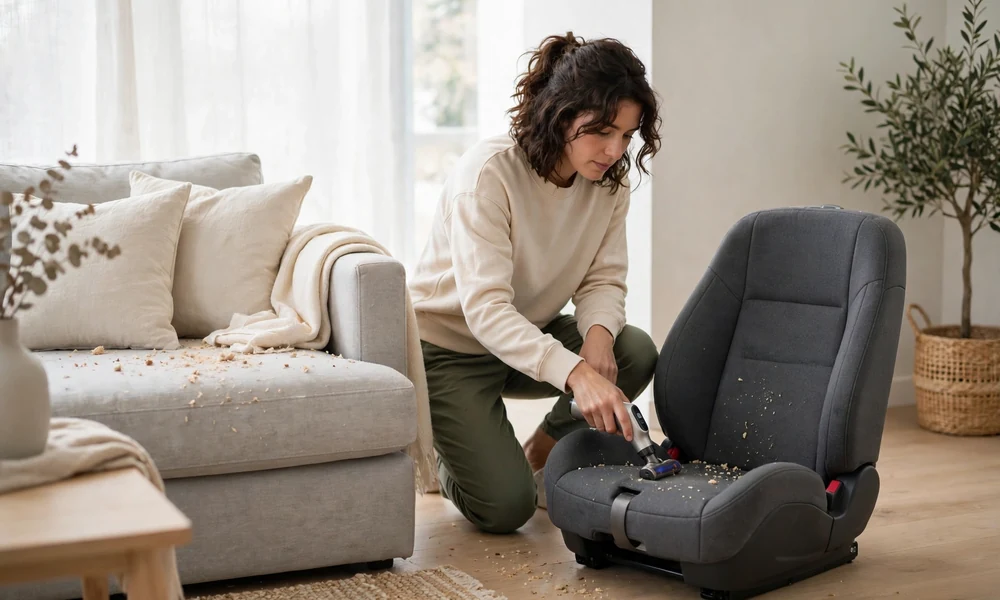
This matters more than it sounds. Stairs are the job people put off most, because carrying a full-size vacuum up and down them is miserable. A handheld that weighs under a kilogram turns a dreaded chore into a two-minute job. The car is the same story: a cordless handheld reaches under seats and into boot corners that no full-size machine can touch. If you have stairs, a car or upholstered furniture, handheld conversion is not a bonus feature. It is the feature.
Cordless Vacuums for Pet Owners
Pet hair tests the whole machine, not just suction. A tangle-free brush roll that sheds hair instead of wrapping it around the bar is the first thing to look for, because a clogged brush loses power fast and needs constant cleaning. A larger dustbin matters too: a 0.4-litre bin sounds fine until a shedding dog fills it halfway through the living room. Pet owners should look for bins of 0.7 litres or more, or accept emptying mid-clean.

Filtration is the third piece. Sealed HEPA filtration traps pollen, dust mite waste and pet dander instead of blowing it back into the room, and it is the right choice for any home with allergies or asthma. A mini motorised tool for stairs and upholstery is almost essential, since pet hair collects exactly where a floor head cannot reach. For the wider picture on filtration and allergy-friendly cleaning, our guide to the best robot vacuums for allergies covers the same principles in a hands-free form. And if you want to see how cordless sticks fit into the full range of machines, our roundup of the best vacuum cleaners of 2026 puts them side by side with uprights, canisters and handhelds.
What to Look For Before You Buy
Five features separate a cordless vacuum you will love from one you will tolerate. Suction comes first: look for air watts above 150 and a motorised brush roll for carpet, plus a soft roller head for hard floors. Filtration comes second: a sealed HEPA system is worth paying for in any home with allergies, asthma or pets. Dustbin capacity comes third, and it is the feature people underestimate most.
Weight and handling come fourth: lift it, push it, and check where the motor sits. Running costs come fifth: add up filters and replacement batteries over three years, not just the price on the box. A cordless vacuum usually needs a new battery after three to five years, and that battery can cost a quarter of the machine. Check spares before you commit, and look for a warranty of at least three years.
Cordless vs Robot: Which Cleans Your Kitchen?
Many homes now own both a cordless stick and a robot, and they do different jobs. The cordless stick is for targeted cleaning: the crumbs under the table after dinner, the hallway after the dog comes in, the stairs on a Saturday. The robot is for maintenance: a daily sweep of the kitchen floor while you cook, keeping dust down between proper cleans. Neither replaces the other, and the pair together covers a home better than either one alone.
For hands-free help between manual cleans, the best robot mops for kitchens offer a useful second layer, handling the sticky hard-floor mess a vacuum leaves behind. But for the heavy work, the deep clean, the stairs and the sofa, the cordless stick remains the machine you reach for. Choose the stick for the jobs that need power and precision, and let the robot handle the daily upkeep.
Cordless Vacuum Buying Checklist
- Measure your home and count your floors: 35 minutes covers a flat, 50 minutes or a swappable battery covers a family home.
- Check the weight in your hand, not on the box: 2 to 2.5 kilograms with a low motor is the sweet spot.
- Test the handheld conversion: one click, no fiddly parts, and a crevice tool included.
- Confirm sealed HEPA filtration if anyone in the home has allergies, asthma or pets.
- Check the dustbin size: 0.7 litres or more for pet owners and large homes.
- Add up three years of filters and a replacement battery, and check the warranty and spares before you pay.
Frequently Asked Questions
Are cordless vacuums as powerful as corded ones?
On hard floors and low-pile carpet, the best cordless vacuums now match corded machines closely, with suction above 200 air watts. On deep carpet, a corded upright or canister still has the edge, because it sustains full power indefinitely. For deep-pile carpet throughout, corded remains the safer choice.
How long does a cordless vacuum battery last?
Most cordless vacuums run for 35 to 60 minutes on standard power, and 8 to 12 minutes on boost. The battery itself usually lasts three to five years before it needs replacing. A swappable battery doubles your runtime and is the best solution for large homes.
How much should I spend on a cordless vacuum?
Most households get an excellent cordless vacuum for between $250 and $500. Below that range, battery life and filtration are often compromised. Above it, you are usually paying for longer runtime, lighter weight and premium build rather than dramatically better cleaning.
Can a cordless vacuum replace a full-size vacuum?
For flats and hard-floor homes, yes: a good stick can be the only vacuum you need. For large carpeted homes, a cordless stick is best paired with a corded upright for deep cleans, with the stick handling the daily work and the upright handling the weekly deep clean.
How do I make the battery last longer?
Use eco or standard mode for hard floors and save boost for carpet and stubborn dirt. Empty the bin before it fills, clean the brush roll regularly, and store the vacuum on its dock so it is always charged. Avoid leaving a flat battery uncharged for weeks, which shortens its life.
Bagged or bagless: which is better for cordless?
Almost all cordless vacuums are bagless, with a bin you empty into the rubbish. Bagless models cost less to run and let you see when the bin is full, but they need regular filter washing. Empty the bin outside or over a bag if dust bothers you, and wash the filter monthly.
The Bottom Line
The best cordless vacuum of 2026 is the one that matches your home, your floors and the way you actually clean. Flats and hard-floor homes will be happiest with a light stick around 2 kilograms with 40 minutes of runtime. Family homes need 50 to 60 minutes or a swappable battery. Pet owners need a tangle-free brush, a big bin and sealed HEPA filtration above all else. Check the battery first, the weight second, and the handheld conversion third, and the right cordless vacuum will make cleaning feel less like a chore and more like a two-minute habit.


