
Coriander seed is the quiet spice that makes a dish taste finished. It is warm, nutty and faintly citrusy, with a lemon-peel brightness that sits underneath richer flavours instead of shouting over them. This guide explains how to buy good coriander, tell fresh from stale, and use it well in 2026.
The best coriander of 2026 is whole seed, bought as seed and ground at home. It smells of orange peel and warm earth the moment you crush it, and that scent is the whole point of the spice. Buy small, buy whole, and toast it yourself.
Key Takeaways
- Coriander seed tastes warm, nutty and citrusy; the leaf, sold as cilantro, is a different ingredient with a fresh, green flavour that some people read as soapy.
- Buy whole seed and grind it yourself: whole seed keeps its aroma for a year or more, while ground coriander fades within a few months.
- Smell before you buy when you can: good coriander smells of orange peel and warm earth, while stale seed smells dusty and faintly musty.
- Toast whole seed in a dry pan for a minute or two until it smells fragrant, then grind it warm for the brightest flavour.
- Use about a teaspoon of ground coriander per dish for a family meal, and add it early so its warmth has time to bloom in the fat.
What Coriander Seed Actually Is
Coriander seed is the dried fruit of the coriander plant, a small round ridged seed about the size of a peppercorn. The plant is one of the oldest flavourings in the kitchen, grown for thousands of years across the Mediterranean, the Middle East and Asia, and its seed turns up in almost every spice tradition on earth. It is the gentle member of the spice rack, and that gentleness is exactly why cooks reach for it so often.
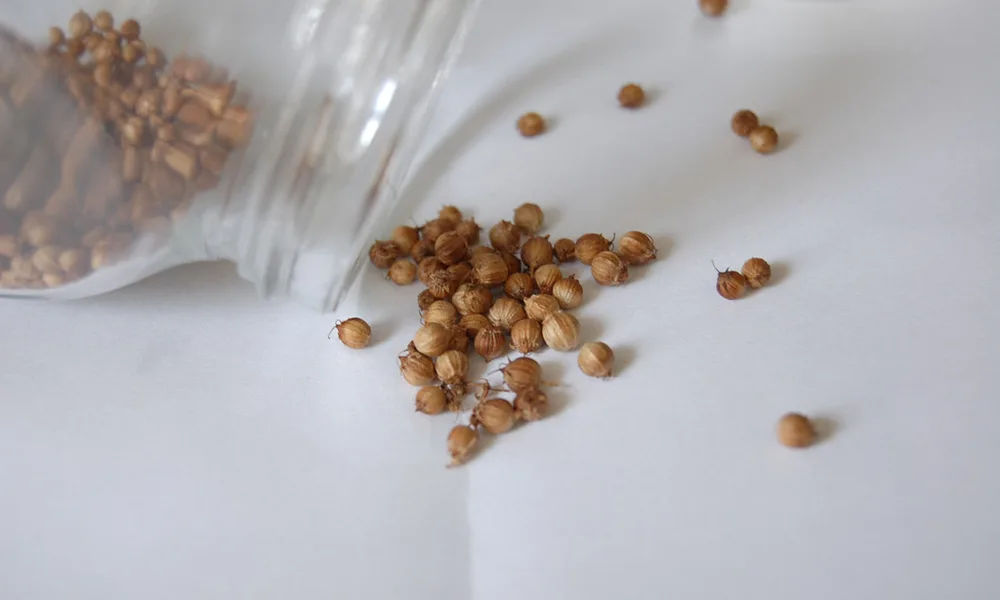
The flavour of good coriander seed is warm and nutty first, citrusy second. Crush a fresh seed between your fingers and you get orange peel, a little lemon, and a soft woody warmth underneath. That citrus note is what separates coriander from its heavier cousins: where cumin is earthy and smoky, coriander is bright and round, and it lifts a dish without ever taking it over.
Seed or Leaf: The Mix-Up That Causes the Soap Taste
Seed and leaf come from the same plant, but in the kitchen they are two different ingredients, and confusing them is the most common coriander mistake of all. The seed is dried, warm and citrusy. The leaf, sold in shops as cilantro or fresh coriander, is green, bright and pungent, and it is used fresh as a herb, never dried and never cooked for long.
Why some people taste soap
The soapy taste some people get from coriander leaf is real, and it has nothing to do with bad cooking. A sizeable share of people carry a gene variant that makes them unusually sensitive to the aldehyde compounds in the fresh leaf, so cilantro tastes soapy or metallic to them. The seed contains far less of those compounds, so most people who cannot stand the leaf enjoy the seed.
How to keep them straight when shopping
When a recipe says coriander without saying which part, look at the amount and the timing. A teaspoon or tablespoon stirred into a simmering pot means seed, usually ground. A handful scattered over a finished dish means leaf. In the shop, seed lives in the spice aisle in a jar or a packet, while the leaf sits in the fresh herb section in a bunch. If you buy the wrong one, the dish will still be edible, but it will not taste like the recipe intended.
Whole Seed or Ground: Which to Buy
Whole seed wins on flavour, and it is not close. The moment coriander is ground, its volatile oils start to escape, and within a few months a jar of ground coriander has lost most of the citrus brightness that makes the spice worth using. Whole seed holds those oils inside its hard shell until you crack it open, which is why a jar of seed bought a year ago still smells alive while a jar of powder bought six months ago smells of dust.
Ground coriander still has a place, and that place is convenience. It blends instantly into batters, doughs and dressings, and it is the right choice when a recipe needs the flavour spread evenly through a smooth mixture. If you buy ground, buy the smallest jar you can find, keep it sealed, and replace it every few months rather than every year. A fresh small jar always beats a stale large one.
How to Judge a Jar Before You Buy It
Start with colour. Good coriander seed is a warm, even tan, sometimes with a hint of gold, and the seeds look plump and ridged rather than flat and grey. Ground coriander should be a pale, warm tan too, not a dull grey-brown. If the powder in the jar looks grey or the seeds look washed out and pale, the spice is old, and old coriander is the most common reason a dish tastes flat.
Smell is the better test, and it works even through a sealed jar if you open it at home. Crush a few seeds between your fingers or rub a pinch of powder in your palm, then smell your hand. Fresh coriander smells of orange peel and warm earth, clear and bright. Stale coriander smells faintly musty, like an old cupboard, or of nothing at all. If you cannot smell anything, the spice cannot flavour anything either.
Coriander at a Glance
| Form | Look | Flavour | Best for |
|---|---|---|---|
| Whole seed | Small, round, ridged, tan | Warm, nutty, citrusy | Curries, rubs, pickling, toasting |
| Ground | Pale tan powder | Even, milder, convenient | Baking, dressings, smooth sauces |
| Fresh leaf (cilantro) | Green, flat leaves | Bright, green, pungent | Garnish, salsas, fresh salads |
Toasting Coriander: The One Step That Changes Everything
Toasting is the single easiest way to make coriander taste like more of itself. Put the whole seed in a dry pan over medium heat, shake the pan every few seconds, and wait for the moment the seeds start to smell warm and nutty and a few of them pop. That takes about a minute or two.
Toasted and ground coriander is the base of a good homemade curry powder, and it is worth making a small batch of your own. That simple blend is why so many cooks keep coriander and cumin side by side on the same shelf.
Cooking With Coriander
Coriander seed belongs early in a dish, bloomed in fat before the liquid goes in. A teaspoon of ground coriander stirred into hot oil or butter for thirty seconds releases its citrus warmth into the fat, and that fat then carries the flavour through the whole pot.
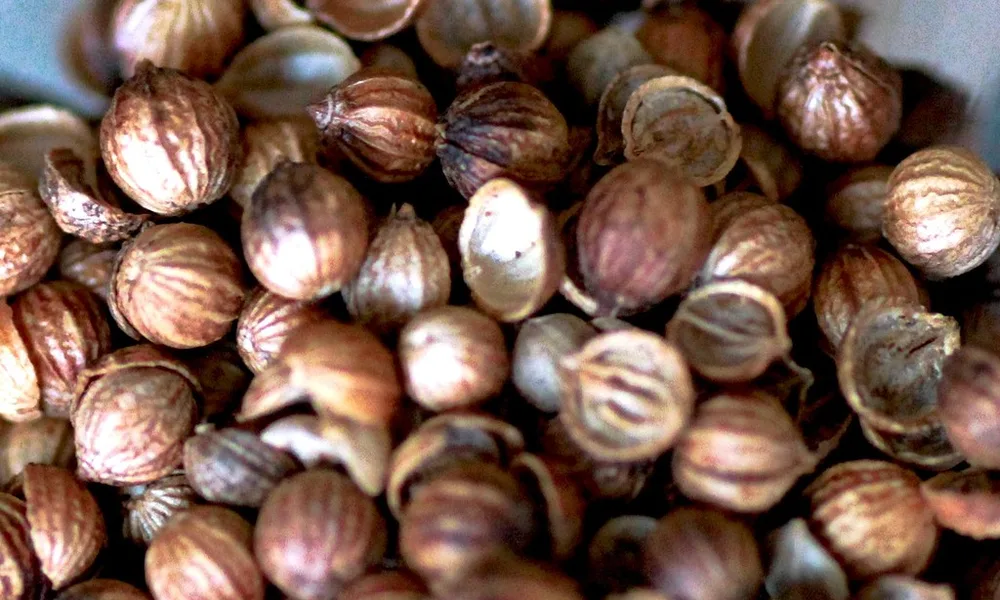
How much to use depends on the dish, but a teaspoon of ground coriander per family-sized pot is a good starting point. Baking is different: a teaspoon in a loaf of rye bread or a batch of spiced biscuits is plenty, and more will make the crumb taste dusty rather than warm.
Fresh leaf deserves its own mention, because it is how most people meet coriander first. Scatter chopped cilantro over a finished curry, a bowl of tacos or a plate of grilled fish, and it adds a green brightness that the seed never could. It is a finishing herb, not a cooking one, so add it at the very end. That is also why it belongs in chimichurri, where the fresh herbs do all the work and the seed would be entirely out of place.
Storing Coriander So It Stays Fresh
Keep whole seed in a small airtight jar in a dark cupboard, away from the cooker and the sink. Light, heat and steam are the three things that strip a spice of its flavour, and the cupboard above the hob is the worst spot in the kitchen for all three. A cool, dark drawer or a cupboard on the far side of the room will keep seed fragrant for a year or more.
Mistakes That Waste Good Coriander
The biggest mistake is treating ground coriander like a spice that keeps forever. It does not, and the jar that has sat open beside the cooker for two years is flavouring nothing. Taste your ground coriander before you trust it: if it smells of dust, throw it out and grind some seed instead. A fresh teaspoon beats a stale tablespoon every time.
The second mistake is using too much of the wrong form, or the leaf where the seed belongs. A handful of fresh cilantro stirred into a simmering curry wilts into a grey, soapy tangle, and a tablespoon of ground seed scattered over a salad tastes gritty and raw. Seed cooks, leaf finishes, and keeping that rule straight is half of cooking with coriander well. A good curry paste already has that balance worked out.
Before You Buy: A Quick Checklist
- Buy whole seed as your main jar, and grind it fresh for the brightest citrus flavour.
- Check the colour: warm, even tan seed and pale tan powder are fresh; grey or washed-out spice is spent.
- Smell it before you trust it: orange peel and warm earth is fresh, dust or nothing is stale.
- Buy the smallest jar of ground coriander that suits how fast you cook through it.
- Toast whole seed in a dry pan for a minute or two, then grind it while it is still warm.
- Keep it in a small airtight jar in a dark cupboard, away from heat, light and steam.
Frequently Asked Questions
Is coriander seed the same as cilantro?
They come from the same plant, but they are different ingredients. The seed is dried, warm and citrusy and is used as a spice. The leaf, sold as cilantro, is fresh, green and pungent and is used as a herb.
Why does coriander taste like soap to some people?
The soapy taste comes from the fresh leaf, not the seed. Some people are genetically more sensitive to the aldehyde compounds in cilantro leaf, so it tastes soapy or metallic to them. The seed contains far less of those compounds, so most leaf-sensitive people enjoy coriander seed without any problem.
Can I use ground coriander instead of whole seed?
Yes, and for baking and dressings ground is often the better choice. Use the same amount by volume, but expect a milder flavour, so taste and adjust.
How long does coriander keep?
Whole seed keeps its flavour for a year or more in a sealed jar in a dark cupboard. Ground coriander fades much faster and is best used within three or four months.
Should I toast coriander seed before using it?
Toasting is worth the minute it takes whenever the seed goes into a savoury dish. A dry pan over medium heat, shaken often, until the seed smells warm and nutty, brings out a depth that raw seed cannot match.
What does coriander go well with?
Coriander is at home with cumin, chilli, garlic and ginger in curries and spice rubs, with citrus and fresh herbs in salads and salsas, and with rye, apples and root vegetables in baking and pickling.
The Bottom Line
Good coriander in 2026 is whole seed, fresh and fragrant, toasted at home and ground when you need it. Keep the seed and the leaf straight, buy small, smell before you trust a jar, and let the citrus warmth do its quiet work early in the dish. Do that, and the quietest jar in the rack will earn its place.


