Cutting Mats That Protect Your Table in 2026
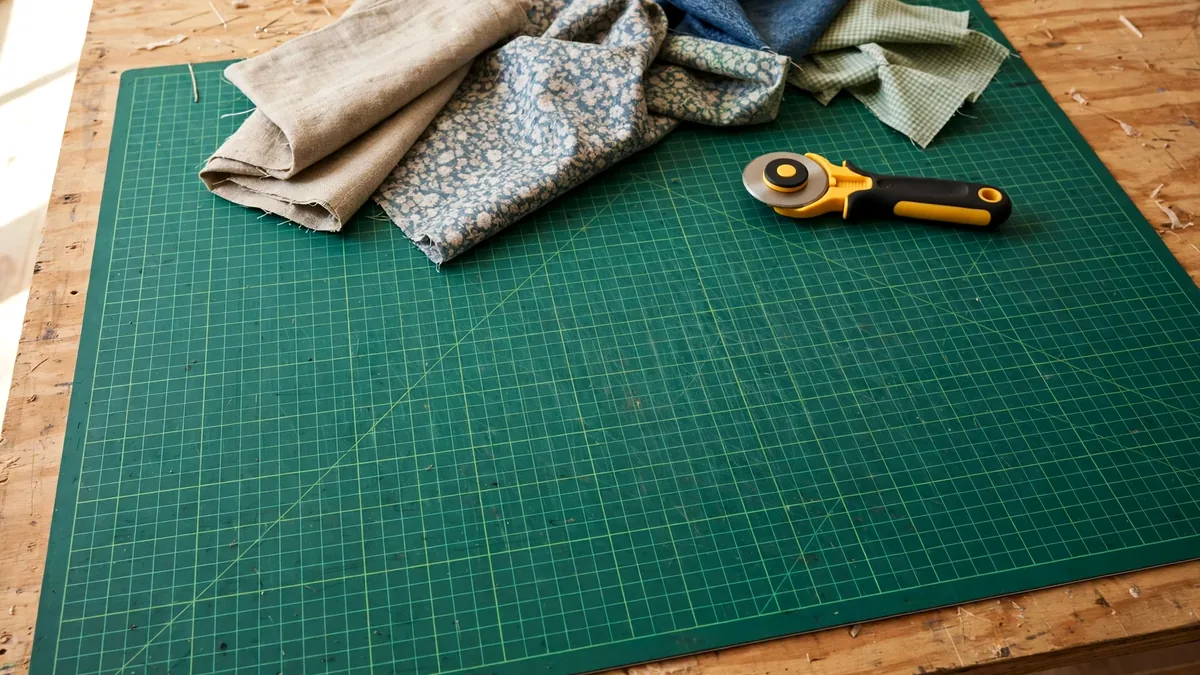
Cutting mats that protect your table in 2026 are the quiet workhorses of the sewing room: a thick, self-healing surface that takes the blade so your table does not have to. A cutting mat sits under your fabric, lets a rotary cutter roll across it and closes up behind the blade, so the surface stays smooth and the table stays unmarked.
A good mat does more than protect furniture. Its printed grid lines up fabric, squares off raw edges and measures strips without a tape measure. A bad mat warps in the sun, grooves after a few cuts and pulls your blade off line. This guide covers sizes, materials, grids and care, and how a mat differs from other table protectors.
Key Takeaways
- A cutting mat is a self-healing surface that a rotary blade sinks into and that closes behind the cut, protecting the table and keeping the blade sharp.
- Buy the largest mat your table and budget allow, because a mat that is too small forces you to move fabric mid-cut and loses accuracy.
- Grid lines in inches and centimetres, with diagonal angles marked, are the most useful markings; a plain mat needs a separate ruler for every measurement.
- Keep a mat flat, out of direct sun and away from heat, because a warped mat will never lie flat again and will pull cuts off line.
- Replace a mat when cuts stay open, the surface feels rough, or the grid fades, because a worn mat damages blades and spoils accuracy.
What a Cutting Mat Actually Is
A cutting mat is a sheet of dense, layered vinyl or polypropylene, usually three to five millimetres thick, with a printed grid on one or both sides. The top layer is firm enough to support fabric and a ruler, yet soft enough for a blade to sink a fraction into it, and the base grips the table so the mat does not slide while you cut.
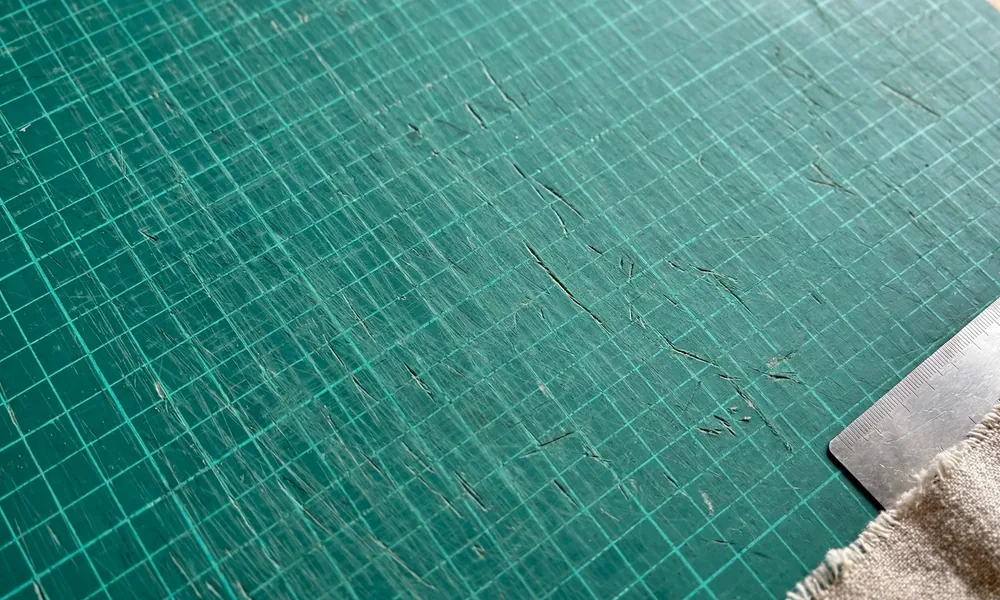
Self-healing is the feature that matters. When a blade passes through, the material closes behind it, so the surface stays smooth for the next pass. A mat that does not heal leaves an open groove, and the next blade crossing it drops in and wanders off the ruler. That is why cheap, hard mats feel fine for a week and then start ruining cuts.
Cutting Mats vs Trivets: A Cutting Surface Is Not a Heat Mat
The nearest neighbour is the trivet, and the two are easy to confuse because both protect a table. A trivet protects it from heat: it goes under a hot pot and takes the temperature so the wood does not scorch. Our guide to trivets that protect the table from hot pots in 2026 covers that job.
A cutting mat protects a table from a blade, not from heat: a hot dish will mark or melt it. A trivet under a rotary cutter would let the blade through to the table in one pass, and a cutting mat under a casserole would warp. Keep the mat for cutting and the trivet for hot dishes.
The other difference is measurement. A trivet is sized to a pot; a cutting mat is sized to the work, with a grid that measures, squares and angles the fabric. That grid is why a mat earns its place even in a small sewing room: it replaces a tape measure and set square for most everyday cutting.
Mat Sizes: Which Size Should You Buy?
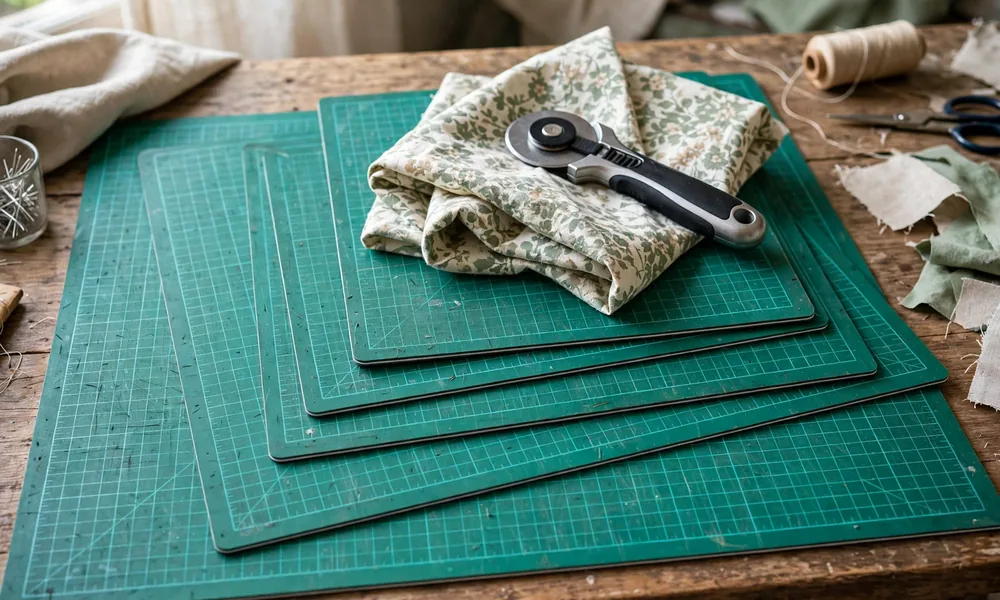
Buy the largest mat that fits your table and budget. A large mat lets you cut a full width of fabric without moving it, and moving fabric mid-cut is the most common cause of crooked strips. A small mat forces you to fold, shift and re-square, and every shift is a chance for error.
Small Mats: A4 and A3
Small mats, around A4 and A3 size, suit craft work, appliqué and taking to a class. They fit in a bag and are cheap to replace, and they are all you need for small pieces. They are too small for quilting or dressmaking, where fabric overhangs the mat and the blade has nowhere safe to finish.
Medium Mats: 45 by 60 cm
A 45 by 60 cm mat is the standard for most home sewers. It takes a folded width of quilting cotton, fits on a dining table with room for a ruler, and is still light enough to move aside. If you buy one mat, make it this size.
Large Mats: 60 by 90 cm and Bigger
Large mats, 60 by 90 cm and bigger, suit quilters and anyone who cuts full widths regularly. They stay put on a dedicated table and their weight alone stops them sliding. The trade-off is storage: a large mat must be stored flat and is too heavy to carry to a class.
Grids, Markings and Double-Sided Mats
The grid turns a protective sheet into a measuring tool. Look for clear lines every centimetre and every inch, with numbers along the edges so you can read a measurement without lifting the ruler. Diagonal lines at 30, 45 and 60 degrees are the most useful extra: they let you cut bias strips and mitred corners without a protractor.
Colour matters more than it seems. A green mat suits light fabric, because the cloth stands out against it; a grey mat suits dark fabric. Some mats are printed on both sides with different grids, which is genuinely useful. A mat whose grid fades after a few months is a bad mat: if the grid wears off, the mat has lost half its job.
Cutting Mats Compared
The table below gives the working range of each common mat size. Treat the fabric width as the folded width the mat can take without the cloth overhanging the edge.
| Mat size | Best for | Fabric width | Portable? | First buy? |
|---|---|---|---|---|
| A4 to A3 | Craft, appliqué, classes | Small pieces | Yes | As a second mat |
| 45 by 60 cm | Quilting, dressmaking | Folded cotton width | Fairly | Yes |
| 60 by 90 cm | Full-width quilting | Full fabric width | No | For dedicated tables |
How to Use a Mat With a Rotary Cutter
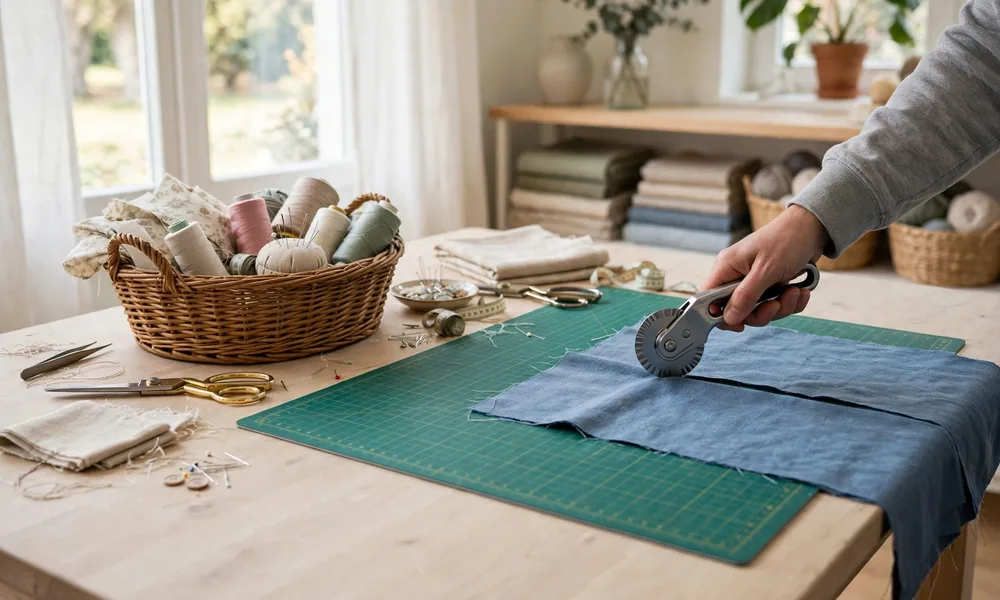
A mat and a rotary cutter are a pair. Lay the mat flat on a firm table, press the fabric flat, and line the fold up with a grid line before measuring anything. If the fold runs along one grid line and the raw edge along another, the fabric is square, and every strip cut from it will be square too.
Hold the ruler firmly, keep your fingers behind its edge, and roll the cutter away from your body in one steady pass. The blade should sink into the mat and close behind it. Our guide to the rotary cutters that slice fabric clean in 2026 covers the blade itself; this guide is about the surface underneath it.
After cutting, lift the ruler straight up rather than sliding it, or the fabric underneath will shift. Brush loose threads off the mat rather than picking at the surface, and re-square the fabric edge every few strips.
Looking After a Cutting Mat
Mats are tough, but they have three enemies: heat, sun and being stored rolled up. Heat softens the surface and leaves a permanent dip; sun fades the grid and makes the mat brittle; a mat stored rolled will hold the curl for months. Store it flat, out of sunlight, away from radiators and irons, and never in a hot car.
To clean it, wipe the mat with a damp cloth and a little mild soap, rinse it, and let it dry flat. Do not scrub it with a scourer, which roughens the surface and stops it healing, and do not use solvents, which dissolve the top layer. If cuts stay open after cleaning, the surface is worn out and it is time to replace it.
A mat used only for fabric lasts longer than one used for card and paper, because paper dust fills the healed cuts and stops them closing. If you cut both, keep one mat for fabric and one for paper, and the fabric mat will last years longer.
Mistakes That Spoil Mats and Fabric
The most common mistake is buying a mat that is too small: it forces you to move fabric mid-cut, and a moved piece is a crooked piece. The second is cutting on a worn-out mat: the blade drops into old grooves, wanders off the ruler, and the strip comes out wavy. Replace the mat and the same blade will cut straight again.
The third mistake is storing a mat in the sun or rolled up behind a door. A warped mat rocks on the table and the ruler will not sit flat on it. The fourth is using the mat as a general work surface: hot mugs and craft knives shorten its life. Keep it for fabric and rotary cutting. A good sewing machine for beginners in 2026 will sew whatever you cut, straight or crooked, so accuracy has to come from the mat, ruler and blade first.
Checklist: Before You Buy a Cutting Mat
- Buy the largest mat that fits your table: 45 by 60 cm suits most home sewers.
- Check the grid is printed clearly in inches and centimetres, with diagonal angles marked.
- Choose a colour that contrasts with the fabric you cut most.
- Press the mat flat in the shop: it should lie flat with no curl, warp or rocking.
- Check the mat is genuinely self-healing, not just a hard plastic sheet with a grid printed on it.
- Plan where you will store it flat, out of sun and away from heat, before you bring it home.
Frequently Asked Questions
What size cutting mat should a beginner buy?
A 45 by 60 cm mat is the best first buy. It takes a folded width of quilting cotton and fits on a dining table. Add a small A3 mat later for classes, and a large mat only if you have a dedicated cutting table.
How long does a cutting mat last?
A mat used only for fabric and kept flat, out of sun and away from heat can last several years. Heavy use, cutting card and paper, or storing it rolled up will shorten its life sharply. Replace it when cuts stay open or the grid fades.
Can I use a rotary cutter without a cutting mat?
No, not if you want the blade or the table to survive. A rotary blade needs a surface it can sink into; on wood it dulls and scores the table, and on glass it skates and chips. A self-healing mat protects the table and keeps the blade sharp.
Why does my cutting mat have grooves that will not close?
The mat is worn out, or it was never truly self-healing. Repeated cuts in the same place, cutting card and paper, and scrubbing all stop the material closing. A mat with open grooves will pull a blade off line, so replace it.
Can I iron on a cutting mat?
No. Heat softens and warps a cutting mat and can melt the printed grid. Iron on an ironing board, and keep the cutting mat for cutting only.
Do I need a mat if I only use scissors?
Scissors do not need a mat, because they cut in the air rather than against a surface. A mat is still useful for measuring fabric with its grid, but it is essential only with a rotary cutter or craft knife. With scissors alone it is a convenience; with a rotary cutter, a necessity.
The Bottom Line
Cutting mats protect your table by taking the blade so the wood never has to, and they earn their place by measuring and squaring the fabric too. Buy the largest mat that fits your table, choose a readable grid and a contrasting colour, and store it flat, out of sun and away from heat. Replace it when cuts stay open or the grid fades.