
A front door has one job above all others: staying shut when you want it shut. The deadbolts that keep your door locked tight in 2026 are solid steel bolts: one throws hardened steel an inch into the frame, and once it is there, the door cannot be pushed, kicked, or carded open.
This guide explains how deadbolts work, which type suits which door, what the grades mean, and how to fit and look after one.
Key Takeaways
- A deadbolt is not a latch: its solid bolt cannot be pushed back by force on the door.
- Single-cylinder deadbolts suit most front doors; double-cylinder suits doors with glass near the lock.
- Buy Grade 1 or 2, with a one-inch throw and a reinforced strike plate.
- The strike plate matters as much as the bolt: long screws into the wall stud are what stop a kick.
- Measure the backset and the door thickness before you buy, or the lock will not fit.
What Makes a Deadbolt Different
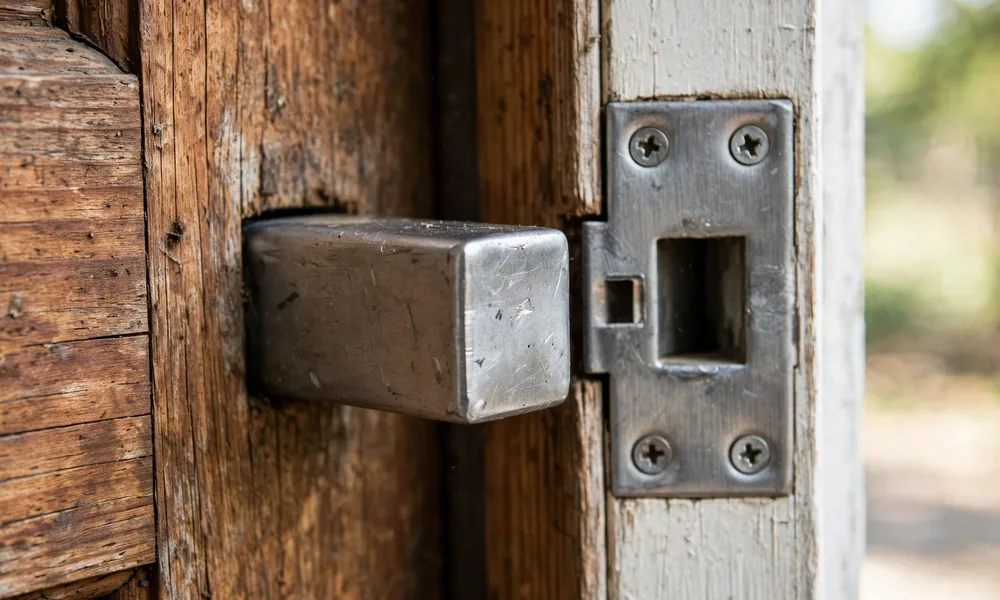
Most doors have two pieces of hardware that look similar and do very different jobs. The latch in the knob or handle is spring-loaded: it snaps shut when the door closes, and it can be pushed back with a card or a thin tool, or by force on the door. A deadbolt has no spring: its bolt is driven by key or thumbturn into a deep hole in the frame, and once thrown, nothing short of breaking the door or frame will move it.
That is why a deadbolt is the heart of front-door security. A good handle set with a weak latch is decoration; a plain door with a solid deadbolt and a reinforced frame is genuinely hard to force. The bolt is usually solid hardened steel, at least an inch long when thrown, with a pin through the middle that resists sawing.
Single-Cylinder, Double-Cylinder, and Keyless Deadbolts
A single-cylinder deadbolt has a key on the outside and a thumbturn on the inside. It is the standard front-door choice: one twist and you are out, which matters in a fire. Most homes should start here.
A double-cylinder deadbolt has a key on both sides, with no thumbturn inside. It exists for one situation: a door with glass panels, a sidelight, or a letterbox close enough to the lock that an intruder could break the glass and reach through to turn the thumbturn. But in an emergency you need the key to get out, and if it is not in the lock, you are trapped. Never fit one on a main exit unless the key stays in the inside cylinder while anyone is home.
Keyless deadbolts use a keypad or combination dial outside, with a thumbturn inside. They are mechanical, not electronic: the code drives the bolt directly, with no batteries. They suit rentals, or households that give a cleaner or guest a code instead of a key.
Deadbolts and Other Door Hardware
A deadbolt works with the rest of the door hardware: the handle opens the door day to day, and the deadbolt locks it at night. Think of the door as a system: deadbolt, strike plate, hinges, and frame all carry the load when someone tries to force it, and the weakest link decides its strength. A Grade 1 deadbolt in a softwood frame held by short screws is no stronger than the screws; the best vs worst door locks comparison puts deadbolts alongside the other options.
Security Grades, Bolt Throw, and the Strike Plate
Deadbolts are graded by independent testing, and the grade is the most useful number on the box. Grade 1 is the highest residential grade, tested against heavy impact, picking, and drilling. Grade 2 is solid mid-range and suits most homes. Grade 3 is a basic lock for interior doors, not a front door.
Bolt throw is how far the bolt extends into the frame, and one inch is the standard. A shorter throw can be levered out, and a bolt that barely engages the frame is not holding the door at all. When fitting, check the bolt throws fully and sits deep, with no wobble: if it stops short, the hole is too shallow or the lock is misaligned.
The strike plate is the metal plate on the frame that the bolt slides into, and it is where most forced entries fail or succeed. A standard plate held by two short screws will rip out of a softwood frame under one strong kick, however good the lock is. A reinforced strike plate, or one fitted with three-inch screws reaching the wall stud, changes that completely. The screws cost pennies, and they are the best security upgrade a front door can get.
Materials and Finishes That Last
Solid brass is the classic: it resists corrosion and ages gracefully. Stainless steel is tougher, harder to scratch, and better in coastal or damp conditions. Polished brass looks warm but needs polishing and shows fingerprints. Satin nickel and matte black are the practical choices for a busy front door: they hide fingerprints and do not show wear quickly.
Match the finish to the rest of the hardware, but do not let it decide the lock: a door knob that feels solid every time in the same finish looks considered, yet a pretty finish on a Grade 3 lock is still a weak lock. Buy the grade and the bolt first, and the finish second.
Deadbolts Compared: Which Type for Which Door
| Deadbolt type | Best for | Security grade | Key point |
|---|---|---|---|
| Single-cylinder | Most front doors, main exits | Grade 1 or 2 | Fast exit from inside |
| Double-cylinder | Doors with glass near the lock | Grade 1 or 2 | Key needed on both sides |
| Keyless mechanical | Rentals, shared access, lost keys | Grade 2 | No key, change the code |
| Rim deadbolt | Thin or unusual doors | Grade 2 | Surface-mounted inside |
| Vertical deadbolt | Doors at risk of prying | Grade 1 | Bolt drops into the frame |
Fitting a Deadbolt So It Holds
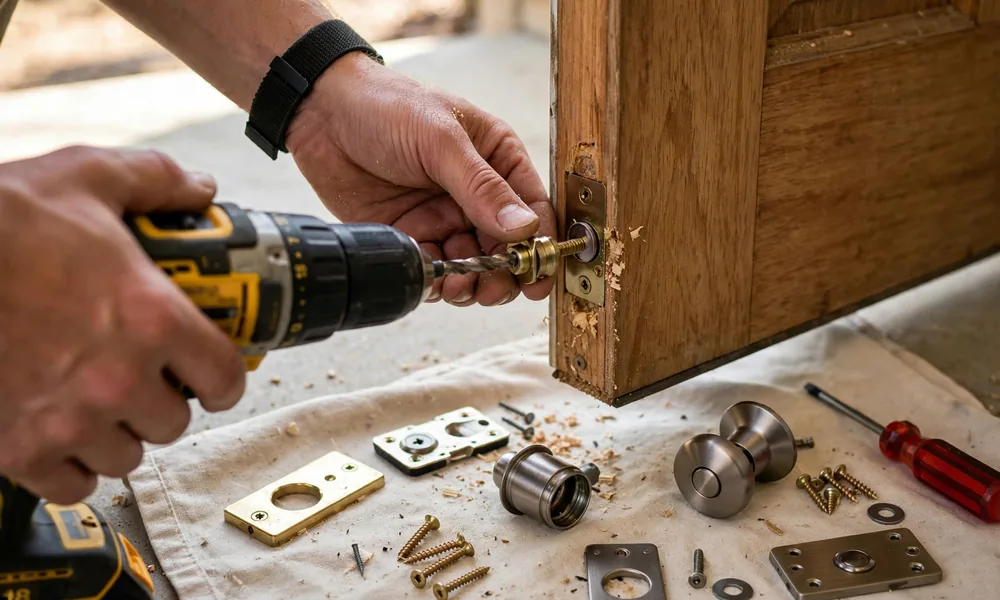
Measure first, and measure twice. The backset is the distance from the door edge to the centre of the lock hole, usually sixty or seventy millimetres; the lock must match it, or the bolt will not line up with the strike plate. Measure the door thickness too: a lock made for a standard forty-five-millimetre door will not fit a thin interior door or a thick old one without an extension kit.
If the door is not drilled, mark the centreline and drill the cross-bore with a hole saw, keeping the drill square: a hole drilled at an angle makes the lock bind from the start. Fit the bolt into the door edge first and check it slides freely before fitting the cylinders. It should sit flush and throw fully with a smooth action; if it sticks, the mortise is too shallow or the bolt is twisted, and no adjustment on the cylinders will cure it.
Fit the strike plate last, to the bolt rather than the old hole: close the door, mark where the bolt lands, and cut the mortise to that mark. Use three-inch screws into the stud, and test the bolt a dozen times before you call the job done.
Common Mistakes That Leave a Door Weak
The most common mistake is a deadbolt that does not throw fully. The bolt stops a few millimetres short, usually because the strike plate hole is too shallow or the plate is misaligned, and the door looks locked while the bolt barely holds. Deepen the hole and realign the plate instead of forcing the key, which can snap and leave you calling a locksmith.
The second mistake is short screws in the strike plate: the screws supplied bite only into the thin frame. Replace them with seventy-five-millimetre screws reaching the stud, and the door becomes several times harder to kick in. The third mistake is ignoring the hinges: a door with a Grade 1 deadbolt and short hinge screws is a door that can be forced at the hinge side instead.
Keeping a Deadbolt Working Smoothly
A stiff deadbolt is usually dirty or dry, not broken. The fix is a puff of powdered graphite into the keyway, worked in by turning the key, and a light silicone spray on the bolt. Never use oil in a cylinder: it attracts dust and turns sticky.
Check the bolt alignment once a year: a door that has settled or swollen can pull the bolt out of line, and the first sign is a key that needs a shove. Re-key the lock when keys change hands: a previous owner or tenant may still hold a copy, and re-keying costs far less than a new lock.
Deadbolts Around the Home
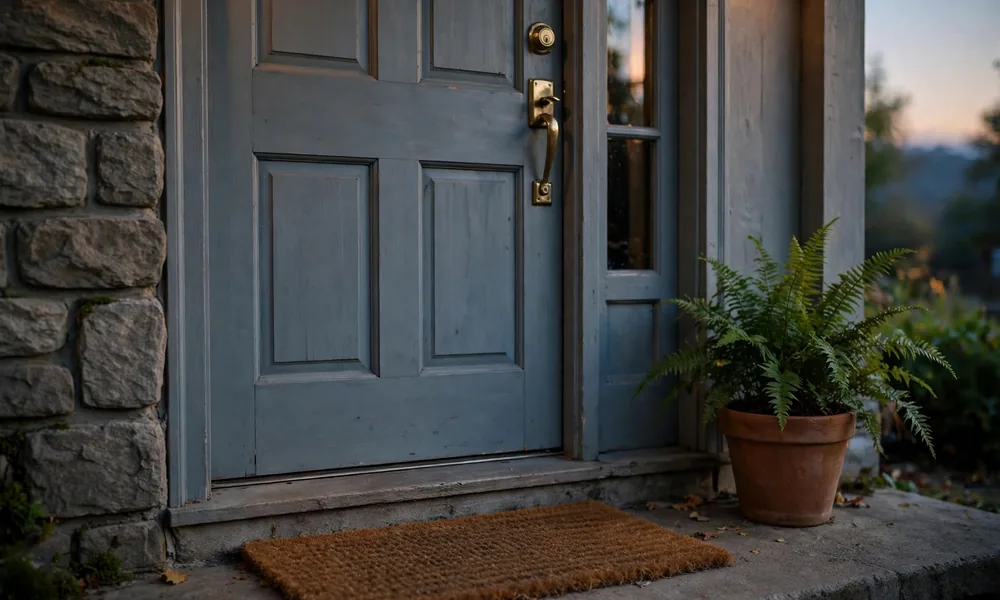
On the front door, fit the best grade you can afford: a single-cylinder Grade 1 deadbolt, a reinforced strike plate with long screws, and a solid frame are the core of front-door security. On a back door, often out of sight, a reinforced strike and long screws matter even more. On a side, garage, or shed door, a deadbolt is the cheap way to make a weak door stronger, and a rim deadbolt that surface-mounts inside can suit a thin door. Many homes fit a deadbolt as the primary lock and a smart lock for the front door for everyday convenience: easy to open with a code, still held by a solid steel bolt at night.
Checklist: Before You Buy a Deadbolt
- Measure the backset, door thickness, and bore hole before ordering.
- Choose single-cylinder for a main exit; double-cylinder only for a door with glass near the lock.
- Buy Grade 1 or 2, with a one-inch throw and anti-pick pins.
- Fit a reinforced strike plate with three-inch screws into the wall stud.
- Pick the finish after the grade is decided.
- Test the bolt a dozen times, and re-key when keys change hands.
Frequently Asked Questions
Is a deadbolt better than a normal door lock?
Yes. A normal latch is spring-loaded and can be pushed back with a card or forced with pressure. A deadbolt throws a solid steel bolt into the frame that cannot be pushed back, so the door can only be forced by breaking the door or frame.
Should I get a single or double-cylinder deadbolt?
Single-cylinder for most front doors: key outside, thumbturn inside, so you can always get out quickly. Double-cylinder only where glass near the lock lets someone reach through to the thumbturn, and never on a main exit unless the key stays inside while anyone is home.
What does Grade 1 mean on a deadbolt?
Grade 1 is the highest residential grade, tested against picking, drilling, and impact. Grade 2 is solid mid-range; Grade 3 is basic and not enough for a front door. Buy Grade 1 or 2 for any exterior door.
How far should a deadbolt bolt extend?
At least one inch. A shorter throw can be levered out of the strike plate, so check the bolt throws fully and sits deep with no wobble.
Can I fit a deadbolt myself?
Yes, if the door is already drilled to the right size and the backset matches. You need a drill, a hole saw, a chisel, and a spirit level. Otherwise a locksmith will fit one in under an hour.
How do I look after a deadbolt?
Use powdered graphite in the keyway once a year and light silicone spray on the bolt. Never use oil in the cylinder: it attracts dust and turns sticky. Check alignment yearly and re-key when keys change hands.
The Bottom Line
The deadbolts that keep your door locked tight in 2026 are the simple ones done well: a Grade 1 or 2 single-cylinder lock, a solid one-inch bolt, and a reinforced strike plate on long screws. Fit it square, keep it clean, and it will hold for decades.


