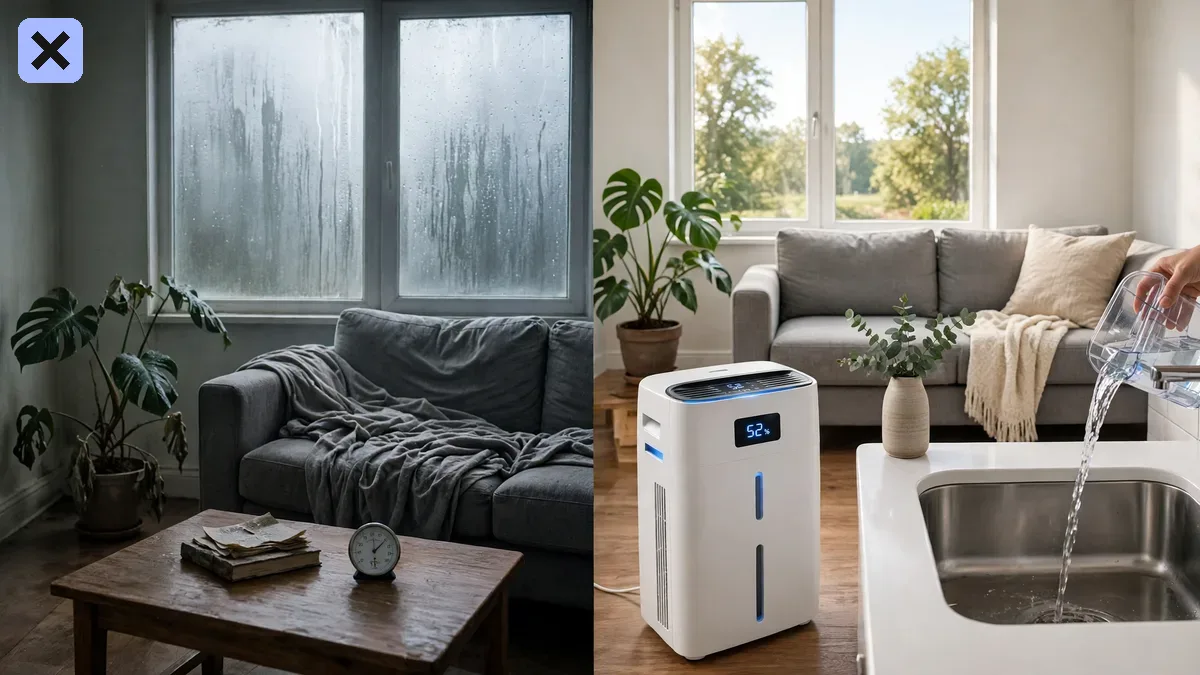
The best dehumidifiers in 2026 do the opposite job to a humidifier, and for damp homes that makes all the difference: they pull excess moisture out of the air, leaving rooms drier, fresher and far less friendly to mould. If your windows stream with condensation every morning, your clothes take days to dry indoors, your bathroom smells musty or black spots keep appearing in corners, the problem is usually too much moisture — and a dehumidifier is the most direct fix.
A good dehumidifier holds a room at a comfortable 40 to 50 percent humidity, dries laundry faster, protects walls, clothes and furniture from damp damage, and makes a cold room feel warmer, because dry air is easier to heat than damp air. The best dehumidifiers of 2026 do this with a quiet compressor or desiccant system, a large water tank or a continuous drain hose, and a humidistat that switches the unit off when the target is reached.
This guide compares the strongest dehumidifiers of 2026 by type, room size and extraction rate, so you can choose the one that actually dries your home.
Key Takeaways
- Aim for indoor humidity of 40 to 50 percent — above 60 percent, mould and dust mites thrive; below 30 percent, air feels uncomfortably dry.
- Compressor dehumidifiers work best in warm rooms above 15°C, while desiccant models keep working in cold garages, basements and unheated rooms.
- Match the extraction rate to the dampness: a mildly damp bedroom needs far less power than a wet basement or a laundry room.
- A humidistat and auto shut-off matter most, because they stop the unit running all day once the room is dry.
- Empty the tank daily or fit a drain hose — a full tank stops the machine, and standing water in a tank can smell.
Why Too Much Moisture Is a Problem
A typical household produces litres of water vapour every day: showers, cooking, boiling kettles, breathing and drying laundry indoors all add moisture to the air. In a well-ventilated home that vapour escapes, but in a modern, well-sealed home it often has nowhere to go. It condenses on the coldest surfaces — windows, external walls and corners — and that is where mould begins.
Mould is more than an eyesore: it damages plaster and paint, stains grout, ruins clothes and books, and can aggravate asthma and allergies. Damp also makes a home feel colder, because humid air takes more energy to heat.
Ventilation helps, but it is not always enough, especially in winter when opening windows lets the heat out, or in a basement or bathroom with no window at all. A dehumidifier tackles the moisture at its source, and it does it room by room, which is exactly where the problem usually lives. If you are also trying to improve the air you breathe, a dehumidifier pairs well with a purifier, and our guide to the best air purifiers for home in 2026 covers the models that suit whole-home use.
The Main Types of Dehumidifier Compared
Dehumidifiers fall into two main families, and the right one depends mostly on the temperature of the room you need to dry.
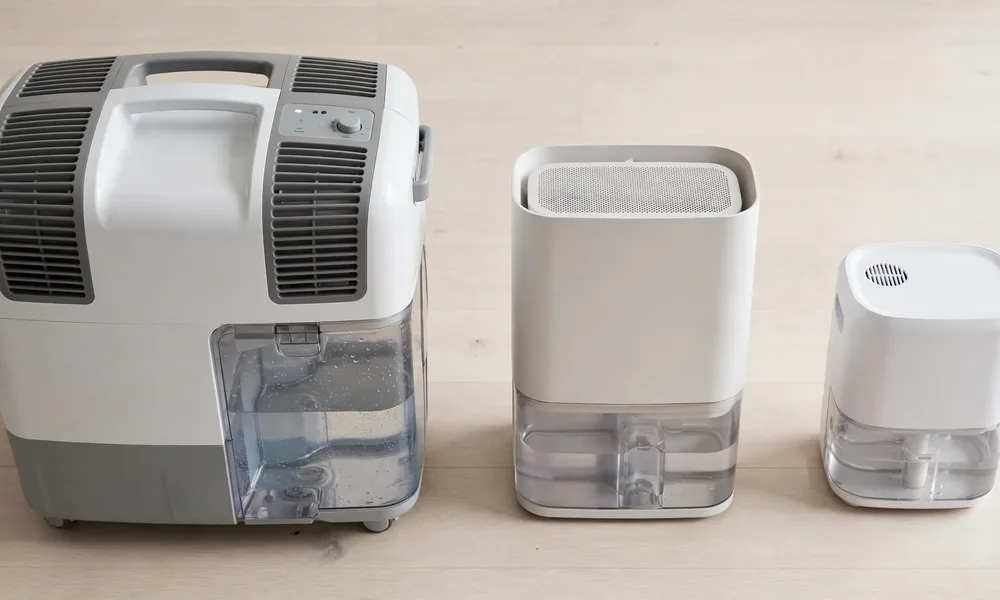
Compressor Dehumidifiers
Compressor models work like a small fridge: they draw damp air over cold coils, the moisture condenses into water and drips into a tank, and the drier air is blown back into the room. They are the most energy-efficient type in warm conditions and the best choice for living rooms, bedrooms and kitchens kept above 15°C. They are also the most common and the cheapest per litre of water extracted. Their weakness is the cold: below about 15°C the coils can ice up, efficiency falls sharply, and many models pause to defrost. For a heated home they are the default pick.
Desiccant Dehumidifiers
Desiccant models pass air over a moisture-absorbing wheel, then gently heat the wheel to release the water into a tank. They keep working down to near-freezing temperatures, which makes them the right choice for garages, basements, caravans, boats and unheated spare rooms. They also blow out slightly warm air, which is a welcome bonus in a cold room, and they are quieter than compressors at low settings. The trade-offs are higher electricity use and a higher price, so they are worth it only when the room is genuinely cold.
How to Choose the Right Dehumidifier
Choosing well comes down to five decisions, and the temperature of the room is the first and most important.
Match the Type to the Temperature
If the room stays above 15°C most of the time, buy a compressor model — it is cheaper to run and cheaper to buy. If the room is unheated, a garage, a basement or a conservatory in winter, buy a desiccant model, because a compressor will spend much of its time defrosting. This single decision decides whether the machine works at all in your situation, so make it before looking at brands or features.
Match the Extraction Rate to the Dampness
Extraction rate is quoted in litres per day, and it is the headline number for a reason. A mildly damp bedroom needs around 10 litres a day; a bathroom with no window or a room used for drying laundry needs 12 to 16 litres; a wet basement or a home with visible mould needs 20 litres or more. An undersized dehumidifier will run constantly and still leave the air damp, while a very oversized one in a small room will cycle on and off and waste electricity. Be honest about how damp the room is, and buy accordingly.
Look for a Humidistat and Auto Shut-Off
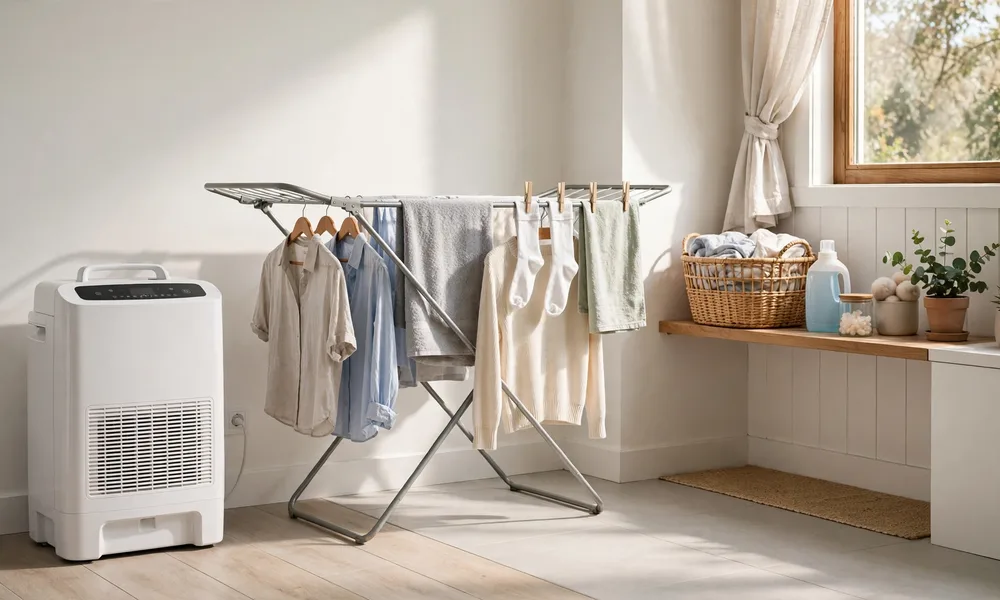
A humidistat lets you set a target — usually 45 or 50 percent — and the dehumidifier works until it gets there, then idles. Without one, the machine runs until you switch it off, which wastes electricity and can over-dry the room. Auto shut-off when the tank is full is essential, as is an auto-restart after a power cut if the unit will run unattended. A laundry mode, which runs at full power for a fixed period, is genuinely useful if you dry clothes indoors.
Best Dehumidifiers by Room and Need
As with any appliance, the best dehumidifier depends on where it will live and what it has to dry.

Best for Bedrooms
For a bedroom, a quiet 10 to 12-litre compressor model with a humidistat and a sleep mode is the sweet spot. Set the target to 45 percent, run it for a few hours before bed, and let it hold the level overnight. Place it away from the bed so the airflow does not blow directly on you, and empty the tank in the morning until the room stabilises. If the bedroom is in a cold part of the house, a desiccant model is the safer choice, because a compressor will struggle on cold nights.
Best for Bathrooms
Bathrooms are the dampest rooms in most homes, and they are where mould appears first. A 12-litre compressor model with a laundry mode and a continuous drain option works well here, run for an hour or two after every shower. Keep the door open while it runs so moist air can escape the room, and clean the filter regularly, because bathroom air carries hair and dust that clog intakes quickly. A warm towel rail helps too, and our roundup of the best towel warmers of 2026 covers the models that keep towels dry and bathrooms warmer.
Best for Basements and Garages
Basements and garages are cold, and cold rooms call for desiccant models. A 10-litre desiccant unit with a continuous drain hose is the practical choice, because it will keep working through winter and you will not need to visit the basement twice a day to empty a tank. The warm air a desiccant model blows out is a bonus in a cold space, and the unit itself is light enough to move. If the basement has standing water or a leak, fix that first — no dehumidifier can keep up with water coming in.
Running Costs and Maintenance
Maintenance is simple. Clean or wash the air filter every two to four weeks, wipe the tank with a mild disinfectant when you empty it, and check the drain hose for kinks if you use one. In a dusty home, a robot mop can help keep the floors clear so the dehumidifier’s filter stays cleaner for longer, and our guide to the best robot mops of 2026 covers the models that handle hard floors well.
Best Dehumidifiers 2026 Compared
| Type | Best For | Extraction | Running Cost | Cold Rooms |
|---|---|---|---|---|
| Compressor 10L | Bedrooms, living rooms | 10 litres/day | Low | Poor below 15°C |
| Compressor 12–16L | Bathrooms, laundry drying | 12–16 litres/day | Low to moderate | Poor below 15°C |
| Compressor 20L | Damp houses, large rooms | 20 litres/day | Moderate | Poor below 15°C |
| Desiccant 10L | Basements, garages, cold rooms | 10 litres/day | Higher | Excellent, works near freezing |
Dehumidifier Buying Checklist
- Check the room temperature first — compressor for warm rooms, desiccant for cold ones.
- Match the extraction rate to the dampness: 10 litres for a bedroom, 12–16 for laundry and bathrooms, 20 or more for a wet basement.
- Choose a humidistat with a target of 45 to 50 percent, plus auto shut-off for a full tank.
- Pick a tank of 3 litres or more, or fit a continuous drain hose so you never have to empty it.
- Check the noise level on the low setting if the unit will run in a bedroom.
- Leave clear space around the intake and outlet, and place the unit near the source of moisture.
Frequently Asked Questions
What humidity level should a dehumidifier maintain indoors?
Aim for 40 to 50 percent relative humidity. Above 60 percent, mould and dust mites thrive. Below 30 percent, the air feels dry and can irritate skin and airways.
Can a dehumidifier stop mould?
A dehumidifier can stop new mould growing by keeping humidity below the level mould needs, and it can dry out a room so existing mould can be cleaned safely.
How long should I run a dehumidifier each day?
In the first week, run it as long as needed to bring the room down to 45 percent, which may mean most of the day. After that, let the humidistat decide: it will cycle on and off to hold the target.
Does a dehumidifier make a room warmer?
Yes, slightly. A compressor model adds a little heat as it runs, and a desiccant model adds more, because it warms the air as it dries it.
Can I leave a dehumidifier running while I am out?
Yes, as long as it has auto shut-off for a full tank or a continuous drain hose, and auto-restart after a power cut.
Do dehumidifiers use a lot of electricity?
A compressor model uses roughly 150 to 250 watts while running, which is comparable to a few light bulbs, and it idles once the room is dry.
The Bottom Line
The best dehumidifiers of 2026 are the ones that match your room’s temperature and dampness, and then hold the humidity at 45 percent without fuss. For most heated homes, a 12-litre compressor model with a humidistat and a drain hose is the sweet spot: it dries a bedroom or a bathroom, speeds up laundry and costs little to run once the room is dry. Cold basements, garages and unheated rooms call for a desiccant model instead, and very damp houses call for a 20-litre unit. Whichever type you choose, close the doors, give it room to breathe, empty the tank or fit a hose, and be patient for the first week.


