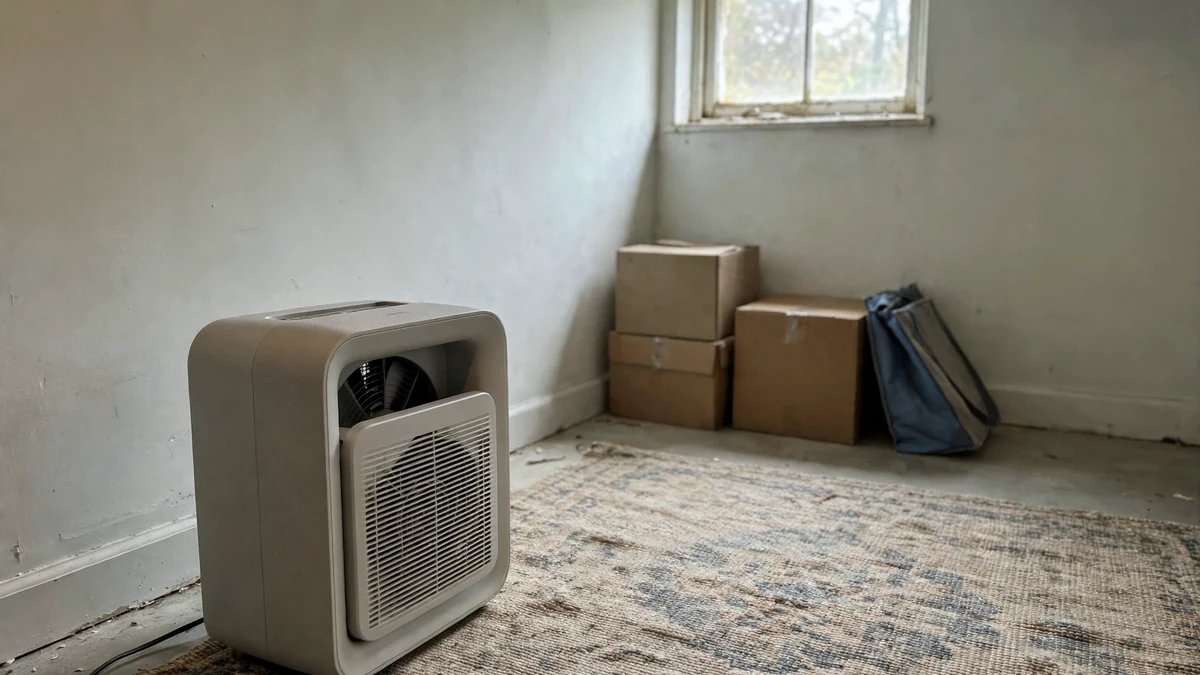
A basement has its own weather. Even on a dry summer day, the air downstairs can feel heavy and cool, and by autumn the walls may weep and a musty smell settles into everything stored below. Moisture seeps through concrete and condenses on cold pipes, and it has nowhere to go. A bedroom dehumidifier will struggle here; a basement needs a machine that can pull a lot of water out of cold, still air, day after day.
The best dehumidifiers for basements in 2026 treat the basement as a different job altogether. They extract twenty litres or more a day, keep working when the temperature drops toward ten degrees, and drain themselves through a hose so you never carry a sloshing tank up the stairs. This guide compares the strongest basement dehumidifiers of 2026 by type and use, so you can match the machine to your own basement.
Key Takeaways
- A basement dehumidifier must keep extracting at low temperatures, where a warm-room compressor model would ice up and stall.
- A damp basement needs at least 20 litres of extraction a day; a wet one with visible mould needs 30 litres or more.
- A drain hose or a built-in pump matters more than a big tank, because a hard-working unit can fill a tank in a few hours.
- Place the machine in the middle of the room, set the humidistat to 45 percent, and let it run until the air stabilises.
- If water is coming in through a crack or a leak, fix the water first, because no dehumidifier can keep up with a leak.
How We Judged
We judged every basement dehumidifier on the things that decide whether a basement actually stays dry. Extraction rate came first, but we looked at the rate a machine achieves in a cold room, not the warm test-room figure on the box, because a basement at twelve degrees is very different from a laboratory at thirty. Drainage mattered just as much, so we favoured a hose outlet and, better still, a built-in pump.
We also weighed noise, running costs and ease of living with the machine. A basement dehumidifier runs for long hours, so a unit you can hear through the floorboards will wear thin, and one that drinks electricity will show up on the bill. We checked the humidistat, the auto restart after a power cut, the washable filter, and how easy the tank is to clean. Finally, we looked at build quality and warranty, because a basement machine works harder than any other dehumidifier in the house.

Best Overall for Basements
The best overall basement dehumidifier is a large compressor model in the 20 to 25 litre class with a humidistat, a continuous drain outlet and a proper auto-defrost cycle. In a typical basement it holds the humidity near 45 percent without running flat out, which keeps noise and electricity use in check. Look for a clear humidity display and a tank of at least five litres as a backup.
What sets the best overall pick apart is balance. It is strong enough for a wet basement but not so large that it short-cycles in a small one, and it is quiet enough that you will not hear it from the room above. Set it in the centre of the basement, a foot or more from any wall, with the drain hose running to a floor drain or a sink, and leave it to do its work. Check the filter once a month and the machine will keep the basement dry through the wettest months. For most homes this single machine is all the basement needs.
Best High-Capacity for Large or Very Wet Basements
Some basements need more than a standard machine. A large basement, an open-plan lower ground floor, or a basement with visible damp patches and mould needs a high-capacity dehumidifier rated at 30 litres a day or more, built for the job rather than a bedroom unit with a bigger tank. These machines are heavy and serious, with a bigger compressor, a larger fan and a sturdier case, and they move a lot more air, which is what a big space needs.
A high-capacity model earns its keep in the first wet week. It pulls the humidity down faster, which stops mould spreading and lets damp plaster and stored belongings dry out properly. Pair it with a drain hose so it never stops to wait for an empty tank, and put it where the air can circulate freely. If your basement is over forty square metres, this is the category to buy in.
Best With a Pump and Drain Hose
The most practical basement dehumidifier for many homes is the one with a built-in condensate pump. A pump changes the rules of placement entirely: instead of relying on gravity to carry water downhill to a drain, the machine can push water up and across the room to a sink, a washing machine standpipe, or even out of a small basement window. It also means the machine never stops because its tank is full.
When you shop for a pump model, check the pump lift, which tells you how high it can push water, and make sure the hose connection is a standard size you can replace cheaply. A good pump runs quietly and only when there is water to move, and the best models let you use the hose, the pump, or the tank, so you are never stuck if one option fails.
Best Quiet for Basements Under Living Rooms
Noise matters more than most people expect, because a basement sits directly under the rooms where you sleep and relax, and sound travels up through a timber floor. The best quiet basement dehumidifier holds its noise to the low forties in decibels on its normal setting, roughly the level of a quiet library, without giving up much extraction power. That usually means a well-insulated case, a slower fan with larger blades, and a compressor mounted on rubber feet. Desiccant models are worth a look here too, since they have no compressor to thump and hum.
A quiet machine is the right choice when the basement is under a bedroom and the dehumidifier will run at night. Run it on its low or sleep setting overnight and let it work harder during the day, when nobody minds the hum. Check the stated noise figure, but also read owner reports, because a machine that claims to be quiet on paper can still rattle if its case is thin.
Best Budget for Smaller or Mildly Damp Basements
Not every basement is a swamp. A small basement that is only mildly damp, or one used for storage rather than living, can be kept dry by a budget dehumidifier in the 12 to 16 litre class, provided you choose carefully. The best budget picks are simple compressor models with a humidistat, a drain hose outlet and a washable filter, without the smart features and the pump that push the price up.
The trap with budget machines is the headline claim. A cheap 12-litre unit that promises to cover a huge basement is almost certainly quoting a warm-room figure, and in a cold basement its real extraction can fall by half. Buy a budget model only if your basement is small, under twenty square metres, and only mildly damp. If the walls are wet to the touch or mould keeps coming back, a budget machine will run all day and still lose, and the money is better spent on a bigger unit.
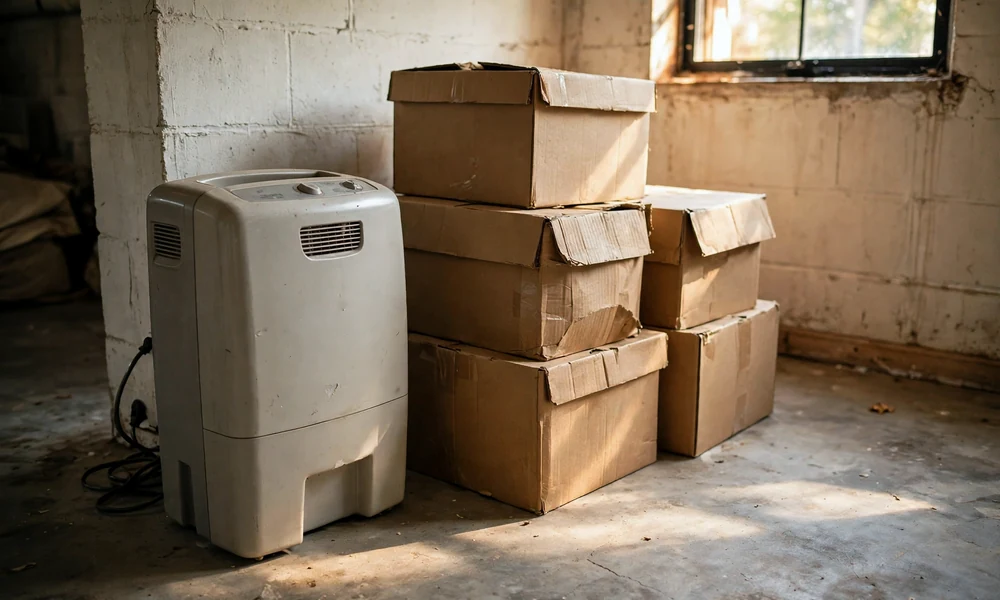
What to Look for When Choosing
Start with extraction rate, measured in pints or litres per day. A mildly damp basement needs around 20 litres a day, a wet basement with visible damp needs 30 or more, and a small, slightly musty storage basement may manage on 12 to 16. Treat the headline figure with suspicion: it is usually measured in a warm room, so in a cold basement the real rate will be lower, and a compressor model can lose a third of its power below fifteen degrees. If your basement is cold for much of the year, a desiccant model that keeps working near freezing may be the better choice. Our guide to the best dehumidifiers of 2026 explains the two types in more detail.
Next, look at coverage and buy for the dampness of your basement rather than its size alone. A thirty-square-metre basement that is very wet needs a machine rated for far more than thirty square metres, because the dampness, not the floor area, is doing the work. Check the noise figure, especially if the basement sits under a bedroom, and look for a model under 45 decibels on its normal setting. Our best versus worst dehumidifiers roundup shows what happens when these features are missing.
Drainage deserves as much attention as extraction. A continuous drain hose is the minimum for a basement, because a hard-working machine can fill a five-litre tank in a few hours and then sit idle until you notice. A built-in pump is better still if there is no floor drain nearby. Also look for auto restart, which brings the machine back to your settings after a power cut, a washable air filter, and a defrost function if you are buying a compressor model for a cold basement. If you are unsure whether your home needs a dehumidifier or a humidifier at all, our best versus worst humidifiers guide explains the difference clearly.
Setup, Care and Mistakes to Avoid
Place the dehumidifier in the middle of the basement or near the dampest wall, with at least thirty centimetres of clear space on every side so air can flow through it. Do not tuck it into a corner behind the washing machine, where it will only dry the air in its own small pocket. Set the humidistat to 45 percent and leave it alone for the first week: the machine will run hard at first, pulling stored moisture out of the walls, the floor and your belongings. Once the air stabilises, it will cycle on and off and use far less power.
Clean the air filter every two to four weeks, because a clogged filter chokes the airflow and makes the machine work harder for less drying. The most common mistake is buying too small: a 10-litre bedroom machine in a wet basement will run all day and still leave the air damp. The second is ignoring the water coming in: if rain runs down the wall or a pipe leaks, fix the leak first, because no dehumidifier can keep up with water arriving faster than it can be removed.
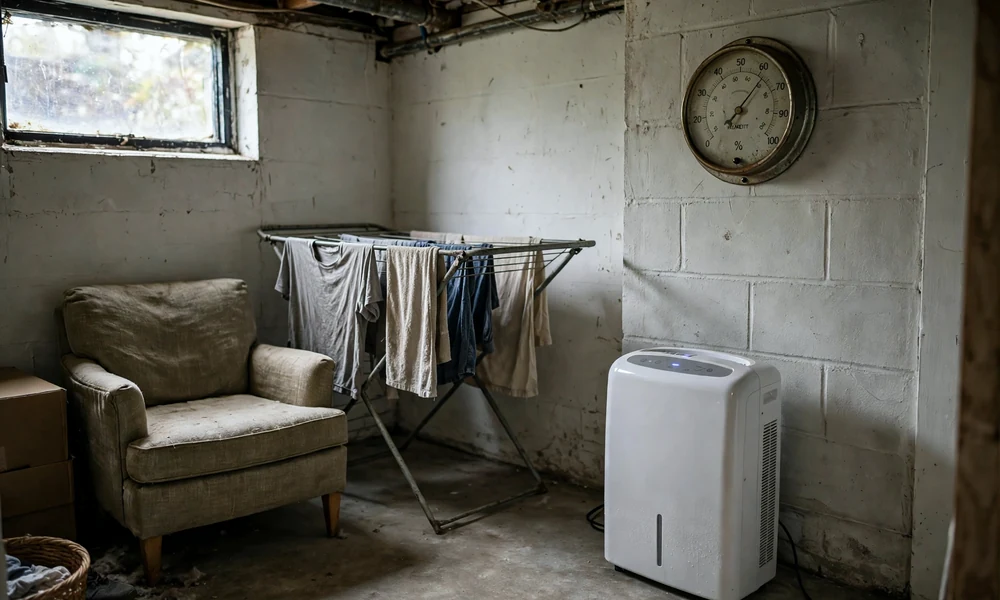
Our Closing Thought
A dry basement is a quieter, healthier and more useful part of the house. Choose a machine big enough for the dampness, give it a drain so it never waits for you, set it to 45 percent and let it work. Do that, and the musty smell fades, the boxes stay firm, and the room below stops being a problem and starts being space you can actually use.