A humidifier should be the quiet hero of a dry home. The right one fills a bedroom with soft, steady moisture through the night, so you wake up without a scratchy throat, cracked lips, or skin that feels tight and itchy. It protects wooden furniture and houseplants, eases a stuffy nose, and makes heated winter air feel comfortable instead of harsh. When it works, you barely notice it: the air simply feels easier to breathe. When it does not work, it is a different story. It gurgles, leaks, grows mould in the tank, or pumps out so much damp air that the walls start to sweat. That gap between the best and the worst humidifiers of 2026 is wider than most buyers expect, and it is decided by details that never appear on the box.
This comparison puts the best humidifiers of 2026 head to head against the worst, judging them the way you would actually live with them: how evenly they raise humidity, how quiet they are at night, how easy the tank is to fill and clean, how long they run between refills, and how much they cost to run and maintain. A good humidifier holds a room in the healthy range, roughly thirty to fifty percent humidity, without constant fiddling. A bad one either does almost nothing or does too much, and both failures are easy to miss until the damage is done. The best humidifiers of 2026 show what a well-designed machine looks like, and this guide uses those strengths as the benchmark for everything that follows.
Key Takeaways
- Look for a humidifier with a built-in humidistat, because a machine that cannot measure humidity cannot hold it steady.
- Ultrasonic cool-mist models are the quietest for bedrooms, while evaporative models are the safest bet against over-humidifying a room.
- A tank that lasts eight hours or more matters more than a fancy display, because a humidifier that runs dry at 3 a.m. is useless.
- Wide tank openings and simple parts make cleaning realistic, and cleaning is what stops mould and mineral dust.
- The worst humidifiers leak, gurgle, over-humidify, or grow slime in a tank you cannot reach into to scrub.
How Humidifiers Actually Work
A humidifier adds water vapour to indoor air, and it does that in one of three main ways. An ultrasonic humidifier uses a small vibrating plate to turn water into a fine, cool mist, which is almost silent and uses very little power. An evaporative humidifier blows air across a wet wick or filter, and the air picks up moisture naturally, which makes it hard for the machine to over-humidify a room. A warm-mist or steam humidifier boils water and releases warm vapour, which can feel soothing in a cold room but uses far more electricity and gets hot enough to be a burn risk around small children.
The part buyers most often overlook is the humidistat, the sensor that measures the humidity in the room and switches the machine off when the target is reached. Without one, a humidifier simply runs until the tank is empty, and in a small bedroom that can push humidity well past sixty percent, which is where condensation, damp smells, and mould begin. With one, the machine holds a steady level and only tops the air up when it drifts down. That single feature separates machines that manage a room from machines that merely spray water into it, and it is worth paying extra for.

The Best Humidifiers of 2026
The best humidifiers share a simple quality: they disappear into the background of a home. They run quietly, hold a steady humidity level, and ask for very little in return beyond a daily rinse and a weekly scrub. They are not the cheapest machines on the shelf, and they are not the ones with the brightest displays or the most buttons. They are the ones whose tanks, filters, and controls were designed by people who understood that a humidifier lives in a bedroom, next to a sleeping person, for months at a time.
Best for bedrooms: quiet ultrasonic models with a humidistat
A good bedroom humidifier should be almost silent, and the best ultrasonic models manage that easily, producing a soft mist with barely a whisper of sound. They should also have a humidistat and a sleep mode that dims or switches off the lights, because a glowing display is the last thing anyone needs at night. A tank of three litres or more will usually last a full night on a low or medium setting, so you are not woken by a beeping empty-tank alarm. Look, too, for a machine that runs on cool mist rather than warm steam, which keeps the bedroom comfortable and removes any burn risk if a child wanders in during the night.
Best for large rooms: evaporative models with big tanks
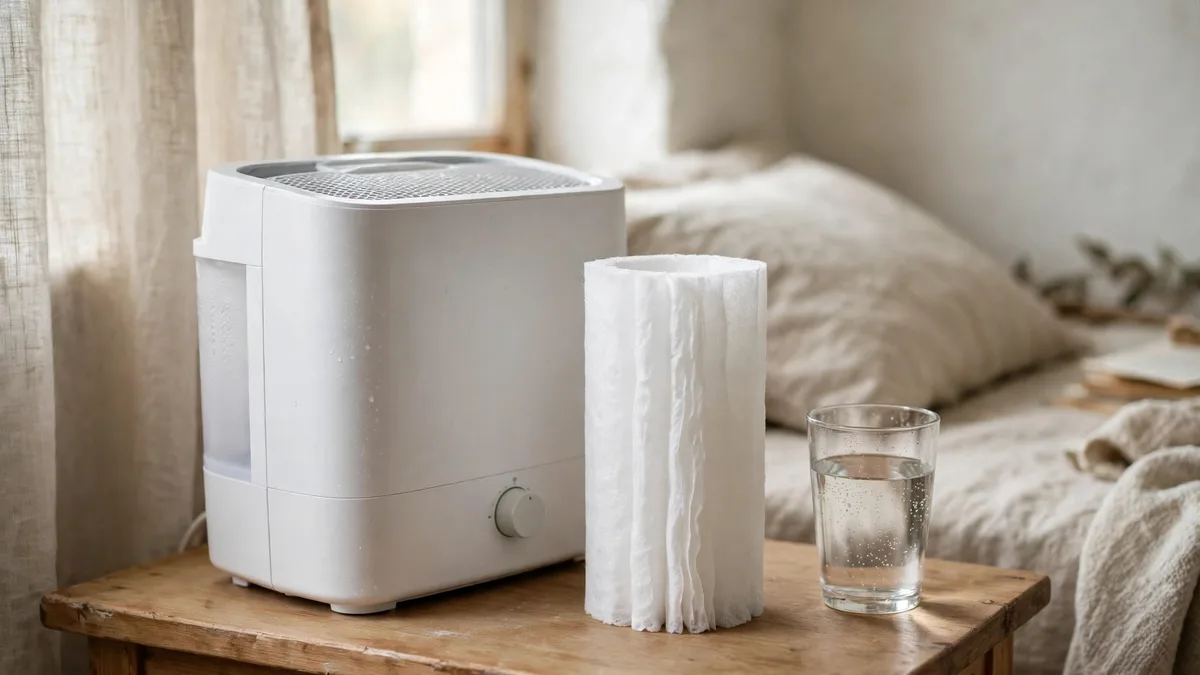
Large living rooms and open-plan spaces need a different kind of machine, and evaporative humidifiers are the strongest choice there. They move more air, they cover a wider area, and because they only add moisture as the air can absorb it, they are very hard to over-humidify with. The best ones have tanks of five litres or more, a washable wick, and a fan with several speeds, so you can run them hard in the evening and quietly overnight. They are slightly noisier than ultrasonic models, because of the fan, but in a living room that is rarely a problem, and the even, natural humidity they produce is worth the trade.
The Worst Humidifiers of 2026
The worst humidifiers fail in ways that are slow, quiet, and easy to blame on something else. A bedroom that smells damp, a window that drips every morning, a cough that never quite clears: all of these can be a bad humidifier at work, and the machine itself will keep humming along as if nothing is wrong. The worst machines are usually cheap, but price is not the whole story. Some expensive models fail just as badly, because they were designed to look impressive on a shelf rather than to work reliably in a real home.
Worst for sleep: noisy, gurgling machines with bright displays
The worst bedroom humidifiers are the ones you can hear. They gurgle as water moves through the tank, they click as the fan cycles on and off, and they beep loudly when the water runs low, usually in the middle of the night. Many also have a bright blue display or a glowing ring that lights up a dark room, and no way to switch it off. A machine like this does not help you sleep; it becomes another thing keeping you awake, and most owners end up switching it off and leaving it to gather dust on a shelf.
Worst for health: tanks you cannot clean
The most serious failure in a cheap humidifier is a tank that cannot be cleaned properly. Narrow necks, sealed bases, and fiddly internal parts create dark, damp corners where mould and bacteria grow, and the machine then sprays that growth into the air you breathe. The first sign is often a musty smell or a thin pink or black film inside the tank, and by then the machine has been running for weeks. Some owners try to fix it with vinegar or bleach, but if you cannot reach a surface to scrub it, no amount of soaking will keep it safe for long. A tank you cannot clean is a machine you should not buy.
Worst for your home: machines that over-humidify
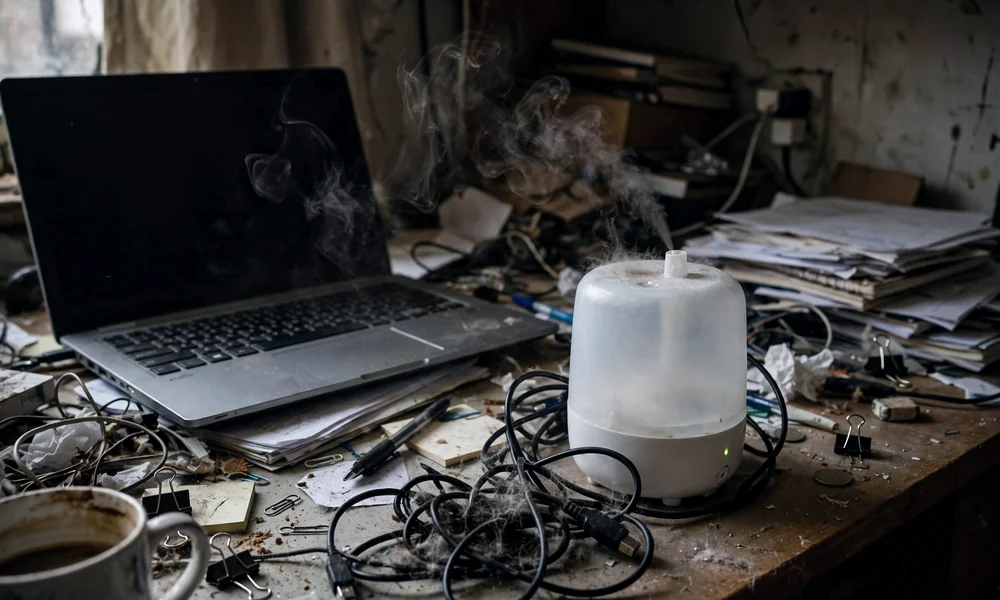
A humidifier without a humidistat, or with a sensor that reads badly, can do real damage to a home. It keeps pumping moisture into a small room long after the air is saturated, and the excess has to go somewhere: onto cold windows, into plaster, behind furniture, and under floorboards. The result is condensation, peeling paint, warped wood, and eventually mould, which is expensive to fix and unpleasant to live with. The irony is that the owner bought the machine to make the home healthier, and instead created the damp conditions that make a home feel cold and unhealthy.
Best vs Worst: Head to Head
Put the two sides next to each other and the differences are stark. The best humidifiers hold a room between thirty and fifty percent humidity and stay there, adjusting themselves through the night. The worst either leave the air dry, because their output is too weak for the room, or push it past sixty percent, because they have no way to know when to stop. The best run quietly for eight hours or more on a single tank; the worst gurgle, beep, and run dry before midnight, or leak onto the furniture they sit on.
Cleaning is the other great divide. The best machines open up, rinse out, and dry quickly, with wide openings and simple parts. The worst hide their water in narrow tanks and sealed bases that grow slime within a week, and their owners either stop using them or keep breathing in whatever is growing inside. Running costs tell the same story: the best use a few watts of power and need only a rinse and an occasional filter change, while the worst waste electricity on warm steam, burn through disposable filters, or need constant descaling because of mineral build-up. Over a winter, the cheap machine often costs more than the good one.
The Verdict
The verdict is clear: buy the humidifier that manages humidity, not the one that merely makes mist. A quiet ultrasonic model with a humidistat and a tank you can clean is the right choice for most bedrooms, and an evaporative model with a large tank is the right choice for a big living room. Spend a little more on a machine with a wide tank opening, a dimmable display, and a realistic coverage figure, and it will serve you quietly for years. The machines to avoid are the ones with no humidistat, a tank you cannot reach into, a bright display you cannot switch off, or a noise level that will wake you. Those are not bargains; they are future dust-gatherers, and in the worst cases they are a damp problem waiting to happen.

Who Each Humidifier Is For
The best humidifiers are for anyone who wakes up with a dry throat, a stuffy nose, or tight skin in winter, and for parents who want a quiet, safe machine in a child’s bedroom. They are for people with wooden floors, musical instruments, or houseplants that suffer when indoor air drops below thirty percent humidity, and for anyone who wants to set a machine running and forget about it until morning. If you are willing to rinse the tank daily and scrub it weekly, a good humidifier will repay that small effort many times over.
The worst humidifiers, by contrast, are for no one, though they do end up in many homes, usually because they were cheap, looked pretty, or were bought in a hurry during a cold snap. If you already own one, use it with care: run it only while you are awake, keep it away from walls and soft furnishings, clean it as thoroughly as you can, and stop using it the moment it smells musty or the windows start to drip. Better still, replace it with a machine that has a humidistat and a tank you can actually clean. Your sleep, your lungs, and your walls will all notice the difference, and the best versus worst dehumidifiers make a useful companion read, because the two machines solve opposite problems and are often confused. For the other half of the story, the best dehumidifiers of 2026 show what to buy when a home has too much moisture rather than too little.