The best desk chairs for home offices in 2026 are the ones you forget you are sitting in. A good chair disappears under you: feet flat, lower back supported, shoulders relaxed through a full working day. A bad chair announces itself within an hour, through a stiff neck or an aching lower back.
That difference matters more than ever. The average remote worker spends seven to nine hours a day at a desk — more than 2,000 hours a year in one chair. Spending a little more on the right seat is one of the cheapest ways to protect your posture and your focus.
We judged each chair on adjustable lumbar support, seat depth, armrest range, build quality, and comfort after four hours rather than four minutes. Nine picks cover every budget and body type.
Key takeaways
- The Herman Miller Aeron is still the best overall, thanks to its breathable mesh, precise adjustments, and 12-year warranty.
- Adjustable lumbar support and seat depth matter more than padding.
- Mesh suits warm rooms and long sessions; leather suits cooler rooms and shorter days.
- Budget buyers should start with the IKEA Markus, the strongest sub-$300 chair for all-day comfort.
- Match the chair to your body and desk, and give any new chair a full week before judging it.
How We Chose the Best Desk Chairs for Home Offices
We scored every chair on ergonomics, comfort over time, build quality, value, and looks. A synchro-tilt mechanism keeps the seat and backrest moving in a natural ratio as you lean back.
The 9 Best Desk Chairs for Home Offices in 2026
1. Herman Miller Aeron — Best Overall
The Aeron has been the benchmark for office seating since 1994, and it still sets the standard. Its pellicle mesh spreads your weight evenly, keeps air moving, and never sags like foam, while PostureFit SL lumbar support cradles the sacrum and lower spine. It comes in three sizes to fit small and tall sitters, and at around $1,400 to $1,800 it is expensive — but the 12-year warranty and a service life of 15 years or more make it the best long-term value here.
2. Steelcase Series 1 — Best for Long Hours
The Series 1 takes the engineering of Steelcase’s flagship Leap chair and packages it at roughly half the price. Its LiveBack backrest changes shape as you move, so support follows your spine when you lean, twist, or reach. At around $500 to $650, it is our most recommended chair for eight-hour days on a mid-range budget. The seat is firmer than some expect at first, but it breaks in within a week.
3. Branch Ergonomic Chair — Best Mid-Range Pick
Branch’s Ergonomic Chair is the most complete package under $400, with seven adjustment points, a breathable mesh back, and a firm foam seat. Nothing about it leads its class, but nothing is weak either, and at around $329 it undercuts most rivals by $100 or more. Pair it with one of the best standing desks for home offices and you have a complete workstation for less than a single premium chair.
4. Autonomous ErgoChair Pro — Best Adjustability
The ErgoChair Pro gives you more levers than any other chair at its price: lumbar support moves up, down, and in and out, the headrest adjusts in height and angle, and the armrests move in four dimensions. At around $499, it is the best choice for a household where two people of different heights share one chair, because each person can reset the fit in under a minute.
5. IKEA Markus — Best Budget Chair
The Markus has been the default budget desk chair for years, and it still earns that position in 2026. For around $229, you get a tall mesh backrest with built-in lumbar support, a padded leather-look seat, and a tilt mechanism with tension control. It is less adjustable than the chairs above it, but the sitting experience is far better than its price suggests. It suits taller sitters well, because the backrest is unusually high and the seat is generously sized.
6. Sihoo Doro S100 — Best Mesh Chair Under $400
The Doro S100 is Sihoo’s strongest home-office chair. It combines a breathable mesh back and seat with dynamic lumbar support, a wide seat pan, and 4D armrests on an aluminium base. Priced at around $350 to $400, it is the chair we suggest to people who run warm, because the full-mesh design keeps air circulating better than any foam seat can. It also suits people over six feet tall.
7. Herman Miller Sayl — Best Design
The Sayl is the chair to buy when you want a Herman Miller but your room is not a corporate office. Designed by Yves Behar, its frameless backrest is inspired by a suspension bridge, flexing to support your spine without any visible lumbar pad, and it comes in many colours. Comfort is excellent for most people, though it suits medium builds best. At around $700 to $900 it is a design-led purchase, but it carries the Aeron’s 12-year warranty.
8. FlexiSpot C7 — Best for Back Pain
The FlexiSpot C7 is built around one idea: lumbar support should move with you, not sit in a fixed position. Its self-adjusting lumbar system tracks your posture as you lean and shift. With its thick, contoured seat cushion and synchro-tilt mechanism, it is the most forgiving chair here for lower-back discomfort. At around $350 to $450 it is good value, and sales often bring it nearer $300.
9. Humanscale Freedom — Best for Tall Sitters
The Humanscale Freedom uses your body weight to set recline tension automatically, so it adapts as you move without any fiddling. The pivoting backrest supports the spine through its full range, and the armrests move with it so your elbows stay supported when you lean back. At around $1,000 to $1,300 it suits taller sitters particularly well, and the 15-year warranty is the longest on this list.

Desk Chair Comparison Table
| Chair | Best For | Material | Typical Price | Warranty |
|---|---|---|---|---|
| Herman Miller Aeron | Overall comfort | Mesh | $1,400–$1,800 | 12 years |
| Steelcase Series 1 | Long hours | Mesh / fabric | $500–$650 | 12 years |
| Branch Ergonomic Chair | Mid-range value | Mesh / foam | Around $329 | 7 years |
| Autonomous ErgoChair Pro | Adjustability | Mesh / foam | Around $499 | 2 years |
| IKEA Markus | Budget buyers | Mesh / faux leather | Around $229 | 10 years |
| Sihoo Doro S100 | Warm rooms | Full mesh | $350–$400 | 3 years |
| Herman Miller Sayl | Design | Mesh / fabric | $700–$900 | 12 years |
| FlexiSpot C7 | Back pain | Mesh / foam | $350–$450 | 3 years |
| Humanscale Freedom | Tall sitters | Leather / fabric | $1,000–$1,300 | 15 years |
How to Choose the Right Desk Chair
Start with your body, not the chair. Lower-back pain means you need real lumbar support; shoulder pain usually means the armrests are at the wrong height or spacing; neck pain often means your screen is too high or too low.
Seat Height and Depth
Your feet should rest flat on the floor with your knees at roughly a right angle, with a two-to-three-finger gap between the back of your knees and the seat’s front edge. If the seat is too deep, it pushes you away from the backrest. Adjustable seat depth is the feature most often missing from budget chairs, and the one most worth paying extra for.
Lumbar Support and Armrests
Good lumbar support fills the natural curve of your lower back without pushing you forwards, and it should be height-adjustable at minimum. Armrests should support your forearms with your shoulders relaxed and your elbows at roughly a right angle. If your desk is narrow, check the armrests can slide inwards or be removed.
Material and Size
Mesh is the best choice for most home offices: it breathes, spreads weight evenly, and does not sag like foam over time. Foam feels softer at first but traps heat and compresses. Leather looks superb and lasts decades, but it is warm and expensive. Before you order, measure your space and check the weight rating. A tidy workspace helps any chair feel better, and the best desk organizers keep cables and clutter off the desk.
Setting Up Your Home Office for Comfort
A great chair cannot fix a bad setup, so run through this checklist when it arrives, and again after a week.
- Set the seat height so your feet rest flat and your knees sit at about a right angle.
- Adjust the lumbar support until it fills the curve of your lower back.
- Position the armrests so your shoulders stay relaxed and your elbows rest at a right angle.
- Place the top of your screen at or just below eye level, an arm’s length away.
- Keep the keyboard and mouse close so your upper arms hang naturally.
- Stand up and move for five minutes every hour; no chair replaces movement.
Lighting deserves the same attention as posture: a warm pool of light across your work reduces eye strain. Our guide to the best desk lamps for a home office covers the options that pair well with the chairs above.
What to Avoid When Buying a Desk Chair
Avoid chairs that look impressive in a photograph but offer no real adjustment. Gaming-style racing chairs are the classic example: many have a fixed lumbar pillow, a flat seat, and armrests that barely move. Be wary of very cheap chairs with no warranty and no returns policy — a $60 chair that hurts your back is not a bargain.
Frequently Asked Questions
How much should I spend on a desk chair for a home office?
For all-day use, plan on $200 to $400; chairs below that usually cut corners on the mechanism or materials. Spending $500 to $900 buys a step up in adjustability and build quality, while $1,000 and above buys the best materials and longest warranties.
Are mesh chairs better than leather chairs?
For most people working long hours, yes. Mesh breathes, spreads weight evenly, and keeps its shape for years. Leather looks better in a formal room but traps heat and needs more care. Choose mesh for warm rooms and long days, leather for cooler rooms and shorter sessions.
Do I need a headrest on my desk chair?
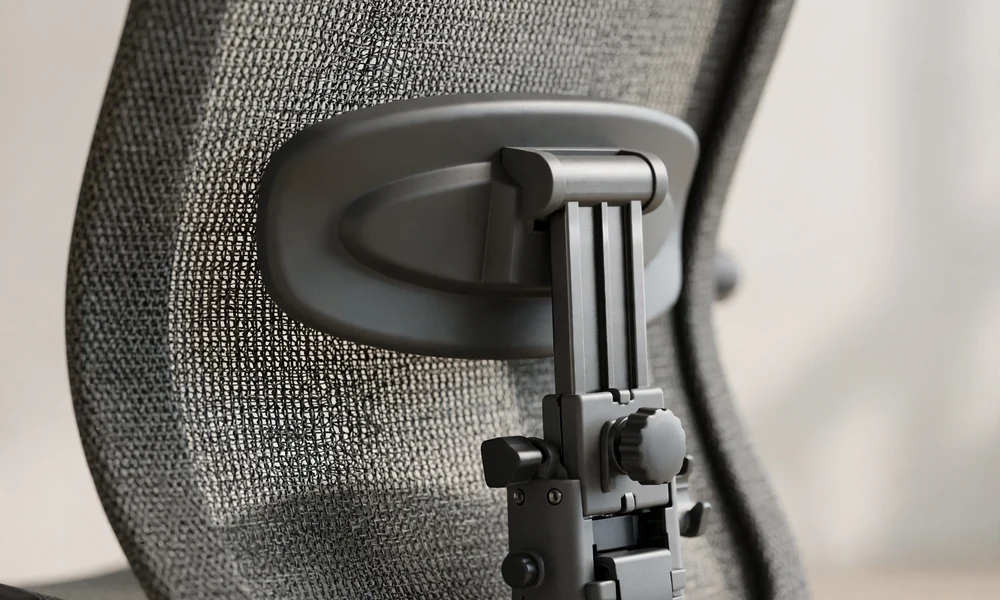
Not necessarily. A headrest helps if you lean back often or have neck trouble, but a badly positioned one pushes your head forwards and creates the pain it should prevent. If you sit upright most of the day, skip the headrest.
How long should a good desk chair last?
A well-built chair should last at least five years of daily use, and the best last 10 to 15 years. The warranty is a useful guide: brands offering 10 or 12 years expect their chairs to last that long. Replace a chair when the seat sags or the gas lift sinks.
Can a desk chair really help with back pain?
A good chair can reduce back pain caused by poor posture and poor support, and many people notice a difference within a week or two. But a chair cannot diagnose or treat a medical condition. If your pain is severe, persistent, or accompanied by numbness or weakness, see a doctor or a physiotherapist.
What is the best desk chair for a small home office?
Look for a compact chair with armrests that slide under the desk and a backrest high enough to support you without dominating the room. The Branch Ergonomic Chair and the IKEA Markus both suit small spaces well.
The Bottom Line
The best desk chair for home offices in 2026 is the Herman Miller Aeron if your budget stretches to it, the Steelcase Series 1 for premium comfort at half the price, and the IKEA Markus if you need the best chair under $250. Whichever you choose, prioritise adjustable lumbar support and seat depth over padding and looks.