
A wet dog is a familiar sight after a rainy walk: a damp coat, muddy paws, a shake that sends droplets across the hallway, and a smell that seems to settle into the sofa for the rest of the evening. A good dog raincoat changes that routine completely. It keeps the worst of the rain off the back, the chest and the belly, so the dog stays warmer, drier and more comfortable, and the walk home is a quick towel-off rather than a full drying operation. The best dog raincoats of 2026 are not the cutest ones, and they are not the most expensive ones. They are the coats that actually keep water out, fit the dog properly, let the dog move freely, and survive being worn, washed and worn again.
What Makes a Dog Raincoat Good
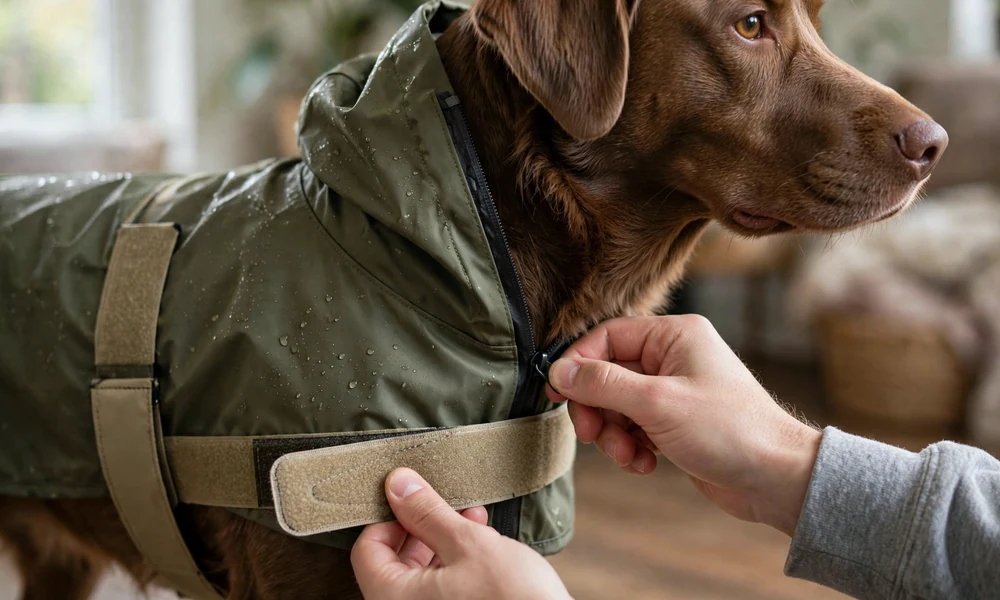
The first thing to judge is whether the coat really keeps water out. A coat that looks waterproof in the shop but soaks through after ten minutes in steady rain is worse than no coat at all, because it holds damp fabric against the dog and adds weight without keeping anything dry. Look for a genuinely waterproof outer fabric rather than a merely water-resistant one, with sealed or covered seams where water usually creeps in. A simple test at home tells you a lot: hold the coat under a running tap for thirty seconds, then feel the inside. If the inside is dry, the fabric is doing its job. If it is damp, the coat will not cope with a real downpour.
Fit is the part most owners get wrong, and it is the part that decides whether the coat is ever worn happily. A coat that is too long catches under the tail or bunches up when the dog sits. A coat that is too tight around the chest restricts the front legs and makes the dog walk stiffly. A coat that is too loose flaps in the wind, slips sideways, and lets rain run straight in at the edges. The right coat covers the back from the neck to just before the tail, sits flat without pulling, and leaves the legs completely free to move. If the dog freezes, paws at the coat, or walks like a wooden horse, the fit is wrong, whatever the size label says.
The Main Types of Dog Raincoat
The classic full-coverage raincoat is the workhorse. It covers the back, the sides and part of the chest, with a hood or a high collar and a belly strap to hold it in place. It suits most dogs in most weather, from a light drizzle to a proper downpour, and it is the easiest type to find in a good range of sizes. Its weakness is weight: a heavy full-coverage coat can feel like a burden on a small dog, and some dogs dislike the hood. For a medium or large dog that walks in all weather, though, this is usually the best starting point.
A lightweight packable raincoat is the opposite idea: a thin shell that folds into its own pocket and lives in a coat pocket or a bag until the rain starts. It is brilliant for changeable weather, for holidays, and for owners who do not want to carry a bulky coat on a dry morning. The trade-off is protection. A thin shell keeps off a shower, but it rarely has the sealed seams or the sturdy fabric to cope with an hour of heavy rain, and it offers almost no warmth. Think of it as an emergency layer rather than a daily coat.
Measuring Your Dog for the Right Size
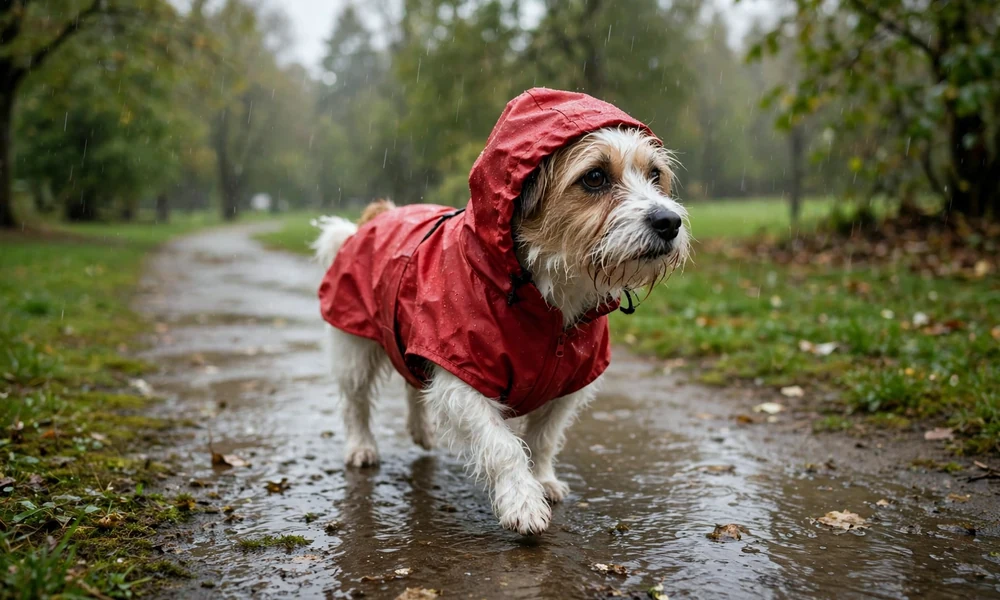
Never buy a dog raincoat by breed alone. Two Labradors can differ by several centimetres in length and chest, and a coat that fits one will hang off the other. Measure three things before you order: the length from the base of the neck to the base of the tail, the chest around the widest part just behind the front legs, and the neck around the collar. Write the numbers down and compare them with the size chart of the actual coat, not with a generic chart. If your dog falls between sizes, go up a size for a thick-coated dog and down a size for a slim, short-coated dog, because the coat has to sit over the fur, not just over the body underneath.
Try the coat on at home before the first rainy walk. Let the dog wear it indoors for a few minutes, with treats and praise, and watch how the dog moves. The dog should walk, sit and lie down without hesitation. The coat should stay in place when the dog turns, and it should not slide to one side. If the dog can shake the coat off, the straps are too loose. If the dog stands frozen and refuses to move, the coat is probably too tight, too heavy, or too noisy. A little rustling is normal; a dog that will not move at all is telling you something.
Which Dogs Need a Raincoat Most
Short-coated dogs feel the rain first. Breeds with thin fur and little undercoat get cold quickly when they are wet, and a raincoat makes a real difference to how much they enjoy a walk. Small dogs are in the same position: they are closer to the wet ground, they get splashed more, and they lose heat faster for their size. Puppies and older dogs also benefit, because they are less able to regulate their temperature and more likely to catch a chill after a soaking. For these dogs, a raincoat is not a fashion item; it is a practical piece of kit.
Dogs with skin conditions, recent surgery or a healing wound have a special reason to stay dry. Wet skin is more likely to become irritated, and a wet coat of fur takes a long time to dry against the skin. A raincoat keeps the affected area dry and reduces the need for rubbing with a towel, which can irritate sensitive skin. If your dog is recovering from an operation, ask your vet before choosing a coat, because the fit around a wound matters more than the waterproof rating, and a coat that rubs the wrong place can do more harm than good.
What to Avoid in a Dog Raincoat
Avoid coats with no belly coverage if your dog walks through long grass or puddles. Rain splashes upwards from the ground, and a coat that only covers the back leaves the belly and the insides of the legs to get soaked. A coat with a belly panel or a wide belly strap keeps far more of the dog dry, and it also stops the coat from riding up. The belly panel does not need to cover everything, but it should reach far enough back to protect the area behind the front legs, where the splash is worst.
Avoid coats that rely on a single fastening. One strap, one popper or one clip is a single point of failure: if it comes undone on a walk, the coat flaps open and the dog is wet within minutes. Two or three fastenings spread the load, keep the coat in place, and give you a backup if one fails. Velcro is quick and easy to adjust, but it collects fur and loses its grip over time, so check it regularly. Buckles are sturdier, but they are slower to fasten on a dog that will not stand still. A mix of the two is often the best compromise.
Avoid coats with a hood that cannot be adjusted or removed. A hood that flops over the dog’s eyes will be hated within minutes, and a dog that cannot see properly will not walk confidently. A hood with a drawcord or an elastic edge can be pulled back so the dog can see, and a removable hood gives you the choice on days when the rain is light. If your dog clearly hates the hood, leave it off and choose a coat with a high collar instead, which keeps rain off the neck without covering the ears.
Care, Washing and Making a Coat Last
A raincoat lasts far longer if it is washed properly. Shake off mud and leave the coat to dry before you wash it, rather than putting a muddy coat straight into the machine. Wash it on a gentle cycle with a mild detergent, and skip the fabric softener, which clogs the waterproof coating and reduces its effectiveness. Hang the coat to dry rather than tumble-drying it, unless the care label says otherwise, because high heat can damage the coating and the seams. A coat that is washed gently and dried properly can last several winters.
Reproofing is worth doing once a season. Even the best waterproof coating wears down with washing and wear, and a spray-on or wash-in reproofer restores much of the protection. Test the coat after reproofing with the tap test described earlier: if water beads up and rolls off the fabric, the coating is working again. If the fabric still darkens and soaks through, the coat has reached the end of its waterproof life, and no amount of spray will bring it back. At that point, replace the coat rather than hoping the next downpour will be lighter.
Store the coat somewhere dry and out of direct sunlight between walks. A coat left screwed up in a damp bag will smell, and sunlight weakens waterproof fabric over time. Hang it by the neck or fold it loosely on a shelf, and check the straps and fastenings now and then for wear. A frayed strap is easy to replace before it fails on a walk, and a coat that is looked after will still be keeping your dog dry long after a neglected one has been thrown away.
Our Verdict
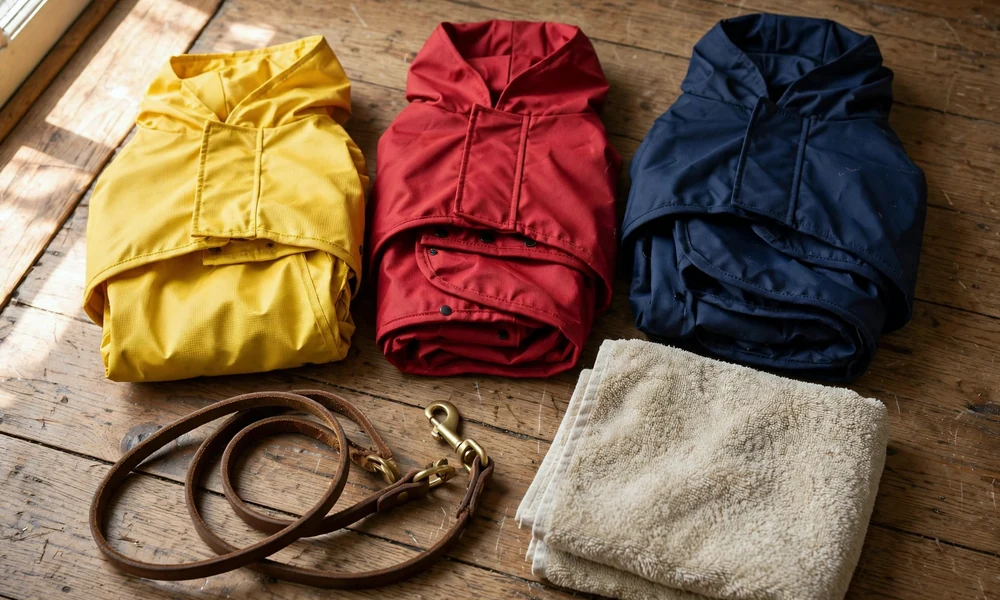
The best dog raincoat is the one that keeps your dog dry, fits properly, and gets worn without a fuss. Start with the measurements, not the colour, and choose a genuinely waterproof fabric with sealed seams and at least two fastenings. Pick full coverage for a dog that walks in all weather, a lightweight shell for changeable days, and an insulated coat for a short-coated dog in cold rain. Avoid a single fastening, a floppy hood and a coat that soaks through in the tap test. Buy the coat that fits the dog you have, look after it, and the rainy season becomes just another season for walking, with a dry dog and a dry hallway at the end of it.
If your dog also needs help getting in and out of the car on wet days, our guide to the best dog ramps is worth a look. For a dry, comfortable place for your dog to rest after a rainy walk, see our guide to the best dog crates. And if you are shopping for rainwear for yourself as well, our guide to the best versus worst raincoats covers the human side of staying dry.


