
A dog ramp looks simple until your dog refuses to use it. The wrong ramp is too steep, too slippery, too wobbly, or too heavy to carry, and a dog that has decided a ramp is scary will not be talked out of it. The right ramp disappears into the routine: the dog walks up it without thinking, and the arthritic spaniel can still reach the sofa on her own.
We ranked the ramps that hold up in real life. A twelve-year-old Labrador with hip dysplasia needs a long, gentle slope and a surface that grips wet paws. A dachshund needs a low, stable ramp to the sofa, not a car ramp pressed into bedroom service. A puppy that will grow into a sixty-kilo dog needs a ramp rated for the adult, not the puppy.
How to choose a dog ramp
Start with the height you need to clear. Measure from the ground to the boot lip, the bed frame, or the sofa seat, then check the ramp’s length. The longer the ramp, the gentler the slope, and the slope decides whether an old or nervous dog will use it at all. Aim for a ramp at least three times as long as the height it climbs, and four times for large or arthritic dogs.
Weight capacity matters more than most listings admit. Manufacturers rate ramps generously, and a ramp rated for forty kilos will flex under a thirty-five-kilo dog that trots up it. Buy a ramp rated for at least twenty percent more than your dog weighs, and if two dogs share it, rate it for the heavier one.
The walking surface is where cheap ramps give themselves away. Smooth plastic is slippery when wet, and a dog that slips once will remember it for months. Look for a high-traction surface: ribbed rubber, a grit coating, or a carpeted tread that stays grippy in the rain. Side rails matter too, because a raised edge stops a paw slipping off the side and gives a nervous dog a visible boundary.
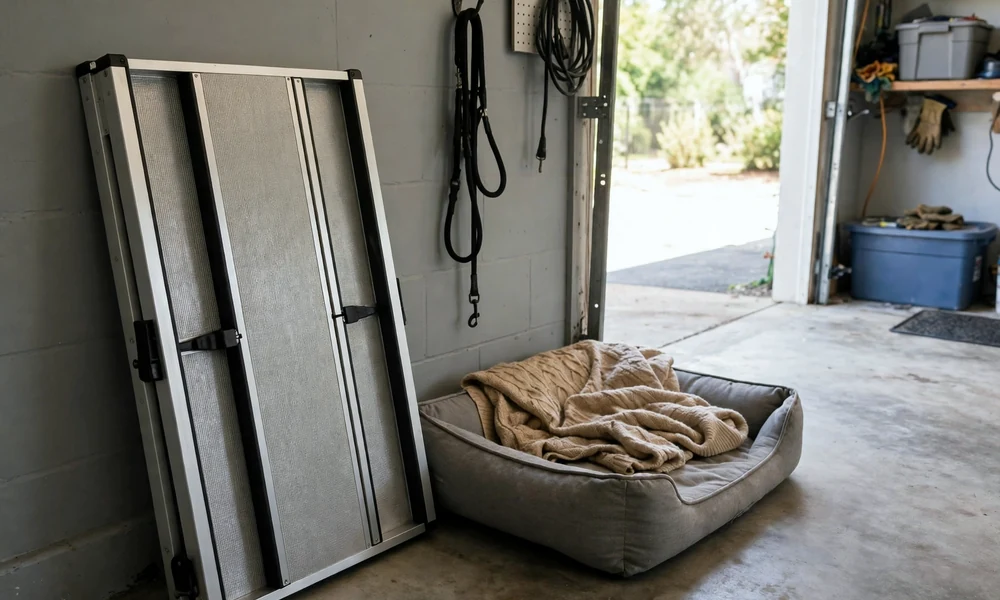
Weight and folding decide whether the ramp actually leaves the house. A car ramp that weighs nine kilos and folds awkwardly will live in the garage while your dog jumps in and out of the boot anyway. Telescoping ramps slide to a compact length and fit behind a seat; folding ramps pack flat but are often heavier.
The best dog ramps of 2026
1. The long telescoping car ramp
The best all-round car ramp is a long telescoping model that extends to well over two metres and slides down to about half that for storage. Stretched fully, the slope is gentle enough for a stiff old Labrador, and one ramp serves a low estate car and a tall SUV alike. The walking surface is a grit-coated aluminium tread that stays grippy in rain, and the side rails guide a hesitant dog.
2. The lightweight folding ramp
If the ramp has to be lifted in and out of the car several times a day, weight is the deciding factor, and this folding ramp wins it. It weighs roughly half what the telescoping models weigh, folds in half with one hand, and still carries a large dog without flexing. The trade-off is length: it is shorter when open, so the slope is steeper on tall vehicles.
3. The heavy-duty ramp for giant breeds
Giant breeds break ordinary ramps. A ramp rated for fifty kilos will sag under a seventy-kilo mastiff, and sag is what turns a confident dog into a frightened one. This heavy-duty ramp has a reinforced frame, a wide walking surface, and a weight rating with a real margin above the biggest dogs. For owners of giant breeds, it is the only honest option here.
4. The carpeted indoor ramp
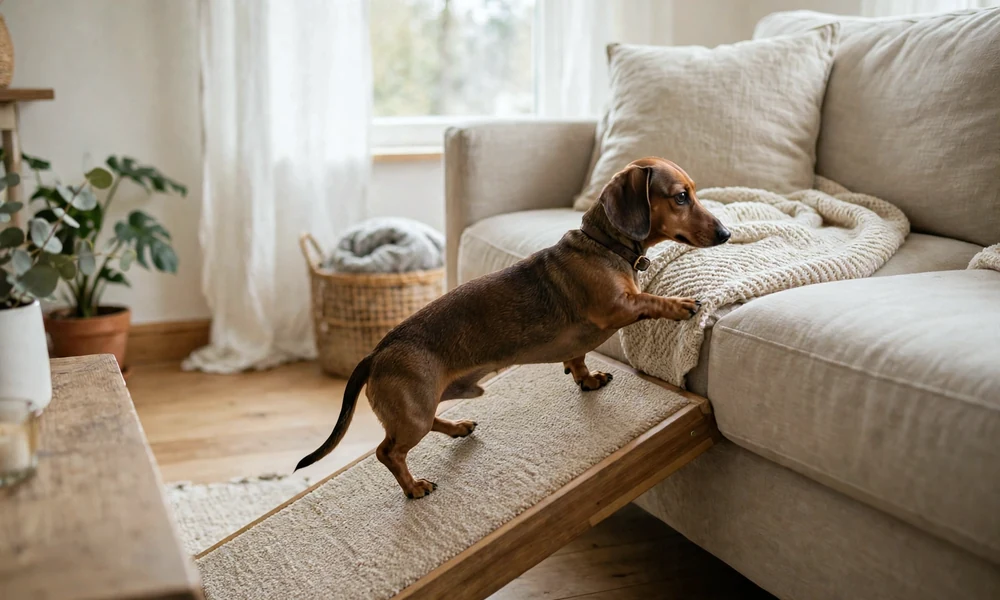
Indoor ramps live a different life. They sit beside the sofa or the bed, they are used in socks and bare feet, and they have to look like furniture rather than garage equipment. This carpeted ramp does that job best. The carpet tread is soft on paws and quiet underfoot, the wooden frame matches a living room, and the low, gentle slope suits dachshunds and other long-backed breeds that should never jump down from furniture.

5. The budget ramp that is actually safe
Budget ramps have a bad reputation, and most of them earn it, with thin plastic that bows and surfaces that turn into slides in the rain. This one is the exception: a simple folding ramp with a genuinely grippy rubber surface, a solid rating for medium dogs, and no gimmicks. For a small or medium dog and a normal car, it does the job safely for about half the price of the premium options.
6. The ramp for nervous and older dogs
Some dogs are limited not by their joints but by their confidence. A dog that has slipped on a ramp needs one that feels like a path rather than a bridge. This model has the widest walking surface on the list, the highest side rails, and a gentle slope that never feels steep. The surface is a soft, high-traction rubber that does not make the hollow drumming sound that scares some dogs on aluminium ramps.
7. The ramp that doubles as steps
Some dogs prefer steps to a slope, and some homes have no room for a long ramp beside the bed. This convertible model works as a ramp or as steps, switching between the two in seconds. As steps, it suits dogs that plant each paw deliberately; as a ramp, it suits dogs that prefer to walk steadily up. The steps are deep and carpeted, so paws do not slip on the edges.
8. The ramp for tall SUVs and trucks
Tall vehicles are where most ramps fail, because the height defeats the length. This extra-long ramp is built specifically for SUVs, trucks, and vans, extending far enough that the slope stays gentle even at full height. The frame is reinforced along its whole length, the surface is a heavy grit coating, and the feet grip tarmac and concrete alike. If your dog climbs into a tall vehicle every day, a shorter ramp is not a saving, it is a risk.
9. The portable ramp for travel
A travel ramp has to be light, compact, and ready in seconds at a service station or a holiday cottage. This one folds to the size of a small suitcase, weighs little enough to carry with one hand alongside a lead, and sets up without clips or fuss. The compromise is capacity: it suits small and medium dogs and lower vehicles, not a giant breed or a tall SUV. For weekends away, it is the ramp that actually comes along.
10. The ramp for multi-dog households
Two dogs sharing a ramp use it differently: one trots up while the other hesitates halfway, and a narrow ramp turns that into a traffic jam. This wide, stable ramp is built for exactly that situation, with a walking surface broad enough for a dog to turn around on and a frame that does not wobble when one dog waits mid-ramp. In a house with two or three dogs of different sizes, it is the only ramp that does not feel like a compromise.
Dog ramps vs dog stairs
The choice comes down to your dog’s body and habits. Ramps suit arthritic dogs, dogs recovering from surgery, and long-backed breeds, because a slope puts less impact on joints than stepping up and down. Stairs suit dogs that like to plant each paw and pause, and they take up less floor space indoors. A dog with hip dysplasia will almost always do better on a ramp; a small, confident dog may prefer stairs.
Mistakes that make dogs refuse ramps
The most common mistake is starting with the car. A dog’s first experience of a ramp should be indoors, flat on the floor, with treats leading it across, not at the back of a car on a rainy day with a vet appointment waiting. Lay the ramp flat, let the dog walk over it for a few days, then raise one end a little at a time.
The second mistake is the wrong slope. Owners buy a short ramp because it is cheaper and lighter, then wonder why the dog balks at the steep climb. If your dog hesitates, the slope is too steep, whatever the listing promised. The third mistake is a slippery surface, and it is the most damaging, because a slip teaches a dog that the ramp cannot be trusted. Test the surface with wet hands before the dog ever steps on it; if your palm slides, paws will too.
What to check before you buy
Measure twice. Measure the height from the ground to the surface your dog needs to reach, and the space you have to store the ramp when folded. Check the weight rating against your dog’s actual weight and add a margin. Check the folded dimensions against your boot, and the open length against the slope rule: at least three times the height, four if your dog is old, large, or nervous.
Think about the rest of your dog’s life at home too. A ramp is rarely the only piece of kit an older dog needs, and the guides to the best dog houses and the best pet strollers cover the shelter and transport that pair naturally with a ramp. For dogs that pull on the lead on the way to the car, the best dog harnesses matter just as much, because a dog that arrives at the ramp already stressed is less likely to walk up it calmly.
Frequently asked questions
Are dog ramps worth it? For any dog that struggles to jump, yes, and the value is measured in joints rather than money. Every jump down from a car boot or a bed loads the front legs and the spine, and for older dogs, long-backed breeds, and dogs recovering from surgery, those impacts add up. A ramp removes them entirely.
What length ramp do I need? Multiply the height your dog needs to climb by three for a minimum, and by four for an older or nervous dog. A shorter ramp is steeper, and a steeper ramp is the single biggest reason dogs refuse to use one.
How do I train my dog to use a ramp? Start flat on the floor with treats, raise one end gradually over several days, and keep sessions short and cheerful. Never pull a dog up a ramp or rush the process. Most dogs learn within a week; a frightened dog may need two or three.
Our verdict
The best dog ramp of 2026 is the long telescoping car ramp: its length gives the gentlest slope, its grit surface grips in the rain, and it fits the widest range of dogs and cars. Buy the lightweight folding ramp if you lift it daily, the heavy-duty ramp if your dog is a giant breed, and the carpeted indoor ramp for the sofa or the bed. Whichever you choose, measure the height, respect the slope, and introduce it patiently — because the best ramp is the one your dog walks up without a second thought.


