A guest room is judged in the first ten seconds, and the bed does most of the judging. The best duvet covers for guest rooms in 2026 look calm and inviting, feel good against the skin, and survive repeated washing without fading or losing their shape.
Guest bedding has a harder job than your own. It must suit strangers with different sleep habits, temperature preferences, and skin sensitivities, without you there to explain it. That is why the strongest guest room covers share a few qualities: breathable natural fibres, a forgiving neutral colour, a closure that stays shut, and a fabric that looks neat even after weeks folded in storage.
This guide covers the best options for every kind of guest room, from a small spare room that doubles as an office to a suite that hosts family for a week. Inside are honest comparisons of cotton, linen, and easy-care blends, plus a checklist for getting the room ready fast.
Key takeaways
- Choose breathable natural fibres first: cotton percale and washed linen suit the widest range of sleepers.
- Stick to light neutrals such as white, cream, oatmeal, and soft grey.
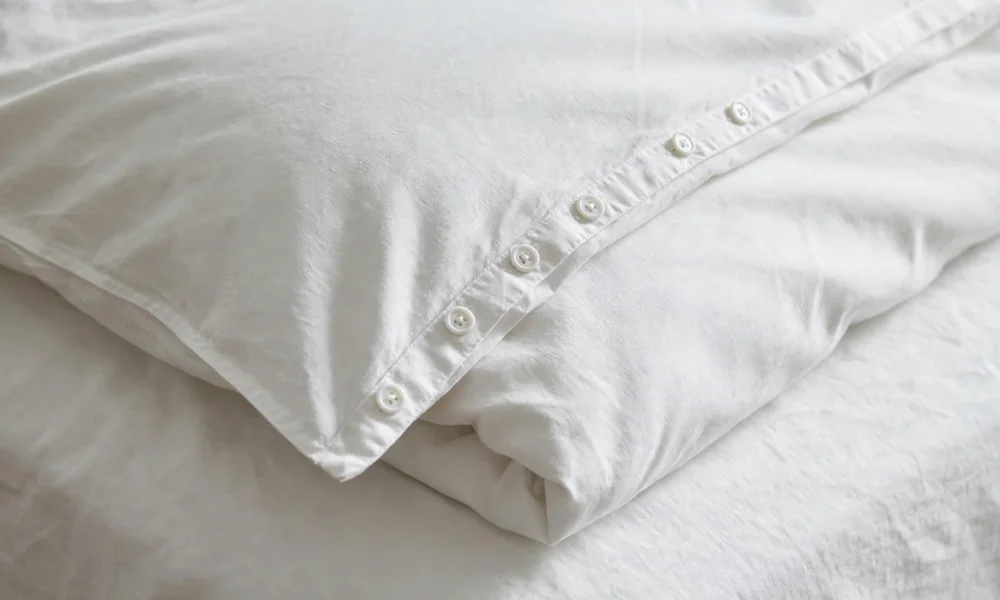
- Pick a secure button or hidden zip closure so the insert stays put overnight.
- Buy one size up from the insert for a relaxed drape, and keep a second cover ready for fast changeovers.
- Wash guest covers after every stay, even short ones, and store them clean, dry, and loosely folded.

What Makes a Great Guest Room Duvet Cover
A good guest room duvet cover has to please people you cannot ask. The fabric should breathe, the colour should calm, and the whole thing should look freshly made with very little effort.
Breathability matters more than thread count. A cover that traps heat leaves a warm sleeper uncomfortable by midnight, while a breathable one keeps warm and cool sleepers alike content. Cotton percale feels crisp and cool, washed linen feels airy and relaxed, and a cotton and linen blend gives you a little of both.
Durability is the other half of the equation. Guest covers are washed far more often than your own, sometimes after every stay, so the fabric must hold its colour and weave through dozens of cycles. Look for long staple cotton, garment washed linen, and firm stitching at the seams and corners.
The Best Duvet Covers for Guest Rooms 2026
The covers below were chosen for guest rooms specifically. They prioritise easy washing, broad appeal, and comfort.
Best Overall: Crisp Cotton Percale
A white or cream cotton percale cover is the safest choice for most guest rooms. Percale is a plain weave that feels cool and matte, almost like a well ironed shirt, and it suits warm sleepers better than any other weave. It washes beautifully, dries quickly, and looks deliberately crisp rather than wrinkled. Choose midweight percale around 300 to 400 thread count with a lightweight insert.
Best Linen: Washed European Linen
Washed linen brings a relaxed, boutique hotel feeling to a guest room, and it is remarkably forgiving. It needs no ironing, softens with every wash, and its textured surface hides the small creases that make other fabrics look tired. Linen also breathes exceptionally well, so it suits rooms that run warm. The trade off is price, since good linen costs more than cotton, and a slightly rumpled look that not everyone loves.
Best Budget: Cotton and Polyester Blend
If you need two or three covers for a busy guest room, a cotton rich blend keeps costs down without feeling cheap. Look for blends that are at least half cotton, with a smooth finish and a hidden zip closure. These covers resist wrinkles better than pure cotton, dry faster, and hold their colour well. They are less breathable than pure cotton or linen, so they suit cooler rooms and shorter stays best.
Best All Season: Cotton and Linen Blend
A cotton and linen blend is the best compromise when you want one cover to work all year. The cotton adds smoothness and structure, the linen adds airflow and a soft, lived in texture, and together they wrinkle far less than pure linen. These blends feel cool in warm weather and layer well with a throw in cold weather, so one cover can serve from spring through autumn.
Best Easy Care: Wrinkle Resistant Sateen
Some hosts want a guest bed that looks polished with zero ironing, and a wrinkle resistant sateen cover delivers exactly that. Sateen has a smooth, slightly lustrous surface that drapes beautifully and feels silky against the skin. Modern finishes mean the cover comes out of the dryer looking nearly ready to use, a real time saver between guests. Sateen runs warmer than percale, so it is best for cool rooms, air conditioned homes, and winter hosting.
Best Luxury: Long Staple Cotton Sateen
For a guest room that should feel like a small hotel, long staple cotton sateen is the luxury pick. The longer fibres spin into a smoother, stronger yarn, giving the fabric a soft sheen and a supple drape that cheaper sateen cannot match. It feels cool when you first slip under it and stays comfortable through the night. The catch is care: wash it gently, skip harsh detergents, and expect a higher price.
| Cover type | Feel | Warmth | Care | Best for |
|---|---|---|---|---|
| Cotton percale | Crisp, cool, matte | Low | Easy | Most guest rooms |
| Washed linen | Airy, textured, relaxed | Low to medium | Easy | Warm rooms, relaxed style |
| Cotton blend | Smooth, light | Medium | Very easy | Budget, frequent washing |
| Cotton linen blend | Soft, textured | Medium | Easy | All season use |
| Wrinkle resistant sateen | Smooth, silky | Medium to high | Very easy | Polished look, cool rooms |
| Long staple sateen | Supple, silky | Medium | Gentle | Luxury guest suites |
How to Choose the Right Fabric
Fabric is the decision that matters most. Cotton is the all rounder: breathable, durable, easy to wash, and available in every weave and price. Percale is the coolest cotton weave, sateen is the smoothest, and cotton jersey is the softest, though it can look casual.
Linen is the character choice. It is made from flax, breathes better than cotton on hot nights, and gets softer and more beautiful with age. It also wrinkles, costs more, and can feel slightly coarse at first, so buy garment washed linen rather than raw linen.
Blends exist to solve real problems. A cotton and polyester blend cuts cost and wrinkles, while a cotton and linen blend balances coolness and texture. Check the label rather than the marketing: a blend should name its fibres and their percentages.

A Seasonal Strategy That Actually Works
The simplest seasonal strategy is two covers, not four. Keep a light percale or linen cover for the warm half of the year and a warmer sateen cover for the cold half, swapping them when you change the insert.
For warm weather, the priority is airflow. A lightweight percale cover with a thin summer insert lets heat escape, and pale colours reflect light and look cool. For more ideas, the best duvet covers for summer focus on breathable weaves and light fabrics for hot nights.
For cold weather, the priority is warmth without weight. A brushed cotton or sateen cover over a medium weight insert traps warmth, and a folded throw at the foot of the bed lets guests add a layer without disturbing the whole bed. The best duvet covers for winter cover warmer fabrics and heavier weaves in more detail.
Styling the Guest Bed
Styling a guest bed is about looking generous without looking fussy. Start with the duvet cover as the base, then add two sleeping pillows in white cases, a folded throw across the foot, and one or two decorative cushions at most.
Colour is your best tool. A white or cream cover works with any wall colour and any season, and it signals cleanliness more clearly than any pattern. If white feels too stark, oatmeal, pale sage, and soft grey are warm alternatives that still read as fresh.
Finish with the small touches that make a room feel considered. A carafe of water and a glass on the bedside table, a spare blanket folded on a chair, and a clear space for a suitcase all matter more than extra cushions. The best throw pillows for bedrooms will help you choose cushions that add comfort without crowding the bed.

Care and Washing
Guest covers should be washed after every stay, even if the stay was only one night. Guests expect fresh bedding, and a quick wash is the surest way to deliver it. Shake the cover out before washing, fasten buttons or zips, and wash on a cool or warm cycle with a gentle detergent.
Drying matters as much as washing. Line drying is kindest to linen and cotton, and it leaves them smelling fresh, but a low tumble dry works well when you are short on time. Remove the cover while it is still slightly damp, shake it out, and fold it straight away to keep wrinkles soft rather than sharp.
Inspect the cover each time you change it. Check the corners for thinning, the closure for missing buttons or a sticking zip, and the seams for loose threads. Repair small damage promptly.
Guest Room Checklist
- Freshly washed duvet cover, fitted sheet, and pillowcases on the bed.
- Spare blanket or throw folded at the foot of the bed for cold sleepers.
- Two pillows per guest, plus one spare.
- Fresh towels, a glass, and water on the bedside table.
- Empty drawer or shelf space and a spot for luggage.
- Second cover ready for the next changeover.
Frequently Asked Questions
What size duvet cover should I buy for a guest room?
Match the cover to the insert, not the bed frame, and buy one size up if you like a relaxed drape. A queen insert in a king cover looks generous and tucks neatly, while an exact fit looks tidier.
Is white really the best colour for a guest room?
White is the most practical choice because it looks clean, matches everything, and can be washed hot with a little oxygen bleach. Cream, oatmeal, and pale grey are good alternatives.
How many duvet covers does a guest room need?
Two covers per bed is the practical minimum: one on the bed and one clean in the cupboard. Three is better for frequent hosts.
Should a guest duvet cover have buttons or a zip?
Both work well if they are good quality. Buttons are easy to replace and look classic, while a hidden zip gives a cleaner edge and keeps the insert fully enclosed.
Can I use the same duvet cover all year?
Yes, if you choose a midweight cotton or cotton linen blend and change the insert with the seasons. Use a light insert in summer and a heavier one in winter, and add a throw for extra warmth.
How do I keep a guest duvet cover looking new?
Wash it after every stay on a gentle cycle, skip fabric softener, dry it on low heat or on the line, and store it clean and dry. Rotate between two covers so neither is washed constantly.
The Bottom Line
The best duvet cover for a guest room is the one your visitors never have to think about: breathable, clean, neatly made, and comfortable in any season. Start with a white or cream cotton percale cover, add a washed linen option for warm months, and keep a spare ready in the cupboard. Get those three things right and the room will feel welcoming every time.