Choosing the best electric cars for families in 2026 is no longer about accepting a compromise. The latest family electric cars offer the space, range and safety parents need, with lower running costs and a quieter drive than most petrol cars. Whether you need three rows, room for two child seats and a pushchair, or a car for the school run and long holiday drives, there is now a strong electric option at almost every price point.
The market has changed quickly. A few years ago, family buyers had to choose between a small electric hatchback and an expensive luxury SUV. In 2026, the choice is far wider, with practical electric SUVs and people carriers that seat seven in comfort. Charging is faster, range is longer, and many models now come with the driver assistance and safety features that matter most with children on board.
This guide compares the strongest family electric cars on sale in 2026, based on space, safety, range and running costs, so you can find the model that fits your household.
Key Takeaways
- The best family electric cars in 2026 combine at least 250 miles of real-world range with fast charging and usable rear space.
- Three-row SUVs such as the Kia EV9 suit larger families, while five-seat models such as the Tesla Model Y suit most households.
- Home charging is the biggest everyday saving, so check you can charge at home or nearby before you buy.
- Always test child seats and luggage in the car itself, because boot figures can be misleading.
- Safety, space and charging speed matter more than a headline range figure.

What Makes a Great Family Electric Car?
A great family electric car starts with space. Children need legroom, adults need to sit comfortably beside a child seat, and the boot needs to swallow a pushchair and a weekly shop. The best models offer wide rear doors and a flat floor.
Range is the second test, but the number that matters is real-world range. A car rated at 330 miles may deliver around 260 miles in winter on the motorway. For most families, a genuine 250 miles covers a week of school runs and commuting. Fast charging matters just as much, because a car that adds 100 miles in 15 minutes turns a stop into a coffee break.
Safety comes next. Look for a five-star safety rating, automatic emergency braking and blind-spot monitoring. Driver assistance such as lane keeping reduces fatigue on long journeys, while a good rear-view camera makes parking easier.
Finally, consider running costs. Electricity is usually much cheaper than petrol, and servicing is simpler because there are fewer moving parts. Insurance can be higher on some models, so get a quote first.
The Best Electric Cars for Families in 2026 Compared
The table below gives a quick overview of the leading family electric cars in 2026. Figures are approximate manufacturer claims.
| Model | Seats | Range (approx.) | Best For |
|---|---|---|---|
| Tesla Model Y | 5 | Up to 330 miles | All-round family use |
| Kia EV9 | 7 | Up to 350 miles | Larger families |
| Hyundai Ioniq 5 | 5 | Up to 320 miles | Space and fast charging |
| Volkswagen ID. Buzz | 7 | Up to 280 miles | Maximum space and character |
| Ford Mustang Mach-E | 5 | Up to 320 miles | Style and driving fun |
| Volvo EX90 | 7 | Up to 360 miles | Safety and luxury |
| Chevrolet Equinox EV | 5 | Up to 320 miles | Value for money |
Tesla Model Y
The Tesla Model Y remains one of the best electric cars for families because it does almost everything well. It is spacious for a five-seat SUV, with generous rear legroom and a large boot. Range of up to around 330 miles makes long trips straightforward, and the balance of space, range and value is hard to beat.
Kia EV9
The Kia EV9 is the best electric car for larger families. It is a proper seven-seat SUV with room for adults in the third row and a calm, well-built cabin. With up to around 350 miles of range and very fast charging, it is the benchmark if you need seven seats, though it is a large car, so check that it fits your driveway.
Hyundai Ioniq 5
The Hyundai Ioniq 5 is one of the most practical five-seat family electric cars, thanks to its flat floor and sliding rear seats. It is also one of the fastest-charging family cars, able to take its battery from low to 80 percent in under 20 minutes at a rapid charger, with range of up to around 320 miles. Its combination of space, charging speed and usability makes it a strong choice.
Volkswagen ID. Buzz
The Volkswagen ID. Buzz brings character to family electric motoring. Inspired by the classic VW camper van, it offers a huge cabin with up to seven seats and sliding rear doors that make loading children in tight spaces easy. Range of up to around 280 miles is shorter than some rivals, but if space matters more than maximum range, it deserves a close look.
Ford Mustang Mach-E
The Ford Mustang Mach-E proves a family electric car can be fun as well as practical. It is a stylish five-seat SUV with a spacious cabin and a driving experience more engaging than most family SUVs. Range of up to around 320 miles makes it a capable long-distance car, and for families who want a car with personality, it is a strong contender.
Volvo EX90
The Volvo EX90 is the most luxurious seven-seat electric car here, and one of the safest cars of any kind on sale in 2026. Its cabin is calm and beautifully finished, with advanced driver monitoring and a full suite of active safety features. With up to around 360 miles of range, it is also a capable long-distance car. It is expensive, but for families who want the very best in safety and comfort, the EX90 sets the standard.
Chevrolet Equinox EV
The Chevrolet Equinox EV is the value pick among the best electric cars for families. It offers a spacious five-seat cabin, a practical boot and a long list of standard safety features, at a price that undercuts many rivals. Range of up to around 320 miles is competitive. The cabin is not as plush as more expensive rivals, but the Equinox EV delivers the essentials well.
Range, Charging and Real Family Life
Range anxiety fades quickly once you live with an electric car, because most family driving is short: the average school run, commute and shopping trip adds up to far less than 50 miles a day. Think about your longest regular journey, and make sure the car covers it comfortably in winter.
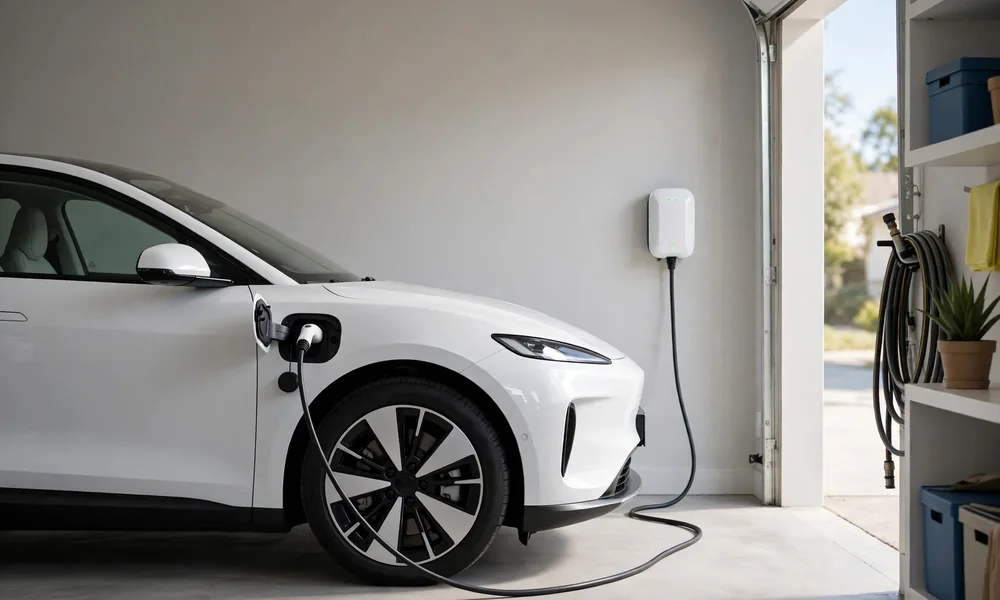
Charging at home changes everything. Plugging in overnight means you start each day with a full battery, at a much lower cost. If you have a driveway or garage, a home wall charger is one of the best investments you can make.
Home Charging Made Simple
A typical home wall charger delivers around 7 kilowatts, adding roughly 25 to 30 miles of range per hour. If you cannot charge at home, check the public chargers near your home and regular routes.
Road Trips in a Family Electric Car
Long journeys need a little more planning in an electric car. Most modern family electric cars can travel 200 miles or more on a motorway before needing a charge, and a rapid charger can add enough range for the next leg in the time it takes to stretch legs and buy a drink. Plan your route before you leave, choose chargers with several bays, and keep a small buffer for detours.
Space, Safety and Everyday Practicality
Space is where family electric cars differ most. Two cars with similar boot figures can feel very different in daily use.
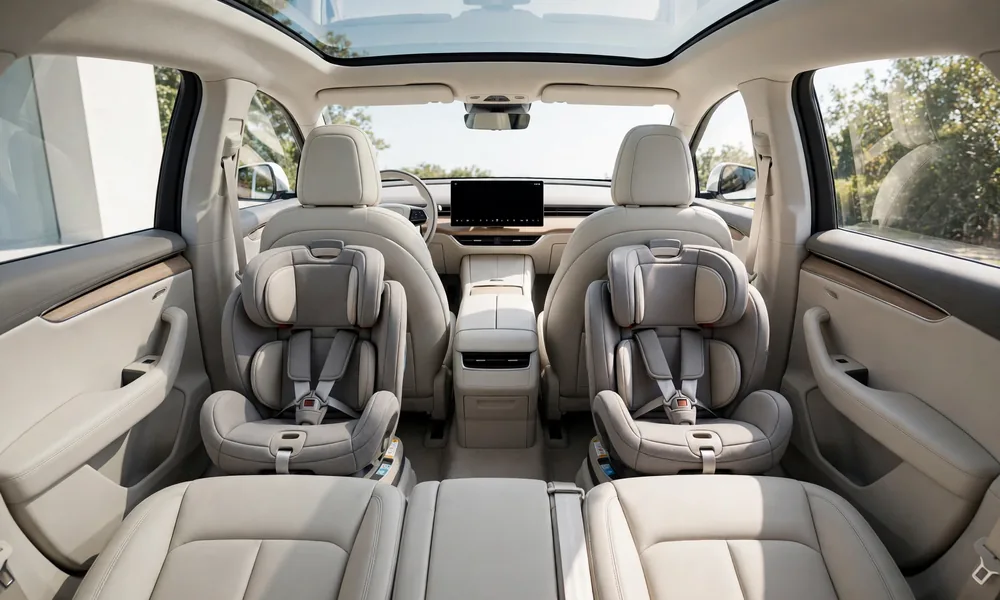
Child seats are the other critical test. Isofix points should be easy to reach, and rear doors should open wide enough to lean in comfortably.
Safety Features Worth Having
Automatic emergency braking, blind-spot monitoring and a good reversing camera are essential, and lane-keeping assistance helps on long journeys. Check the safety rating for the exact model you are buying. Good storage matters too: large door bins and rear USB ports keep everyone comfortable on long trips.
Running Costs: What a Family Electric Car Really Costs
Electric cars are usually cheaper to run than petrol cars, but the saving depends on how you charge. Home charging is far cheaper per mile than petrol. Public rapid charging is more expensive, but most families do most of their charging at home.
Servicing is another saving. Electric cars have fewer moving parts, no oil changes and less brake wear. Insurance is the cost to watch: some electric cars are more expensive to insure. Compare the total cost of ownership, including purchase price, charging, insurance and servicing, and the best hybrid cars for families if you are not yet ready to go fully electric. Our guide to the SUV vs minivan for family travel can help you decide which shape fits your family best.
Family Electric Car Checklist
Use this checklist when you test drive any family electric car.
- Fit all of your child seats at once, and check front-passenger legroom.
- Load your pushchair and weekly shop into the boot, and check the loading height.
- Test real-world range on your longest regular journey, allowing margin for winter driving.
- Check home charging options and the rapid chargers on your regular routes.
- Try the rear seats as an adult, including the third row, and check headroom and knee room.
- Compare insurance, servicing costs and warranty cover for every model on your shortlist.

Frequently Asked Questions
Are electric cars good for families?
Yes. Modern family electric cars offer spacious cabins, strong safety ratings and low running costs. They work best for families who can charge at home or nearby.
How much range does a family electric car need?
Most families will be comfortable with at least 250 miles of real-world range, which covers a week of school runs and commuting. If you regularly drive long distances, look for 300 miles or more and prioritise fast charging.
Is it cheaper to run an electric car than a petrol car?
Usually, yes. Home charging is much cheaper per mile than petrol. The saving is largest if you charge at home.
Can you fit three child seats in an electric car?
It depends on the model. Wide seven-seat SUVs such as the Kia EV9 and Volvo EX90 are the easiest choice, while some five-seat models can also work if the rear bench is wide and flat.
How long does it take to charge a family electric car?
At home, a wall charger typically adds around 25 to 30 miles of range per hour. At a rapid public charger, many cars can go from low to 80 percent in 20 to 40 minutes.
Should I choose an electric car or a hybrid for my family?
An electric car is the better choice if you can charge at home, drive mostly short to medium distances, and want the lowest running costs. A hybrid can be a better fit if you cannot charge easily. Our comparison of electric vs hybrid SUVs for families explains the trade-offs.
The Bottom Line
The best electric cars for families in 2026 are practical, safe and enjoyable to live with. For most households, the Tesla Model Y or Hyundai Ioniq 5 offers the best balance of space, range and value, while the Kia EV9 is the clear choice for larger families. The Volkswagen ID. Buzz, Ford Mustang Mach-E, Volvo EX90 and Chevrolet Equinox EV each bring their own strengths.
Choose the car that fits your family, your home charging situation and your longest regular journey, test it with your child seats and luggage, and compare the total cost of ownership before you decide.