The best e-readers in 2026 make it easier than ever to carry a whole library in one hand. Their screens look like printed paper, their batteries last for weeks, and the best models now add warm lighting, waterproofing, colour displays, and stylus support.
Choosing the best e-reader is not about finding the single most expensive device. It is about matching the screen, the size, the store, and the extras to your reading habits. A light, compact reader suits novels on the train, a larger colour model suits comics and illustrated guides, and a stylus model turns the same device into a notebook.
This guide compares the best e-readers of 2026 across every major brand and style, not just one family of devices. It explains what each type does well, where it falls short, and who should buy it,.
Key Takeaways
- The best e-reader for most readers in 2026 is a mid-size model with a sharp 300 ppi screen, warm lighting, waterproofing.
- A basic, compact e-reader is the best value pick: it does the core job brilliantly at the lowest price, with a glare-free screen and a light body.
- Colour e-readers are now genuinely good for comics and illustrated books.
- A large stylus e-reader is the best choice for note-takers and students, while a compact reader is better for one-handed novel reading.
- Buy the e-reader that matches your book store, your library, and your reading habits, not the one with the longest feature list.
Best E-Readers 2026 at a Glance
| E-Reader | Best For | Screen | Battery | Waterproof |
|---|---|---|---|---|
| Mid-size flagship | Most readers | 7-inch, 300 ppi | Up to 10 weeks | Yes |
| Basic compact reader | Best value | 6-inch, 300 ppi | Up to 6 weeks | No |
| Colour e-reader | Comics and illustrated books | 7-inch colour, 300 ppi | Up to 7 weeks | Yes |
| Large stylus reader | Notes and documents | 10.2-inch, 300 ppi | Up to 6 weeks | No |
| Compact library reader | Borrowing library books | 6 to 7-inch, 300 ppi | Up to 6 weeks | Yes |
| Premium large reader | Big screens and storage | 7 to 8-inch, 300 ppi | Up to 10 weeks | Yes |
How to Choose the Best E-Reader
Start with the screen, because it is the part you will look at for hundreds of hours. A 300 ppi display keeps text crisp at any font size and is now standard on every good e-reader. Size matters more than resolution: a 6-inch screen is light and pocketable, a 7-inch screen shows more words per page, and a 10-inch screen suits documents but is too large for one-handed reading in bed.
Lighting is the second decision. Every good e-reader now has a built-in front light, so you can read in a dark room without a lamp. Warm lighting, which shifts the page from cool white to amber, is worth paying for if you read at night, because it feels gentler on tired eyes. Look for an even, glare-free light with no bright patches at the edges.
Then think about where your books come from. Some e-readers are tied closely to one book store, while others support library borrowing and a wider range of file formats. If you borrow ebooks from a public library, check that your chosen reader supports your library system before you buy. Storage is rarely a problem: even 16 GB holds thousands of books.
Weight, waterproofing, and battery life shape the daily experience more than any specification sheet suggests. A reader under 200 grams is easy to hold one-handed for an hour. Waterproofing is worth having if you read in the bath, by the pool, or on rainy commutes. Battery life is generous across the board, because the screen only uses power when the page changes. Readers who want the deepest dive into one brand can start with our roundup of the best Kindles of 2026.
Best E-Reader Overall: The Mid-Size Flagship
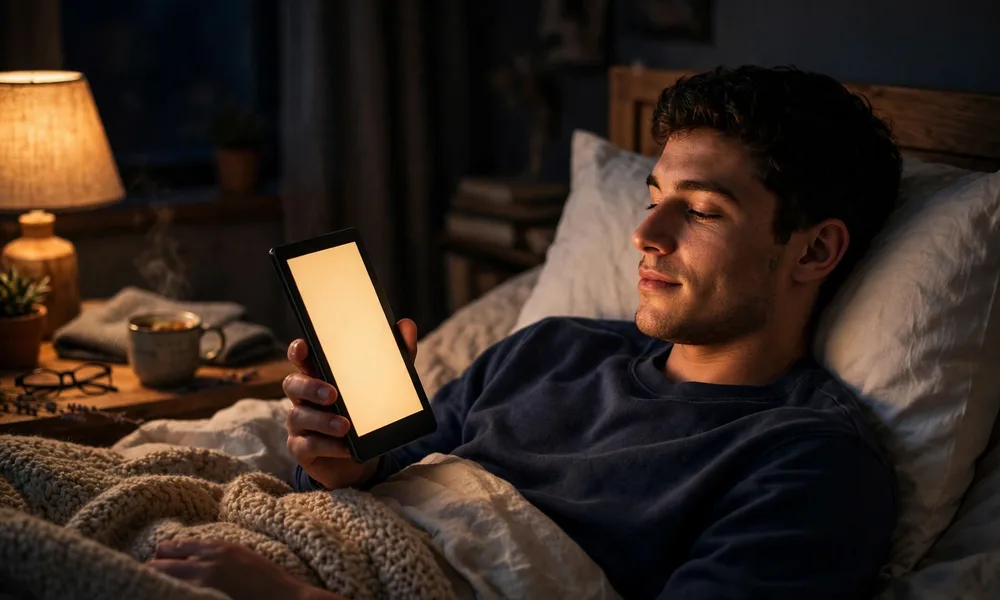
The best e-reader for most people in 2026 is a mid-size flagship with a 7-inch, 300 ppi screen, warm lighting, and waterproofing. It is large enough for comfortable reading without becoming heavy, and the sharp text stays crisp at any font size. The warm light lets you shift the page to amber at night, and the waterproofing protects the device from splashes and spills.
What makes this category win is balance. The battery lasts for weeks, the device weighs around 200 grams, and the storage holds thousands of books. Page turns are quick, the screen is readable in bright sunlight, and there are no notifications to pull you out of the story. It is the model to buy if you want one device that does everything well.
Best Value E-Reader: The Basic Compact Reader
The basic compact e-reader proves that the core reading experience does not need a premium price. It has the same sharp 300 ppi screen as its more expensive siblings, the same front light, and the same access to a huge book store. For pure novel reading, it is hard to tell apart from a flagship in normal use, and its 6-inch body slips into a jacket pocket.
What you give up is comfort and protection rather than reading quality. The screen shows fewer words per page, so you turn pages slightly more often. There is usually no warm light adjustment and no waterproofing, and the storage still holds thousands of books. The device is also a little lighter, which some readers prefer during a long chapter.
Best Colour E-Reader: For Comics and Illustrated Books
For years, e-reader screens were black and white, which was fine for novels and a real limitation for everything else. Colour e-readers change that with a colour display that shows book covers, comics, and illustrated guides in soft, paper-like colour while keeping the same glare-free reading experience. The colours are gentler than on a tablet, but that is the point: it looks like a printed page.
Colour makes the biggest difference in comics, graphic novels, cookbooks, and children’s picture books, where the images carry as much of the story as the words. It also makes book covers and highlights feel more alive. The best colour models keep the warm light, the waterproofing, and the weeks-long battery of the flagship range.
There are two honest limits to know before you buy. Colour screens are slightly less sharp for plain black text, and they cost more than a basic reader. If you read almost entirely novels, a standard reader is the better buy.

Best E-Reader for Notes: The Large Stylus Reader
The large stylus e-reader is a different kind of device. Its 10-inch screen is nearly twice the size of a standard model, and it comes with a stylus that lets you write directly on the page. You can scribble in the margins, keep a handwritten journal, annotate documents, and sketch ideas on the same paper-like screen.
This is the best choice for students, researchers, and anyone who reads long documents for work. A large screen shows a full page of a PDF without constant zooming, and handwritten notes stay attached to the document they belong to. The writing feels close to paper, with a slight texture under the stylus and no glare.
Best E-Reader for Travel: Light, Tough, and Long-Lasting
Travel is where a good e-reader earns its place in your bag. It weighs about as much as a small paperback, holds your entire holiday reading list, and survives a long flight and a week without a power socket. The screen stays readable in bright sunlight, and a waterproof model removes the worry from poolside reading and sudden rain.
For travel, prioritise weight, battery, and waterproofing over screen size and extras. A 6 or 7-inch reader is the right size: light enough to hold one-handed on a crowded train and small enough for a jacket pocket.
A tablet can do more on a trip, from maps and films to email, but it is heavier, needs charging every day, and glares in sunlight. For pure reading, the e-reader wins; see our guide to the best tablets of 2026 if you need one device to do everything instead.

Best E-Reader for Library Books
If you borrow most of your books from a public library, the best e-reader is the one that makes borrowing effortless. Some readers connect directly to library systems, letting you browse, borrow, and return books on the device itself, while others need a computer or phone as a middleman. That difference matters every week, so check it before you buy.
Mistakes to Avoid When Buying an E-Reader
The most common mistake is buying the biggest, most expensive model when a smaller one would suit your reading better. A large screen is wonderful for documents, but it is a burden for one-handed novel reading, and the extra features often go unused. Match the device to your reading, not to the specification sheet.
The second mistake is ignoring the book store and the library. An e-reader is only as useful as the books you can put on it easily, so a device that fights your library will frustrate you every week. Finally, do not expect an e-reader to replace a tablet: it is a better reading device and a worse computer. See our Kindle vs tablet for bedtime reading guide for how that trade-off plays out at night.
Buying Checklist
- Choose a 300 ppi screen: 6 inches for portability, 7 inches for comfort, or 10 inches for notes.
- Pick warm lighting if you read at night, and check the light is even with no bright patches.
- Confirm your book store and your public library work easily on the model before you buy.
- Choose waterproofing if you read in the bath, by the pool, or on rainy commutes.
- Check the weight: under 200 grams is comfortable for long one-handed sessions.
- Buy 16 GB of storage for novels, and more only for many audiobooks or graphic novels.
Frequently Asked Questions
Are e-readers better than tablets for reading?
For long reading sessions, yes. An e-reader has a paper-like screen with no glare, weeks of battery life, and no notifications. A tablet wins for colour, films, and apps.
How long does an e-reader battery last?
Most modern e-readers last three to ten weeks on a single charge with regular reading, because the screen only uses power when the page changes. Front-light and Wi-Fi use shortens that, but a reader still outlasts a tablet.
Can I read an e-reader in bright sunlight?
Yes, and this is one of its biggest strengths. The screen reflects light like paper, so it gets easier to read in bright sun, while a tablet screen washes out and turns into a mirror.
Do I need a colour e-reader?
Only if you regularly read comics, graphic novels, cookbooks, or children’s picture books. For novels and most non-fiction, a black-and-white screen is sharper and cheaper.
How much storage do I need in an e-reader?
For most readers, 16 GB is plenty and holds thousands of books. Choose 32 GB or more only if you keep a large audiobook library, many graphic novels.
Can I borrow library books on an e-reader?
Yes, on many models, but support varies by reader and by library system. Check your library’s supported devices before you buy.
The Bottom Line
The best e-reader in 2026 is the one that disappears into your reading: a sharp, glare-free screen, a warm light for the evening, a light body you can hold for an hour, and a battery you forget to charge. For most readers, that is a mid-size flagship; for value seekers, a basic compact reader; for comic lovers, a colour model; and for note-takers, a large stylus reader. Pick the one that matches how you read.