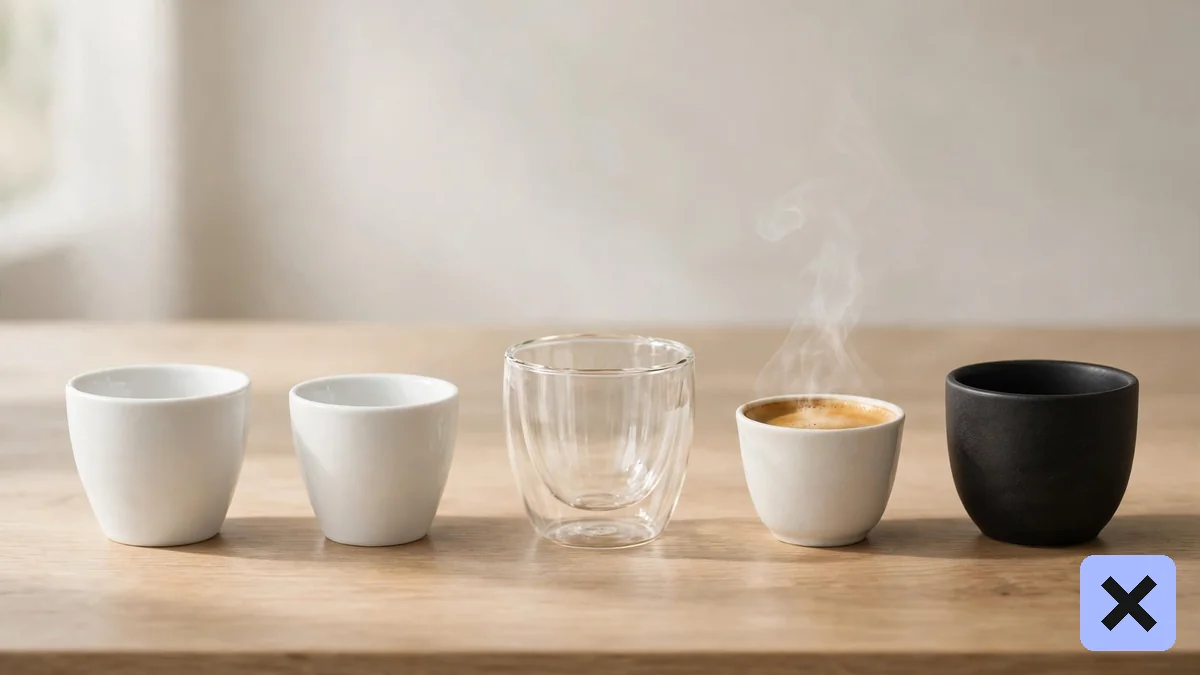
The best espresso cups for home do more than hold coffee. They keep a 30-millilitre shot hot long enough to enjoy, frame the crema so you can see what your machine pulled, and feel right in the hand at 7 in the morning. A great cup is the cheapest upgrade in the whole home espresso setup.
After years of pulling shots at home, testing thick-walled porcelain against double-wall glass and handleless stoneware against classic demitasse, one truth keeps coming back: the cup matters as much as the beans. A thin, cold cup can drop a fresh shot by several degrees before the first sip, flattening the sweetness and collapsing the crema. A heavy, pre-warmed porcelain cup holds heat and lets the flavours open up.
This guide rounds up nine espresso cups worth pouring into in 2026, from the classic Italian demitasse to modern double-wall glass and handcrafted stoneware.
Key takeaways
- A 60–90 ml demitasse suits a single or double shot; larger cups cool espresso too fast.
- Thick-walled porcelain and stoneware hold heat best — always pre-warm the cup.
- Double-wall glass keeps espresso hot without burning your fingers and shows the crema.
- Handleless cups suit slow sipping; handles win for daily use.
- Buy cups in sets of two or four.
How We Chose the Best Espresso Cups
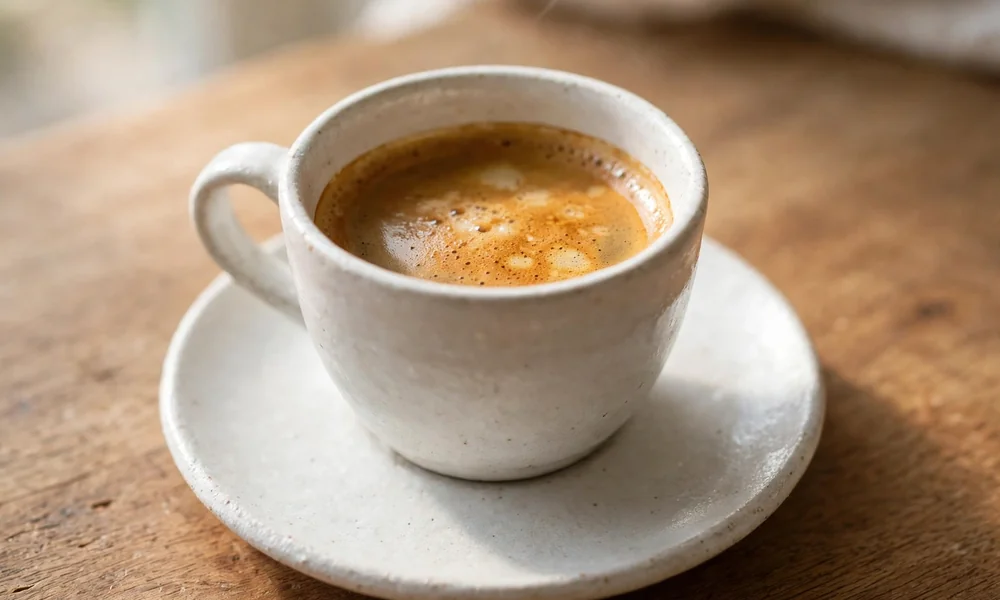
Every cup here was judged on five things that change how espresso tastes at home. Heat retention came first: a shot that cools in ninety seconds never tastes as good as one that stays warm for five minutes. Size came second — a single is 25–30 ml and a double 50–60 ml, so a 60–90 ml cup leaves room for crema. Third, the rim: a slightly tapered rim concentrates aroma. Finally, build quality: every pick below is dishwasher-safe and available in sets.
The 9 Best Espresso Cups for Home in 2026
1. notNeutral LINO Demitasse — Best Overall
The notNeutral LINO is the cup most speciality coffee bars reach for, and it translates beautifully to home use. At 90 ml, it fits a double shot with room for crema, and its gently tapered bowl concentrates aroma while the rolled rim feels smooth on the lip. The thick porcelain holds heat through a slow morning sip, yet the cup stays light and balanced. The dense glaze resists staining, the small handle is genuinely usable, and the wide saucer catches drips.
2. Illy Espresso Cups — Best Classic Porcelain
Illy has made espresso cups in Italy for decades, and its classic 60 ml porcelain demitasse remains the benchmark for the traditional Italian serve. Small and thick-walled, it is perfectly proportioned for a single shot, with white porcelain that shows the crema beautifully. Pre-warm one with hot water and the espresso stays at drinking temperature noticeably longer than in a thin mug. Sold in sets of two or six with matching saucers, its only trade-off is size: a double shot fills it to the brim, so double-shot drinkers should size up to the 90 ml cappuccino cup.
3. Bodum Pavina Double-Wall Glass — Best Glass Cup
The Bodum Pavina turns an espresso into a small piece of theatre. Its double-wall borosilicate glass suspends the shot in mid-air, showing off the crema layers while the outer wall stays cool enough to hold. At 80 ml it is sized exactly for a double shot, and the glass is surprisingly tough for daily use. Double-wall glass holds heat slightly less well than thick porcelain, so pre-warming matters even more, but the visual payoff is real. It is also the best choice for iced espresso in summer, since the double wall resists condensation. Dishwasher-safe, in sets of two, four, or six.
4. Fellow Monty — Best for Milk Drinks
Fellow’s Monty was designed for the modern home barista who drinks as many cortados and flat whites as straight espressos. The 100 ml size holds a double shot plus a splash of steamed milk, and the wide, open bowl makes latte art far easier than a narrow demitasse. The double-walled ceramic body keeps drinks hot while staying comfortable to hold. The matte exterior contrasts with a glossy interior, the weighted base sits securely under a portafilter, and it stacks with its saucer. It costs more than basic porcelain, but for milk-drink lovers it is the most versatile cup here.
5. Hasami Porcelain Mug — Best Stoneware
Hasami Porcelain brings a Japanese craft sensibility to the espresso cup. Its 85 ml mug is cast from a blend of porcelain and clay, giving it a soft, matte texture and a reassuring weight that feels handmade without being rustic. The thick walls hold heat superbly, and the simple, handle-free cylinder looks at home on any kitchen shelf. This is a cup for slow mornings: without a handle, you cradle it in both hands, which suits a leisurely single shot far better than a rushed double. The matte finish hides fingerprints, and a matching wooden lid doubles as a coaster.
6. Sweese Porcelain Demitasse Set — Best Budget Set
Sweese proves you do not need to spend a fortune to drink espresso properly. Its 60 ml porcelain demitasse set, usually sold as a set of six with saucers and spoons, covers the essentials: thick walls, a comfortable handle, and a clean white glaze that shows off crema. For the price of one premium cup elsewhere, you can equip the whole household. The cups are slightly heavier than the Illy equivalent and the glaze a touch less refined, but in daily use the difference is hard to spot. Dishwasher- and microwave-safe, they stack well, and six means a chip never disrupts the routine.
7. Acme & Co. Tulip Demitasse — Best for Double Shots
Acme & Co., the New Zealand brand behind the cups in countless speciality cafes, makes a 110 ml tulip demitasse that is the ideal home for a double shot. The tulip shape narrows at the rim, concentrating aroma, while the wide bowl gives the crema room to breathe. The porcelain is dense and heavy, so a pre-warmed Acme cup holds temperature longer than almost anything else at this size. The saucers are generous, the handle fits two fingers comfortably, and the glaze resists staining even with dark roasts. A cafe-grade cup, perfectly at home in a kitchen.
8. Loveramics Egg Cup — Best Handleless Design
The Loveramics Egg is the most distinctive design on this list. Its smooth, egg-shaped body has no handle at all, inviting you to hold the cup in your palm and feel the warmth of the coffee. At 150 ml it is larger than a strict demitasse, making it a good choice for a double shot with a little milk, or for a long black. The rounded base keeps the liquid moving gently as you sip, and the thick ceramic walls retain heat well. It comes in a wide palette of colours with a glossy interior and matte exterior, and sits in a matching saucer.
9. Zwilling Sorrento Double-Wall Glass — Best for Entertaining
When guests come over, the Zwilling Sorrento is the cup to reach for. Its elegant double-wall glass shows off the espresso like a piece of glassware, and the 80 ml size is perfect for a double shot served after dinner. The borosilicate glass is heat-resistant and the cups feel substantial, not fragile, despite their delicate look. Sold in sets of two, four, or six, they look striking as a matching set on a tray with a small jug of cream. Dishwasher-safe, though hand-washing keeps them sparkling longest — the most giftable cup on this list.
Espresso Cups at a Glance
| Cup | Size | Material | Best For |
|---|---|---|---|
| notNeutral LINO | 90 ml | Porcelain | Everyday doubles |
| Illy Espresso Cups | 60 ml | Porcelain | Classic single shots |
| Bodum Pavina | 80 ml | Double-wall glass | Seeing the crema |
| Fellow Monty | 100 ml | Ceramic | Milk drinks |
| Hasami Porcelain | 85 ml | Stoneware | Slow mornings |
| Sweese Demitasse Set | 60 ml | Porcelain | Budget sets |
| Acme Tulip | 110 ml | Porcelain | Double shots |
| Loveramics Egg | 150 ml | Ceramic | Handleless sipping |
| Zwilling Sorrento | 80 ml | Double-wall glass | Entertaining |
How to Choose the Right Espresso Cup
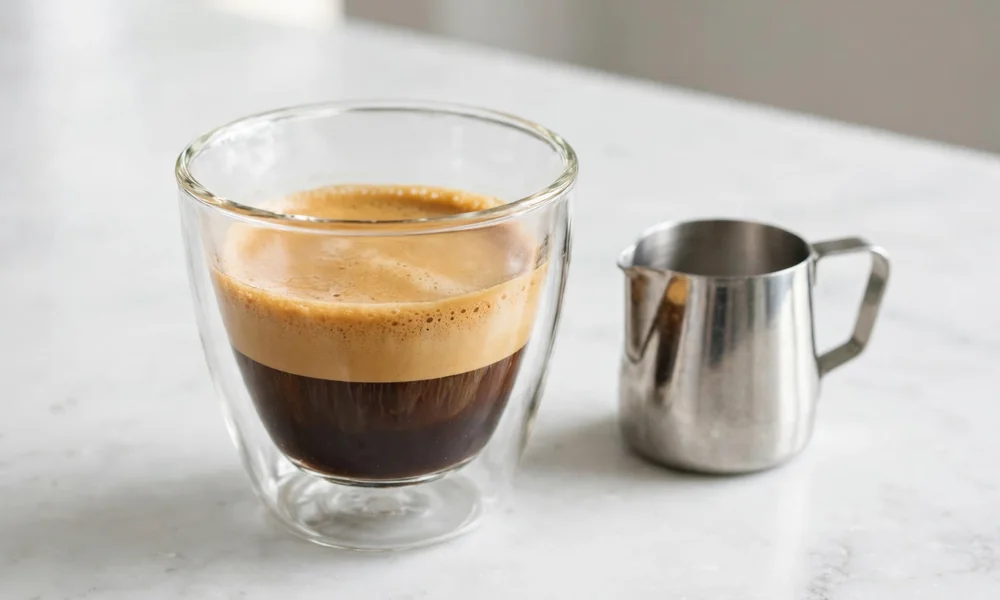
Start with size. If you drink single shots, a 60 ml demitasse is perfect; for doubles, look at 90–110 ml; for milk drinks, 100–150 ml gives room for steamed milk without overflow. Buying a cup that is too big is the most common mistake: a single shot in a 200 ml mug cools before you finish it and tastes thin by the last sip.
Next, choose your material. Thick porcelain is the all-rounder: it holds heat, shows off crema, and survives the dishwasher. Stoneware adds weight and a handmade feel but is often handleless, suiting slow sipping. Double-wall glass lets you see the espresso and keeps fingers cool, though it holds heat slightly less well. The cup is only one part of the ritual — pairing a good cup with the best espresso beans for home makes a bigger difference than any single piece of kit. And if you are still deciding on your brewing method, our espresso machine vs French press comparison explains which suits a home routine. Finally, check the practical details: is the cup dishwasher-safe, does it fit under your machine’s spouts, and does it stack?
Espresso Cup Buying Checklist
- Size matches your drink: 60 ml for singles, 90–110 ml for doubles, 100–150 ml for milk drinks.
- Thick porcelain or stoneware walls for the best heat retention.
- A smooth, slightly tapered rim that concentrates aroma.
- A handle that fits at least two fingers, unless you want a handleless design.
- Dishwasher-safe glaze that resists coffee staining.
- Sold in a set of two or more, so a chip never breaks the set.

Frequently Asked Questions
What size cup is best for espresso?
A 60–90 ml demitasse suits most home espresso drinkers. A single is 25–30 ml and a double 50–60 ml, so a cup in that range leaves room for crema without excess air space that cools the shot. If you add milk, size up to 100–150 ml.
Are double-wall glass espresso cups good?
Yes. They keep the outside cool to the touch, show off the crema beautifully, and resist condensation with iced drinks. They hold heat slightly less well than thick porcelain, so pre-warm them with hot water before pulling your shot.
Should I pre-warm my espresso cup?
Always. Pour hot water into the cup while you prepare your shot, then empty it just before brewing. Pre-warming makes a bigger difference than the cup’s material or price, takes ten seconds, and improves every shot.
Is porcelain or glass better for espresso?
Porcelain is better for heat retention and durability, which is why most cafes use it. Glass is better for presentation and for seeing the crema, and it stays cool to hold. If you can only buy one set, choose porcelain.
How many espresso cups should I buy?
Buy at least two, and ideally four. Two covers a daily drinker plus a guest, while four means you always have a clean cup ready and a chip does not break the set. Sets of four or six are usually better value per cup.
Can I use a regular mug for espresso?
You can, but it is not ideal. A regular mug is usually 250–350 ml, so a 30 ml shot spreads thin, cools fast, and loses aroma. If a mug is all you have, pre-warm it well and drink quickly. A proper demitasse costs little and improves every shot — and keeping fresh beans on hand helps too, which is why many home baristas compare the best coffee subscriptions to keep their cupboard stocked.
The Bottom Line
The best espresso cups for home in 2026 balance heat retention, size, and practicality, and the notNeutral LINO leads as the best all-rounder. Classic porcelain from Illy or Acme suits traditionalists, double-wall glass from Bodum or Zwilling suits crema-watchers, and the Fellow Monty is the pick for milk-drink lovers. Buy a proper demitasse and pre-warm it every time, and your home espresso will taste noticeably better.