
Exterior paint that survives the weather in 2026 is not the prettiest tin on the shelf, and it is not the most expensive one either. It is the paint whose chemistry matches what your house actually faces: driving rain in winter, hard sun in summer, frost overnight, and the slow daily expansion and contraction of the walls underneath it. A paint that cannot flex with the siding will crack, one that cannot shed water will peel, and one that cannot resist the sun will fade. The right exterior paint does all three, year after year, while the wrong one can start failing within a single season.
Choosing it well matters because repainting a house is one of the biggest jobs a home ever asks for. The paint itself is the cheapest part of the project, so saving a little on the tin and paying for the whole job twice is the most expensive mistake you can make. This guide compares the exterior paints that hold up in 2026 and helps you pick one that stays put through rain, sun, and frost.
Key Takeaways
- Flexibility matters most: exterior paint must stretch and shrink with the siding, or it will crack and peel.
- Acrylic latex is the best all-round choice for most houses, because it flexes, breathes, and cleans up with water.
- Two thin coats always beat one thick coat; thick paint skins over, traps moisture, and peels in sheets.
- Preparation decides the result: clean, dry, properly primed wood holds paint for years, while dirty or damp wood sheds it in months.
- Judge paint on UV resistance, water shedding, and mildew resistance, not on colour alone.
Why Exterior Paint Fails
Most exterior paint does not fail because the paint was bad. It fails because the surface underneath was not ready, or because the paint was asked to do a job it was never made for. Paint peels when water gets behind it, through cracks, unsealed end grain, and bare wood that was never primed. Once water is trapped behind the film, the sun warms it, it expands, and it pushes the paint off the wall in blisters and sheets. Sunlight is the other enemy: ultraviolet light breaks down the binder that holds paint together, which is why south-facing walls fade and chalk first. Frost finishes the job, as water in a crack freezes, expands, and pries the paint away.
Surviving the weather is a very different job from the one indoor paint has to do. Inside, paint is judged on finish and colour; outside, on survival, which is why our guide to why the right interior paint changes a room treats the two as separate buying decisions.
The Types of Exterior Paint Compared
Acrylic latex paint is the standard for most houses in 2026. It is water-based, so it cleans up easily and dries quickly, but its acrylic resins give it real toughness: it flexes with the wood, lets trapped moisture escape instead of blistering, and holds its colour well in sun. For wood siding, fibre cement, and previously painted masonry, it is the default choice.
Oil-based and alkyd paints are the old guard. They dry to a very hard, smooth film and grip bare wood and metal tenaciously, which is why they are still the choice for front doors, metal railings, and trim that takes knocks. But they are slow to dry, they yellow with age, and they need solvents for cleaning. For large siding areas they have largely been replaced by acrylics, though a good alkyd still earns its place on doors and windows.
Elastomeric paint is the heavyweight option. It goes on far thicker than ordinary paint and dries to a flexible membrane that bridges hairline cracks and seals out wind-driven rain, making it the paint for cracked stucco or masonry that has leaked before. It is expensive and needs careful application, so it is a specialist choice. Masonry paint is made for brick, render, and concrete: it is breathable, so moisture in the wall can escape, and it resists the alkaline salts that push ordinary paint off new masonry.

What Makes an Exterior Paint Weatherproof
Three qualities decide whether a paint survives outside. The first is flexibility: the film must stretch and shrink with the siding without cracking. The second is water resistance: the dried film should shed rain like a coat while still letting water vapour escape from inside the wall. The third is UV resistance, which comes from the quality of the pigments and resins: good paints use pigments that resist fading and resins that do not break down in sunlight, which is why a premium tin keeps its colour for years while a budget one fades in two summers.
Matching Paint to Your Siding
Wood siding is the most demanding surface, because it moves. It swells when wet and shrinks when dry, so acrylic latex over exterior primer on bare wood is the best match. Seal end grain and joints well, and never paint wood that is damp or in direct hot sun, which dries the surface before the paint can grip.
Vinyl siding needs a lighter touch. It expands in heat, so keep the colour no darker than the original or the siding can warp. Brick and masonry want a breathable masonry paint that lets the wall dry out; a non-breathable coating traps moisture and pushes the paint off in sheets. Metal siding needs a paint that grips smooth metal over a primer, and stucco suits elastomeric or masonry paint.
Finishes: Flat, Satin, and Semi-Gloss
The finish you choose is not just about looks; it is about how the paint handles weather. Flat finishes hide flaws well, which suits older siding and rough render, but they hold dirt and are harder to clean. Satin is the best all-round exterior finish: it sheds water well, it can be washed, and it hides minor flaws while still looking soft and natural. Semi-gloss is the toughest and most washable, and it is the right choice for doors, window frames, and trim, where rain runs and hands touch. Save it for wood that is smooth and well prepared, and use satin on the main walls with semi-gloss on the trim.
Choosing a Colour That Lasts in Sun
Colour is not only a style choice outside; it is a durability choice. Dark colours absorb more heat and UV, so they fade faster and stress the paint film more, especially on south-facing walls. Pale colours reflect the sun, stay cooler, and keep their shade for years longer. Muted greens, soft blues, warm greys, and earthy tones all hold up well, because their pigments are stable in sunlight. Bright reds, vivid yellows, and deep blues fade fastest, so use bold colours on the front door or trim, where they are easy to refresh. Always test a colour on the wall itself in a patch at least a metre square before you commit.
Preparation: The Step That Decides Everything
Preparation is dull, slow, and responsible for most of the difference between a paint job that lasts ten years and one that lasts two. Start by washing the walls with a stiff brush and soapy water, or a gentle pressure wash, to remove the dirt, chalk, and mildew that stop paint gripping. Let the walls dry completely, which can take two or three dry days, and never paint wood that still feels damp. Then scrape off loose paint, sand the edges smooth, fill cracks with exterior filler, and prime every patch of bare wood, because paint on bare wood soaks in unevenly and peels first. Check the forecast before you start: you need at least two dry days, temperatures above 10 degrees, and no rain for 24 hours after the final coat.
Applying Exterior Paint for a Lasting Finish
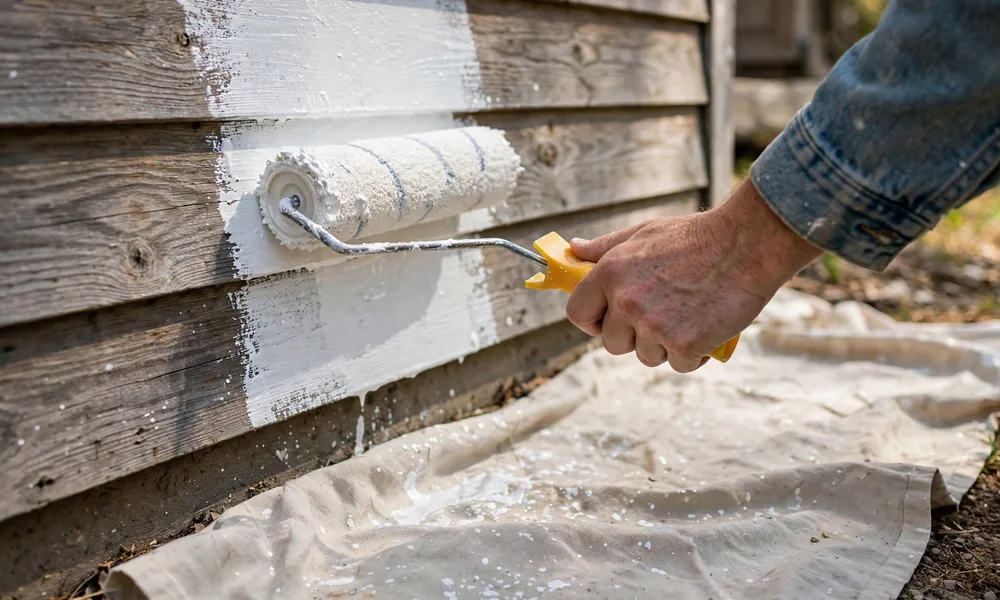
Work from the top down, so drips fall onto unpainted areas and can be brushed out rather than onto finished paint. Cut in the edges with a brush first, then roll the large areas while the cut-in paint is still wet, so the two blend without a visible line. Keep a wet edge as you go, or the join will show as a lap mark. Two thin coats are the rule: the first seals and grips and will look patchy, while the second builds the colour and the weatherproof film. Let the first coat dry fully, usually four to six hours, before the second. Use the right roller nap: short for smooth siding, longer for rough render. Our guide to the best paint rollers of 2026 compares the rollers that leave a smooth finish on exterior walls, and the best paint brushes of 2026 covers the brushes that hold a clean edge on trim without shedding bristles into the paint.
Comparison Table: Which Exterior Paint for Which House
| Paint type | Best for | Flexibility | Finish | Lasts about |
|---|---|---|---|---|
| Acrylic latex | Wood siding, fibre cement, most houses | Excellent | Flat, satin, semi-gloss | 7-10 years |
| Oil-based / alkyd | Doors, metal trim, railings | Poor over time | Smooth, hard gloss | 5-7 years |
| Elastomeric | Stucco, cracked masonry | Excellent | Thick, textured | 10+ years |
| Masonry paint | Brick, render, concrete | Good | Flat to satin | 7-10 years |
| Exterior wood stain | New timber, fences, cladding | Good | Natural, translucent | 3-5 years |

Exterior Paint Checklist
- Match the paint to the siding: acrylic latex for wood, masonry paint for brick, elastomeric for cracked stucco.
- Wash the walls, let them dry for two or three days, and scrape off every loose flake.
- Prime all bare wood and fill cracks and gaps before you open the paint tin.
- Check the forecast: two dry days, above 10 degrees, no rain for 24 hours after the final coat.
- Apply two thin coats, working top down and keeping a wet edge to avoid lap marks.
- Choose satin for walls and semi-gloss for trim, and test the colour on the wall in daylight first.
Frequently Asked Questions
How long should exterior paint last?
A good acrylic latex paint, properly applied over sound preparation, should last seven to ten years on most houses. Peeling within two years usually means the preparation or the painting weather was wrong, not the paint.
Can I use interior paint outside?
No. Interior paint is made for a sheltered, stable environment and has none of the flexibility, UV resistance, or water shedding that exterior paint needs. It will crack, fade, and peel within months outdoors.
Do I need primer on exterior walls?
Yes on any bare wood, bare masonry, or patched area, and yes if you are changing from a dark colour to a pale one. Primer seals the surface and evens out absorption so the colour goes on uniformly.
What is the best time of year to paint a house exterior?
Late spring and early autumn are best in most climates: mild temperatures, lower humidity, and settled dry weather. Avoid hot summer sun, which dries paint before it can grip, and cold, damp months when paint cannot cure.
How do I stop exterior paint peeling?
Peeling is almost always a moisture problem. Make sure the wall is dry before painting, prime bare wood, seal end grain and joints, and fix gutters and leaks so water cannot get behind the paint.
Is expensive exterior paint worth it?
Usually, yes. Premium paints use better resins and pigments, so they flex more, resist UV longer, and cover in fewer coats. Since paint is the cheapest part of a repaint, a good tin costs little compared with redoing the job in three years instead of ten.
The Bottom Line
Exterior paint that survives the weather is a practical choice, not a decorative one. Match an acrylic latex to wood siding, a masonry paint to brick, or an elastomeric to cracked stucco; prepare the walls properly; and apply two thin coats in good weather. Done right, the paint will still be doing its job years from now, through rain, sun, and frost.


