
Why Eye Masks Are the Quickest Fix for Tired Eyes in 2026
The best eye masks in 2026 are hydrogel patches worn under the eyes for ten to twenty minutes, because they deliver a concentrated dose of moisture and de-puffing ingredients exactly where tired eyes show it first. An eye mask is not a sleep mask. It is a skincare treatment: a pair of gel patches that sit beneath your eyes, cool and hydrate the skin, and leave you looking rested in the time it takes to drink a coffee. If you woke up with puffy eyes, dark circles or fine lines that look worse than yesterday, an eye mask is the fastest fix that actually works.
The skin under your eyes is the thinnest on your face, with almost no oil glands of its own, which is why tiredness shows there first. A bad night, a long flight, too much screen time or a salty dinner all leave the same marks: puffiness, shadows and a crepey texture no concealer quite hides. An eye mask floods that thin skin with moisture and holds it there, sealed under a gel patch, so the area plumps up and the shadows soften.
Key Takeaways
- An eye mask is a skincare treatment, gel patches worn under the eyes for ten to twenty minutes, not a sleep mask.
- Hydrogel patches are the best starting point: they stay put, feel cooling, and deliver serum steadily.
- Chilling your patches in the fridge makes the de-puffing effect noticeably stronger, and it costs nothing.
- Look for caffeine for puffiness, hyaluronic acid for dryness, and peptides or niacinamide for fine lines.
- Two or three sessions a week is enough for most people, with a daily eye cream doing the maintenance.

What an Eye Mask Actually Is
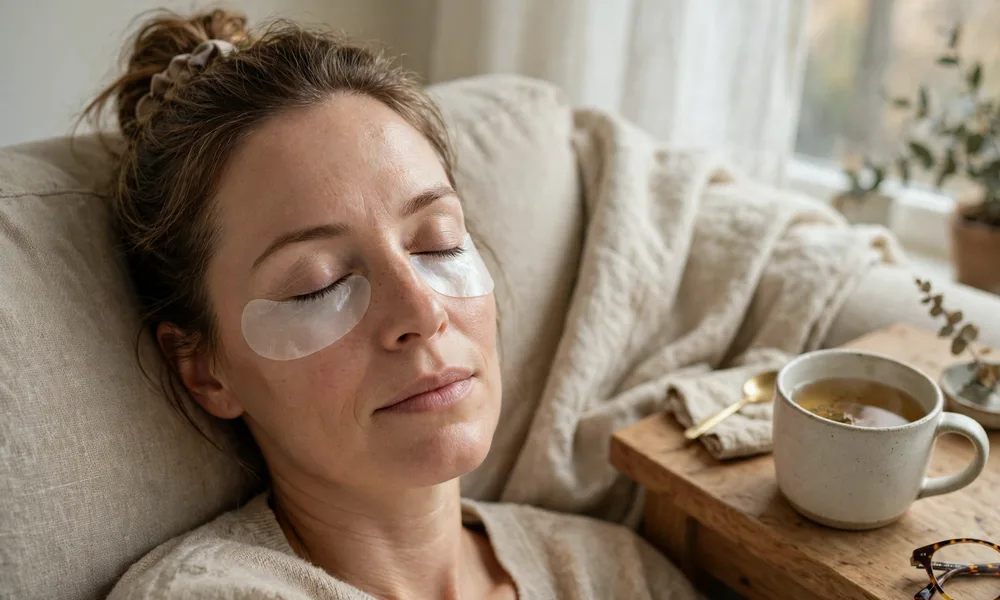
An eye mask is a pair of patches, usually hydrogel or biocellulose, soaked in serum and shaped to fit the crescent beneath each eye. Press them onto clean skin, leave them for ten to twenty minutes, then peel them off and pat in the leftover serum. The patch delivers active ingredients and seals them in so they cannot evaporate, which is why a ten-minute patch beats a cream left to dry.
It is worth being clear about what it is not. A sleep mask is a fabric blindfold worn to block out light while you sleep, and it does nothing for the skin. An eye mask is a skincare product worn while awake, usually in the morning. They share a name and nothing else.
An eye mask is also different from an eye cream, even though they work on the same area. A cream is daily maintenance: light, quick, used every morning and night. A mask is an intensive treatment: richer, slower, used a few times a week when your eyes need extra help. The two work best together, and our guide to eye creams that actually work in 2026 explains what a good daily cream should do.
The Main Types of Eye Mask, Compared
Most eye masks fall into five families. Hydrogel patches are the classic choice: cool, good at delivering serum. Biocellulose patches cling closer and suit people on the move. Cream and gel masks suit very dry skin. Cooling masks are built for puffiness, and overnight masks are a richer cream left on while you sleep.
| Type | Best for | Wear time | Watch out for |
|---|---|---|---|
| Hydrogel patches | Most people, first buy | 10 to 20 minutes | Can slide if you lie flat wrong |
| Biocellulose patches | Moving around, sensitive skin | 15 to 20 minutes | Usually pricier per pair |
| Cream or gel mask | Very dry under-eyes | 10 to 15 minutes | Messier to remove |
| Cooling patches | Morning puffiness | 10 minutes, chilled | Effect fades within hours |
For most people, hydrogel patches are the right first buy: easy to find, and they work on the widest range of concerns. Chill them in the fridge for ten minutes first and the cooling alone takes puffiness down a notch.
The 7 Best Eye Masks for Tired Eyes in 2026
1. Best overall: hydrogel patches with hyaluronic acid
The patch most people should buy first is a hydrogel pair built around hyaluronic acid and a little caffeine. It hydrates fast, cools on contact, and leaves the under-eyes smoother after one use. Wear it for fifteen minutes in the morning and you look like you slept properly whether you did or not.
2. Best for puffiness: chilled caffeine patches
Puffy eyes need caffeine and cold, and the best patches deliver both. Caffeine tightens the tiny blood vessels under the eyes, while the chill drains the fluid that causes the puff. Keep the pack in the fridge and wear the patches for ten minutes: the difference is visible straight away, though it lasts hours, not days.
3. Best for dark circles: niacinamide and vitamin C patches
Dark circles have many causes, and no patch removes them completely, but niacinamide and vitamin C brighten the area over time and make shadows softer. Use these patches two or three times a week for a month before judging them. If your circles are mostly shadows from the shape of your face, no skincare will fix them.
4. Best for fine lines: peptide patches
Fine lines under the eyes are mostly dehydration, and peptide patches tackle them by flooding the area with moisture and signalling the skin to firm up. The lines look softer within minutes of peeling the patch off. Pair them with a good eye cream.
5. Best for sensitive skin: fragrance-free biocellulose patches
The skin under the eyes reacts fast, so sensitive skin needs the gentlest option. Biocellulose patches cling well, carry fewer irritants, and are usually fragrance-free. Test any new pair on one eye first, and skip heavy fragrance near the eyes entirely.
6. Best for travel: individually wrapped pairs
Long flights are where eye masks earn their keep. Individually wrapped pairs fit in a handbag, need no fridge, and turn ten minutes on a plane into a proper reset. Wear them after landing and you step off looking far more rested.
7. Best budget: plain hydrating gel patches
You do not need to spend much. A simple gel patch with hyaluronic acid and glycerin does most of what an expensive pair does, and the cooling alone accounts for much of the de-puffing. If money is tight, buy the simple ones.
Matching a Mask to Your Concern
Puffiness
Puffiness is fluid, so it needs cold and caffeine. Chill your patches, wear them for ten minutes, and sleep with your head slightly raised if mornings are regularly bad. Salty dinners and late nights make it worse.
Dark circles
Dark circles need brightening ingredients and patience. Niacinamide and vitamin C help over weeks, and consistent sleep helps more than any product.
Fine lines
Fine lines are mostly dryness, so they respond fast to moisture. Peptide and hyaluronic acid patches plump the skin within minutes, and regular use keeps the lines softer. Deeper lines need more than a patch.
Dryness and crepey skin
Dry under-eyes need a cream or gel mask rather than a quick patch. Use a hydrating mask twice a week and a plain eye cream every day, and the crepey texture softens within a fortnight.

Ingredients That Earn Their Place
Caffeine is the ingredient for puffiness: it tightens blood vessels and drains fluid. Hyaluronic acid is the ingredient for dryness: it pulls water into the thin skin and plumps it up. Peptides help fine lines by encouraging the skin to firm itself. Niacinamide brightens and strengthens the barrier. Vitamin C adds brightness but can sting, so it suits less sensitive skin.
What to skip is almost as useful. Heavy fragrance near the eyes invites watering and irritation, and essential oils are worse. Retinol is too strong for most under-eye patches, so leave it to a dedicated eye cream.
How to Use Eye Masks Properly
The routine matters as much as the product. Start with clean skin, because a patch works best when nothing sits between it and your eyes. The wash itself sets the stage, and the best face washes for clear, healthy skin in 2026 explains how to choose one that cleans without stripping. Pat your face dry, press the patches beneath each eye, narrow end towards the inner corner, and leave them for ten to twenty minutes, no longer.
Peel them off, then pat the leftover serum in with your ring finger, which presses lightest. Follow with a little eye cream to seal it in, then your normal moisturiser. The routine takes fifteen minutes: patches on while the kettle boils, serum patted in while you get dressed. If you want the wider picture of masking, the best face masks for every skin concern in 2026 shows how a full-face mask differs from a targeted under-eye patch.
The Mistakes That Waste a Good Eye Mask
The most common mistake is wearing a patch for too long: once it dries out it starts taking moisture back, so twenty minutes is the limit. The second is putting it too close to the eye, where serum can seep in and sting. The third is expecting a patch to fix dark circles overnight, when brightening takes weeks. The fourth is using a patch on dirty skin. And the fifth is reusing a pair, which is unhygienic once the serum is spent.
Eye Mask Checklist
- Choose hydrogel patches first if you are new to eye masks, and chill them in the fridge.
- Check the label for caffeine, hyaluronic acid, peptides or niacinamide, and skip heavy fragrance.
- Start with clean skin, press the patches under each eye, narrow end towards the inner corner.
- Wear them for ten to twenty minutes only, then peel off and pat the serum in gently.
- Follow with eye cream to seal in the moisture, then moisturiser.
- Use two or three times a week, and give brightening patches a month before judging them.
Frequently Asked Questions
Is an eye mask the same as a sleep mask?
No. An eye mask is a skincare treatment: gel patches worn under your eyes for ten to twenty minutes while you are awake. A sleep mask is a fabric blindfold worn over closed eyes to block light while you sleep. They share a name and nothing else.
How often should I use eye masks?
Two or three times a week suits most people. Daily use is fine for plain hydrating patches, but richer pairs are better kept to a few times a week, with a daily eye cream doing the maintenance in between.
Can eye masks remove dark circles completely?
No, and any product that promises that is overselling. Patches with niacinamide and vitamin C soften dark circles over weeks, and the cooling makes them look better immediately, but circles caused by thin skin or face shape will not disappear entirely.
Should I use eye masks before or after moisturiser?
Before. Patches go on clean skin, then you pat in the leftover serum, then eye cream and moisturiser seal it in. Moisturiser first would block the patch from reaching your skin.
Can I use eye masks if I have sensitive skin?
Yes, but choose fragrance-free biocellulose patches and test one pair on a single eye first. Skip heavy fragrance or essential oils near the eyes, and stop if your eyes water or the skin reddens.
Do eye masks work on fine lines?
Yes, on the fine lines caused by dryness, which is most of them. A peptide or hyaluronic acid patch plumps the skin and softens the lines within minutes. Deeper lines need more than a patch.
The Bottom Line
The quickest fix for tired eyes in 2026 is a pair of chilled hydrogel eye masks, worn for fifteen minutes on clean skin two or three times a week. They deliver moisture and de-puffing ingredients exactly where tiredness shows, sealed under a patch that gives them time to sink in. Pick the type that fits your concern and let ten quiet minutes do the work.


