Best Firewood Racks 2026
Firewood left in a heap on the ground is firewood on its way to ruin. It soaks up rain from below, rots where it touches the soil, and turns into a damp pile that smokes, hisses, and refuses to burn properly. A good rack changes all of that with very little fuss: it lifts the wood off the ground, lets air move through the stack, and keeps a winter of fuel dry, tidy, and within easy reach.
These are the best firewood racks of 2026, chosen for the things that actually matter over a whole burning season. We looked at how much wood each rack holds, how well it keeps rain off, how stable it stands when fully loaded, and how easy it is to load, reach, and restack. A rack that wobbles, rusts, or traps water is worse than no rack at all.
Key Takeaways
- Buy the rack for the wood you actually burn, because a rack sized for a weekend of fires will not hold a winter of logs.
- Airflow matters more than shelter, since wood dries from the sides and a rack sealed tight on every face keeps moisture in.
- Keep the bottom row at least a few inches off the ground, or the lowest logs will rot while the top ones stay dry.
- Cover the top only, never the whole stack, because a full cover traps damp air and invites mould.
- Measure your longest logs before you buy, since a rack built for short logs will leave long pieces sticking out at both ends.
Firewood Racks 2026 at a Glance
| Best for | Rack type | Capacity | Standout strength |
|---|---|---|---|
| Best overall | Freestanding steel rack | Half a cord | Steady, airy, and easy to load |
| Best indoors | Wrought-iron log holder | One evening | Neat beside the fire and easy to reach |
| Best for wet weather | Covered outdoor rack | Half a cord | Rain stays off the top rows |
| Best for small gardens | Wall-mounted rack | Quarter cord | Uses a wall and frees the ground |
| Best for big burners | Heavy-duty long rack | Full cord | Holds a serious winter supply |
| Best for moving wood | Rolling log cart | One load | Carries logs from store to fire |
What a Firewood Rack Is Really For
A firewood rack does three jobs at once. First, it holds the wood off the ground so damp cannot creep up from below. Second, it holds the stack upright and stable, so logs do not roll across the patio or topple onto a foot. Third, it lets air circulate around every log, which is what seasoning is really about: dry wood burns hotter, cleaner, and with far less smoke than wet wood.
It helps to know the difference between a rack and its close cousins. A rack stores and seasons the fuel; the fire itself is a different purchase, and our guide to the best fire pits of 2026 covers the fires worth gathering around once the wood is dry. The rack is the quiet workhorse that makes the fire possible.
The Six Rack Types Worth Knowing
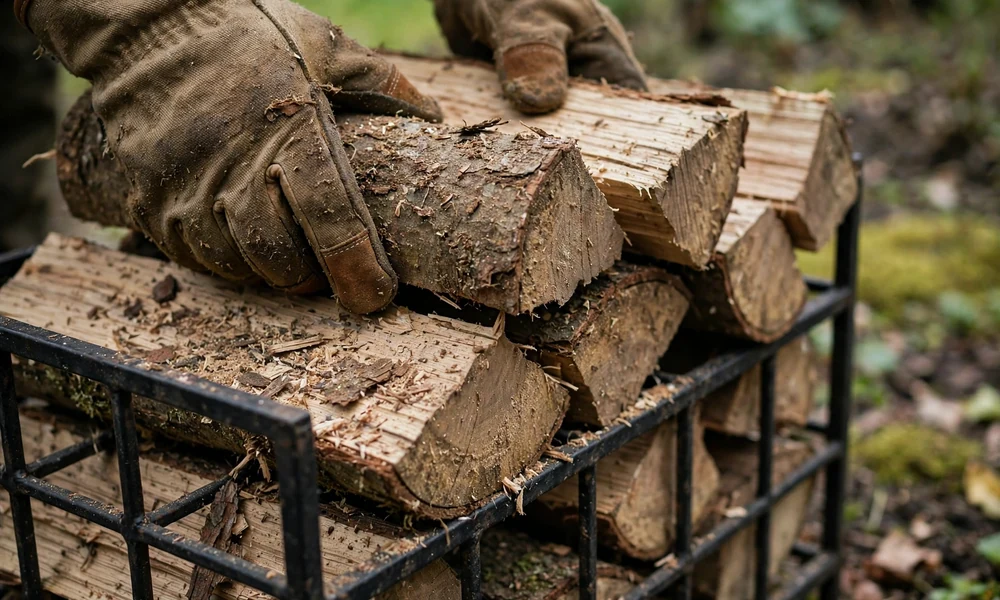
The freestanding steel rack is the default for a reason. Two end frames joined by crossbars, open on every side, holding somewhere between a quarter and half a cord. It goes anywhere flat, costs little, and does the core job well. Look for thick tube steel rather than thin wire, because a full rack of oak is heavy and thin frames bow within a season.
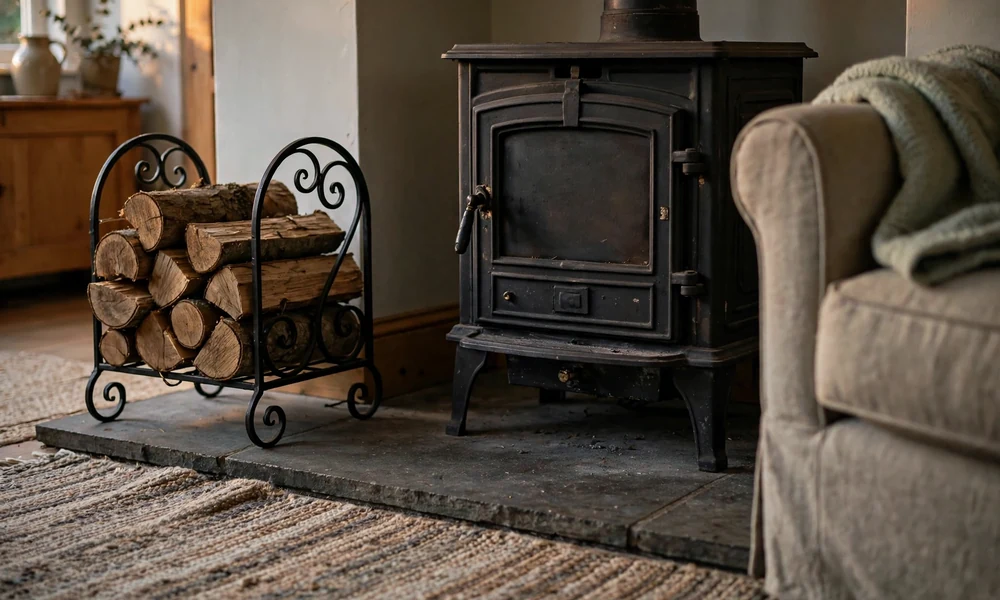
The indoor log holder is a different animal. It holds a single evening of logs beside the stove or fireplace, and its job is tidiness rather than seasoning. Wrought iron suits this role best: heavy enough not to slide, open enough to show the wood, and handsome enough to sit in a living room. Buy one with a solid base tray, or bark and dust will end up on the floor every time you lift a log.
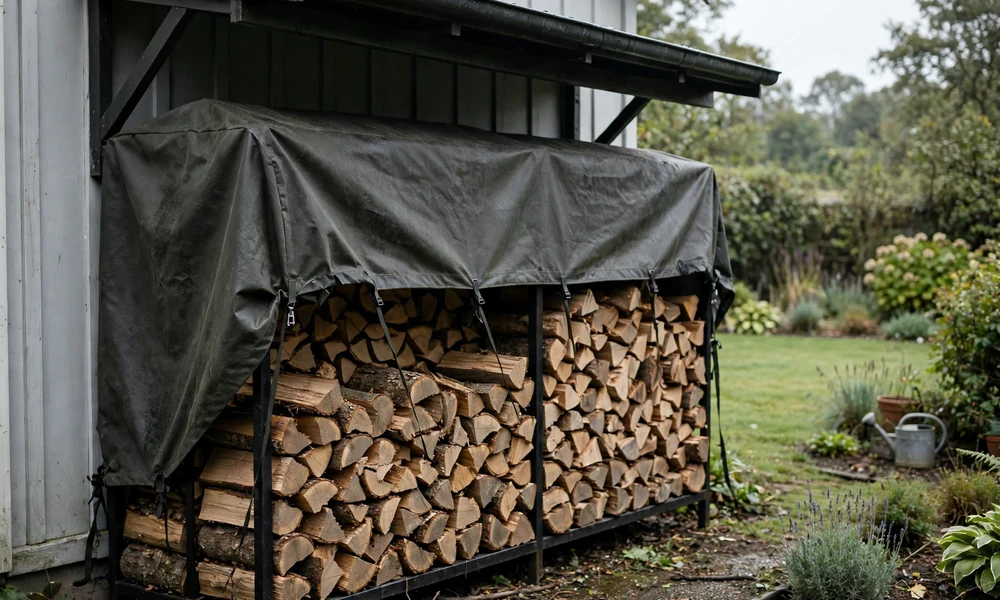
The covered outdoor rack adds a roof or a fitted cover to the freestanding frame. This is the right choice if your wood sits in the open with no wall or eave above it. The cover should sit over the top only, with the sides left open to the wind. A cover that hangs down all four sides is a damp trap, not a shelter.
The wall-mounted rack suits small gardens and narrow passages. It bolts to a house wall or a fence post and holds a modest stack clear of the ground. It is the tidiest option where floor space is scarce, but it holds less wood than a freestanding rack, and the fixings must be sound: a loaded rack pulls hard on its bolts.
The heavy-duty long rack is for households that burn wood all winter. At two metres or more, it holds a full cord in one run, and the best versions come in sections so you can add length later. Buy this only if you have the space and a level base, because a long rack on uneven ground will rack and lean as it fills.
Size It Before You Buy It
Start with your logs. Standard split firewood runs around 25 to 40 centimetres long, and the rack must be at least as long as your longest piece, with a little to spare. A rack that is shorter than the logs leaves ends sticking out, which catch rain, snag clothing, and make the stack unstable. If you cut your own wood, check the length before you order anything.
Then count your burn. A household that lights a fire twice a week needs far less storage than one that burns every evening from October to March. A half-cord rack suits the occasional burner; a household that burns daily will fill it in a fortnight and should look at a full cord or two racks side by side. It is better to buy one rack too big than one too small, because an overflowing rack is a pile on the ground again.
Materials: Steel, Wrought Iron, Wood, and Plastic
Powder-coated steel is the workhorse material for outdoor racks. It is strong for its weight, resists rust when the coating stays intact, and handles a full load without bending. Check the coating at the joints and the feet, because that is where rust starts, and touch up any chips before winter. A steel rack that is left to rust at the feet will fail at the feet.
Keeping Wood Dry and Seasoned
Dry wood is the whole point of a rack, and dryness comes from air, not from wrapping the stack tight. Stack logs with small gaps between them, bark side up on the top row so rain runs off, and never pile green wood tight against seasoned wood. The gaps look untidy; they are doing the work.
Seasoning takes time, and a rack helps you manage it. Fill one end with the oldest wood and burn from that end first, refilling from the other side, so the stock rotates and nothing sits for years. Wood that has seasoned for a year or more burns hotter and cleaner, and the rack is what keeps it dry while it waits. Cutting that wood to length in the first place is a job for a proper saw, and our guide to the best chainsaws of 2026 covers the tools that turn a fallen tree into a neat stack of logs.
Where to Put the Rack
Put the main rack somewhere dry, level, and close to the door you carry wood through. A rack at the far end of a dark garden will not get used on a wet night, and the wood will stay there while you burn the nearest damp pile instead. Convenience decides what actually gets burned.
Keep the rack off the house wall by a few centimetres. Wood stacked tight against a wall traps damp against the brickwork, blocks airflow on one whole side, and gives insects a sheltered route indoors. A small gap costs nothing and solves all three problems at once.
Stacking That Actually Works
Stack in straight, level rows, with the ends flush and the heaviest logs at the bottom. Alternate the direction of each layer if the logs are uneven, so the stack locks together instead of leaning. A stack that leans will fall, and a falling stack of hardwood is a genuine hazard to feet and fingers.
Safety, Stability, and Pests
A full rack is heavy, and it must stand on firm, level ground. Sink the feet into soft soil and the whole stack will tilt as the ground settles. Put the rack on paving, gravel, or a concrete pad, and check the level with a spirit level before the first load goes on. Ten minutes with a level saves a season of leaning.
Woodpiles attract insects, and that is normal outdoors. It becomes a problem only when the pile sits against the house or comes indoors uninspected. Shake each log before you carry it inside, and never store a season of wood in a living room: the indoor holder is for one evening, and the main store stays outside. A rack that holds the wood off the ground also makes it harder for ground insects to settle in.
What to Avoid
Avoid racks with no bottom rail, because the lowest logs will sit in puddles and rot from below. Avoid racks with solid sides, because they block the airflow the wood needs. Avoid racks that arrive with no fixings or instructions worth following, because a rack that is hard to assemble is often a rack that is hard to trust.
Avoid the cheapest thin-wire racks for a serious burn. They look fine empty, bow under a full load, and rust at every weld within a year. Spend a little more on thick steel or wrought iron, and the rack will still be standing when the cheap one has gone to scrap.
The Shortlist
If you burn most evenings, buy a heavy-duty covered steel rack for the garden and a wrought-iron holder for the house, and you will have the whole system: a big dry store outside and a neat evening supply inside. If you burn occasionally, a single freestanding steel rack and a small indoor holder will do the job well. If you garden is small, a wall-mounted rack plus a rolling cart covers storage and carrying in very little space.
Whatever you buy, buy it before the first cold snap, not during it. Racks sell out when the weather turns, and a stack built in autumn has months to season before the coldest nights. And if your outdoor living needs warmth as well as fuel, our guide to the best patio heaters of 2026 covers the heaters that stretch evenings outside long after the sun has gone down.
A good firewood rack is not a luxury. It is the difference between wood that burns and wood that smoulders, between a tidy garden and a rotting pile, and between a fire that lights first time and one that fights you all evening. Buy for your logs, your burn, and your weather, and the rack will quietly do its job for years.