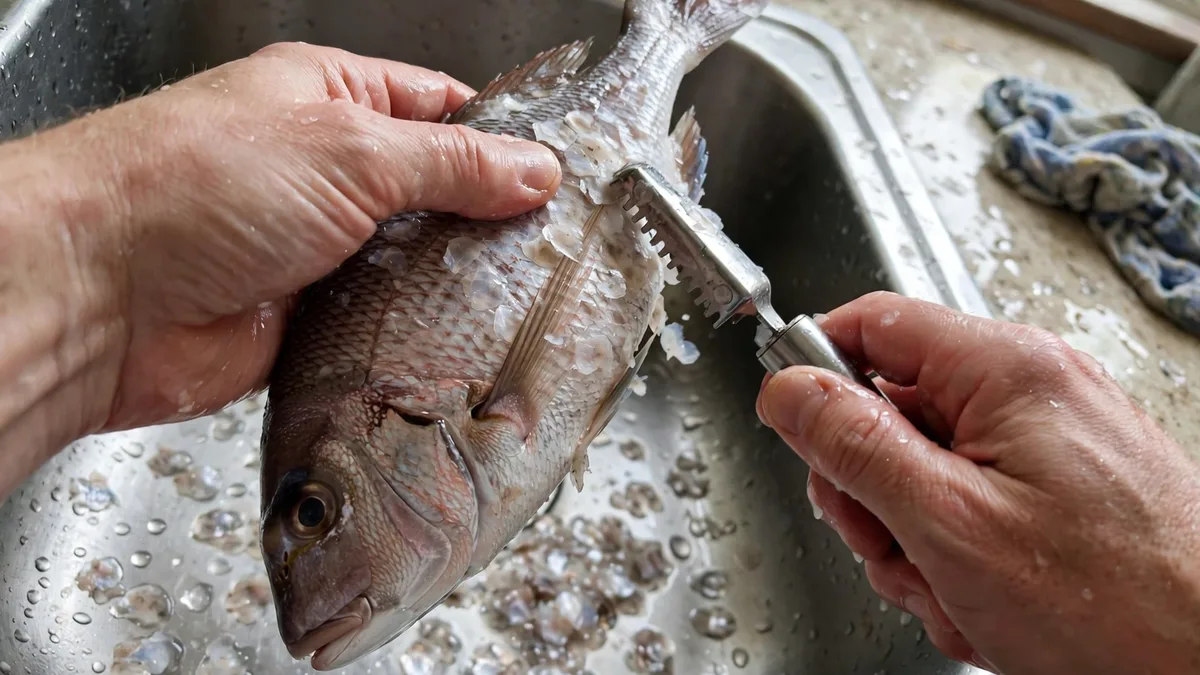
Fish scalers are the small, toothed tools that strip scales from a whole fish in minutes, and knowing how to choose one is the difference between a clean fillet and a kitchen covered in flying scales. The best fish scalers bite into the scales and lift them away in short, controlled strokes, without tearing the skin underneath or sending scales across the room. This guide covers the types worth buying in 2026, the features that matter for different fish, and the technique that keeps the mess in the sink where it belongs.
Scaling is the first job in preparing a whole fish, and it is the one most home cooks dread. A fish straight from the market wears a coat of overlapping scales that must come off before cooking, because scales turn leathery and unpleasant in the pan and stop seasoning reaching the skin. A knife can do the job, but it is slow, it risks cutting the skin, and it leaves you chasing scales. A purpose-built fish scaler is faster, safer, and far less messy, and a good one costs less than a single restaurant fish dinner.
Key Takeaways
- A fish scaler works by catching the edge of each scale and lifting it away, so sharp, well-spaced teeth matter more than weight or brand.
- Handheld toothed scalers suit most home cooks, while electric scalers suit anyone who scales fish in volume.
- Match the scaler to the fish: fine teeth for small, delicate fish and wide, sturdy teeth for large, thick-scaled fish.
- Scale inside a bag, under water, or in the sink to keep scales contained, and always work from tail to head.
- Rinse and dry your scaler after every use, because wet steel rusts and a dull scaler tears skin instead of lifting scales.
Why Scaling Matters Before Cooking
Fish scales are made of the same tough material as fingernails, and they do not soften in cooking. Leave them on and they turn into hard, curling flakes that catch between your teeth and stop the skin crisping properly. A scaled fish, by contrast, gives you skin that crisps in the pan, seasoning that reaches the flesh, and a fillet that looks like it came from a fishmonger rather than a struggle.
The Main Types of Fish Scalers
Fish scalers come in three broad designs, and the right one depends on how often you scale fish and how big those fish are.
Handheld Toothed Scalers
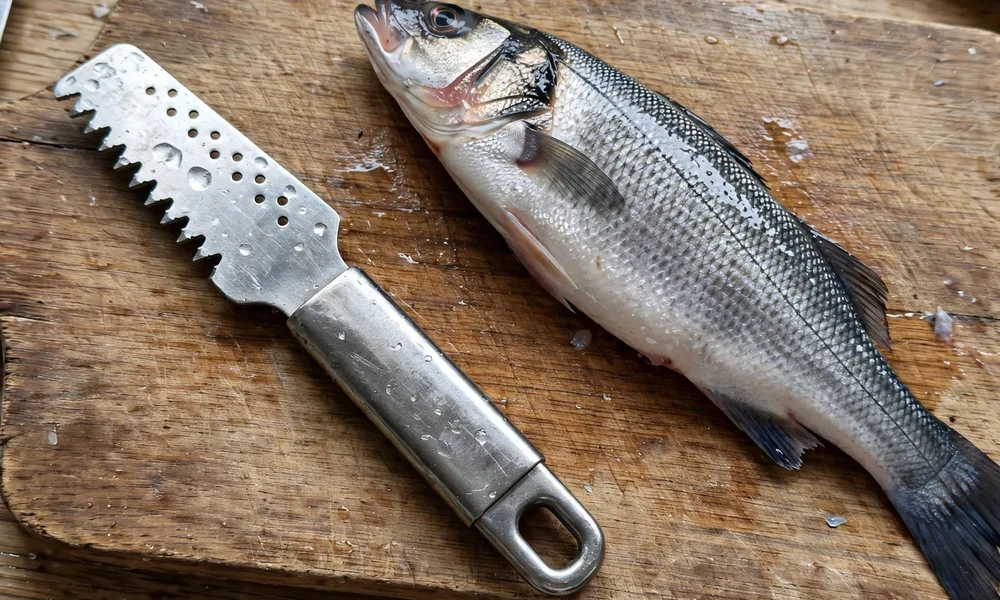
The classic fish scaler is a short handle with a flat metal head covered in sharp teeth or serrated edges. You grip the fish by the tail, hold the scaler at a shallow angle, and push it towards the head in short strokes. Handheld scalers are cheap, easy to clean, and precise enough for delicate fish. The best have a comfortable handle that stays grippy when wet, because a scaler that slips in a wet hand is a cut waiting to happen. Stainless steel heads are worth paying for: they stay sharp, they do not rust, and they rinse clean.
Brush and Comb Scalers
Brush scalers use rows of stiff metal bristles or a comb-like head to lift scales. They are gentler than toothed scalers and suit small, delicate fish whose skin tears easily, such as trout and sea bass. Their weakness is speed: they take more strokes to clear a large fish, and they struggle with the thick, armour-like scales of carp or snapper. Keep one for small fish and a toothed scaler for everything else.
Electric Fish Scalers
Electric scalers use a small motor to spin or vibrate a toothed head, doing the work of dozens of hand strokes in seconds. They are the best choice for anyone who scales fish regularly, for a fishing household, or for a small restaurant. They are also the most expensive, the noisiest, and the hardest to clean, because fish slime gets into the mechanism. If you scale a fish once a month, a handheld scaler is the better buy. If you scale several a week, an electric model pays for itself in saved time and saved skin.
How to Choose the Right Fish Scaler
Start with the fish you actually cook. Small fish with fine scales, like sardines, trout, and mackerel, need fine, closely spaced teeth that can catch tiny scales without digging into the skin. Large fish with thick scales, like carp, snapper, and sea bream, need wide, sturdy teeth with deep gaps that clear scales instead of clogging. A scaler that clogs every few strokes is worse than useless, because you spend more time cleaning the tool than scaling the fish.
Handle design comes next. The handle should be long enough to keep your knuckles clear of the fish, thick enough to grip firmly, and textured enough to hold when wet and slimy. Rubberised grips are the best choice here, and a hole or loop at the end is useful for hanging the scaler to dry. Avoid smooth metal handles, which turn treacherous the moment fish slime gets on them.
Material matters for longevity. Stainless steel is the standard for a reason: it holds an edge, resists rust, and survives the dishwasher. Cheaper plated steel looks the same in the shop but rusts within months of regular use, and rust on a tool that touches food is not something to ignore. Plastic-bodied scalers can work well if the teeth are steel, but an all-plastic scaler will dull quickly and is a false economy.
Think about the rest of your fish preparation kit too. A scaler is one tool among several, and it should sit happily alongside them. Our guide to the best kitchen scissors of 2026 covers the shears that trim fins and cut through small bones, and a scaler that shares a drawer with good scissors and a sharp knife makes the whole job smoother. Once the fish is scaled, a thin flexible blade takes over, and our guide to the best spatulas of 2026 explains why a metal turner is the right tool for sliding under a delicate fillet without breaking it.
Fish Scalers Compared
| Type | Best For | Speed | Skin Safety | Price |
|---|---|---|---|---|
| Handheld toothed | Most home cooks | Medium | Good | Low |
| Brush and comb | Small, delicate fish | Slow | Excellent | Low |
| Electric | Frequent scaling | Very fast | Good | High |
| Combination tool | Boats and camping | Medium | Fair | Medium |
How to Scale a Fish Without the Mess
The technique matters as much as the tool. Hold the fish firmly by the tail, ideally with a cloth or a rubber glove for grip. Work in the sink, or put the fish in a large plastic bag and work inside it, so the scales have nowhere to fly. Push the scaler from tail to head in short, firm strokes, letting the teeth do the work rather than pressing hard. Pressing hard is what tears skin: the scaler should glide, catching scales as it goes.

Work one side at a time, then turn the fish over and do the other side, finishing with the belly and the area around the fins, where scales hide in folds. Rinse the fish under cold water and run your hand against the grain to feel for any scales you missed; your fingers will find what your eyes cannot. A final rinse washes away loose scales and slime, and the fish is ready for gutting and cooking. The whole job should take a few minutes, and if it is taking much longer, your scaler is probably dull or wrong for the fish.
Care, Cleaning, and Storage
Store your scaler where the teeth cannot hurt anyone. A drawer with a blade guard, a hook on the wall, or a knife block slot all work, but loose in a crowded drawer is a bad idea: the teeth will dull against other tools and someone will grab it by the wrong end. Hang it by its loop with the teeth facing the wall, and it will be ready, sharp, and safe next time you need it. Serve the finished fish with a classic accompaniment, and our guide to the best tartar sauce of 2026 covers the sauce that belongs beside almost any scaled, fried, or grilled fish.

Fish Scaler Checklist
- Match the tooth size to your fish: fine teeth for small fish, wide sturdy teeth for large thick-scaled fish.
- Choose stainless steel teeth and a rubberised handle that stays grippy when wet.
- Scale from tail to head in short strokes, letting the teeth work instead of pressing hard.
- Contain the mess by scaling in the sink, under water, or inside a large plastic bag.
- Rinse the fish and check by hand against the grain for scales you missed.
- Clean the teeth with a brush after every use, dry the scaler fully, and store it teeth-safe.
Frequently Asked Questions
Can I use a knife instead of a fish scaler?
You can, but it is slower and riskier. A knife blade can scrape scales off, but it is easy to cut the skin or your hand, and it leaves more scales behind. A scaler costs little, works faster, and is designed to lift scales without cutting skin. If you cook whole fish more than once or twice a year, a scaler is worth owning.
Do fish scalers work on all fish?
They work on almost all scaled fish, from sardines to carp. The exceptions are fish with no scales, like catfish and eels, which have smooth skin instead, and fish with tiny embedded scales that are usually cooked with the skin removed. For those, a scaler is simply not needed.
How do I stop scales flying everywhere?
Scale inside a large plastic bag, under a slow stream of water, or deep in the sink. The bag method is the most reliable: put the fish and your hands in the bag, work inside it, and the scales stay in the bag. Short, controlled strokes also scatter fewer scales than long, forceful ones.
Are electric fish scalers worth it?
For occasional use, no: a handheld scaler is cheaper, easier to clean, and precise enough. Electric scalers earn their price when you scale fish several times a week, because they cut a five-minute job down to under a minute. They are also helpful for anyone with weak hands or arthritis.
How do I know when a scaler is dull?
A sharp scaler lifts scales in one or two strokes and glides over the skin. A dull one skids, needs hard pressure, and starts tearing the skin. If you are pressing hard and getting nowhere, the teeth are dull or clogged. Clean the teeth first, and if it still struggles, replace the scaler.
Should I scale a fish before or after gutting it?
Scale first, then gut. Scaling a gutted fish is messier, because the open belly cavity catches scales, and the fish is softer and harder to hold firmly. Scale the whole, firm fish, rinse it, and then gut it. The order makes the whole job cleaner and quicker.
Bottom Line
How to choose fish scalers comes down to three things: teeth matched to your fish, a handle your wet hand can hold, and stainless steel that stays sharp. A handheld toothed scaler covers most kitchens, a brush scaler suits delicate fish, and an electric model is for anyone scaling fish in volume. Scale from tail to head, contain the mess in the sink or a bag, and clean the teeth after every use. Do that, and scaling stops being the chore you dread and becomes the quick first step to a properly cooked fish.


