The best fishing rods for beginners are the ones that make your first season on the water feel easy instead of frustrating, and most new anglers buy the wrong rod before they ever tie on a hook. The rods that look impressive in the shop are often the least forgiving on the bank: stiff, heavy blanks built for specialists, extra-long rods made for surf casting, and ultra-light rods that snap the moment a decent fish runs. A beginner does not need tournament-level tackle. A beginner needs a fishing rod that casts smoothly, forgives a sloppy cast, handles a hooked fish without drama, and still gives enough feedback to learn from. This guide explains how fishing rods work, which types suit a new angler in 2026, and how to choose a rod you will still be glad you own two seasons from now.
The first thing to understand is that a rod is decided by three things: length, power, and action. Length decides how far you can cast and how much leverage you have over a fish. Power decides how much weight the rod can handle. Action decides where the rod bends, which decides how quickly it responds. Get those three right for the water you actually fish, and almost any decent rod will serve you well.
Key Takeaways
- A medium-power spinning rod around 6 feet 6 inches to 7 feet is the best first fishing rod for most beginners, because it handles the widest range of lures and fish.
- Match the rod to the water you actually fish: short, light rods for small streams and ponds, longer medium rods for lakes, and heavier rods for rivers and the sea.
- Fast action suits lures and single-hook rigs, while moderate action suits treble hooks and crankbaits, because it keeps fish pinned during the fight.
- A one-piece rod is slightly more sensitive, but a two-piece rod is far easier to carry and store, and modern two-piece rods lose almost nothing in performance.
- Spend modestly on the rod and more on learning to cast, because a well-chosen budget rod in practised hands will out-fish an expensive rod that does not suit its owner.
How to Choose Your First Fishing Rod
Choosing a first rod starts with an honest answer to one question: where will you fish most often? A rod for a small farm pond is a different tool from a rod for a wide river, and both are different again from a rod for the coast. Most beginners fish lakes, ponds, and slow rivers for species like perch, trout, bass, and roach, and for that kind of fishing a spinning rod is the right starting point. Spinning rods are easy to cast, forgiving of tangles, and simple to use with a fixed-spool reel, which is why almost every fishing teacher recommends them to new anglers.
Length: the 6 foot 6 inch sweet spot
Rod length matters more than most beginners expect. A rod around 6 feet 6 inches to 7 feet long is the sweet spot for a first rod, because it casts a useful distance without being awkward to handle. Shorter rods suit tight spots under trees and small streams, while longer rods cast further but are harder to transport and to cast accurately. If you only buy one rod, buy one in the middle of that range.
Power: light, medium, or heavy
Power is the rod’s strength, marked on the blank as ultralight, light, medium-light, medium, medium-heavy, or heavy. A light rod is a joy for small fish but struggles with heavy lures and bigger fish. A medium rod is the all-rounder: it casts lures from a few grams up to about 20 grams and handles fish up to several kilos. A heavy rod is built for big lures and powerful fish. For a first rod, medium power covers the most situations.
Action: where the rod bends
Action describes where the rod bends when it is loaded. A fast-action rod bends mostly near the tip, which makes it sensitive and quick to set the hook, and it suits lures fished with a single hook. A moderate-action rod bends through the middle, giving a slower, more forgiving feel that helps keep a fish hooked when it shakes its head. Most beginners do best with a fast or moderate-fast action.

The Main Types of Fishing Rod
There are four rod types a beginner is likely to meet, and each one suits a different style of fishing. Understanding the differences before you buy will save you from buying a specialist rod for general fishing, which is the most common first-rod mistake.
Spinning rods: the best first rod
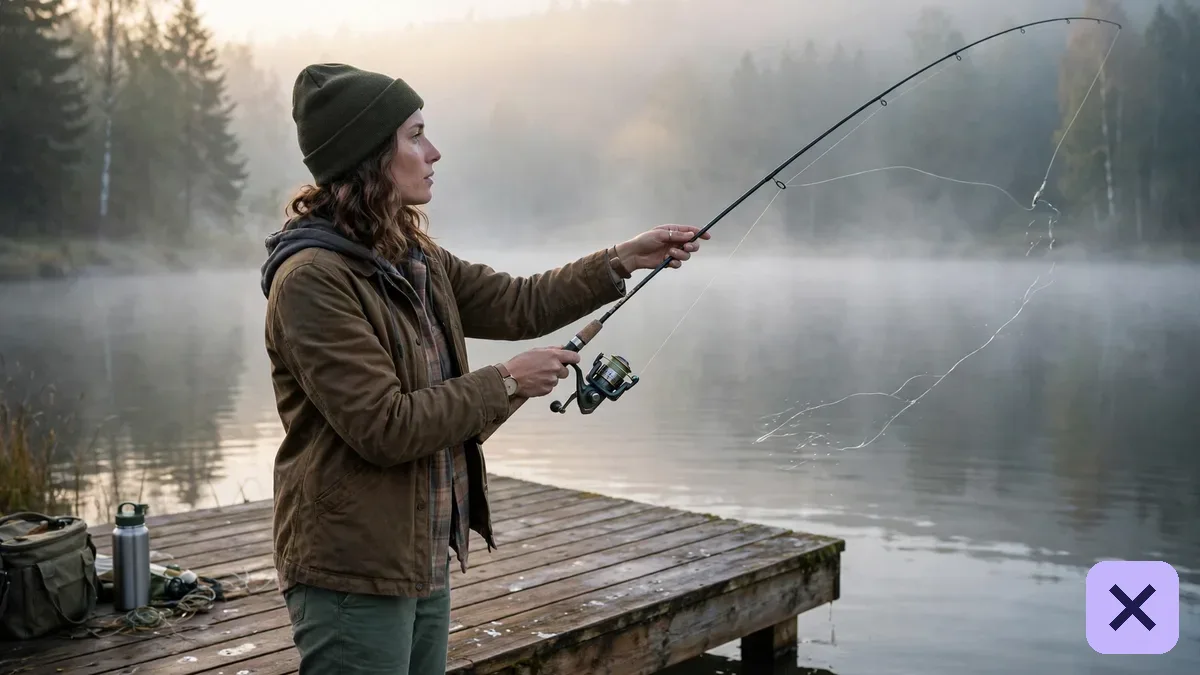
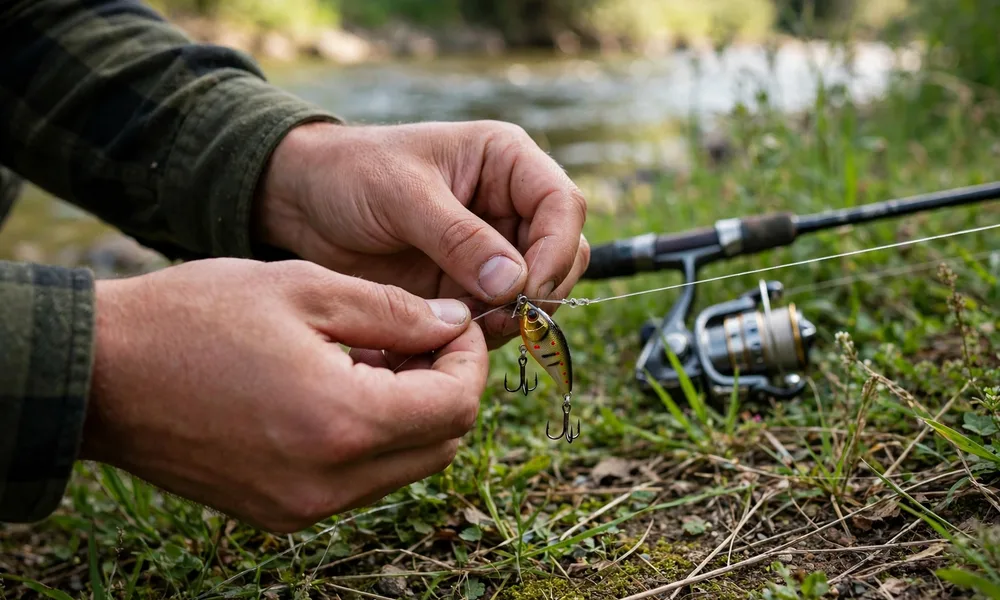
A spinning rod pairs with a fixed-spool reel that hangs underneath the rod, and it is the easiest combination to learn. You open the bail arm, hold the line, swing the rod, and release the line to cast. Spinning rods handle light lures well and forgive sloppy casting, which is why almost every fishing teacher recommends them. If you are buying your first rod, buy a spinning rod.
Baitcasting rods: powerful, but not for beginners
A baitcasting rod pairs with a reel that sits on top of the rod, and it gives experienced anglers more control with heavier lures. The catch is that baitcasting reels are prone to backlash, the tangled nest of line that appears when the spool spins faster than the line leaves it, and learning to control that takes practice. Learn on a spinning rod, and add a baitcaster later.
Fly rods: a different world of fishing
A fly rod is a long, flexible rod used to cast an almost weightless fly, and fly fishing is a different skill altogether. It is deeply rewarding, but a poor way to start: take a lesson and borrow a rod first, because a fly rod bought on a whim usually ends up gathering dust.
Telescopic and travel rods: convenient, with a trade-off
Telescopic rods collapse to a short length, and travel rods break into three or four sections, which makes them easy to carry on a bike, a train, or a holiday. Modern travel rods are far better than the floppy telescopic rods of the past, and a good one is a sensible second rod. As a first rod, a two-piece rod is usually better, because it is stiffer, more sensitive, and cheaper for the same quality.
| Rod type | Best for | Difficulty | First rod? |
|---|---|---|---|
| Spinning rod | Lakes, ponds, rivers, general fishing | Easy | Yes, the best choice |
| Baitcasting rod | Heavy lures, bass, thick cover | Hard | No, add it later |
| Fly rod | Fly fishing for trout and salmon | Hard | No, take a lesson first |
| Telescopic / travel rod | Travel, holidays, tight storage | Easy | Good second rod |
| Sea / surf rod | Beach and pier fishing | Medium | Only for sea fishing |
Mistakes That Waste Money on a First Rod
The most expensive mistake is buying a rod for the fishing you imagine rather than the fishing you will actually do. A long surf rod looks exciting in the shop, but it is useless on a small lake. Buy for your local water first, and let the specialist rods come later, once you know which kind of fishing you enjoy most.
The second mistake is buying the cheapest rod on the shelf. Very cheap rods are often heavy, poorly balanced, and fitted with rough guides that damage your line. You do not need to spend a fortune, but a mid-priced rod from a known brand will cast better, last longer, and feel better all day. A good rule is to spend about the same on the rod as on the reel.
The third mistake is ignoring the rod’s balance and weight. A rod that feels fine for thirty seconds in the shop can feel like a fence post after four hours on the bank, and a tip-heavy rod will tire your wrist and ruin your casting. Hold the rod with a reel attached and see how it feels: the right rod feels light, balances near the reel, and swings smoothly.
It is also worth thinking about the rest of your kit before you head out. A landing net, a small tackle box, and a comfortable seat make a bigger difference than a slightly better rod. If you plan long days outdoors, our guide to the best camping tents in 2026 covers tents that hold up for weekend trips, the best vs worst coolers in 2026 comparison helps you keep bait fresh, and our guide to the best hiking backpacks in 2026 will help if you walk a long way to the water.
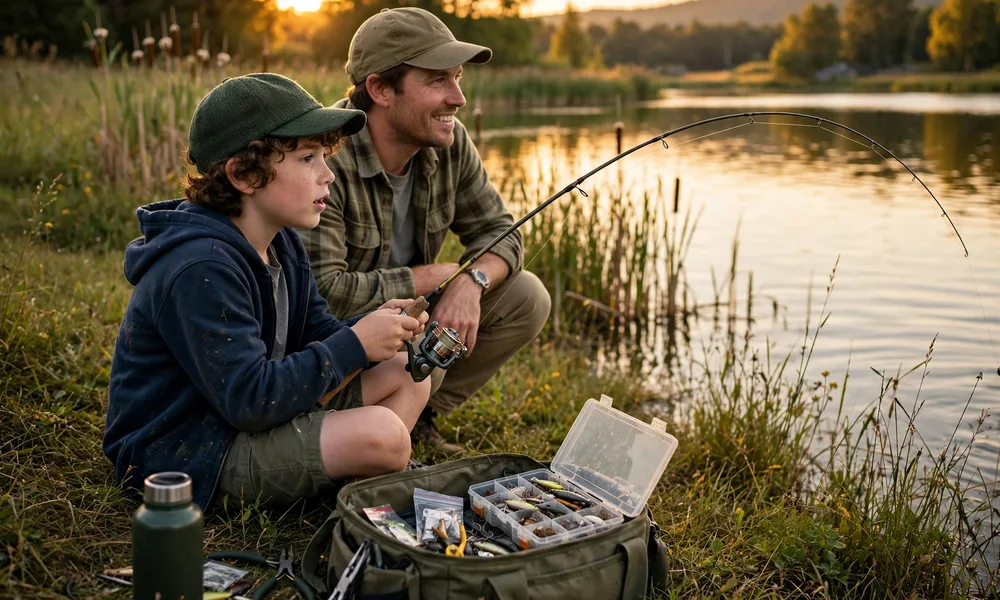
Beginner Fishing Rod Checklist
- Choose a medium-power spinning rod, 6 feet 6 inches to 7 feet long, with a fast or moderate-fast action.
- Match the rod to your local water, not to the fishing you dream about, and buy for perch, trout, bass, or roach first.
- Pair the rod with a sensibly sized fixed-spool reel, or buy a ready-made rod and reel combination.
- Hold the rod with the reel attached before you buy, and check that it balances near the reel and feels light in the hand.
- Buy a rod bag or tube, and store the rod dry and out of direct sunlight so it lasts for years.
- Budget for a landing net, a small tackle box, and a few basic lures or hooks, not just the rod itself.
Frequently Asked Questions
What is the best fishing rod for a complete beginner?
A medium-power spinning rod, 6 feet 6 inches to 7 feet long, with a fast or moderate-fast action, is the best first rod for most beginners. It casts well, handles a wide range of lures and fish, and is forgiving while you are still learning to cast.
Should I buy a one-piece or a two-piece rod?
A one-piece rod is slightly more sensitive and has no joint to loosen, but a two-piece rod is far easier to carry and store, and modern two-piece rods lose almost nothing in performance. For most beginners, a two-piece rod is the practical choice.
How much should I spend on my first fishing rod?
A mid-priced rod from a known brand is the best value for a beginner, and spending about the same on the rod as on the reel is a good rule. Very cheap rods are heavy and badly balanced, while very expensive rods are built for specialists and will not help a beginner catch more fish.
What line should I use with a beginner rod?
Monofilament line in the 6 to 10 pound range suits most beginner spinning rods, because it is cheap, forgiving, and easy to handle. Braided line casts further and is more sensitive, but it is harder to manage and more expensive, so it is better saved for later.
Can one rod do everything?
One medium-power spinning rod can cover most freshwater fishing, from small lakes to slow rivers, but it cannot do everything well. Sea fishing, fly fishing, and heavy-cover bass fishing all need specialist rods, so treat your first rod as a general tool and add specialists as your fishing grows.
How do I look after a fishing rod?
Store the rod in a bag or tube, out of direct sunlight, and wipe it dry after use. Rinse it with fresh water after sea fishing, check the guides for cracks or rough spots, and never lean a rod against a car or a wall where it can be knocked over.
The Bottom Line
The best fishing rods for beginners are not the most expensive rods in the shop, but the ones that match the water you fish, cast smoothly, and forgive the mistakes every new angler makes. Choose a medium-power spinning rod around 6 feet 6 inches to 7 feet long, match it with a sensible reel, and spend the money you save on time on the water. The rod that gets you fishing often is the rod that makes you a better angler.