Fly traps beat sprays for indoor flies in 2026 because they work while you do nothing at all. A spray kills the flies you can see in the moment you spray them, and then it is gone. A fly trap keeps working hour after hour, catching the flies that drift in while you cook, eat, or sleep.
This guide explains how the main types of fly traps work, which ones suit a kitchen, a bedroom, or a patio, and how to place them so they catch flies.
Key Takeaways
- Fly traps work continuously, while sprays only kill the flies you hit in the moment, so traps cut the fly population over days, not minutes.
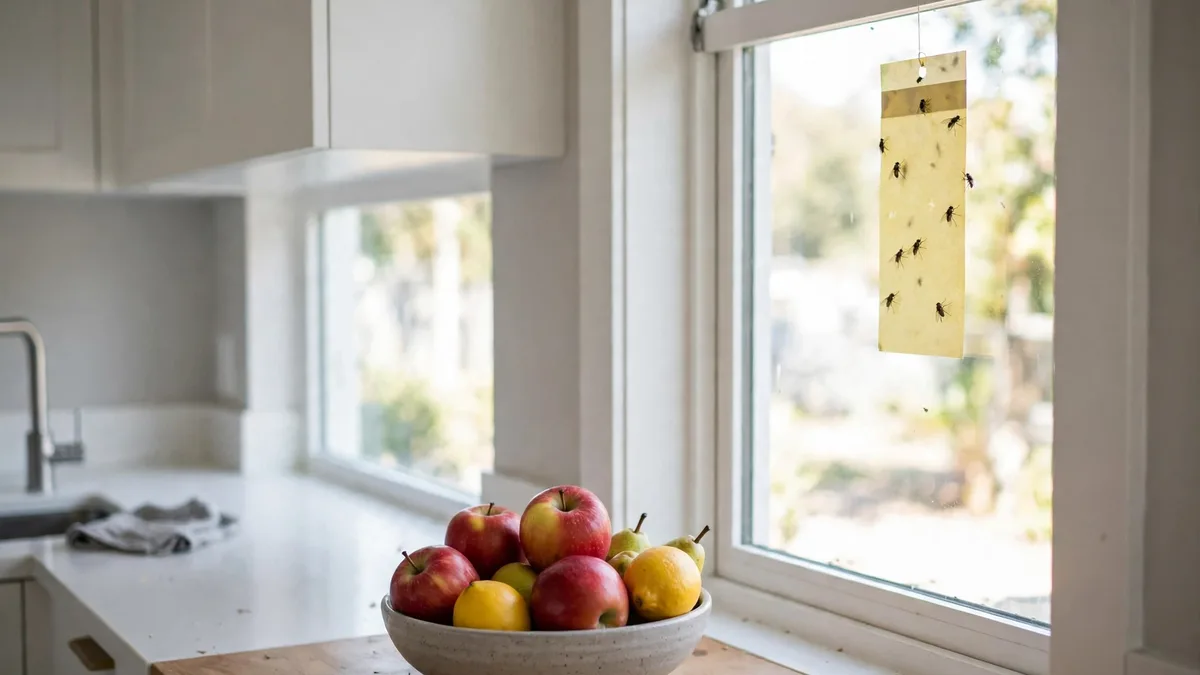
- Sticky window traps are the cheapest option for kitchens, and they work best where flies gather: sunny windows and fruit bowls.
- UV light traps catch flies overnight in bedrooms, but they need darkness, so keep them away from bright windows.
- Bait traps catch the most flies outdoors, yet their smell makes them a poor choice indoors, so keep them outside, away from seating.
- Placement matters more than brand: a trap in the wrong spot catches almost nothing.
Why Fly Traps Beat Sprays for Indoor Flies
Flies do not arrive all at once. They drift in one or two at a time through an open door or window, all day long. A spray can only deal with the flies present when you pick it up. A trap is always on duty, removing flies as they arrive, so the population falls steadily instead of bouncing back.
Sprays also bring chemicals into the rooms where you eat and sleep, leaving a smell and a residue most people do not want over a kitchen counter or a baby’s bedroom. Traps avoid that entirely: sticky traps use glue, light traps use ultraviolet light and a sticky board, and bait traps use a food-based lure.
Sprays still have a place: they are the fastest way to deal with a sudden swarm. Our guide to the best bug sprays in 2026 covers the strongest options for those moments. A net is the other half of the answer at night: a physical barrier that keeps biting insects off a sleeping person while a trap clears the room. Our guide to the best mosquito nets in 2026 explains mesh sizes and hanging.
How Fly Traps Actually Work
Every fly trap exploits something flies cannot resist: light, warmth, or the smell of food. Houseflies navigate by light, which is why they gather on windows and lamps, and they are drawn to fermenting fruit, meat, and rubbish. A good trap puts one of those attractions in a place the fly cannot escape from.
Sticky traps are the simplest design: a sheet or strip coated in strong glue, hung where flies land. Window traps use the same idea in a smaller form, sticking directly to the glass where flies cluster. They are silent and cheap.
UV light traps use a low-power ultraviolet bulb to attract flies in a darkened room. Once a fly flies close, it lands on a glue board or is pulled in by a small fan. They work best at night, because bright daylight dilutes the bulb. Bait traps use scent: flies enter a container through a funnel they cannot find their way out of. They catch large numbers, which is why they suit patios, but their smell keeps them outdoors.

The Best Fly Traps of 2026
1. Best Overall: Catchmaster Window Fly Trap
The Catchmaster is a clear, near-invisible sticky sheet that presses onto the inside of a window. Flies are drawn to the window light anyway, so the trap sits exactly where they go. Each sheet holds dozens of flies, and a pack of four costs less than a can of spray.
2. Best Sticky Ribbon: Raid Fly Ribbons
Raid fly ribbons are the old-fashioned hanging strips that unroll from a small tube, and they still work brilliantly. Hang one near a window or above a bin, and flies land on it within hours. They are the cheapest trap on this list. The downside is that they look like what they are: a sticky ribbon covered in dead flies. Fine in a garage, less so in a kitchen.
3. Best UV Light Trap: DynaTrap Indoor Fly Trap
The DynaTrap combines a UV light with a quiet fan and a sticky glue board, and it is the best choice for bedrooms after dark. Plug it in on a side table, and the light draws flies in while the fan pulls them onto the glue board. It runs almost silently and works best in a dim room, away from bright lamps and windows.
4. Best Bait Trap for Outdoors: Rescue Outdoor Disposable Fly Trap
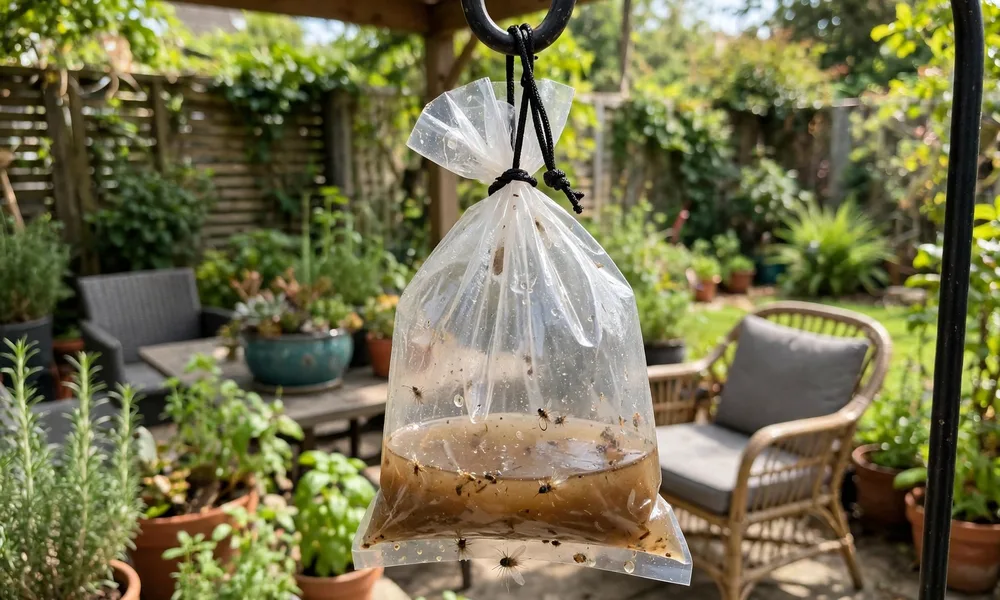
The Rescue outdoor trap is a hanging bag with a water-activated bait that draws flies in from a surprising distance. Hang it from a tree or fence post at least six metres from the house, add water, and within a day it will be catching flies by the dozen. The bag holds thousands of flies and is disposable. The smell is strong, which is why it must stay outdoors and downwind of seating.
5. Best for Kitchens: Zevo Flying Insect Trap
The Zevo trap is a small plug-in unit with a blue light and a replaceable sticky cartridge, designed to sit unobtrusively in a kitchen or hallway. It looks more like a night light than a pest trap: guests will not notice it. The cartridge slides out for replacement without touching the glue. It catches fewer flies than a large UV trap, but it is the most liveable option where appearance matters.
6. Best Budget Pick: Terro Fruit Fly Trap
The Terro trap is a small, apple-shaped container with a liquid lure, aimed mainly at fruit flies. Place it next to the fruit bowl or the bin, and the lure draws fruit flies in through a small opening they cannot escape from. It works within a day and costs very little.
Fly Traps 2026 Comparison Table
| Trap | Type | Best for | Power | Smell | Price |
|---|---|---|---|---|---|
| Catchmaster Window Trap | Sticky sheet | Kitchens, windows | No | None | Low |
| Raid Fly Ribbons | Sticky ribbon | Garages, utility rooms | No | None | Very low |
| DynaTrap Indoor | UV light and fan | Bedrooms, living rooms | Yes | None | Medium |
| Rescue Outdoor Trap | Bait bag | Gardens, patios | No | Strong | Low |
| Zevo Flying Insect Trap | UV light, plug-in | Kitchens, hallways | Yes | None | Medium |
| Terro Fruit Fly Trap | Bait container | Fruit flies | No | Mild | Very low |
Where to Place a Fly Trap Indoors
Placement decides whether a trap works or not. Flies follow light and food, so the best spots are the ones flies already visit: sunny windows, the wall beside a fruit bowl, and the corner near a bin. A window trap belongs on the sunniest window in the room, at about head height.
UV traps need the opposite treatment. Put them in the darkest corner of the room, away from competing lights, so the bulb is the brightest thing the flies can see. A UV trap next to a bright window will be ignored. In a bedroom, a bedside table opposite the window works well.
Do not place a trap right next to the thing you are protecting. A trap beside a fruit bowl draws flies toward the fruit as well as toward the trap. Place it a metre or two away, on the route flies take to reach the food, so they meet the trap first. The same logic applies outdoors: hang a bait trap away from the patio, not above the barbecue. Our guide to the best camping essentials in 2026 includes portable traps worth packing if you cook outdoors regularly.
Mistakes That Make Fly Traps Fail
The most common mistake is leaving a trap up long after it has filled. A sticky sheet covered in flies has no clean glue left, so new flies land on old ones and fly away again. Check sticky traps every few days in summer, and replace them as soon as the surface looks crowded.
The second mistake is using one trap for a whole house. Flies do not travel far indoors, so a trap in the kitchen does nothing for the flies in the bedroom upstairs. Most homes need at least two traps: one in the kitchen, and one in the bedroom. The third mistake is placing bait traps indoors, which draws flies in that might otherwise have stayed outside.
The fourth mistake is ignoring the source: a bin that is not emptied, fruit left to rot, or a drain that needs cleaning. Fix the source and the traps will have less work to do.
Outdoor Fly Traps for Patios and Gardens
Outdoor traps earn their keep in summer, when eating outside is otherwise a battle against flies. Place the trap downwind and at least six metres from where people sit, so flies are drawn away from the table. A bait bag hung from a tree at the far end of a garden works well, and combined with indoor sticky traps near the back door, far fewer flies will make it inside.
Fly Trap Buying Checklist
- Match the trap to the fly: sticky or UV traps for houseflies, a small bait container for fruit flies, and a bait bag outdoors.
- Count your rooms: one trap for the kitchen, one for the bedroom or living room, and one for outdoors.
- Check running costs: refills, glue boards, and cartridges are the real cost over a summer.
- Place it where flies go: sunny windows, near bins, and dark corners for UV traps.
- Keep bait traps outdoors and downwind of seating, and never use a zapper over food preparation areas.
- Check traps every few days in summer, and replace a full sticky sheet or glue board straight away.
Frequently Asked Questions
Do fly traps really work indoors?
Yes, provided the trap matches the room and is placed where flies actually go. Sticky window traps catch flies in kitchens within a day, and UV traps catch flies overnight in dark bedrooms. A trap in the wrong spot, or one left full, catches very little.
Are fly traps safe around children and pets?
Sticky and UV traps are generally safe, because they use glue and light rather than chemicals. Keep sticky ribbons out of reach of children and pets, since the glue is unpleasant to remove from hair and fur. Bait traps should stay outdoors.
How long does a fly trap last?
A sticky sheet lasts until its surface is covered: a week in a bad summer, or a month in a quiet house. A UV trap lasts for years, with only the glue boards needing replacement monthly. A bait bag lasts a few weeks outdoors.
Why is my fly trap not catching anything?
Usually it is in the wrong place. A UV trap beside a bright window is ignored, and a sticky trap in a dark corner is never visited. Move the trap to a sunny window or a dark corner, and give it two or three days.
Do fly traps work on fruit flies?
Standard sticky and UV traps catch some fruit flies, but a small bait container designed for fruit flies works far better. Place it next to the fruit bowl and remove overripe fruit at the same time.
Should I use a fly trap or a spray?
Use a trap for everyday control and a spray for sudden swarms. The trap works continuously, while the spray deals with the flies in front of you right now. Most homes benefit from having both.
The Bottom Line
Fly traps beat sprays for indoor flies because they never stop working. A spray wins a single battle; a trap wins the summer. Start with a sticky window trap in the kitchen, add a UV trap in the bedroom, and hang a bait bag away from the patio. Check them weekly, and replace them when full.