How to Choose Fruit Tea: Berry, Citrus and Apple Blends Worth Brewing in 2026
The best fruit tea in 2026 is the one that tastes like the fruit on the packet. It brews into a bright, clear cup, smells of berries or citrus the moment the water hits it, and finishes clean rather than sticky. It is dried fruit, flowers and peel, steeped slowly.
The shelf is crowded with blends that look alike and taste very different, from loose-leaf mixes full of real apple and hibiscus to bags of coloured dust that taste of flavouring. This guide sorts them out: what fruit tea actually is, berry versus citrus versus apple blends, loose leaf versus bags, and how to brew a cup that tastes like fruit.
5 Key Takeaways
- Fruit tea is an infusion of dried fruit, flowers and peel, not true tea, so it is naturally caffeine-free.
- Berry blends brew ruby-red and tart, citrus blends golden and bright, apple blends mellow and honeyed: pick by flavour, not by colour.
- Read the ingredients before the price: real dried fruit should come first, and flavouring should not be doing the work.
- Use near-boiling water and a long steep of five to seven minutes, because dried fruit gives up its flavour slowly.
- Loose-leaf fruit blends usually taste fuller than bags, and a good blend brews beautifully iced as well as hot.
What Fruit Tea Actually Is
Fruit tea is made from dried fruit, and that is the whole definition. The base is usually apple or hibiscus, with rosehip, berries, orange peel or lemon peel layered in. There is no leaf of the tea plant in it, so it is not tea in the strict sense: it is an infusion, in the same family as chamomile and peppermint, and naturally free of caffeine. Our guide to the best herbal teas of 2026 puts fruit blends alongside the other caffeine-free classics.
The base matters more than the flavour on the front of the packet. Hibiscus is the usual backbone of a red fruit tea: it gives the deep ruby colour and a tart, cranberry-like bite. Apple is the usual backbone of a golden blend: it gives body and a gentle natural sweetness. A blend built on apple and hibiscus with real fruit pieces on top will taste like fruit. A blend built on flavouring and citric acid will taste like a sweet shop, and no steeping fixes it.
Berry Blends: The Tart, Ruby Cup
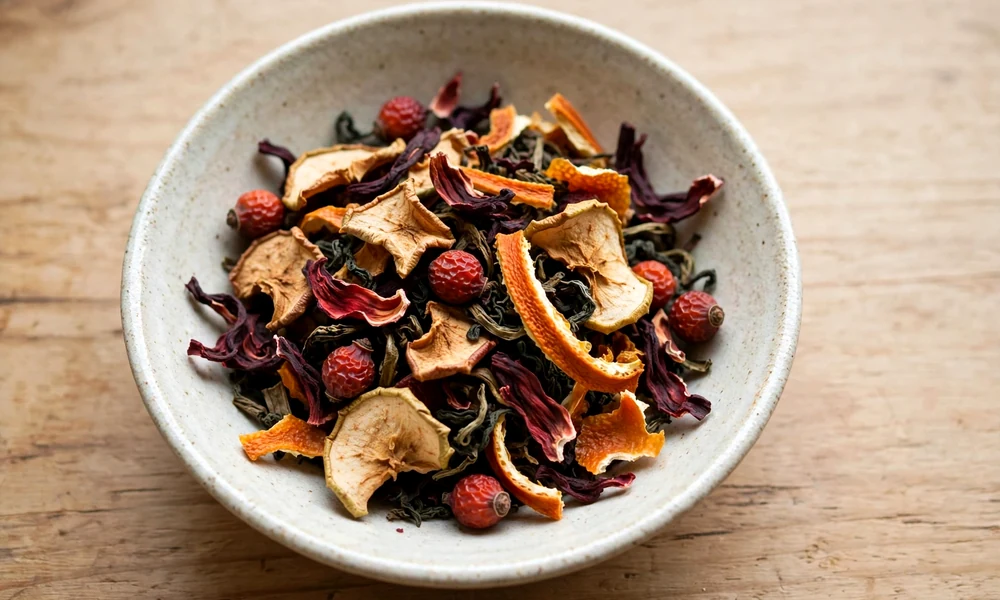
Berry blends are the best-known fruit teas, and the easiest to judge. A good one pours deep ruby-red and smells of berries before you taste it. The tartness should come from the fruit itself, usually hibiscus and rosehip with raspberry, blackberry, strawberry or currant pieces, balanced by the dried fruit rather than by added sugar. If the cup tastes sharp and thin, the blend is mostly hibiscus and acid. If it tastes syrupy, it is sweetened, and the fruit is decoration.
Look at the dry blend before you buy it twice. You should be able to see recognisable pieces: whole rosehips, dried berry pieces, hibiscus petals, and apple chunks that hold the blend together. Dust and tiny coloured crumbs mean the fruit has been ground fine, and a finely ground blend brews fast and flat. Whole pieces brew slower, taste fuller, and survive a second steep far better.
Citrus Blends: Bright, Sunny and Forgiving
Citrus blends are the sunny side of the fruit-tea shelf. Orange peel, lemon peel and dried citrus slices give a bright, clean flavour that lifts the whole cup, and they pair well with apple for body, hibiscus for colour, or ginger for warmth. A good citrus blend tastes like a freshly peeled orange rather than like a cleaning product, and the difference is the quality of the peel. Real dried orange peel is fragrant and slightly bitter in a pleasant way. Flavouring that imitates orange is sharp and one-note, and it lingers in a way real peel does not.
Citrus blends suit people who find berry blends too tart, because citrus reads as bright rather than sour, and the apple base keeps the cup round. They brew well hot and chill well, and a strong brew with a little honey makes a good summer punch. Keep the peel in for the full steep, because citrus flavour comes out slowly.
Apple and Orchard Blends: The Gentle Everyday Cup
Apple blends are the quiet workhorses of the fruit-tea shelf. A good apple blend brews golden-amber, tastes gently sweet and honeyed, and drinks like a warm orchard. The apple pieces give body and natural sweetness, and they carry other flavours well: cinnamon for warmth, or a few rosehips for colour and a little tart lift. It is the blend most people reach for every day, and the one that works best as an evening drink, because it is soothing rather than stimulating.
Apple is also the base of most mixed fruit blends, which is why it deserves its own attention. A blend that is mostly apple with a scatter of berries will taste mostly of apple. Turn the packet over: if apple is first and the named fruit is fourth or fifth, expect an apple tea with a hint of something else.
Fruit Tea Compared
| Fruit tea style | Colour in the cup | Flavour | Best served |
|---|---|---|---|
| Berry blend | Deep ruby-red | Tart, rich, berry-led | Hot or iced, plain |
| Citrus blend | Bright golden | Clean, zesty, refreshing | Hot, iced, or with honey |
| Apple blend | Warm amber | Gentle, sweet, honeyed | Hot, in the evening |
| Mixed fruit blend | Amber to red | Round, layered, fruity | Hot or iced, any time |
Loose Leaf or Tea Bags?
Loose-leaf fruit tea usually tastes better than the same blend in a bag, and the reason is visible. Loose blends use whole dried pieces, apple chunks, whole rosehips, hibiscus petals and strips of peel, with room to unfurl and release flavour slowly. A bag holds the same ingredients ground small, and small pieces brew fast and flat: the first cup is strong and the second is water. Loose leaf also lets you control the strength, and it often works out cheaper per cup.
Tea bags win on convenience, and there is nothing wrong with a good one. The best bags use large-cut dried fruit rather than dust, and they brew a pleasant cup in minutes with no mess. Open a bag and look: if you can see recognisable pieces of fruit and petal, it is a good bag. If it is all fine coloured dust, the flavour will be thin. For brewing loose blends properly, our guide to which tea infuser brews a cleaner cup covers baskets and strainers that keep the pieces out of your cup without choking the flavour.
How to Brew Fruit Tea Properly
Fruit tea is forgiving, but it rewards patience. Dried fruit gives up its flavour slowly, so the two mistakes are the same as with every infusion: water that is not hot enough, and a steep that is too short. Use freshly boiled water, just off the boil, and steep for five to seven minutes, covered if you can, so the aromatic oils do not escape with the steam. The colour tells you when it is ready: ruby for berry, bright gold for citrus, warm amber for apple. If the cup still looks pale, give it another two minutes rather than another spoonful.
Use a generous spoonful per cup, about two to three grams per 250 millilitres, and a little more for a pot. Fruit tea is almost impossible to over-brew: it has no tea leaf, so there is no tannin to turn bitter, and a long steep only makes the cup fuller. That forgiveness is the reason people love it and the reason they brew it badly: because it never turns bitter, it is easy to under-brew it and end up with a pale, weak cup, then blame the blend. Use more fruit and give it more time than you would for black tea.

Hot or Iced: Two Drinks From One Blend
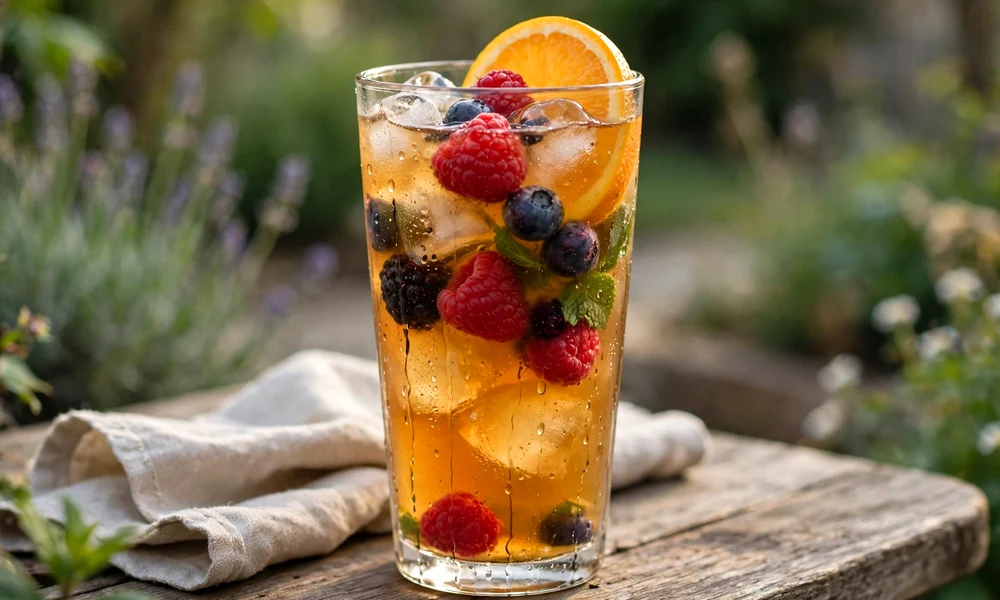
The same fruit blend makes two different drinks, and both are worth knowing. Hot, it is a slow, fragrant cup, best in the evening or on a cold afternoon, when the steam carries the fruit aroma. Iced, it is a bright, refreshing drink for warm days, and one of the best iced drinks you can make at home because it needs no caffeine. Our guide to the best iced teas for summer sipping covers cold brewing in detail.
To brew iced fruit tea, make it double strength: twice the blend, the same five to seven minutes, then pour over a glass full of ice. The ice dilutes the brew as it melts, so a normal brew ends up thin. Or cold-brew it overnight: blend and cold water in a jug in the fridge for eight hours, then strain. Cold brewing gives a smoother, sweeter cup with almost no tart edge, and it suits berry blends especially well. Add fresh fruit to the glass, not the pot, so it stays bright and the blend stays in charge.
Your Fruit Tea Checklist
- Real dried fruit comes first on the ingredients list, not flavouring, sugar or citric acid.
- You can see recognisable pieces in the blend: apple chunks, rosehips, hibiscus petals, strips of peel.
- The colour matches the fruit: ruby for berry, gold for citrus, amber for apple, with no artificial brightness.
- It brews with near-boiling water for five to seven minutes and still tastes full, not thin or dusty.
- It is naturally caffeine-free, with no tea leaf in the blend, so it works as an evening drink.
- It tastes good unsweetened, and honey is an option, not a rescue.
Fruit Tea FAQs
Is fruit tea actually tea?
No, not in the strict sense. True tea comes from the leaves of the tea plant, and fruit tea contains no tea leaf at all. It is an infusion of dried fruit, flowers and peel, which is why it is naturally caffeine-free.
Does fruit tea contain caffeine?
Almost never. A pure fruit blend has no caffeine because there is no tea leaf in it. Check the packet if the blend is described as flavoured black or green tea, because those are true teas with fruit flavouring and they do contain caffeine.
Why does my fruit tea taste weak?
Usually because it was under-brewed. Dried fruit releases flavour slowly, so use near-boiling water, a generous spoonful per cup, and a full five to seven minutes. If the cup still tastes thin, the blend is the problem: finely ground dust and flavouring cannot make a full cup.
Can I brew fruit tea twice?
Yes, with loose leaf. A good loose-leaf blend gives a pleasant second cup, a little lighter than the first. Bags rarely survive a second steep, because the small pieces give up everything at once. Add a minute or two to the second steep.
Is fruit tea full of sugar?
A pure fruit blend contains no added sugar, only the natural sugars in the dried fruit, and a cup brewed plain is light. Some blends add sugar, so read the ingredients: if sugar appears near the top of the list, the blend is a sweet drink, not a fruit tea.
What is the best fruit tea for evenings?
Apple blends are the gentlest evening choice, mellow and honeyed, and berry blends work well too. Any pure fruit tea is caffeine-free, so the best evening blend is simply the flavour you enjoy most.
Bottom Line
The best fruit tea is the one that tastes like fruit, and the test is simple: real dried pieces you can see, a colour that matches the fruit, and a cup that needs no sweetener. Start with one blend in the family you like, berry for tart, citrus for bright, apple for gentle, and brew it properly: near-boiling water, five to seven minutes, a generous spoonful. Once you know what real fruit tea tastes like, the flavoured dust will never fool you again.