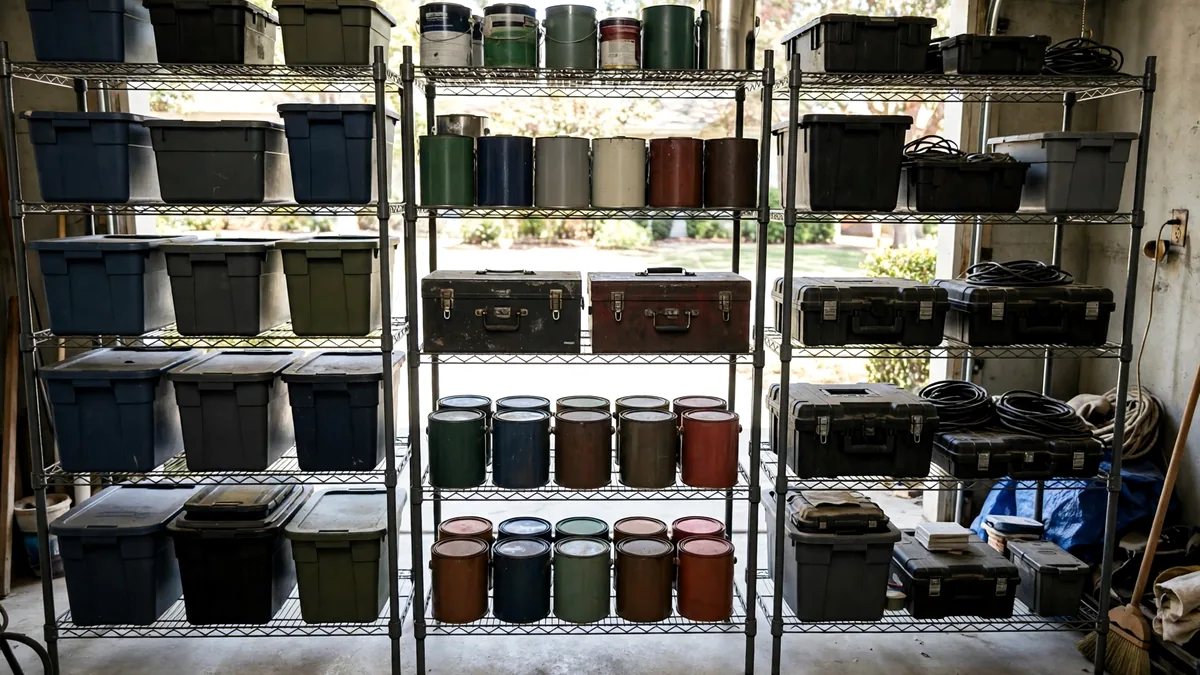
Garage Shelving That Holds Heavy Gear Without Sagging in 2026
Garage shelving earns its keep the first time you load it with paint tins, toolboxes and boxes of spares and it stays dead straight. The best garage shelving of 2026 is not the tallest or the cheapest unit on the shelf. It is the unit whose shelves stay level under a real load, whose frame does not rack when you lean on it, and whose depth fits your garage without stealing the parking space. This guide looks only at shelving units themselves: freestanding steel racks, wall-mounted shelf units, wire shelves and wooden units, judged on weight ratings, depth, materials and how they behave after a year of daily use.
Most shelves fail the same quiet way: the middle bows a few millimetres, then a few more, until boxes slide to the centre. The cause is usually a board that was too thin or a rating that counted the whole unit instead of one shelf.
Key Takeaways
- Check the per-shelf weight rating, not the whole-unit rating, and keep at least a quarter of it in reserve.
- Steel uprights with bolted or clip-lock joints stay square under load; thin plastic connectors do not.
- A shelf depth of 45 to 60 centimetres suits most garages, while deeper shelves eat into parking space.
- Wire shelves suit dusty garages and airflow, while solid boards suit small items that would slip through.
- Wall-mounted shelf units free the floor, but only when fixed into studs or solid masonry.
Garage Shelving at a Glance
| Best for | Type | Per-shelf rating | Depth | Standout strength |
|---|---|---|---|---|
| Best overall | Heavy-duty freestanding steel | 200 kg | 60 cm | Stays level under paint tins and toolboxes |
| Best for heavy loads | Bolted steel rack | 250 kg | 60 cm | Bolted joints, no wobble at full load |
| Best wire shelving | Chrome steel wire | 150 kg | 45 cm | Airflow stops dust settling |
| Best wall-mounted | Wall-mounted steel shelf unit | 100 kg | 45 cm | Frees the floor completely |
| Best budget | Boltless steel rack | 120 kg | 45 cm | Strong for the price, easy to build |
| Best for small garages | Slim rolling unit | 80 kg | 35 cm | Narrow, moves aside when needed |
How We Judged Garage Shelving
We judged every shelving unit on five things that decide whether it lasts in a real garage. Weight capacity came first, and we read it the hard way: per shelf, evenly spread, with the unit fixed to a wall where the maker required it. A rating that sounds generous means little if it counts all five shelves together, so we treated the per-shelf figure as the real number and favoured units that printed it clearly.
Next came the frame. We looked for uprights that stay square when loaded unevenly, joints that lock without play, and feet that sit flat on a concrete floor that is never quite level. A unit that racks sideways when you push it will only get worse, so cross-bracing and bolted joints earned extra credit. Materials came third: powder-coated steel resists rust in a damp garage, thick boards resist bowing, and wire shelves resist dust build-up.

1. Best Overall Garage Shelving
The best overall garage shelving is a heavy-duty freestanding steel unit with five adjustable shelves, each rated for around 200 kilograms. It wins because it does the ordinary job brilliantly: it holds paint tins, toolboxes, bags of compost and crates of spares on shelves that stay level, year after year. The uprights are thick steel with clip-lock joints, the boards are solid rather than thin chipboard, and the whole unit bolts to the wall so it cannot tip forward when a child pulls on it or you lean a ladder against it.
What sets it apart is how little it asks of you. The shelves slide to new heights in minutes, so a tall box gets a tall space and shallow bins share a level without wasting headroom. At 60 centimetres deep it swallows a standard storage box with room to spare, yet it still leaves a sensible gap to a parked car in most single garages. It is not the cheapest unit here, but it is the one most garages should buy first.
2. Best Garage Shelving for Heavy Loads
When the load is genuinely heavy, a bolted steel rack is the honest choice. Every joint is bolted rather than clipped, the uprights are heavier gauge, and each shelf is rated for around 250 kilograms. That matters when you store engine parts, full paint tins, bags of cement or a stack of hardwood offcuts, because those loads punish a weak frame in a way that light boxes never do.
3. Best Wire Garage Shelving
Wire shelving suits garages that are dusty, damp or full of items that benefit from airflow. The shelves are chrome-plated steel wire, so dust falls through instead of settling, air circulates around stored items, and you can see what is on a shelf from below. Each shelf holds around 150 kilograms, which covers most household garage loads comfortably.
4. Best Wall-Mounted Garage Shelving
A wall-mounted shelf unit is the best choice when floor space matters more than anything else. Fixed to studs or solid masonry, it holds around 100 kilograms per shelf and leaves the floor underneath completely clear for sweeping, for a bike, or for a car door to swing open. That clear floor is the real prize in a small garage, where every square metre counts twice.

5. Best Budget Garage Shelving
A budget rack has to answer one fair question: is it actually better than stacking boxes on the floor? The best budget option says yes, because even at a modest price it offers a boltless steel frame, shelves rated for around 120 kilograms each, and adjustable heights that let you fit real boxes rather than whatever happens to stack. It is strong enough for most home garages, from paint and tools to seasonal decorations and sports kit.
6. Best Garage Shelving for Small Garages
Small garages need shelving that knows its place. A slim rolling unit, only 35 centimetres deep, fits against a wall that a standard rack would block, and its castors let you pull it out to reach the back or roll it aside when you need the space for a bigger job. Each shelf holds around 80 kilograms, which is plenty for hand tools, cleaning supplies, small boxes and garden kit.
What to Look for When Buying Garage Shelving
Start with the weight rating, and read it properly. The number that matters is the per-shelf rating with the load spread evenly, not the total for the whole unit. If a maker only prints a total, divide it by the number of shelves and then knock off a quarter for safety, because garages accumulate weight over time and nobody weighs every box. If you plan a whole garage layout rather than a single unit, our guide to the best garage storage systems shows how shelving fits alongside the rest of the room.
Then measure the space with a tape, not your eye: wall length, height to pipes or lights, and clearance between the shelf front and a parked car with the doors open. Leave a walkway of at least 60 centimetres, and remember that 60 centimetres of depth holds a standard box while 45 suits lighter storage.
Materials decide how long the unit lasts. Powder-coated steel resists rust in a damp winter garage, while bare steel will show rust within a year if the coating is thin. Solid boards beat thin chipboard, which bows between supports and swells if it gets wet, and wire shelves beat both for airflow but need trays for small items. Check the fixings too: a unit that ships without wall bolts is not a bargain, it is an extra trip to the shop.
Care, Layout and Mistakes to Avoid
Plan the shelves in zones before you buy. Put the things you use weekly at waist or eye level, the things you use monthly on the higher shelves, and the things you use once a year at the top or the bottom. Keep heavy items low, where a slip will not hurt anyone and the frame carries the load best. Leave the parking space clear first and fit the shelving around it, because a shelf that forces the car outside has failed.
Care is simple. Wipe the shelves twice a year, check the wall fixings each spring for loosening or rust, and re-tighten bolted joints after the first month, when new steel settles. Keep the floor clear enough to sweep under freestanding units, and deal with damp at its source, since no shelf survives a garage that floods. If your shelves sit beside a workbench, the tools you store on them deserve the same care as the shelves themselves, and our guide to the best workbenches shows how to set up the working side of the garage.
The most common mistake is buying shelving before sorting what you own. Sort first, throw away or donate what you no longer need, and only then measure and buy. The second mistake is overloading the top shelf, which raises the centre of gravity, and the third is skipping the wall fixings on a tall loaded unit.
Garage Shelving Checklist
- Per-shelf rating checked, with a quarter in reserve.
- Depth measured against the parked car and the walkway.
- Uprights and joints checked for play before loading.
- Unit bolted to the wall or studs where required.
- Heavy items on the lowest shelves, light items up top.
- Labels on boxes so every shelf can be read at a glance.
Frequently Asked Questions
How much weight should garage shelving hold per shelf?
For most garages, 120 to 200 kilograms per shelf covers paint, tools and boxes comfortably. Check the per-shelf figure, not the whole-unit total, and keep a quarter in reserve.
How deep should garage shelves be?
A depth of 45 to 60 centimetres suits most garages. Sixty holds a standard storage box, while 45 suits lighter items and leaves more floor space for the car.
Are wire shelves or solid shelves better in a garage?
Wire shelves suit dusty garages because air circulates and dust falls through. Solid boards suit small items that would slip through wire, and they hold a heavy box more evenly.
Do I need to bolt garage shelving to the wall?
Yes, for any tall or heavily loaded unit. Bolting stops tipping, keeps the frame square, and is essential in a garage where children or a car door can knock a unit.
Can garage shelving hold paint tins and toolboxes?
Yes, if the per-shelf rating covers the load and the weight is spread evenly. Put paint and toolboxes on the lower shelves, where the frame is strongest and a slip is least dangerous.
What is the best shelving for a small garage?
A slim wall-mounted unit or a narrow rolling rack works best. Both leave floor space clear, and the rolling unit can move aside when you need room for a bigger job.
The Bottom Line
The best garage shelving is the unit that matches your load, your wall and your parking space, and then stays level for years. For most garages, that means a heavy-duty freestanding steel unit with shelves rated for around 200 kilograms each, bolted to the wall, with the heaviest boxes low and the everyday items at eye level. Small garages should go slim or wall-mounted, and heavy workshops should go bolted.
Buy the shelf once, install it properly, and it will repay you every time you walk into the garage. The bike comes out without moving three boxes, the tool you need is where you left it, and the car still fits. Keep the load honest, keep the labels current, and if you store a lot in bins as well as on shelves, our guide to the best storage bins will help you choose boxes that fit the shelves you have just bought.