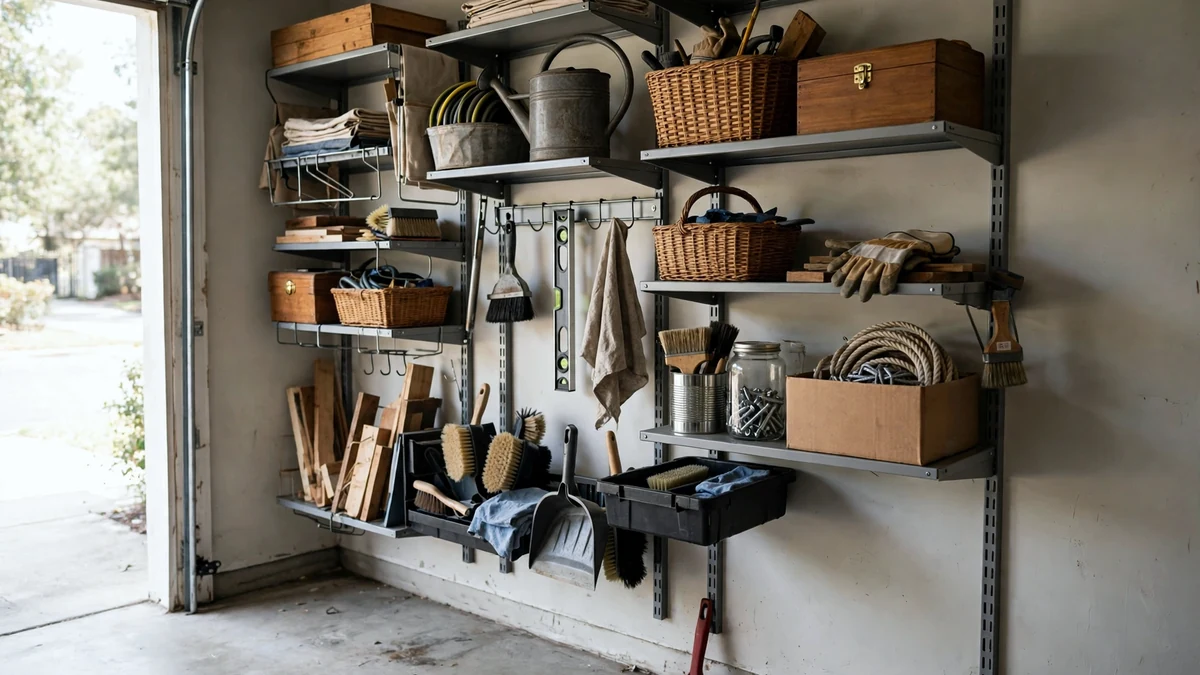
Most garages do not fail because they are too small. They fail because everything in them has nowhere sensible to go, so the floor becomes the shelf, the shelf becomes a pile, and the car ends up parked outside in the rain. A good storage system reverses that drift. It puts the things you use often within easy reach, lifts the things you use rarely up and out of the way, and leaves enough open floor that you can walk in, work in, and park in the space you already own.
The best garage storage systems of 2026 are not the biggest or the flashiest. They are the ones that hold their rated weight without sagging, survive damp winters and hot summers without rusting or warping, and can be rearranged when your life changes. This guide compares the main types side by side and helps you build a setup that fits your garage, your budget, and the way you really live.
Key Takeaways
- Start with wall-mounted storage first, because it frees the floor without a major installation job.
- Overhead racks are the best way to store bulky seasonal items, but only if your ceiling height and joists can take the load.
- Steel cabinets beat plastic ones for heavy tools, while sealed bins beat open shelves for dust and damp.
- Measure your wall space, ceiling height, and garage door clearance before buying anything.
- A system you can rearrange later is worth more than a fixed setup that looks perfect on day one.
How We Judged
We judged every type of garage storage on five things that matter in daily use: how much weight it genuinely holds, how well it survives a real garage environment, how easy it is to install, how simple it is to reach what you need, and how fairly it is priced for what it does. Weight capacity came first, because a shelf that bows under a box of books is worse than no shelf at all. We looked for honest load ratings, solid fixings, and frames that stay square once loaded, rather than optimistic numbers printed on a box.
Durability mattered just as much. Garages are damp in winter, dusty in summer, and knocked about all year, so we favoured powder-coated steel, thick shelving boards, and hardware that resists rust. We also weighed access: the best systems keep everyday items at waist or eye level and push rarely used things higher. Finally, we considered flexibility, because a garage that stores bikes this year may need to store camping gear next year, and a good system should adapt without a full rebuild.

Best Overall: Wall-Mounted Track and Panel Systems
The best overall choice for most garages is a wall-mounted track or slat-wall panel system with hooks, baskets, and shelves that slide along the track. It wins because it does the most useful thing first: it gets bikes, tools, garden gear, and sports equipment off the floor and onto the wall, where they are visible and easy to grab. A single run of panels along one wall can hold a great deal, and because the hooks move, you can rearrange the layout in minutes when you buy something new.
Good systems use steel tracks fixed into studs, with a load rating per hook that you can trust, and they keep heavy items low and light items high. The best panels are thick, well-sealed, and easy to wipe clean, and their accessories lock in firmly instead of lifting off when you pull a tool free. They are not cheap, but for a garage that needs to work hard every day, nothing else gives you so much usable storage for so little floor space.
Best Wall-Mounted: Heavy-Duty Shelving Units
Tall steel shelving units with adjustable shelves suit garages that need to store big, heavy boxes: paint tins, tool cases, bags of compost, and crates of spares. Adjustable shelves let you fit tall items on one level and shallow bins on another without wasting vertical space.
Look for shelves rated for at least 150 kilograms per level, uprights that bolt to the wall so the unit cannot tip, and boards that do not bow under a full load. Steel mesh shelves resist dust build-up and let air circulate, while solid boards are better for small items that might slip through. The trade-off is depth: a deep unit eats into your floor space, so measure the gap between the shelf front and your parked car before you commit.
Best Overhead: Ceiling-Mounted Storage Racks
Overhead racks are the answer to the question every garage owner asks eventually: where do the Christmas decorations, the camping gear, and the suitcases go? A ceiling-mounted rack uses the dead space above your car, which is otherwise wasted, and it is the cheapest way to add a large amount of storage without losing a single square metre of floor. Most racks are steel grids hung from the ceiling joists, ideal for flat, bulky, light items in sealed bins.
The catch is that overhead storage is only as safe as its installation. You must fix into joists, never into plasterboard alone, and you must respect the weight limit strictly, spreading the load evenly rather than piling everything at one end. Keep the rack clear of the garage door mechanism and the opener rail, and leave enough clearance that the car roof passes underneath with room to spare. Access is by step ladder, so overhead racks suit things you need a few times a year, not things you reach for every weekend.
Best Cabinets: Steel Garage Cabinets
For a tidy look and the safest home for valuable tools, steel garage cabinets are the best choice. A row of lockable cabinets hides the visual noise of sprays, oils, spare parts, and cleaning products, keeps dust off everything inside, and keeps curious children and damp air away from things that should stay clean and dry.
The best cabinets are made from thick-gauge steel with a powder-coated finish, doors that close squarely, and shelves that adjust without tools. Magnetic catches and sturdy handles matter more than they sound, because a door that swings open or a drawer that sticks will annoy you every day. Cabinets cost more per litre of storage than open shelves, and they hide things, so label the doors or keep an inventory list inside.
Best Budget: Stackable Bins and Freestanding Racks
If the budget is tight, the best value is not a single expensive system but a thoughtful combination of stackable bins and a basic freestanding rack. Heavy-duty plastic bins with lids are cheap, keep out dust and damp, and stack neatly, and a simple steel rack gives them a home off the floor.
Spend the money where it counts: buy bins with lids that clip shut and handles that do not crack, and choose a rack with a realistic load rating rather than the cheapest frame you can find. Label every bin on two sides so you can read it whichever way it faces, and keep a simple list of what lives where. The limits are real: bins hide their contents, stacks get unstable above three high, and you will outgrow this setup if you store heavy tools.

What to Look for When Choosing
Weight capacity is the first number to check, and it is worth reading carefully. A shelf rated for 200 kilograms sounds generous until you realise the rating may be for the whole unit, evenly spread, rather than for a single shelf. Check the per-shelf rating, check whether the rating assumes the unit is fixed to a wall, and leave a margin of at least a quarter spare, because garages have a habit of accumulating weight over time.
Space is the second question, and it needs a tape measure rather than a guess. Measure the wall length, the ceiling height, and the clearance above your car with the garage door open and closed, because a rack that blocks the door is worse than no rack. Leave walkways of at least 60 centimetres so you can carry things through.
Installation decides whether a system is a weekend project or a job for a professional. Wall tracks and shelves need solid studs or masonry fixings, overhead racks need joists, and cabinets need a level floor. If you are not confident finding a stud or drilling into brick, pay someone who is, because a loaded shelf that pulls out of a wall is dangerous. Check what fixings are included, because some kits ship without the wall plugs and bolts you actually need.
Durability and access are the last two checks, and they pull in opposite directions. The most durable materials, thick steel and sealed hardwood, last for decades but are heavy and harder to move. The most accessible setups, open shelves and hooks at eye level, show dust and clutter, while closed cabinets and lidded bins stay cleaner but hide what is inside. The best garages mix the two: open storage for the tools you grab daily, closed storage for chemicals, spares, and anything you want to keep clean.

Planning, Care and Mistakes to Avoid
Plan the garage in zones before you buy a single shelf. Put the workbench and daily tools near the door or a window, keep sports gear near the entrance so it comes and goes easily, and push seasonal and rarely used items to the back wall or overhead. Leave the parking space clear first and fit storage around it, not the other way round, because a system that forces you to park outside has failed at its job.
Care is simple but worth doing. Wipe shelves and steel frames twice a year, check fixings and brackets each spring for loosening or rust, and re-label bins whenever their contents change, because an out-of-date label is worse than none. Keep the floor clear enough to sweep, and deal with damp at its source, since no storage system survives a leaking roof or a garage that floods in heavy rain.
The most common mistake is buying storage before sorting what you own. Many garages hold broken tools, dried-up paint, and boxes nobody has opened in years, and no rack will fix that. Sort first, throw away or donate what you no longer need, and only then measure and buy. The second mistake is copying the worst storage ideas that create more clutter, such as piling everything into one deep cupboard or stacking bins so high they cannot be reached safely. The third is overloading: respect every weight limit and spread loads evenly.
Your garage also holds your car, so think about the vehicle as part of the plan. Keep a clear path to the driver’s door, store anything flammable well away from the engine and any heaters, and if you park inside every night, a dash cam with parking mode can watch over the car while it sits in the garage. And when the workbench is part of your setup, the tools you hang there deserve the same care as the storage itself; a good starting point is our guide to the best vs worst power tools.
A tidy garage is not a showroom. It is a working room that should make ordinary life easier: the bike comes out without moving three boxes, the tool you need is where you left it, and the car fits with room to spare. Choose a system that matches your space, install it properly, label everything, and keep the floor clear.


