The worst storage ideas that create more clutter usually look sensible at first. A new set of matching bins, a clever shelf, or a deep box that swallows a whole wardrobe all promise order. For a week or two, they even deliver it. Then the bins fill up, the shelf becomes a dumping ground, and the box becomes a place where things go to be forgotten. The problem was never a lack of containers. It was a system that made it easier to keep things than to use them, find them, or let them go.
Good storage works quietly in the background. You can reach what you need without moving five other things, you can see what you own at a glance, and putting something away takes less effort than leaving it out. Bad storage does the opposite. It hides things, stacks them out of reach, mixes categories together, and rewards buying more containers instead of making decisions. Every time you open a cupboard and sigh, that is storage working against you rather than for you.
This guide looks at the storage ideas that most often backfire, why they feel so tempting, and what to do instead. Each one fails in a predictable way, and each one has a simpler replacement that costs less and lasts longer.
Key takeaways
- Buying containers before decluttering only organises clutter instead of reducing it.
- Deep bins and high stacks hide things, so you buy duplicates and forget what you own.
- Open shelving works for a few beautiful objects, not for everyday mess.
- Storage that is hard to reach or hard to open will be ignored within weeks.
- The best storage makes putting things away the easiest option, not the hardest.
Why Storage Goes Wrong
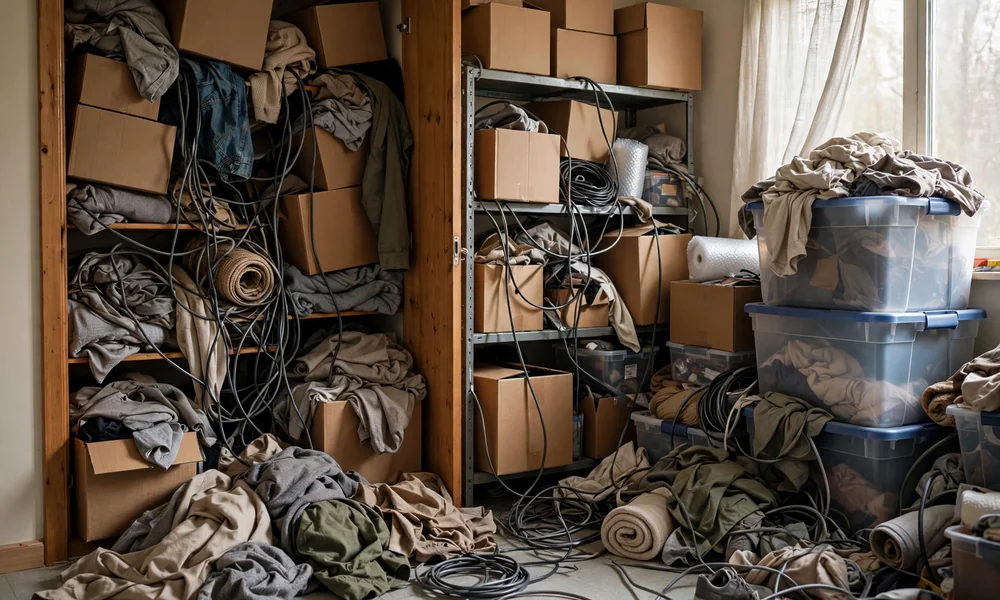
Most storage fails for the same reason: it is designed for the day you buy it, not for the hundreds of ordinary days that follow. A tidy photo of labelled bins looks wonderful, but real life involves tired evenings. If the system only works when you have energy and patience, it will stop working on the days you need it most.
Another common mistake is treating storage as a place to put things rather than a way to find them. If you cannot remember what is inside a box, that box is not storage. It is a hiding place. The same applies to high shelves and deep drawers.
Buying Bins Before Decluttering
This is the most expensive storage mistake, and the most common. You feel overwhelmed by clutter, so you buy a set of attractive bins, sort things into them, and feel a rush of progress. A month later, the bins are full, the surfaces are cluttered again, and you own the same amount of stuff plus ten new bins.
Bins do not reduce clutter. They only move it into a neater shape. If you have more clothes than your wardrobe can hold, a bin in the spare room does not solve the problem. It postpones it. Declutter first, then measure the space that is left and buy containers to fit it.
Deep Bins and Tall Stacks
Deep bins look efficient because they hold so much, but they are terrible for everyday use. Whatever you need is always at the bottom, under a layer of things you do not need. You dig through them, pull half the contents out, and put them back in a hurry. Within a few weeks, the bin becomes a jumble that nobody wants to open.
Tall stacks have the same problem. A pile of five boxes might look neat, but you can only reach the top one without moving the rest, so the boxes at the bottom become forgotten archives. Choose shallow containers for things you use often, and stack no more than two boxes high. Drawers or shelves are better still, because every item gets its own reachable place.
Open Shelving Everywhere
Open shelving looks beautiful in photographs. In real homes, it turns every shelf into a display that needs constant attention. Dust settles on everything, items drift out of alignment, and a single messy pile is visible from across the room. What was meant to look airy and modern starts to look untidy within days.
Open shelves work well for a small number of things you genuinely want to see: a few favourite books, a plant, or a set of matching bowls you use every day. They fail when they are asked to hold the overflow from every cupboard in the house. Keep open shelving to one area and put everything else behind a door. The goal is a home that looks calm on an ordinary day, and a quiet home depends far more on closed doors than on beautiful displays.
Cramming Everything Under the Bed
Under-bed storage feels like free space, and that is exactly why it becomes a problem. It is dark, dusty, and hard to reach, so things go under the bed and stay there. Out-of-season clothes, spare bedding, and the box you meant to sort out all end up in the same hidden zone, and you forget what is there.
Under-bed boxes also make cleaning harder, because moving them to vacuum underneath is such a chore that most people stop trying. Use the space only for flat, clearly labelled items you need a few times a year, such as spare bedding in a sealed bag, kept to one layer. If you cannot remember what is under the bed, it is holding clutter rather than storage.
Using the Garage as a Dumping Ground
The garage is the biggest storage trap in many homes because it is out of sight. Broken appliances, old paint tins, boxes from three moves ago, and the exercise bike nobody uses all end up there. Because you do not see them every day, they do not feel like clutter. They feel like things that are stored. In reality, they are things you have stopped using but have not yet decided to remove.
A dumping-ground garage also makes the space useless for its real purpose. You cannot park the car or find a tool without climbing over boxes. Treat the garage like any other room: give every zone a purpose, keep the floor clear, and put things you use often within easy reach. The same mismatch shows up in hotel design traps that look clever in photos but fail in daily use.
Closet Floors and High Shelves
Closet floors are where clothes go to be forgotten. Shoes pile up in a heap, bags get crushed under boxes, and the back corners collect items that have fallen off hangers. Because the floor is low and dark, it is easy to ignore, and you keep adding to it until you cannot find a pair of shoes you know you own.
High closet shelves have the opposite problem. They are hard to reach, so they become the place where things go to wait: a hat you wear twice a year, a bag you have not used since last summer. Give the closet floor a simple structure, such as a shoe rack with one pair per slot and nothing else on the floor. Keep the top shelf for a few labelled boxes you check twice a year, and put the things you wear most at eye level, where you can see them without effort.
What Works Instead
The best storage systems share three qualities: they are visible, reachable, and easy to put back. Visible means you can see what you own without opening five boxes. Reachable means you can get to it without a ladder or a struggle. Easy to put back means tidying takes seconds, not a project. If a storage idea fails any of these tests, it will probably fail in your home too.
Start small. Choose one cupboard or shelf, and make it work properly before you buy anything new. Remove what you do not use, group what is left by how often you use it, and give the most-used items the easiest spot. Leave a little empty space: it is the breathing room that keeps a system working.
It also helps to think about how things travel through your home. Coats belong near the door, and cleaning supplies belong where you clean. Travel gear is a good test: if packing means digging through three cupboards, your storage is working against you, and the worst luggage choices for travellers often start with bags stored so badly that the wrong case is the easiest one to grab.
| Storage idea | Why it fails | What works instead |
|---|---|---|
| Buying bins first | Organises clutter instead of reducing it | Declutter first, then buy to fit |
| Deep bins and tall stacks | Bottom items are hidden and forgotten | Shallow containers, two boxes high at most |
| Open shelving everywhere | Dust and visible mess, needs constant upkeep | Closed storage, open shelves for a few items |
| Under-bed cramming | Dark, dusty, hard to reach | One layer of labelled, sealed items only |
| Garage dumping ground | Out of sight, so clutter grows unchecked | Zoned garage with a clear floor |
| Closet floor piles | Low and dark, items get forgotten | Shoe rack, eye-level storage for daily items |
A Simple Storage Checklist
Use this checklist before you buy any new storage. It takes five minutes and can save you a lot of money and frustration.
- Declutter the category first, then measure the space that is left.
- Choose shallow, clear containers you can open with one hand.
- Put the most-used items at eye level and within easy reach.
- Keep one category per container, and label only what needs a label.
- Leave a little empty space in every cupboard, drawer, and shelf.
- Review each storage spot twice a year and remove what you no longer use.
Frequently Asked Questions
What is the worst storage mistake most people make?
Buying containers before decluttering is the most common mistake. It feels productive, but it only organises clutter instead of reducing it. Always remove what you do not use first, then choose storage that fits what is left.
Are deep storage bins a bad idea?
Deep bins are fine for a small number of bulky items you rarely need, such as seasonal decorations. They are a bad idea for everyday items, because whatever you want is always at the bottom. Shallow containers work better for things you use often.
Is open shelving bad for storage?
Open shelving is not bad in itself, but it is a poor choice for everyday clutter. It works best for a few attractive items you use regularly. Everyday supplies, cleaning products, and mixed clutter belong behind closed doors.
How much should I store under the bed?
Keep under-bed storage to one flat layer of clearly labelled items you need a few times a year, such as spare bedding in a sealed bag. If you cannot remember what is under the bed, it is holding too much.
How do I stop my garage becoming a dumping ground?
Give every zone in the garage a purpose, keep the floor clear, and put things you use often within easy reach. If an item has sat untouched for a year, ask yourself honestly whether you would miss it if it were gone.
How often should I review my storage?
Review each storage spot twice a year. Take everything out, check what you still use, and remove what you do not. A short review keeps small problems from turning into a full clear-out.
The Bottom Line
The worst storage ideas all make the same promise: buy this container, and your clutter will disappear. It will not. Clutter disappears when you own less than your home can hold, when you can see what you have, and when putting things away is the easiest thing to do. Choose shallow containers over deep ones, closed doors over open shelves, and one clear home for each category. Start with a single cupboard, declutter it properly, and let that small success show you what good storage feels like.