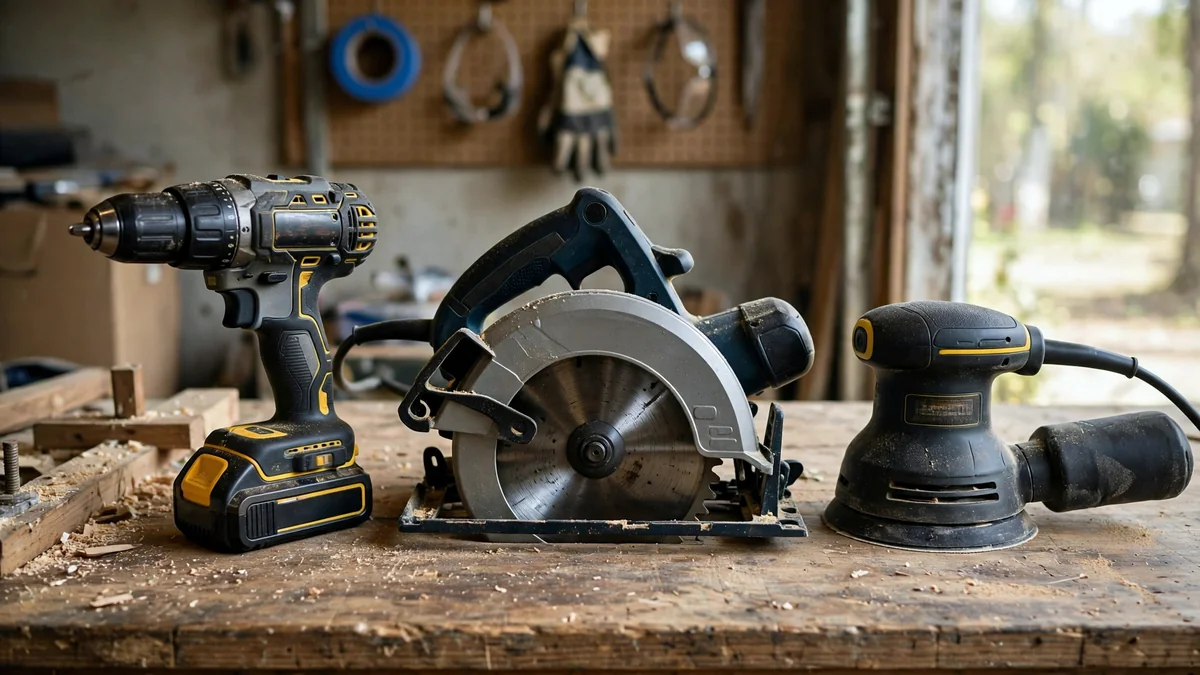
A power tool is the fastest way to turn a weekend job into a finished job, and the fastest way to turn it into a trip to the hardware shop for a replacement. When it works, a drill sinks a screw in seconds, a saw cuts a straight line through a plank, and a sander leaves a surface smooth enough to paint. When it does not work, the drill stalls halfway through the screw, the saw wanders off the line, and the sander leaves swirls you can see from across the room. The best power tools of 2026 make the good days routine and the bad days rare. The worst make every job feel like a fight, and a tool that fights you is a bad buy at any price.
This comparison looks at power tools as a whole category — drills, saws, sanders, grinders, and the battery kits that tie them together — rather than at any single tool on its own. We judge each tool the way you would actually use it at home: opening the box on a Saturday, charging the battery, drilling a shelf bracket into the wall, cutting a plank for a garden bed, and sanding a tabletop smooth. We look at power, battery life, comfort, dust control, and whether the tool is still pleasant to use after the novelty wears off. A great power tool is not the biggest or the most expensive one on the shelf. It is the one that works well on a Tuesday evening when you are tired, and this guide shows you how to tell the two apart before you spend a penny.
Key Takeaways
- Power under load matters most: the best power tools keep their speed when the bit bites, while the worst slow down, stall, and burn the wood.
- Battery platforms beat single tools: the best kits share one battery across drills, saws, and sanders, while the worst leave you with a drawer of chargers that fit nothing else.
- Comfort decides whether you finish the job: the best tools balance well and vibrate little, while the worst tire your hands in ten minutes.
- Check the real cost of extras before you buy: spare batteries, blades, and sanding discs add up faster than the price of the tool itself.
- The same honest cost check helps with our comparison of the best and worst drills of 2026, the single tool most people buy first.
How We Judged the Power Tools
We judged every power tool on six things that matter when you actually work with one rather than when you look at the specification sheet. First, power under load: whether the tool keeps its speed when the work gets hard, or whether it slows, stalls, and strains. Second, battery life: whether a battery lasts through a real job, and whether it charges fast enough to keep you working. Third, comfort: whether the tool balances in your hand, or whether it pulls your wrist and tires your arm. Fourth, accuracy: whether a saw cuts straight, a drill goes in true, and a sander leaves an even finish. Fifth, dust and mess: whether the tool collects its own dust, or whether it coats the whole room. Sixth, living with it: how easy it is to store, whether spares are easy to find, and whether one battery really does fit the whole kit.

The Best Power Tools of 2026
The best power tools share one habit: they disappear into the job. You pick up the drill, you pull the trigger, the screw goes in, and you move on to the next one. The saw cuts where you point it, the sander leaves a smooth surface, and the grinder takes off exactly as much metal as you meant it to. These tools are not always the most expensive ones. The best of them are often mid-priced tools with a solid motor, a good battery, and a small set of genuinely useful features rather than a long list of modes you will never use.
Power under load is where the best tools earn their keep. A good drill keeps turning when the screw bites into hardwood, a good circular saw keeps its speed through a thick plank, and a good sander keeps spinning when you press it against the wood. That steady power comes from a strong motor and a battery that can deliver current without sagging. The worst tools slow down the moment the work gets hard, and a tool that slows down is a tool that burns wood, snaps bits, and leaves a rough finish. When the power holds, the job goes faster, and it goes better.
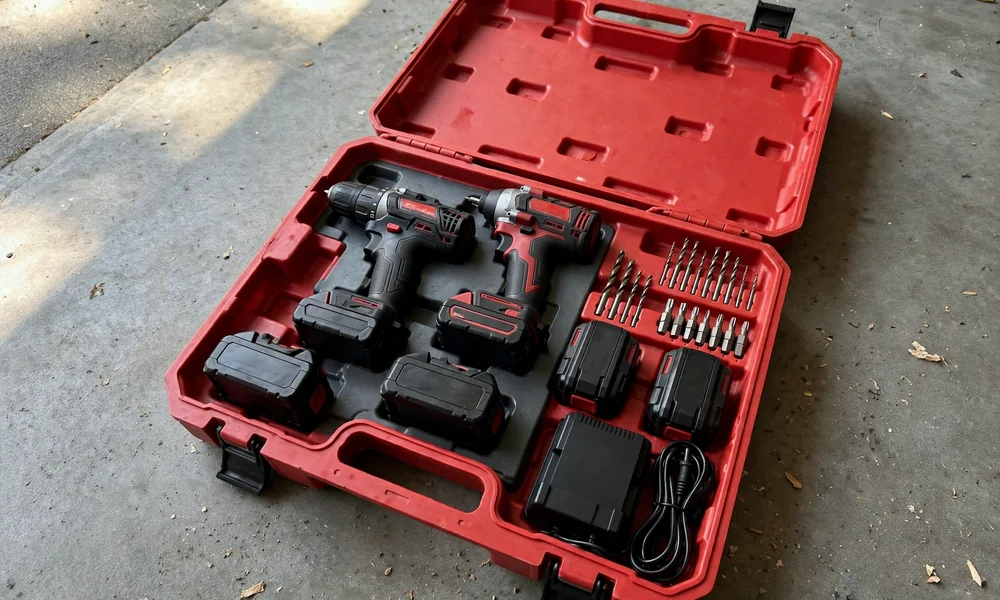
Battery platforms are the second great strength of the best tools. A good kit shares one battery across the drill, the saw, the sander, and the grinder, so one charger and two batteries cover the whole weekend. The batteries click in firmly, charge in under an hour, and still hold a charge after a month in the cupboard. That sounds like a small thing until you own three tools from three different makers, each with its own charger and its own dead battery. The best platforms save you money, shelf space, and the frustration of a flat battery halfway through a job.
Comfort is what lets you finish a long job. The best tools balance well, with the weight sitting over your hand rather than pulling forward, and they vibrate little enough that your hands are not buzzing after ten minutes. The grips are shaped for a real hand, the triggers are smooth, and the switches fall where your thumb expects them. The best saws also have a clear view of the cut line, and the best sanders have a dust bag that actually catches the dust. Comfort is not a luxury. It is what lets you work for an hour without aching, and it is usually a sign that the tool is well made inside as well as out.
The Worst Power Tools of 2026
The worst power tools announce themselves within the first hour. The drill stalls on the third screw, the saw binds halfway through the plank, and the sander leaves swirls across the tabletop you spent an afternoon preparing. These tools are usually the cheapest ones, but cheap is not the problem: the problem is a weak motor that cannot hold its speed, a battery that dies after twenty minutes, and a body made of thin plastic that flexes in your hand. A tool that cannot finish a simple job is not a bargain at any price.
Batteries are where the worst tools waste your Saturday. The battery takes four hours to charge, dies after half a job, and fits nothing else you own. You buy a second battery, and it costs nearly as much as the tool itself. You buy a saw from the same maker, and it needs a different battery altogether. After a year, the battery holds half its charge, and the maker has changed the platform, so a replacement is hard to find. A bad battery platform turns a cheap tool into an expensive habit, and it is the most common regret among people who buy the cheapest kit on the shelf.
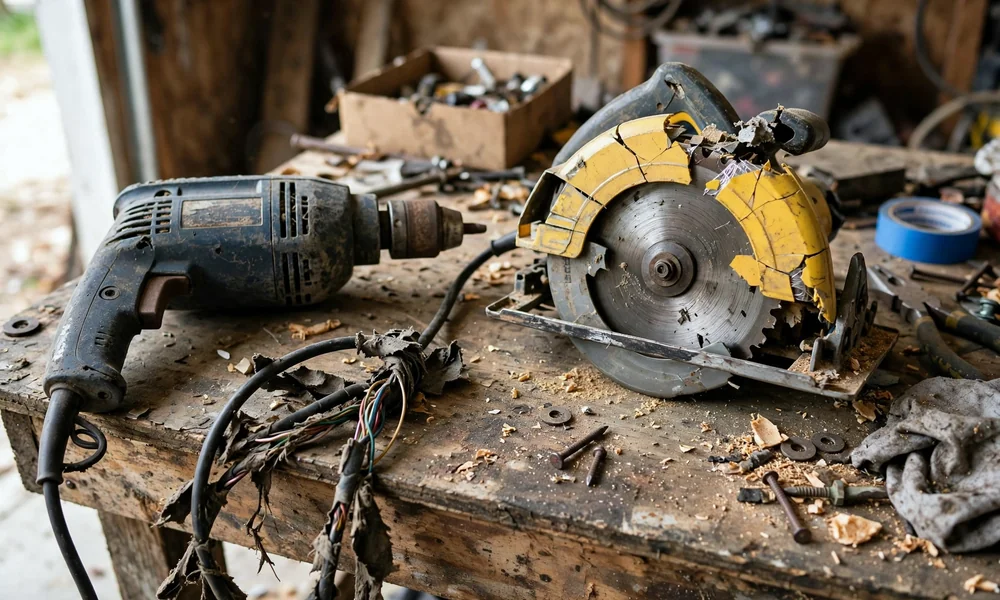
Comfort is where the worst tools hurt you. They are heavy in the wrong place, they vibrate so hard that your hands go numb, and the grip is a hard plastic shell that slips when your hands sweat. A heavy grinder pulls your wrist, a badly balanced saw is hard to guide, and a cheap sander bounces across the surface instead of sitting flat on it. You end up working in short bursts, resting your hands between screws, and the job that should have taken an hour takes the whole afternoon. A tool that hurts to use is a tool you will avoid, and a tool you avoid is money wasted.
The worst tools also hide their real cost. The box promises a full kit, but the blades are blunt, the sanding discs wear out in minutes, and the dust bag is a loose sock that catches nothing. Add the cost of decent blades, spare batteries, and the wood you ruined learning that the saw does not cut straight, and the cheapest tool on the shelf becomes the most expensive one you own. That is the trap this comparison is meant to help you avoid, and it is why the price on the box is the least useful number in the shop.
Best vs Worst at a Glance
Put the two side by side and the difference is not subtle. The best power tools hold their speed under load, run for a full job on one battery, and cut straight where you point them. The worst stall on the third screw, die after twenty minutes, and wander off the line you marked. The best tools share one battery across the whole kit and come with blades and discs worth using. The worst tools come with a drawer of incompatible chargers and accessories that wear out in a week.
The price gap is smaller than the quality gap. A good mid-priced tool often costs only a little more than a bad cheap one, and it lasts years longer, works on far more jobs, and does not waste your materials or your weekends. The same comparison holds across the workshop: our look at the best and worst saws of 2026 found the same pattern, where the cheapest saw cost the most in the end. If you use power tools more than a couple of times a year, the mid-priced tool is the cheaper buy, and the one-battery kit is the smarter buy.
The Verdict
Buy the best power tools you can afford, and judge them by power under load, battery life, and accuracy, not by the number of tools in the box. A drill, a saw, and a sander that share one battery platform, hold their speed when the work gets hard, and cut straight will serve you for years, and they will make you want to tackle the next job. A cheap kit with a weak motor, a slow battery, and a wandering blade will fight you on every job, waste your materials, and teach you to avoid the workshop.
If you are buying your first kit, choose a mid-priced set from a maker with a wide battery platform, test the drill on hardwood before you take it home, and check that the saw cuts straight on the timber you actually use. If you already own tools that stall, die halfway through a job, and hurt your hands, stop fighting them: the money you save by keeping them is spent many times over in wasted materials and wasted weekends. The best power tools of 2026 are not the flashiest ones. They are the steady, comfortable ones that let you get on with the job, and that is the whole point of owning them. The same rule applies to the rest of the workshop, as our comparison of the best and worst toolboxes of 2026 shows: the kit that stays organised, every time, is the one worth paying for.


