How to Choose the Best Garden Decor of 2026
The best garden decor does not shout. It gives a garden a reason to be looked at twice: a stone figure at a path end, water moving in a quiet corner, a spinner above the flowers. Garden decor is the layer that turns planted ground into a place with a personality, and the difference is choosing the right piece, in the right material, at the right size, in the right spot.
Key takeaways
- Choose one focal piece first, then smaller accents around it; three focal points means none.
- Match the decor to the garden you have: formal suits stone, cottage suits small finds, modern suits one bold shape.
- Stone, bronze and powder-coated metal survive outside for years; resin and thin painted metal fade, crack and rust.
- Buy bigger than you think: a focal piece should be at least a metre tall on its plinth.
- Place decor where the garden suggests it, never scattered at random.
What garden decor actually does
Plants change every week, but decor stays still. A statue, a fountain or an arch gives the eye a fixed point to rest on. Decor also carries a garden through winter, when borders are cut back and trees are bare. One or two well-chosen pieces charm a garden; ten scattered across every bed turn it into a display. The rule through this guide is simple: fewer pieces, better chosen, placed with intent.
The main types of garden decor compared
Most garden decor falls into a handful of families, each doing a different job. The table below covers the types you will actually find in shops in 2026.
| Decor type | Best for | Typical price | Upkeep |
|---|---|---|---|
| Statues and figures | Focal points, path ends | $40–$400 | Annual wash |
| Fountains and water | Sound, wildlife, shady corners | $80–$600 | Pump care, winter drain |
| Wind spinners | Movement, colour, borders | $20–$120 | Occasional oiling |
| Flags and signs | Personality, seasonal change | $10–$40 | Replace yearly |
| Arches and obelisks | Structure, climbers, entrances | $60–$300 | Pruning, repainting |
| Lanterns and lights | Evenings, paths, patios | $15–$80 | Batteries, cleaning |
Statues and figures
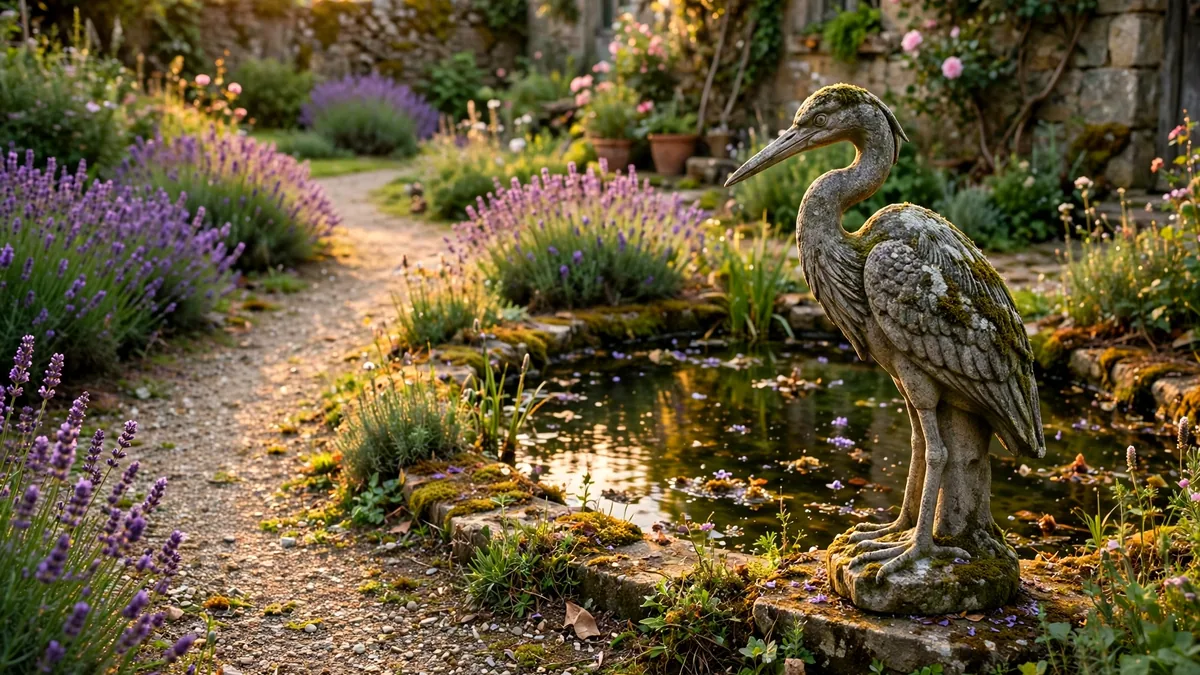
A statue is the oldest idea in garden decoration: it asks nothing of the garden and gives it a centre. Classical stone figures suit formal gardens, bronze animals suit wildlife and pond gardens, and a single bold abstract form suits a modern garden. Small whimsical pieces — a rabbit in the lavender, a hedgehog under a shrub — suit cottage gardens. Our guide to the best garden statues 2026 covers classical stone, bronze animals and modern forms in depth. What matters most is construction: solid stone, a weathered surface, a base that sits squarely. Thin, hollow figures crack in frost; resin suits sheltered spots but fades in the open.
Fountains and water
A fountain adds sound and movement no other decor can. Water over stone cools a garden on a hot day, masks traffic noise, and draws birds far more reliably than a dry ornament. Tiered stone fountains suit shady corners with ferns and hostas, while a simple bubbling rock suits a small courtyard.
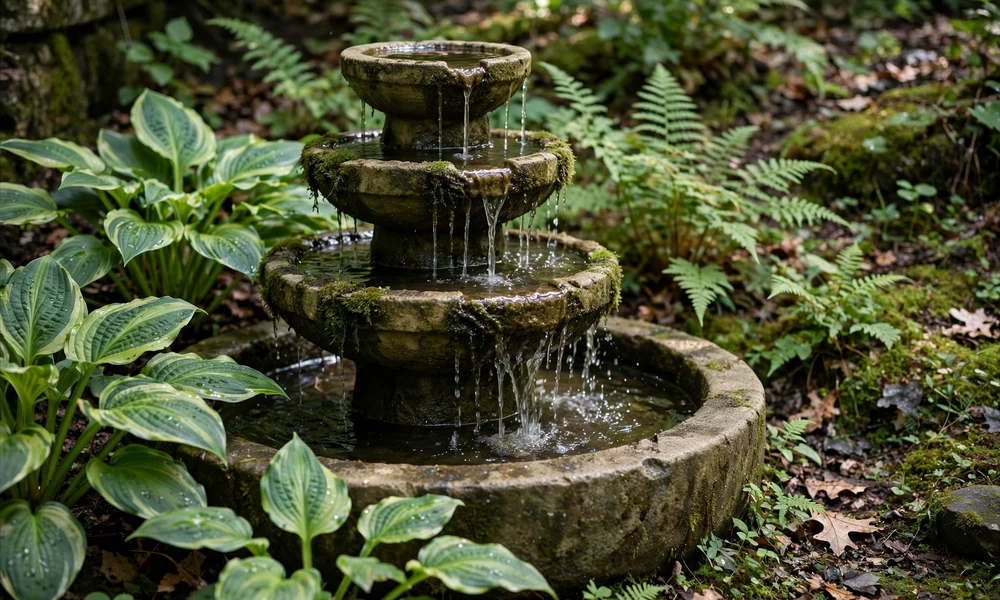
Fountains need more care than statues: the pump needs cleaning a few times a season, leaves must be cleared from the basin, and in cold regions the fountain should be drained before the first hard frost, since frozen water cracks stone. Our guide to the best garden fountains 2026 explains which designs add calm and which become a chore.
Wind spinners and moving pieces
Wind spinners are the liveliest decor a garden can have. A copper or powder-coated metal spinner turns in the breeze, throws colour across a border, and gives a flat stretch of planting something that changes by the minute. They work best seen from the house, so the movement is enjoyed from a window as well as the path. Buy them the way you buy any outdoor metal: a sealed bearing that turns freely, a stake that holds in wind without leaning, and a powder-coated finish. Cheap painted spinners rust within a season and stop turning.
Flags, signs and small accents
Flags, signs and small accents are the lightest touch in garden decor, and the easiest to change. A garden flag brightens a border for a season, a wooden sign by the gate adds character, and a handful of small ornaments — a ceramic bird, a glass orb — rewards a closer look along a path. Their strength is also their weakness: because they are cheap and easy, it is tempting to buy too many, and a border crowded with small pieces looks cluttered. Treat them like seasoning: one flag, one sign, one or two small finds where a visitor will discover them. Replace flags yearly; take out anything faded, since tired decor drags a garden down more than an empty corner does.
Arches, obelisks and structures
Arches and obelisks are decor that the garden grows into. A wooden arch covered in climbing roses turns a path into an entrance, and an obelisk gives a climbing clematis somewhere to climb instead of sprawling across the bed. They work best framing a view: an arch at a lawn end, an obelisk at a bed centre. Structures need the sturdiest materials of any decor family, because they carry weight and catch the wind. Hardwood or powder-coated steel lasts; thin pine rots at the ground line within a few years. Set posts with feet clear of standing water, and plan for pruning access and tying-in. Done well, a structure becomes part of the garden, and it is the one decor type that looks better every year as the planting grows over it.
Matching decor to your garden style
The fastest way to choose garden decor is to start with the garden you already have. A formal garden — hedges, gravel, symmetry — suits stone, bronze and balanced pairs: a classical figure at a path end, matching planters flanking a door. A cottage garden — dense planting, mixed borders, a winding path — suits small finds: a stone rabbit in the lavender, a wooden sign, a bird bath. A modern garden — pale paving, grasses, clean lines — suits one bold shape and little else. A wildlife garden suits decor that reads as part of nature: a bronze heron by the pond, a fountain the birds actually use. When styles clash, the garden loses. Let the decor rhyme with the paving, fencing and planting already there rather than argue with them.
Materials that survive outside
Material determines how long garden decor lasts, and it matters more than style. Stone is the traditional choice: heavy, stable and beautiful as it weathers, and the most durable option for statues and fountains. Natural carved stone costs most; cast stone is a good compromise provided it is solid and well made. Both handle frost well if water cannot pool inside them, and both improve with a light patina of age.

Bronze holds fine detail and weathers to a dark, warm tone that sits naturally against green foliage and water, which is why it suits animals and pond-side pieces. Powder-coated steel and aluminium suit spinners, arches and modern forms: light enough to move, strong enough to last, and protected against rust by the coating. Resin is light and cheap and can look convincing at first glance, but it fades, cracks in frost and looks hollow in bright sun, so keep it to sheltered spots. Avoid thin painted metal: it rusts at the joints within a season.
Size, scale and placement
The most common mistake in garden decor is getting the size wrong, and it usually happens in the same direction: people buy too small. A statue that looks generous in a shop can vanish in a real garden, swallowed by shrubs and distance. As a rough guide, a piece meant to be seen from across a garden should be at least a metre tall, including its plinth, and a focal-point figure at the end of a long view may need to be closer to one and a half metres. Small pieces work only up close, beside a path or a bench. Placement is what separates a garden with decor from a garden with ornaments left on the lawn. The best positions are the ones the garden suggests: a path end, a circular bed centre, a corner where two hedges meet, or a gap where the eye rests. A piece placed in one of those spots looks inevitable. Give every piece room: a statue crowded by shrubs disappears, and a spinner hidden behind tall planting never turns in the wind. A bench beside a focal piece completes the arrangement, and our guide to the best garden benches 2026 covers sturdy, weatherproof seating in several styles.
Budget: what to spend where
Spend on the pieces that take the weather; skimp on the pieces that do not. Spend on the focal piece — the statue, the fountain, the arch — because it is the one you will look at every day and the one that has to survive frost, sun and rain. A solid cast-stone statue at $150 will still be standing in ten years; a $40 resin copy will have faded and cracked within three, and replacing it three times costs more than buying well once. Save on the accents: flags, signs and small ornaments are seasonal by nature, and a $15 flag that fades after a summer has done its job. Buy one piece at a time and live with it for a few weeks before deciding what the garden still needs. The gardens that look best decorated are almost always the ones that were decorated slowly.

Shopping checklist
- Pick one focal piece first, in the style of the garden you already have.
- Check the material: solid stone, bronze or powder-coated metal for anything left out all year.
- Measure the spot and buy bigger than you think — at least a metre tall for a focal piece.
- Place it where the garden suggests: a path end, a planting gap, beside a bench.
- Leave clear space around each piece and keep the total count low.
- Plan the upkeep before you buy: annual wash for stone, pump care for fountains, oil for spinners.
Frequently asked questions
How much garden decor is too much?
One focal piece and a handful of small accents. If you can see more than three decorated spots from one spot, take something out.
What garden decor lasts longest outside?
Solid stone and bronze last longest, often decades, with an annual wash. Powder-coated steel lasts well if the coating is kept intact. Resin and thin painted metal fade, crack and rust within a few seasons.
Where should I put a garden statue?
At a path end, in the centre of a circular bed, or in a gap where the eye naturally rests — at least a metre tall, and visible from the house.
Do garden fountains attract wildlife?
Yes — moving water draws birds far more reliably than a dry ornament. Keep it clean, top it up in hot weather, and avoid chemicals that harm wildlife.
Can garden decor stay outside all winter?
Stone, bronze and powder-coated metal can, provided hollow pieces cannot fill with water and freeze. Drain fountains before the first hard frost and bring small resin pieces into a shed.
How do I stop garden decor looking cluttered?
One style, a low count, clear space around every piece, and remove anything faded or broken.
The bottom line
The best garden decor earns its place by doing one job well: giving a garden a still centre, a sound, a movement or a destination. Start with one focal piece in the style of the garden you already have, buy it in a material that survives outside, make it big enough to be seen, and put it where the garden already asks for something. Add accents slowly, and remove anything faded or cracked — then decor becomes part of the garden.