A garden statue is the one piece of garden decoration that never needs watering, pruning, or replanting, yet it changes the whole feeling of the space around it. A single well-chosen figure can turn a plain lawn into a place with a story, give a long border a destination at its far end, and make a quiet corner feel considered rather than forgotten. The best garden statues of 2026 do that work quietly. They sit comfortably among the planting, age gracefully in the weather, and look as though they have always belonged exactly where they stand.
This guide covers the statues that earn their place outdoors: classical stone figures, bronze animals, modern abstract forms, and small whimsical pieces. It explains which materials survive frost and sun, how to judge size and scale before you buy, where to place a statue so it anchors a view instead of cluttering one, and how to keep it looking good for years. Every type here has been chosen for how it actually performs in a real garden, through wet winters and hot summers, not just how it looks in a catalogue photograph.
Why a statue changes a garden
Plants move, grow, fade, and return. A statue does none of those things, and that stillness is precisely its value. It gives the eye a fixed point to rest on, which makes the planting around it feel more deliberate. Designers call this a focal point, but in plain terms it means the garden stops looking like a collection of plants and starts looking like a composed place. A statue at the end of a path pulls you forward. One half-hidden among shrubs rewards a second look. One beside a bench makes sitting there feel like an occasion.
Statues also add structure in the months when the garden is at its thinnest. In late autumn and winter, when borders are cut back and trees are bare, a stone figure or a bronze animal keeps the garden interesting. It holds the shape of the space while the plants rest. That year-round presence is the main reason a statue is worth more than most other garden ornaments, which tend to disappear visually the moment the summer colour fades.
Classical stone figures
The classical figure is the oldest idea in garden statuary, and it still works. A draped woman, a shepherd, a cherub, or a muse, carved or cast in stone, brings a sense of calm and history to a garden. These pieces suit formal gardens best, especially where there are hedges, gravel paths, and symmetrical planting, but a single classical figure can also soften a modern garden by adding something timeless against clean lines and pale paving.
What matters most with classical stone is the quality of the casting. Look for crisp detail in the drapery and the face, a surface that already has a slightly weathered texture, and a weight that tells you it is solid rather than hollow. Thin, hollow cast-stone figures are the ones that crack in frost, because water gets inside and expands. A solid piece, or one with proper drainage, will stand for decades. Check the base as well: a figure that sits squarely on its plinth, without rocking, is far less likely to lean or topple as the ground settles.
Bronze animals and wildlife
Bronze animals are the most convincing statues in a garden, because the material suits the subject. A heron by a pond, a fox at the edge of a woodland border, a hare among grasses: bronze holds fine detail, from feathers to fur, and its dark, warm tones sit naturally against green foliage and water. Unlike stone, bronze does not try to look like a monument. It looks like a creature that has paused for a moment, which is why it works so well in informal and wildlife-friendly gardens.

Placement matters more with animals than with classical figures. A bronze animal works best where a real animal might actually be: a heron near water, a frog on a damp stone, a hare at the edge of long grass. That small piece of logic makes the statue feel discovered rather than displayed, and it is the difference between a garden that feels alive and one that feels like a shop window. A bird bath nearby can strengthen the effect, drawing real birds into the same corner and making the bronze one feel like part of the scene rather than a solitary decoration. For ideas on choosing and siting water features, see our guide to the best bird baths 2026.
Modern and abstract forms
Not every garden wants a figure. Modern gardens, with their pale paving, grasses, and architectural plants, often suit an abstract form better: a smooth sphere, a twisting column, a set of interlocking rings, or a simple monolith. These pieces work as sculpture rather than decoration, and they reward gardens that are already confident about their design. A single bold shape, placed where it can be seen from the house, can carry a whole garden.
Small whimsical statues
Small statues are the friendliest kind, and they suit cottage gardens, family gardens, and borders that are meant to be explored up close. A rabbit among the lavender, a hedgehog under a shrub, a gnome by the back door, or a fairy tucked into a fern: these pieces are not trying to be grand. They are small jokes and small delights, and they work because they are found rather than announced.

The rule with small statues is restraint. One or two, placed with care, charm a garden. Ten, scattered across every bed, turn it into a collection on display, and the charm disappears. Choose the ones you love most, give each a proper home where it can be seen from a path, and leave the rest in the shop. A single rabbit in a border will make visitors smile; a whole warren will make them wonder where the gardener stopped.
Angels, saints, and quiet corners
Planting around a memorial or contemplative statue should be gentle: soft grasses, white flowers, or scented plants such as lavender and rosemary, which suit quiet corners. Avoid bright, busy bedding around it, which fights the calm mood the statue is meant to create. A simple bench nearby completes the corner, turning it from a statue on a lawn into a place to sit for a while. For seating that suits a reflective spot, our guide to the best garden benches 2026 covers sturdy, weatherproof options in several styles.
Choosing the right material
Material is the decision that determines how long a garden statue lasts and how much care it needs. Stone is the traditional choice: heavy, stable, and beautiful as it weathers. Natural carved stone is the most durable and the most expensive, while cast stone, made from stone dust and cement, is a good compromise, provided it is solid and well made. Both handle frost well if water cannot pool inside them, and both improve with a light patina of age.
Resin has improved a great deal, and a good resin statue can look convincing at first glance. Its advantages are low weight and low price, which make it easy to move and easy to replace. Its disadvantages are fading, cracking in frost, and a tendency to look hollow and light in bright sun. Resin suits sheltered spots and small pieces, but for a statue that will stand in the open for years, stone or bronze is the better investment.
Size and scale
The most common mistake when buying a garden statue is getting the size wrong, and it usually happens in the same direction: people buy too small. A statue that looks generous in a shop or in a photograph can vanish in a real garden, swallowed by shrubs and distance. As a rough guide, a statue meant to be seen from across a garden should be at least a metre tall, including its plinth. A focal-point figure at the end of a long view may need to be taller still, closer to one and a half metres, before it reads clearly.
Where to place a statue
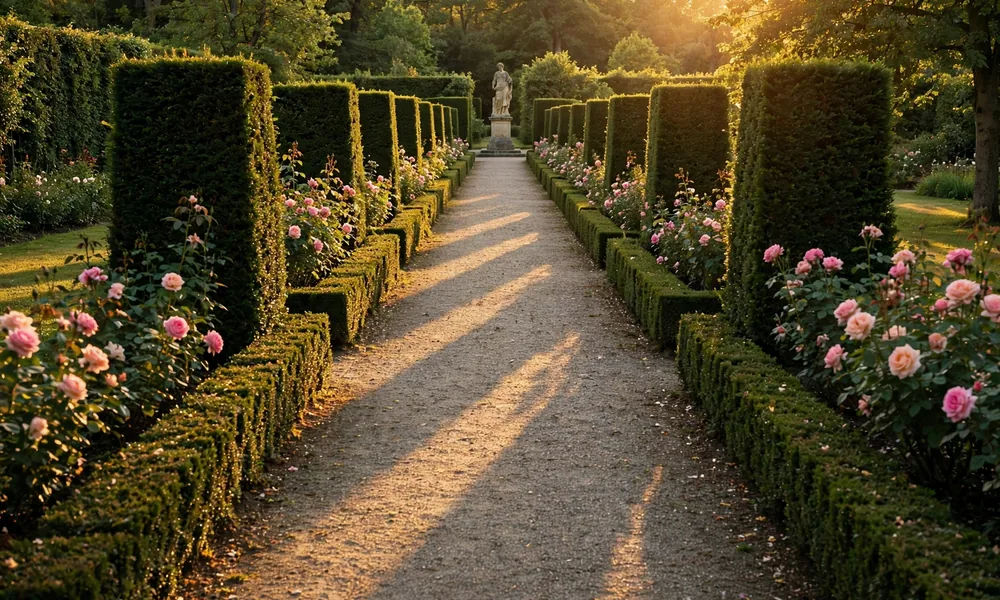
Placement is what separates a garden with a statue from a garden with an ornament left on the lawn. The best positions are the ones the garden already suggests: the end of a path, the centre of a circular bed, a corner where two hedges meet, or a gap in the planting where the eye naturally rests. A statue placed in one of those spots looks inevitable, as though the garden was designed around it. One placed at random looks like an afterthought, however beautiful the piece itself may be.
Weather, care, and maintenance
A good garden statue needs very little care, but a little care goes a long way. Stone statues benefit from an annual wash with plain water and a soft brush, which removes algae and lichen before they take hold. Avoid pressure washers, which can strip the surface and force water into cracks. If moss builds up in the crevices, a stiff brush and a mild, garden-safe cleaner will deal with it, and a clear stone sealant applied in dry weather will slow its return.
Resin and painted statues need the most attention. Check them each spring for cracks and peeling paint, and repair small damage before water gets in. A coat of clear outdoor sealant once a year will extend their life considerably. In very cold regions, small or hollow pieces are best brought into a shed for the worst of winter, since repeated freezing and thawing is what cracks them. Keeping statues clean is also a matter of good garden habits: the same tools you use for general upkeep, covered in our guide to the best garden tools 2026, will handle most statue cleaning without any specialist equipment.
The best garden statues 2026: the short list
If you want a single recommendation for each kind of garden, start here. For a formal garden, choose a solid cast-stone classical figure, at least a metre tall on its plinth, in a natural weathered tone. For a wildlife or pond garden, choose a cast-bronze animal placed where the real creature might stand. For a modern garden, choose one bold abstract form in steel or stone, given space to breathe. For a cottage or family garden, choose one or two small stone animals or whimsical figures, placed close to a path where they can be found.
Whatever style you choose, insist on solid construction, a stable base, and a size you have tested against the real spot. Place the statue where the garden already asks for a focal point, where it can be seen from the house, and where the light will flatter it. Look after it with an annual wash and a little attention in spring. Do that, and your statue will not just decorate the garden. It will become part of it, growing more at home with every season that passes, and giving the garden a still, quiet centre that no plant, however beautiful, can provide on its own.