Garment Bags That Keep Suits Crease-Free in 2026
Garment bags that keep suits crease-free in 2026 are the difference between stepping off a plane looking sharp and stepping off looking slept-in. A suit is one of the most crease-prone things you can pack, and an ordinary suitcase does it no favours. A good garment bag holds the suit flat, protects it from dust and damp, and lets you hang it up the moment you arrive.
The trouble is that garment bags vary enormously. Some are little more than a plastic cover with a zip; others are proper travel cases with structure, pockets, and folding systems designed around a suit. This guide compares the main types and explains what actually keeps a suit crease-free.
Key Takeaways
- A structured, tri-fold garment bag keeps suits flatter than a soft, unstructured cover, which lets fabric bunch and fold.
- Length matters: the bag should be long enough for your suit without folding the trousers more than once.
- Breathable fabric beats sealed plastic for storage, which can trap moisture and leave a musty smell.
- A clear or mesh panel helps you find the right suit quickly without opening every bag in the wardrobe.
- The best travel garment bags double as a carry-on, with a shoulder strap and a pocket for shoes and accessories.

Why Suits Crease So Easily
Wool, the fabric of most good suits, is naturally resilient, but it is not crease-proof. Press a fold into it for hours inside a packed case and the fibres hold the shape. Add heat, humidity, or the weight of other clothes on top, and the creases set in.
A garment bag works by removing the pressure and the folding. Instead of being rolled or stuffed, the suit hangs or lies flat, supported along its full length. The bag’s job is to keep it that way: to stop other luggage pressing on it, to keep it dry, and to make sure the only folds are the ones you choose.
There is also a storage argument. Suits left hanging bare collect dust, attract moths, and pick up smells. A breathable garment bag keeps them clean between wears without sealing them in plastic. If you own suits you care about, a decent bag is cheap insurance.
The Main Types of Garment Bag
Soft Hanging Covers
The soft hanging cover is the simplest garment bag: a fabric or plastic sleeve with a zip and a hook hole at the top. It is light, cheap, and ideal for wardrobe storage, where its only job is keeping dust off. Most dry cleaners hand your suit back in one.
For travel, though, a soft cover is barely better than nothing. With no structure, it folds wherever the case folds it, and the suit inside creases just as it would without a bag. Buy soft covers for the wardrobe, not for the road, and choose breathable fabric over clear plastic, which traps moisture and can yellow light suits.
Tri-Fold Travel Garment Bags
The tri-fold is the workhorse of suit travel. The suit hangs inside a structured bag, which then folds in thirds into a compact case with a handle and a shoulder strap. Good ones have internal straps to hold the suit in place, a mesh pocket for a shirt and tie, and a separate compartment for shoes.
The folding is the clever part: because the suit folds only twice, at wide, gentle points, it creases far less than it would crumpled in a case. On arrival, hang the bag up, unzip it, and the suit is ready with at most a light steam. Look for a rigid or semi-rigid back panel — the structure does the work, and flimsy versions defeat the purpose.
Bi-Fold and Carry-On Garment Bags
Bi-fold bags fold just once, so they are longer when carried but kinder to the suit. Many are sized to fit airline carry-on limits, which means your suit never leaves your side — no checked-bag delays, no crushed cases, no lost luggage worries.
The trade-off is size. A bi-fold is bulkier to carry than a tri-fold and can be awkward on crowded trains or in small overhead bins. If you travel light with one suit, it is the best option; for two suits plus a week’s clothes, a tri-fold paired with a small case works better.
Wheeled Garment Bags
Wheeled garment bags combine a garment compartment with a rolling case, so the suit travels flat while everything else packs around it. They suit longer trips and travellers who would rather roll than carry. The best ones keep the garment section separate, so shoes and toiletries never press against the suit.
The downside is weight and cost. A wheeled bag is heavier before you pack a thing, and the good ones are not cheap. They also tempt you to overpack, which is exactly what creases suits.
Comparison Table
| Type | Best For | Crease Protection | Drawbacks |
|---|---|---|---|
| Soft hanging cover | Wardrobe storage | Low | No structure for travel |
| Tri-fold travel | Flights, short trips | High | Two fold points |
| Bi-fold carry-on | One suit, hand luggage | Very high | Bulky to carry |
| Wheeled garment bag | Longer trips | High | Heavy, expensive |
| Canvas duffel style | Weekend trips | Medium | Suit folds more |
How to Choose the Right Garment Bag
Start with how you travel. If you fly with hand luggage only, measure your airline’s carry-on limits and buy a tri-fold or bi-fold that fits them — a bag you have to check loses half its value. If you drive to weddings and events, a simple hanging bag may be all you need.
Next, check the length. The bag should fit your suit with the trousers folded no more than once, and the jacket should hang without its shoulders being squeezed. Tall travellers should look for long or extra-long models; a bag that forces the suit to bunch at the bottom is worse than no bag at all. A full-length clear panel or mesh window is worth having, so you can see which suit is inside without unzipping.
Then look at the material. Breathable, water-resistant fabric — usually nylon or polyester with a durable coating — is the best all-rounder: it keeps rain out and lets air through. Avoid thin clear plastic for anything but short-term use. Check the zip, too: a full-length, smooth-running zip is essential, because a stuck zip is a miserable start to a trip.
Finally, think about the extras. Internal straps make a real difference, as do pockets for a shirt, tie, belt, and shoes. A shoulder strap should be padded and detachable, and the bag should have a hook for hanging in a hotel wardrobe.
How to Pack a Suit So It Stays Crease-Free
A good bag helps, but packing technique does the rest. Start with the jacket: button it, lay it flat, and fold it using the inside-out method — turn one shoulder inside out, tuck the other shoulder inside it, then fold the jacket in half lengthways. This keeps the outer fabric from rubbing against itself and puts the lining, not the wool, on the outside of the fold.
Fold the trousers once, along their natural crease, and lay them flat on top of the jacket. Place the bundle in the bag, fasten the internal straps snugly but not tightly, and add a shirt — folded, not rolled — on top. Stuff the shoes with socks and place them in a separate pocket or shoe bag, never loose against the suit. Fill any empty space with soft items like a jumper, so nothing shifts in transit.
On arrival, hang the suit up immediately, ideally in a steamy bathroom for ten minutes, which relaxes most light creases without an iron. If you travel with best luggage carry-on bags, a garment bag that clips to the case handle keeps everything together. And never leave a suit in its bag for days after the trip — unpack, air it, and return it to the wardrobe.
Storing Suits at Home
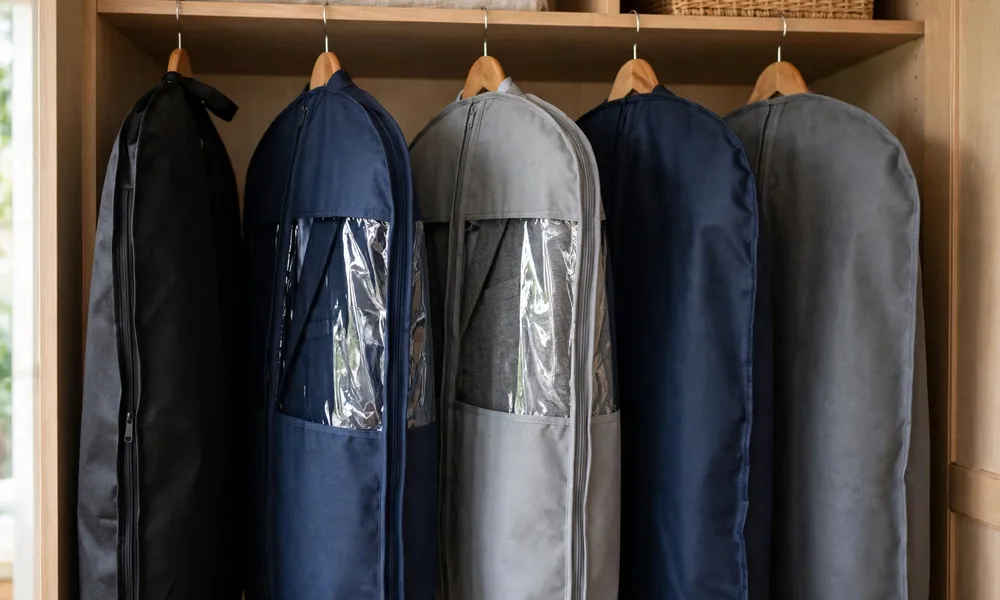
Travel is only half the story. At home, a garment bag protects suits from dust, light, and moths between wears. Use breathable fabric covers, not plastic, and leave a little space between bags so air can circulate. Cedar blocks or lavender sachets inside the wardrobe help against moths without the chemical smell of mothballs.
Hang suits on wide, shaped wooden hangers that support the shoulders — thin wire hangers distort the jacket over time. Leave the jacket unbuttoned, empty the pockets, and brush the suit down after wearing to remove dust before it settles.
For seasonal storage, clean the suit before putting it away — stains and oils attract moths and set over time. A clear panel lets you check the contents without opening the bag. For travel backpacks for business trips, a slim garment sleeve inside the main compartment can protect a jacket on shorter journeys.

Checklist: Buying a Garment Bag in 2026
- Match the bag to your travel: tri-fold for flights, bi-fold for one suit, wheeled for long trips.
- Check the length fits your suit without bunching — tall travellers need long models.
- Choose breathable, water-resistant fabric, not thin clear plastic.
- Look for internal straps, a full-length zip, and pockets for shirt, tie, and shoes.
- Make sure it fits your airline’s carry-on limits if you plan to take it on board.
- Pick a clear or mesh panel so you can identify the suit without opening the bag.
Frequently Asked Questions
Do garment bags really keep suits crease-free?
Yes, when used properly. A structured garment bag holds the suit flat and stops other luggage pressing on it, which removes the two main causes of creases. Some light creasing can still occur at the fold points, but a few minutes hanging in a steamy bathroom usually relaxes it.
What is the best garment bag for flying?
A tri-fold that fits your airline’s carry-on limits is the best choice for most travellers. It keeps the suit flat, folds only twice, and stays with you in the cabin. If you carry one suit and travel light, a bi-fold offers even better crease protection.
Should I use plastic or fabric garment bags?
Fabric, for anything beyond a few days. Breathable fabric lets air circulate and stops moisture building up, while plastic traps humidity, can leave a musty smell, and may yellow light fabrics over time. Keep the plastic covers from the dry cleaner for short-term use only.
How do I fold a suit jacket into a garment bag?
Button the jacket, turn one shoulder inside out, tuck the other shoulder inside it, and fold the jacket in half lengthways. This puts the lining on the outside of the fold and protects the outer wool. Lay the trousers, folded once along the crease, flat on top.
Can a garment bag count as hand luggage?
Often, yes — many tri-fold and bi-fold bags are designed to fit carry-on size limits. Check your airline’s exact dimensions before you travel, as limits vary, and remember that a packed garment bag plus a personal item may exceed what some budget airlines allow.
How do I store suits in garment bags at home?
Use breathable fabric covers on wide wooden hangers, leave space between bags for air to circulate, and add cedar blocks or lavender against moths. Clean suits before seasonal storage, and avoid plastic covers for long-term use.
The Bottom Line
Garment bags that keep suits crease-free in 2026 are the structured ones: a tri-fold or bi-fold in breathable, water-resistant fabric, long enough for your suit, with internal straps and a full-length zip. Pack the jacket inside-out, fold the trousers once, hang the suit up the moment you arrive, and you will step into every meeting looking like you just left home.