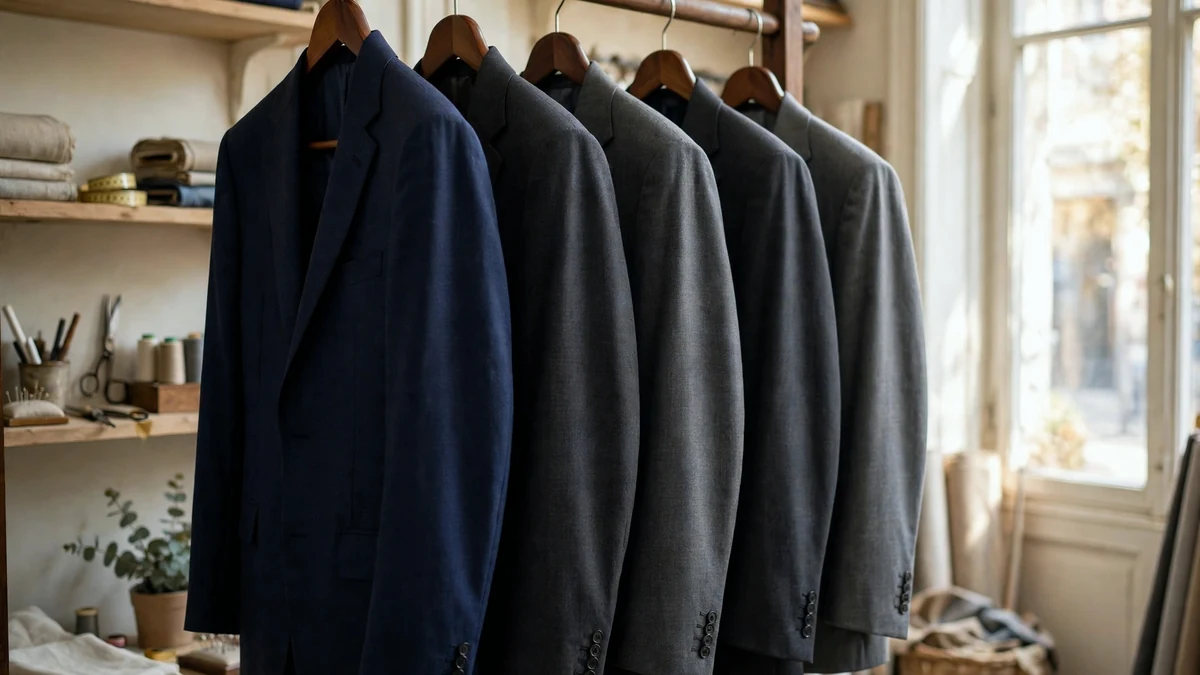
A suit is the most demanding outfit most men ever buy. Every flaw is on show: a shoulder that does not sit right, a jacket that pulls when you button it, trousers that break badly at the shoe. The best suits of 2026 earn their price by fitting as if they were made for you, holding their shape through a long day, and still looking sharp after years of wear. The worst suits do the opposite. They shine at the elbows, sag at the shoulders, and within a few months they look tired enough to be demoted to fancy dress.
This comparison puts the best suits of 2026 head to head against the worst, judging them the way you would actually wear them: put on for a job interview, worn through a wedding, sat in for a long working day, and hung up at the end of it. We look at fabric, fit, construction, comfort, and whether the suit still looks good after a season of hard wear. The same honest approach sits behind our comparison of the best and worst jackets of 2026, which shows how the same rules decide which outer layers last and which ones fall apart.
Key Takeaways
- Judge a suit by its fabric and its fit, not by its price tag or its label.
- A well-cut suit in a good wool will outlast three cheap ones.
- Sagging shoulders, a pulling button, and trousers that pool at the shoe are the first signs of a suit built to a price.
- Fit matters as much as fabric: too tight and it pulls, too loose and it swallows you.
- Buy the suit for the life you actually live, not for the one in the advertisement.
What Makes a Suit Good or Bad
A good suit starts with fabric. The best suits of 2026 are made from wool with real substance: a Super 110s or 120s worsted that drapes cleanly, holds a crease, and breathes in warm weather, or a wool and mohair blend that resists creasing on a long journey. The cloth has enough weight to hang properly, and the jacket is half-canvassed or fully canvassed, so the chest keeps its shape instead of collapsing. The worst suits are made from thin, shiny polyester that feels clammy the moment you put it on, goes shiny at the elbows and seat within a few wears, and holds a crease like a paper bag.
The second thing that separates good from bad is construction. Look at the jacket: a good suit has shoulders that end where your shoulders end, a lapel that lies flat against the chest, and a button that fastens without pulling the fabric into an X. The trousers have a waistband that sits comfortably, a crease that runs straight down the leg, and a hem that breaks just once over the shoe. A bad suit has shoulders that stick out past your own, a lapel that bows away from the chest, and trousers that are either so long they pool around your shoes or so short they show your socks when you sit.
Fit is the third test, and it is the one most buyers get wrong. A good suit fits at the shoulders first, because everything else hangs from them: the jacket collar sits flat against your shirt, the sleeves show about a centimetre of shirt cuff, and the jacket covers your seat without hanging halfway down your thighs. It is roomy enough to sit in comfortably without the button straining, and the trousers are long enough to cover your socks when you cross your legs. A bad suit is either cut so tight that you cannot raise your arms, or so loose that the jacket hangs like a sack and the trousers flap around your ankles.
The Best Suits of 2026
The best suits of 2026 are mostly the quiet ones, and that is exactly the point. They are the plain navy and charcoal two-button suits in a mid-weight wool that go with everything and never look out of place: a clean lapel, flat-front trousers, and a cut that is neither boxy nor skin-tight. They work with a tie for a formal day, with an open collar for a smart evening, and with a jumper underneath when the weather turns. They are not the loudest suits on the rail, but they are the ones their owners reach for every single time.

What the best suits share is a feeling of ease. The jacket moves with you instead of fighting you, the shoulders sit naturally, and the trousers fall in a clean line from the waist to the shoe. They are comfortable enough to wear all day, from a morning meeting to an evening dinner, without needing to be adjusted every ten minutes. The best ones also hold up well, coming back from the dry cleaner looking the same as they went in, with no bubbling, no sagging, and no shine.
The Worst Suits of 2026
The worst suits of 2026 are not always the cheapest, and that is what makes them so frustrating. Some look smart on the hanger and come with a fashionable slim cut or a bold check, but within a few wears the problems start: the fabric goes shiny at the seat and elbows, the jacket lining tears at the shoulder, and the trousers lose their crease after an hour of sitting. Owners find themselves reaching for them less and less, until they end up at the back of the wardrobe.

Comfort is where many of the worst suits fall down hardest. They are often made from stiff, scratchy fabric that irritates the skin, or from a fused jacket that traps heat and makes you sweat through your shirt by midday. Some have armholes cut so low that you cannot lift your arms without the whole jacket riding up, and others have trousers with a waistband that digs in the moment you sit down. A suit that is uncomfortable to wear has failed at its one basic job, however good it looks in photographs.
Then there is the way they age. The worst suits bubble at the lapels and chest after a few trips to the dry cleaner, because the glued fusing has come loose from the cloth. The trousers go shiny at the seat, the knees bag out, and the hems fray. Buttons fall off, pockets tear, and the lining shreds at the vents. A suit that cannot survive a year of regular wear is not a bargain at any price, because you will be buying its replacement within months.
Fit, Fabric, and the Details That Decide It
Fabric choice is the other half of the decision. Pure wool is the classic for a reason: it breathes, it drapes beautifully, and it recovers from creasing overnight on a hanger. Wool and mohair blends can work well when the cloth is good quality, adding a little sheen and crease resistance, but a cheap blend will go shiny fast. Cotton and linen suits have their place in hot weather, though they crease easily and need more care, and a blend that is mostly polyester will feel clammy, attract static, and pill faster. The same care with fabric applies to the rest of your wardrobe, and our comparison of the best and worst dresses of 2026 shows how the same rules decide which garments last and which ones fall apart.

The small details are where quality hides. A good suit has a canvas chest that you can feel by pinching the lapel, pick stitching along the lapel edge, and buttons made from horn rather than plastic. The trousers should have a proper waistband with a curtain inside, and the jacket pockets should be stitched firmly rather than hanging loose. Turn the jacket inside out before you buy it: if the lining is neatly fitted and there are no loose threads hanging off, it was made by someone who cared. If the inside looks like a tangle of loose ends, walk away.
Best vs Worst Suits at a Glance
| Feature | Best Suits | Worst Suits |
|---|---|---|
| Fabric | Good wool that drapes, breathes, and holds a crease | Thin, shiny polyester that clings and pills |
| Fit | Shoulders end where yours end, button fastens flat | Shoulders stick out, button pulls into an X |
| Construction | Canvassed chest, lapel lies flat, clean trouser crease | Fused chest that bubbles, bowing lapel, pooling hems |
| Comfort | Comfortable all day, no adjusting needed | Hot, scratchy, or impossible to move in |
| After a year | Same shape, same colour, no shine | Bubbled lapels, shiny seat, torn lining |
| Cost per wear | Low, because it lasts for years | High, because it needs replacing within months |
How to Buy a Suit Without Regret
The single most useful thing you can do before buying a suit is to try it on properly. Button the jacket and look in the mirror: if the button pulls the fabric into an X, it is too tight, and if the lapels bow away from your chest, it is too big. Sit down in it, raise your arms, and walk across the shop. Check whether the jacket collar sits flat, whether the sleeves show a little shirt cuff, and whether the trousers break just once over your shoes. A suit that feels comfortable and looks right when you move will usually feel comfortable after a year, and one that needs constant adjusting in the shop will only get worse.
Check the fabric content on the label before you pay, not after. A suit that is mostly wool will serve you far better than one that is mostly polyester, whatever the price. Hang it properly on a wide wooden hanger after every wear, brush it down, and let it air before you put it away. Dry clean it only when it needs it, not after every wear, because too much cleaning wears the cloth out. A good suit rewards simple care, and a cheap one will not be saved by it. The same thinking applies to the rest of your wardrobe, and our comparison of the best and worst sweaters of 2026 shows how the same rules decide which knits last and which ones fall apart.
The Verdict
The best suits of 2026 are the ones that make life easier without asking for much in return. They fit properly, they move with you, they hold their shape, and they look good without any fuss: a simple, well-made suit you can rely on for years, that still looks sharp after dozens of wears. They do not need a bold check or a designer label to prove their worth. They simply work, day after day, and they get better as they soften with wear.
The worst suits of 2026 are the ones that demand too much and give too little back: too much money spent replacing them, too much time spent adjusting them, and too little comfort for the space they take up in your wardrobe. A suit is the one outfit that has to work entirely on its own, and when it fails, there is nothing to hide behind.
So buy with your hands as well as your eyes. Feel the cloth, check the stitching, try it on and move in it, and walk away from anything that feels thin, shiny, or poorly made. Spend a little more on one good suit rather than a little less on three bad ones, and you will end up cooler, smarter, and better off.


