
A golf glove is a small piece of kit with an outsized job. It is the only thing between the hand and the club, and on a warm afternoon, a damp morning or a long round, that thin layer of leather or synthetic fabric decides whether the club stays steady or twists at impact. A good glove grips without squeezing, breathes without slipping, and feels so natural after a hole or two that the golfer forgets it is there. The best golf gloves of 2026 are not the most expensive ones, and they are not the ones with the longest list of features. They are the gloves that fit snugly, hold firm in all weather, and keep working round after round without falling apart.

What Makes a Golf Glove Good
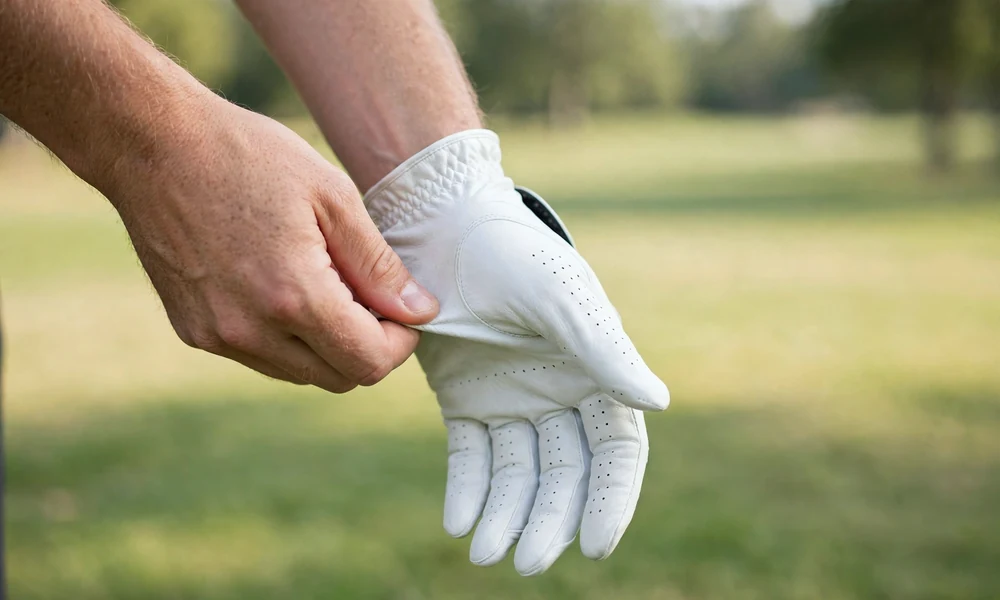
The first thing to judge is fit. A golf glove should fit like a second skin, snug across the palm and fingers with no loose material at the fingertips and no pulling across the knuckles. If the fingers are too long, the extra leather folds and bunches, and the grip feels vague. If the glove is too tight, it restricts the hand and wears out quickly at the seams. The right fit lets the golfer close the hand fully around the grip, feel the club through the leather, and swing without thinking about the glove at all.
The second thing is grip. The palm and fingers need enough tack to hold the club firmly without the golfer squeezing hard, because a tight grip creates tension in the arms and shoulders and robs the swing of speed and rhythm. A good glove gives a secure hold with a light, relaxed grip, so the hands stay soft and the clubhead can move freely. The material matters here: soft cabretta leather is famous for its thin, supple feel and its natural grip, while modern synthetic gloves use textured palms and silicone patterns to add traction.
The Main Types of Golf Glove
Cabretta leather gloves are the classic choice, and for many golfers they remain the standard against which everything else is measured. Cabretta is a thin, soft leather made from sheepskin, and it offers the closest feel to a bare hand, with excellent grip and a natural softness that moulds to the hand over a few rounds. The trade-off is durability and weather resistance: leather gloves wear faster than synthetic ones, and they can stiffen if they get soaked and are left to dry badly.
Synthetic gloves are the practical alternative, built for golfers who want durability, easy care and a lower price. They are usually made from a mix of synthetic leather and stretchy fabric, with mesh panels for breathability and a textured palm for grip. They do not feel quite as soft as cabretta, and the very best leather gloves still win on pure touch, but a good synthetic glove holds its shape well, dries quickly, and survives far more rounds before wearing through.
Rain gloves are a separate category, and they are worth owning for anyone who plays through the year. Unlike ordinary gloves, which get slick when wet, rain gloves are designed to grip better as they get wetter, using a special suede-like material that stays tacky in the rain. They are usually sold in pairs, so both hands are covered, and they are the difference between finishing a wet round comfortably and struggling to hold the club at all. A golfer who only plays on dry summer days may never need them, but for a regular player in a climate with real rain, a pair of rain gloves is one of the cheapest and most useful pieces of kit in the bag.
How to Find Your Size and Fit
Getting the size right starts with measuring the hand, but the real test is trying the glove on and closing the hand around a club. The fingers should reach the end of the glove without extra material flapping at the tips, and the palm should feel smooth with no wrinkles when the hand is closed. The glove should feel snug when it is new, because leather stretches a little with wear, and a glove that feels loose on day one will only get looser. Many brands offer a cadet size, shorter in the fingers and wider across the palm, which suits golfers who find regular sizes too long or too tight.
Handedness matters too, and it catches out more beginners than any other detail. A right-handed golfer wears the glove on the left hand, and a left-handed golfer wears it on the right, because the lead hand is the one that guides the club. Buying the wrong hand is an easy mistake, especially when shopping online, so it is worth double-checking before ordering. The glove should also be checked at the wrist: the tab should close firmly and stay closed through the swing, without the glove rotating on the hand. If the glove twists during a practice swing, it is either the wrong size or the wrong shape, and no amount of breaking in will fix it.
The Best Golf Gloves of 2026
The best all-round golf glove of 2026 is a soft cabretta leather glove with a snug, second-skin fit and a reliable grip in dry weather. It feels thin and natural in the hand, holds the club securely without forcing a tight grip, and breathes well enough to stay comfortable through a full round. The stitching is neat and strong, the wrist tab stays put, and the leather moulds gently to the hand over the first few rounds. It is the glove for the regular golfer who plays mostly in fair weather and wants the best feel available, and it is the pick that makes the most sense for the most players this year.
The best synthetic glove of 2026 is a durable, breathable model with a textured palm and stretch panels that keep the fit close as the hand moves. It does not have the buttery softness of the best leather, but it makes up for that with toughness, easy care and a price that makes it easy to keep a spare in the bag. It dries quickly after a damp morning, holds its shape round after round, and gives a secure grip without feeling stiff. For a beginner, a budget-conscious golfer, or anyone who plays in all kinds of weather, this is the glove that offers the most value and the fewest worries.
The best rain glove of 2026 is a pair of wet-weather gloves that grip harder as the rain gets heavier. The material stays tacky when soaked, the fit stays snug even when the hands are wet, and both hands are protected so the golfer can swing with confidence on a miserable day. They pack down small, cost little, and turn a round that might have been abandoned into one that is simply damp rather than unplayable. Every golfer who plays through the year should keep a pair in the bag, even if they only come out a few times a season, because on the day they are needed, nothing else will do.
The best glove for beginners is a comfortable synthetic glove sold at a friendly price, with a forgiving fit and a grip that helps a new golfer hold the club correctly. It does not demand careful leather care, it survives the scuffs and mistakes of learning, and it can be replaced cheaply when it wears out. A beginner does not need the finest leather in the game, and spending a lot on a first glove is a waste when the glove will be worn hard while the swing is still developing. What matters is a glove that fits, grips, and lets the new golfer focus on learning the game instead of fighting the equipment.

How Long a Glove Lasts and How to Look After It
A golf glove is a consumable, and even the best one will wear out. A regular golfer might get through several gloves a season, while an occasional player can make one last much longer. The palm and the thumb are usually the first places to wear, and once the leather thins or the grip goes smooth, the glove should be replaced, because a worn glove forces a tighter grip and quietly harms the swing. Keeping a spare in the bag avoids the problem of a glove giving up halfway through a round, and rotating two gloves spreads the wear and lets each one dry properly between rounds.
Common Mistakes to Avoid
The biggest mistake is buying the wrong size, usually a glove that is too big. A loose glove bunches, slips and dulls the feel of the club, and many golfers blame their swing for problems that are really caused by a glove with too much material. The second mistake is wearing a glove that is past its best, with a smooth palm and thinning leather, because the golfer has grown attached to it. A worn glove is not a lucky charm; it is a handicap. The third mistake is playing in the rain with a standard leather glove, which gets slick and stiff, when a pair of rain gloves would have solved the problem for very little money.
How Golf Gloves Fit a Relaxed Round
Golf is a slow game, and much of its pleasure comes from the walk, the conversation and the quiet between shots. A good glove supports that calm, because it removes one small worry from every swing and lets the golfer enjoy the course instead of fighting the club. The same care that goes into choosing a glove pays off elsewhere in the bag, and a golfer who thinks about fit and grip will usually think about the rest of the kit too. Readers who are sorting out their equipment will find the best golf bags guide useful for the other half of the carrying question, because a comfortable bag and a well-fitting glove make the whole round easier on the body.
The hand skills that golf builds also carry into other games. The soft grip, the steady hands and the patience of a golf swing have a lot in common with the controlled swing of a racket sport, and golfers often find they pick up those games faster than expected. Readers who enjoy that kind of precision will find plenty to like in the best tennis rackets for beginners and the best table tennis paddles guides, which cover the same idea from a different angle: the right gear, matched to the player, makes the whole game more fun.
The Verdict
The best golf glove of 2026 is the one that fits the golfer wearing it. For most players that means a soft cabretta leather glove in dry weather, with a snug fit and a grip that holds without squeezing. For the golfer who plays in all weathers, a durable synthetic glove is the smarter everyday choice, and a pair of rain gloves belongs in every bag for the wet days. Whatever the choice, buy the right size, buy the right hand, look after the leather, and replace the glove before it wears smooth.


