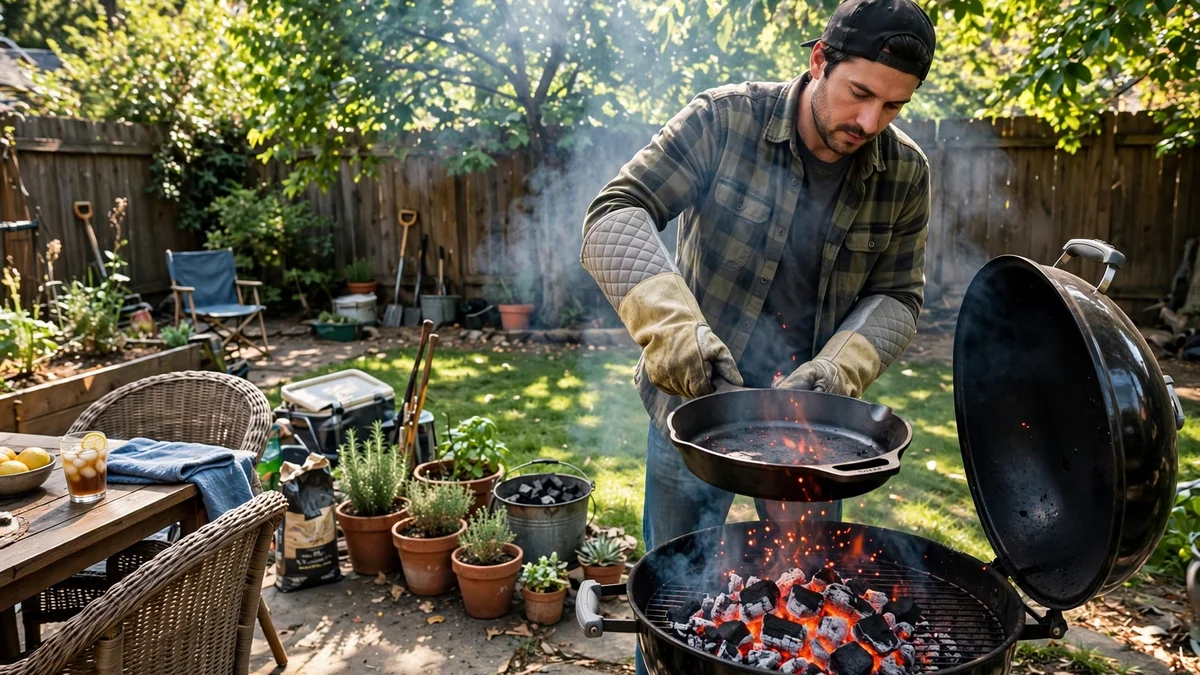
Best Grill Thermometers for Perfect Barbecue in 2026
The best grill thermometers in 2026 are the tools that end the guessing at the barbecue. A grill thermometer tells you the truth about two things at once: how hot your grill really is, and whether the meat on it is actually done. Without one, you are cooking blind. A steak can look perfect outside while the middle is still raw. This guide explains the types of grill thermometer worth buying, how they differ from the other thermometers in your kitchen, and how to use one so every barbecue comes out right. It also saves money, because fewer steaks end up overcooked and thrown away.
Key Takeaways
- A grill thermometer measures grill heat and meat temperature at the grill: dome gauges, grate probes, and leave-in meat probes are the three kinds that matter.
- Know your grill temperature first: most grills run hotter or cooler than the dial suggests.
- A leave-in probe with an alarm is best for roasts and low-and-slow cooking, because it watches the meat while you walk away.
- Accuracy matters more than speed: test every thermometer before you trust it.
- Buy for heat resistance: grill probes and cables must survive far higher temperatures than kitchen thermometers face.
What a Grill Thermometer Is, and What It Is Not
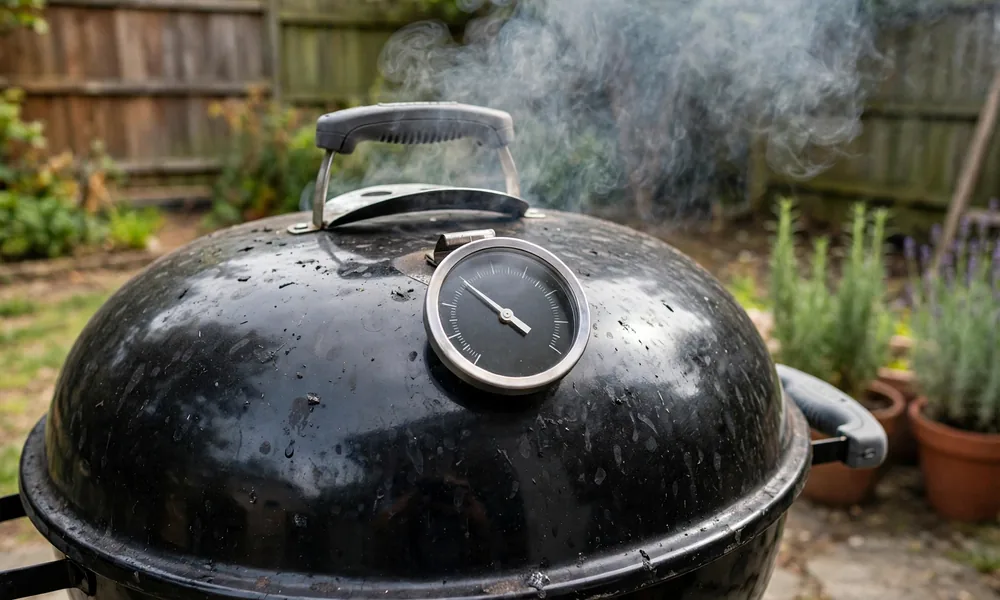
A grill thermometer is a thermometer built for the heat, smoke, and grease of a barbecue. It comes in three forms. A dome or lid gauge sits in the lid of the grill and shows the air temperature inside the closed grill. A grate probe clips to the cooking grate, or sits on it, and measures the heat exactly where the food cooks. A leave-in meat probe goes into the meat on the grill and watches its internal temperature, connected by a heat-resistant cable to a display outside, or wirelessly to a unit you carry.
That job is easy to confuse with nearby thermometers, so draw the line clearly. A meat thermometer, covered in our guide to meat thermometers that read true in seconds, is a kitchen tool: a fast instant-read probe for checking a steak or a roast at the counter, or a leave-in probe for the oven. It is not built for open flame, flare-ups, or life beside a hot grill. An oven thermometer hangs in the oven and measures still oven air, and it cannot be clipped to a grate or pushed into a steak. A candy thermometer measures boiling sugar in a pan, at temperatures and in conditions that have nothing to do with a barbecue.
Why does the grill need its own thermometer at all? Because a grill is the hardest cooking environment to judge by feel. The heat comes from below, in patches, and it changes every time you open the lid, add cold meat, or get a flare-up.

The Main Types of Grill Thermometer, Compared
Most grill thermometers fall into four types, and the right one depends on how you grill. Dome gauges are the simplest: a round dial in the grill lid,. Their weakness is accuracy and placement: they measure the air high in the dome, not the grate, and they can read far hotter than the food.
Instant-read grill probes are fast digital thermometers with a folding probe. You push the probe into the meat, read the display in two or three seconds, and take it out again. They cannot stay in the grill: sustained heat damages their handles and electronics.
Leave-in probe thermometers are built for roasts, whole birds, and low-and-slow cooking. A probe stays in the meat on the grill, connected by a heat-resistant cable to a display outside, or wirelessly to a unit on the counter. They are the best choice for anything that cooks for an hour or more, and for smoking, where opening the lid costs heat and smoke.
Wireless and Bluetooth monitors are leave-in probes with a radio link, so the display sits in your pocket or on your phone. The best ones take four or more probes, so you can watch the grate and several meats at once. They cost the most, and batteries and pairing can fail, but for long cooks they are the most useful thermometers you can own.
| Type | Best for | Strength | Watch out for |
|---|---|---|---|
| Dome gauge | Quick lid check | Always there, no batteries | Reads dome air, not the grate |
| Instant-read probe | Steaks, chops, burgers | True reading in seconds | Cannot stay in the grill |
| Leave-in probe | Roasts, smoking, long cooks | Alarms at your target | Cable must survive grill heat |
| Wireless monitor | Big cooks, several meats | Four probes, phone alarms | Batteries and pairing can fail |
| Infrared gun | Grate surface only | Instant surface reading | Cannot measure meat inside |
Dome, Grate, and Meat: Three Temperatures That Matter
A grill has three temperatures that matter, and they are rarely the same. The dome temperature is the air under the closed lid. The grate temperature is the heat at the cooking surface, where the food actually sits, and it is the number that decides how fast food cooks and whether it sears or steams. The meat temperature is the inside of the food, and it is the only number that decides whether a chicken is safe or a steak is medium-rare. That is why a single reading never tells the whole story: a grill can show a steady dome temperature while the grate runs hot in the middle and cool at the edges. A grill thermometer that measures only one of the three leaves you guessing about the other two.
Hot spots make the grate temperature harder still. Most grills are hotter in the middle and cooler at the edges, or hotter on one side where the burner runs stronger or the coals are piled higher. A grate probe moved across the grill maps those spots, so you can sear over the hot zone and finish over the cool one.
Carryover cooking matters at the grill as much as in the kitchen. Meat keeps cooking after it leaves the heat, rising by three to five degrees as it rests. Pull a steak off a few degrees before your target and let it rest for five minutes, and it will arrive exactly where you want it.
Accuracy, Calibration, and Heat Limits
Accuracy is the whole job of a grill thermometer, and it is where cheap models fail. A good digital probe is accurate to within one degree, and the best manage half a degree. Check accuracy before you trust a new thermometer, and check it again every few months.
The ice-water test is simple: fill a glass with ice, add cold water, stir, and put the probe in the middle without touching the sides or the bottom. It should read 0 degrees Celsius, or 32 degrees Fahrenheit. If a digital model reads more than a degree out and cannot be calibrated, replace it. Write the result on a label on the thermometer, so you remember the correction next time you grill.
Heat limits are the part most buyers forget. A grill probe must survive the temperature it measures, and a grill grate can pass 300 degrees Celsius during searing. Check probe and cable ratings before you buy, and never let a cable rest on the grate or touch a flame. The display unit should sit outside the grill, away from direct heat, and never on a hot lid.
The Best Grill Thermometers at a Glance
The best all-round grill thermometer is the one most grillers should buy first: a two-probe leave-in set, with one probe for the meat and one for the grate, a clear display, and an alarm you can set for each probe.
The best instant-read grill probe is the pick for fast cooks. It reads in under three seconds, accurate to within a degree, with a probe long enough to reach the centre of a thick steak and a display you can read at a glance in daylight.
The best wireless monitor is the pick for long cooks and big gatherings. It takes four probes, so you can watch the grate and three pieces of meat at once, and it alarms on your phone when any probe hits its target. It is the best choice for smoking, whole birds, and brisket, where the cook runs for hours and opening the lid costs heat.
The best value grill thermometer proves that you do not need to spend a fortune. A simple two-probe wired set, with a clear display and a loud alarm, does almost everything the premium sets do, with fewer probes and no phone app. For a new griller, it is the smart buy.
Care, Cleaning, and When to Replace
A grill thermometer lives a hard life: smoke, grease, and heat. Clean the probe after every use with hot soapy water, and dry it before you put it away, because a dirty probe carries bacteria from one piece of meat to the next.
Replace a thermometer that drifts in the ice-water test, one with a fading display, or a bent, loose, or charred probe. And remember that a grill thermometer is only one part of the kit: the grill itself matters too, so read our guide to the best grills for backyard cooking if your grill is the weak link.
Your Grill Thermometer Checklist
- Probes and cables rated for grill heat, well above your hottest searing temperature.
- Accuracy within one degree, verified by the ice-water test before first use.
- A grate probe as well as a meat probe, so you know both grill heat and food temperature.
- An alarm you can set for each probe, loud enough to hear from inside the house.
- A display readable in bright sunlight, with a cable long enough to reach outside the grill.
- Easy to clean, with a covered probe for safe storage.
Frequently Asked Questions
Do I need a grill thermometer if my grill has a built-in gauge?
Yes. A built-in gauge measures the air high in the dome, not the grate where the food cooks, and it is often wrong by a wide margin.
Can I use a meat thermometer on the grill?
A fast instant-read meat thermometer works for quick checks of meat on the grill, because you take it out again at once. A leave-in meat thermometer should not be used on the grill unless its probes and cables are rated for grill heat.
Can I use an oven thermometer on the grill?
No. An oven thermometer measures still oven air and cannot be clipped to a grate or pushed into meat.
Where do I put the probe in the meat on the grill?
In the thickest part, with the tip at the centre, away from bone, fat, and the grate.
What temperature should my grill be for steaks?
For searing steaks, the grate should run hot, around 230 to 260 degrees Celsius, so the outside browns fast while the middle stays juicy.
How do I test if my grill thermometer is accurate?
Fill a glass with ice, add cold water, stir, and put the probe in the middle without touching the sides or the bottom. It should read 0 degrees Celsius, or 32 degrees Fahrenheit.
The Bottom Line
The best grill thermometer in 2026 is the one that measures the grill where it matters and that you actually use every time you cook outside. A two-probe leave-in set, verified in iced water, will save more barbecues than any other tool at its price. Complete the kit with the right tools from our guide to the best BBQ tools for grilling, and every cookout will come out right.