
Top Gummy Bears Worth Buying in 2026
The best gummy bears in 2026 are soft without being slimy, chewy without sticking to your teeth, and fruity in a way that tastes like actual fruit rather than like sugar with a colour added. They are one of the simplest sweets you can buy, and also one of the easiest to get wrong, because a bag that looks bright and cheerful on the shelf can turn out to be rubbery, gritty, or so sweet that the flavour disappears underneath it. The difference between a great gummy bear and a disappointing one is rarely the price. It is the juice, the gelatine or pectin, the cooking, and the care taken after the bears leave the mould.
This guide looks at what makes a gummy bear worth buying in 2026, which types hold up best, how to read a label before you commit to a whole bag, and how to store bears so they stay soft instead of turning hard or sticky. The same rules apply whatever you are buying for: real fruit flavour, a clean chew, a short ingredient list, and a maker who tells you what went into the bag.
5 Key Takeaways
- The best gummy bears list real fruit juice or fruit puree near the top of the ingredients, not flavouring and colouring alone.
- A good bear is soft and springy, with a clean bite and no grit, stickiness, or rubbery bounce.
- Sour bears should taste sharp and fruity first, with the sour coating as a finish rather than the whole flavour.
- Sugar-free and vegan bears can be excellent, but only when the sweetener or pectin is balanced and the texture is still right.
- Store gummy bears airtight, cool, and dry, and eat them within a few weeks of opening for the best chew.
What a Good Gummy Bear Feels Like
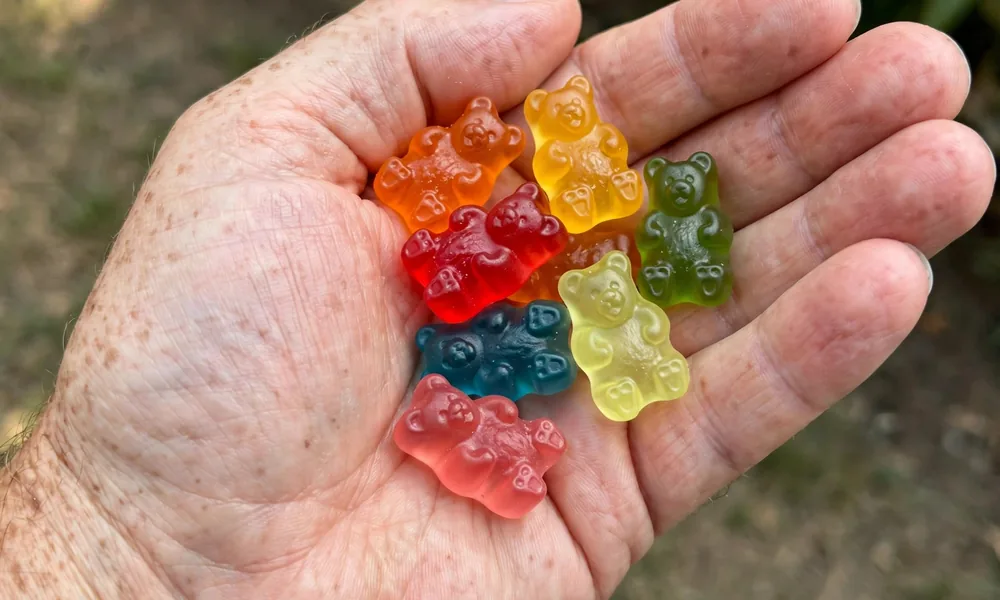
Texture is the first test, and it tells you almost everything about how a gummy bear was made. A good bear feels firm when you pick it up, holds its shape, and then yields with a gentle, springy chew. It should not snap like a hard sweet, and it should not collapse into a soft blob. The surface is usually smooth and lightly glossy. If it feels gritty, the sugar coating is too heavy or the bear has dried out. If it feels slimy, the batch has too much moisture or has been stored badly.
Flavour That Tastes of Fruit
Flavour is the second test, and it is just as revealing. A raspberry bear should taste of raspberries, sharp and a little tart. An orange bear should taste of oranges, bright and zesty rather than like orange squash. A cola bear should have a proper spiced depth, with cinnamon and citrus notes rather than just brown sweetness. When a bear tastes only sweet, the maker has leaned on sugar to carry a flavour that the real ingredients never delivered. A pinch of acidity, usually citric acid or malic acid, helps enormously here, lifting the fruit flavour and stopping the sweetness from becoming flat. Our comparison of the best and worst candies of 2026 makes the same point about gummy sweets: the ones made with real fruit juice are a far better choice than neon jellies made mostly from sugar and gelatine.
Top Gummy Bear Types in 2026
Not all gummy bears are the same sweet, even when they come in the same shape. The classic bear is made with gelatine, glucose syrup, sugar, and fruit juice or flavouring, and it is the benchmark against which every other type is judged. Sour bears add a citric-acid coating that makes your mouth pucker before the fruit flavour arrives. Sugar-free bears replace the sugar with maltitol or another sweetener, which changes both the sweetness and the chew. Vegan bears replace gelatine with pectin or agar, which gives a slightly softer, shorter bite. Vitamin bears add vitamins and minerals to the same chewy base, and they should be judged as a supplement first and a sweet second.
The table below compares the main types on the things that matter when you actually eat them: flavour, texture, sweetness, and who they suit best. Use it as a starting point, then buy a small bag of the type that sounds right and judge it by the chew test above before you buy a large bag.
| Type | Flavour | Texture | Sweetness | Best For |
|---|---|---|---|---|
| Classic fruit | Bright, fruity | Soft, springy | Moderate | Everyday snacking |
| Sour | Sharp, tangy | Firm, coated | High | People who like a pucker |
| Sugar-free | Clean, lighter | Softer, cooler | Moderate | Lower-sugar diets |
| Vegan pectin | Fresh, juicy | Soft, short bite | Moderate | Plant-based eaters |
| Vitamin | Mild, sweet | Soft, chewy | High | Daily supplements |
| Cola | Spiced, deep | Firm, chewy | High | Sharing, parties |
Classic Fruit Bears Lead the Field
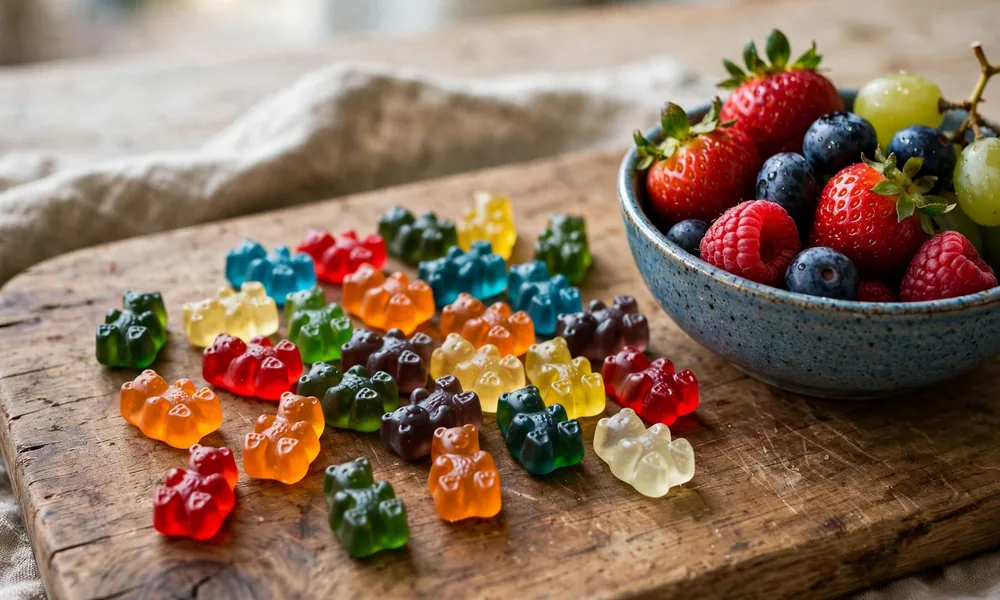
Classic fruit bears are the flavour most people mean when they say gummy bears. They are the most widely available, the easiest to judge, and the most forgiving to make well. A good classic bear uses real fruit juice, natural colours, and a gelatine set firm enough to hold the bear shape but soft enough to chew easily. The colours should look like the fruit: deep red for raspberry, warm orange for orange, pale yellow for lemon, green for apple. Neon-bright bears are a warning sign, because they usually rely on colouring and flavouring rather than fruit. The same instinct that picks a good fudge applies here: look for depth and real ingredients. Our guide to the best fudge in 2026 makes the same point about cocoa quality and honest ingredients.
Sour Bears and the Coating Trap
Sour bears are the strongest challenger to the classic bear. They are sharp and satisfying when the sour coating is balanced by real fruit flavour underneath. The best versions use citric acid and malic acid in a light, even coating, and the fruit flavour arrives as the sourness fades. Avoid versions where the coating is so thick and gritty that it overwhelms everything else, or where the bear underneath tastes of nothing once the sourness is gone.
How to Read the Label Before You Buy
Start with the ingredient list, which good makers display proudly. Fruit juice or fruit puree, sugar, glucose syrup, gelatine or pectin, and citric acid should come first, in that order or close to it. If the list opens with glucose syrup and a long run of flavourings, colourings, and acids, the bear is built for shelf life and bright colour rather than flavour. Short lists are a good sign, and so is a maker who states the juice content as a percentage.
Buy small before you buy big. A single small bag tells you everything you need to know about a maker, and it costs little. Look at the bears, smell the bag before you eat one, and notice whether the flavour arrives straight away or only after the sweetness fades. If you are buying online, read recent reviews for mentions of texture and freshness, and check whether the seller ships in cool packaging during warm weather, because gummy bears soften and stick together fast in heat.

Buying Gummy Bears for Different People
For children, choose classic fruit bears with natural colours and a moderate sweetness, and keep the portion small: a handful is a treat, a whole large bag is too much sugar at once. For a party table, mix classic and sour bears in separate bowls so guests can choose, and add a bowl of cola bears for variety. For someone watching their sugar intake, sugar-free bears are a genuine option, but check the sweetener and eat them in moderation, because sugar alcohols can upset the stomach in large amounts. For a vegan guest, pectin bears are the safe choice, but check the label for beeswax glazing, which some vegan eaters avoid.
Storing Gummy Bears So They Stay Soft
Gummy bears keep best in an airtight container at cool room temperature, away from direct sunlight and strong smells, because gelatine picks up odours easily. A sealed jar or a resealable bag with the air pressed out will keep bears soft for several weeks after opening. Do not store them in the fridge unless the packet tells you to, because cold air dries them out and makes them hard. If bears go sticky, the storage was too warm or too humid: move them somewhere cooler and drier and eat them soon.
Your Gummy Bear Checklist
- Check the label for real fruit juice or puree in the first few ingredients.
- Pick colours that look like fruit, not neon-bright colouring.
- Bite one bear first: it should be soft, springy, and clean, never gritty or rubbery.
- Buy a small bag before committing to a large one.
- Match the type to the eater: classic for most people, pectin for vegans, sugar-free in moderation.
- Store airtight, cool, and dry, and eat within a few weeks of opening.
Frequently Asked Questions
Are gummy bears vegetarian?
Most classic gummy bears are not vegetarian, because they are set with gelatine, which comes from animals. Vegan bears use pectin or agar instead, and they are labelled vegan. Always check the packet rather than assuming, because some bears use beeswax as a glazing agent too.
How many gummy bears make a sensible portion?
A small handful, roughly 25 to 30 grams, is a sensible portion for most adults. That is about eight to ten bears, depending on their size. A whole large bag can contain several times that amount of sugar, so it is better shared or saved across several days.
Why do some gummy bears go hard?
Bears go hard when they lose moisture, usually because the bag was left open or stored somewhere warm and dry. An airtight container and a cool, steady temperature slow this down. Once a bear is fully dried out, it rarely softens properly again.
Are sugar-free gummy bears healthier?
They contain less sugar, but they are still a sweet, and sugar alcohols can cause stomach discomfort if you eat a lot at once. They are a useful option for people managing sugar intake, not a health food, and the same portion guidance applies.
Can you freeze gummy bears?
You can, and some people like the firmer chew of a frozen bear, but freezing changes the texture and the bears can turn sticky as they thaw. It is better to buy a smaller bag and eat it fresh than to freeze a large one.
What is the difference between gummy bears and jelly beans?
Gummy bears are soft, chewy, and made with gelatine or pectin, with a matte or lightly glossy surface. Jelly beans are smaller, bean-shaped, with a hard shiny shell and a soft jelly centre. They are different sweets with different textures, even though both come in fruit flavours and bright colours. If you want a soft chew, choose gummy bears; if you want a crisp shell that gives way to jelly, choose jelly beans.
The Bottom Line
The best gummy bears in 2026 taste of real fruit, chew cleanly, and leave you satisfied after a small handful rather than reaching for another bag straight away. Start with the label, buy small, trust the chew test, and store what you buy properly. Do that, and a simple bag of bears becomes a genuinely good sweet, whether you are sharing it at a party or keeping a jar on the shelf for a small treat after dinner. For a richer sweet to serve alongside them, our guide to the best chocolate cake in 2026 follows the same rule: real ingredients first, and flavour that tastes of what it claims to be.


