Hand Towels That Dry Hands Fast Without the Damp in 2026
Hand towels that dry hands fast without the damp are the quiet heroes of every bathroom: the best hand towels of 2026 do the job in seconds, then dry themselves before the next person reaches for them. A good one takes water off your skin in one or two passes, feels soft, and still smells fresh at the end of the day. A bad one smears water around, stays cold and clammy, and smells musty within a day or two.
The difference is not price or brand. It comes down to fibre, weave, weight, and size, all easy to check before you buy.
Key takeaways
- Fast drying is about absorbency per gram, not thickness: a dense loop pile beats a heavy, loosely woven towel.
- Long-staple cotton and linen dry hands quickest and stay fresh longest; cheap short-fibre cotton turns thin and scratchy within months.
- Hang a hand towel spread out, not bunched up, or it stays damp all day whatever the fabric.
- 400 to 500 grams per square metre is the sweet spot: thick enough to absorb, light enough to dry between uses.
- Skip fabric softener: it coats the fibres and destroys absorbency wash after wash.
Why so many hand towels stay damp
A hand towel has a harder job than a bath towel. A bath towel is used once or twice a day and then has hours to dry. A hand towel in a family bathroom may be used twenty times a day, with only minutes to dry between uses and almost no airflow in a small bathroom. That is why the towel that feels lovely and thick in the shop so often becomes a cold, damp rag by evening.
The problem is usually the weave. A towel with a loose, fluffy pile looks soft, but the long loops hold water deep inside, where air cannot reach it, so the surface feels dry while the core is still wet. A shorter, denser pile holds less water, and what it holds sits close to the surface, where it can evaporate. That is why a thin hotel towel sometimes dries hands better than a thick luxury one: it was woven tightly.
The main types of hand towel
Every hand towel falls into one of five families, defined by fibre and weave, each with a clear strength, weakness, and best bathroom.
Terry cotton hand towels
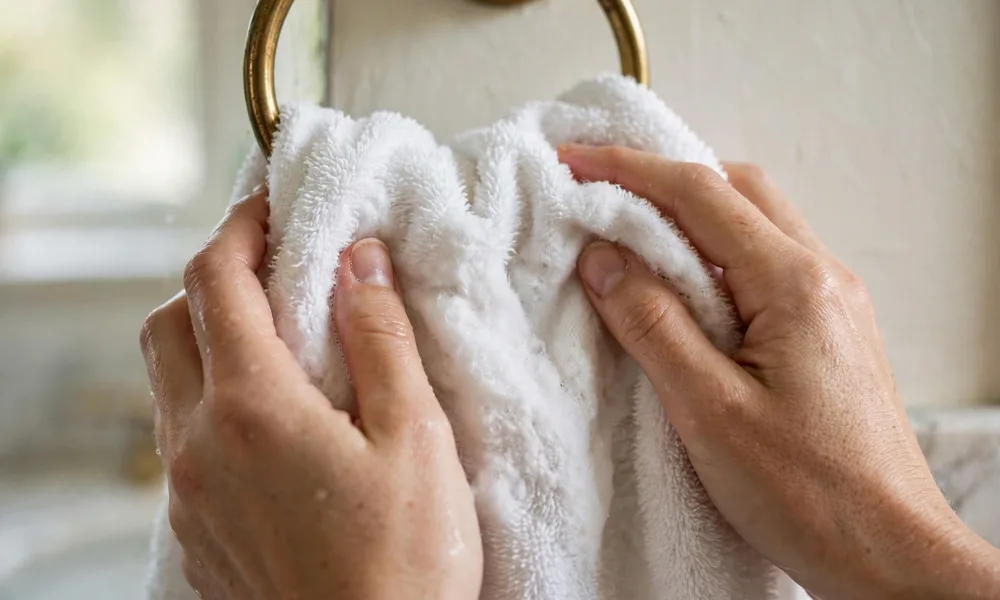
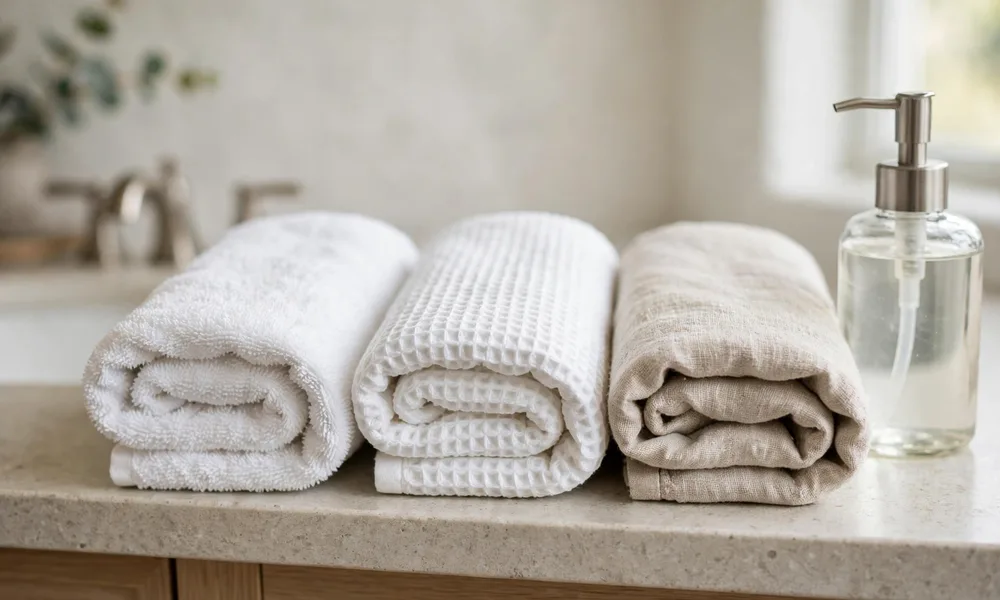
Terry cotton is the classic hand towel, and still the best all-rounder for most homes. The loops stand up from the surface and pull water off the skin fast, and a good terry towel can absorb several times its own weight. The best terry hand towels of 2026 are made from long-staple cotton, usually Turkish or Egyptian, spun into smooth, strong yarn that stays soft wash after wash. The worst are made from short, cheap fibres that break, shed fluff, and turn thin and scratchy within months; their shop softness is silicone softener that washes away within weeks.
Look for a dense, even pile on both sides and a double-stitched hem. Hold it up to the light: if you can see through the weave, it is too loose. Terry cotton suits family bathrooms and kitchens, anywhere a towel gets heavy daily use.
Waffle weave hand towels
Waffle weave towels have a honeycomb texture instead of loops, and they are the fastest-drying cotton towels you can buy. The raised squares create air channels, so water evaporates quickly, and the towel is light and thin. A waffle towel dries hands well, though not quite as fast as dense terry on the first pass, because there is less pile to grab the water. Where it wins is the second test: it is dry again within an hour or two, while a thick terry towel may still be damp.
Waffle weave suits small or humid bathrooms, where a towel that stays damp starts to smell. The trade-off is feel: some find it less soft than terry. Try one for a week before replacing the whole set.
Linen hand towels
Linen is the oldest hand towel fabric, making a quiet comeback for good reason. Its fibres are hollow, so they absorb water quickly and release it quickly too, and linen is naturally antibacterial, staying fresh longer between washes than cotton. A linen towel feels crisp rather than fluffy, drying hands with a slightly rougher touch some love and others find too rustic.
Linen improves with age: it softens with every wash, does not shed, and lasts for years. The downsides are price and wrinkles, and it never feels plush. A linen-cotton blend gives most of the freshness with a softer feel and a lower price.
Bamboo hand towels
Bamboo towels are made from bamboo viscose, a soft, silky fibre that absorbs well and resists odour, much like linen. The weakness is durability: bamboo fibres are weaker when wet, so the towels can thin and tear sooner if washed hot or tumble-dried hard. Bamboo suits an en suite where softness matters most; wash it cool and skip the dryer.
Microfibre hand towels
Microfibre towels are made from tiny synthetic fibres that absorb a great deal of water for their weight, dry fast, and cost little. They are excellent for gyms and travel packs. As an everyday bathroom towel, though, microfibre feels grabby on dry skin, holds odours, sheds plastic fibres into the wash, and goes flat and slippery when saturated. Keep it for the gym bag and choose a natural fibre for the bathroom.
What makes a hand towel dry hands fast
Four things decide how fast a hand towel dries your hands: fibre, pile, weight, and size. The fibre decides how much water the towel holds and how willingly it gives it up. Cotton and linen hold water inside the fibre, then release it to the air. Microfibre holds water between its strands, which is why it feels dry again fast but stops working when saturated.
The pile decides how quickly water moves from skin into towel. A dense loop pile touches the skin at many points and pulls water off in one pass; a flat or worn pile slides over the skin and leaves a film behind. Press the loops: if they spring back, the pile is healthy. If they lie flat, the towel is worn out, and no washing will bring it back.
Weight decides the balance between drying your hands and drying itself. Around 400 to 500 grams per square metre absorbs plenty and still dries between uses. Heavier feels more luxurious but stays damp; lighter dries in an hour but may need two passes. Pick the middle weight and buy more towels, so one is always dry.
How to hang and store hand towels
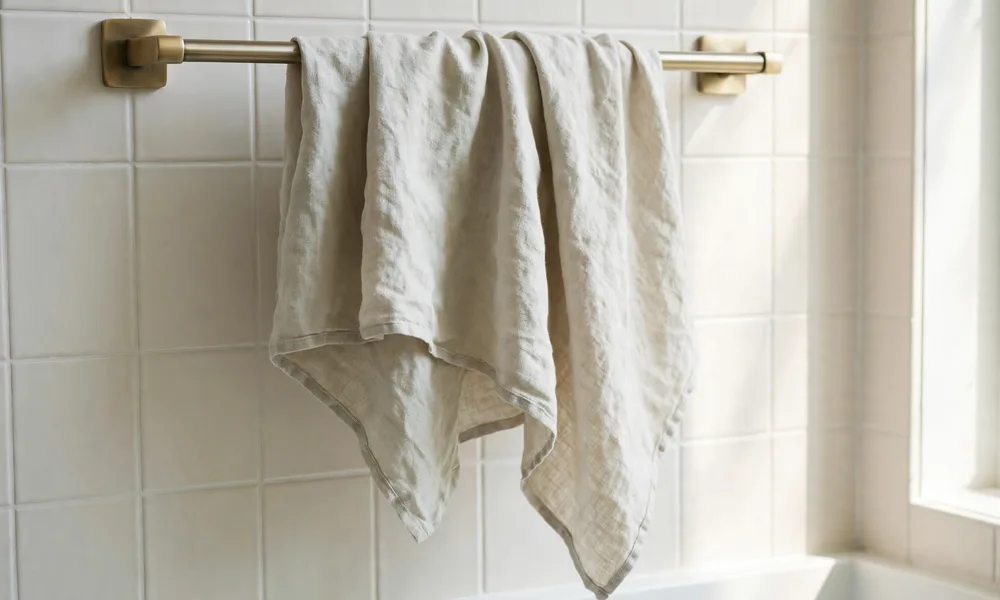
Where a hand towel hangs matters as much as what it is made of. The best spot is a ring or a bar beside the sink, with air on both sides. A towel draped over the bath edge or stuffed onto a hook in a bunch will stay damp whatever it is made of. If you have a heated towel rail, use it: gentle warmth is the best cure for a damp towel.
Keep a small stack of fresh hand towels in the bathroom, changed every two to three days, daily if guests use them. A good towel rack keeps the towel spread out and off the wall, and open bathroom shelves keep the fresh stack within reach. Ventilation is the other half: a fan running for twenty minutes after a shower does more for your towels than any fabric. Hang the towel near the sink, away from the toilet, where every flush sends a fine mist into the air.
Comparison table
| Hand towel type | Dries hands | Dries itself | Softness | Stays fresh | Best for |
|---|---|---|---|---|---|
| Terry cotton | Fastest | Moderate | Very soft | Good | Family bathrooms, everyday use |
| Waffle weave | Good | Fastest | Medium | Very good | Small or humid bathrooms, guests |
| Linen | Good | Fast | Crisp | Best | Guest bathrooms, low-wash homes |
| Bamboo | Good | Moderate | Very soft | Very good | En suites, sensitive skin |
| Microfibre | Fast, then flat | Fast | Grabby | Poor | Gym bags, travel, cars |
Keeping hand towels fresh and absorbent
Most hand towels are ruined in the laundry, not in the bathroom. The worst thing you can do is use fabric softener: it coats fibres in a thin layer of wax that makes them feel soft while sealing them against water, so after a few washes a towel that once absorbed beautifully just pushes water around. The same goes for dryer sheets. Wash with normal detergent, skip the softener, and add half a cup of white vinegar to the rinse now and then to strip residue and keep the fibres open.
Wash hand towels hot, at 60 degrees, weekly; cotton and linen can take the heat, bamboo should be washed at 40 degrees. Dry them in fresh air when you can, and do not overload the machine, or detergent residue builds into stiffness and smells. Replace a towel when the pile lies flat or it smells musty within a day of washing; a good cotton towel lasts two to three years, linen far longer. Keep a good soap dispenser by the sink and filled, because hands properly washed and dried on a clean towel stay clean.
Checklist: choosing the best hand towels in 2026
- Pick long-staple cotton or linen, with a dense, even pile on both sides.
- Aim for 400 to 500 grams per square metre: absorbent, but light enough to dry between uses.
- Buy the standard 40 by 60 centimetre size and hang it spread out on a ring or a bar.
- Choose waffle weave or linen for small, humid or windowless bathrooms.
- Skip fabric softener and dryer sheets; wash at 60 degrees.
- Keep two or three towels in rotation, and replace them when the pile lies flat.
Frequently asked questions
How often should hand towels be changed?
Every two to three days, daily if guests use it or someone is unwell. A towel used many times a day collects bacteria quickly and smells after three days. Keep two or three in rotation.
Why do my hand towels smell musty even after washing?
The usual cause is damp, not dirt: bacteria grow in fibres that never dry fully. Hang the towel spread out, improve ventilation, and wash at 60 degrees with a splash of vinegar in the rinse.
Are expensive hand towels worth the money?
Up to a point. A well-made long-staple cotton towel costs more because the fibre and weave are better, and it outlasts two or three cheap ones. Beyond that, you pay for a brand name. Check the pile, hem, and weight, not the price tag.
What is the best hand towel for a small bathroom?
A waffle weave or linen towel: both dry fast and stay fresh with little airflow. Hang it on a ring in a single layer and run the fan after showers; a thick terry towel in a small, windowless bathroom stays damp all day.
Should hand towels match the bath towels?
They do not have to, but a matching set looks tidy and is easier to buy. Match the weight and fibre, not the colour: a thick hand towel in a small bathroom is a bad idea whatever it matches.
Can I use hand towels in the kitchen?
You can, but keep them separate and use a different colour so nobody mixes them up. Kitchen towels get greasy and need hotter, more frequent washing; waffle weave or linen dries fast there.
Bottom line
The best hand towels of 2026 dry your hands in one or two passes and then dry themselves before the next use. For most homes, that means a dense, long-staple terry cotton towel at 400 to 500 grams per square metre, hung spread out, washed hot and never with fabric softener. If your bathroom is small or humid, switch to waffle weave or linen, and rotate a few good towels: they will do the job for years.