Top Headphone Cases That Actually Protect Your Headphones in 2026
A good pair of over-ear headphones is one of the most expensive things you carry every day, and the best headphone cases of 2026 are the cheapest insurance for them. A bare pair tossed into a bag gets crushed under a laptop, scratched by keys, and bent at the headband until one ear cup sits crooked. A proper case stops all of that: a rigid shell takes the weight, soft lining stops scratches, and a pocket keeps the cable from tangling. The difference between a case that protects and one that only looks protective is in the details, and this guide covers them, from shell stiffness to ear-cup depth.
Headphone cases are not the same product as the small charging cases for earbuds. Our guide to the best earbud cases of 2026 covers those pocket-sized cases, built around a charging battery and a model-specific fit. A headphone case is bigger and simpler, judged on whether the shell resists crushing and whether the ear cups sit flat without pressure on the cushions. For the headphones themselves, start with our guide to the best headphones of 2026.
Key Takeaways
- Buy the case for the headphones you own: too small presses on the ear cushions, too big lets the headphones rattle around inside.
- A hard shell is the only real crush protection. Soft pouches stop scratches, but they do nothing when a bag gets sat on.
- Check the ear-cup depth first. Deep cushions need a deep case, or the lid presses the cushions flat every time you close it.
- A zip that runs all the way around beats a magnetic flap, and a mesh pocket under the lid keeps the cable off the cups.
- Match the case to the day: a slim hard shell for the commute, a rugged case for travel, a soft pouch for a pair that stays home.

What a Headphone Case Actually Protects Against
Most headphone damage happens in a bag, not on your head. The first enemy is crushing: a laptop or a water bottle pressing down on the ear cups until the cushion foam stays dented or the headband bends. The second is scratching: keys and zips dragging across the cups every time you reach into the bag. The third is the cable, which knots around the headband and pulls at the plug. A case deals with all three by giving the headphones a rigid home of their own, with the cable kept separate.
There is also the slow damage people forget. Ear cushions are foam covered in leather or fabric, and they deform if something presses on them for hours. A case with moulded cups or a deep interior lets the cushions rest in their natural shape.
The Main Types of Headphone Case
Hard-Shell Zip Cases
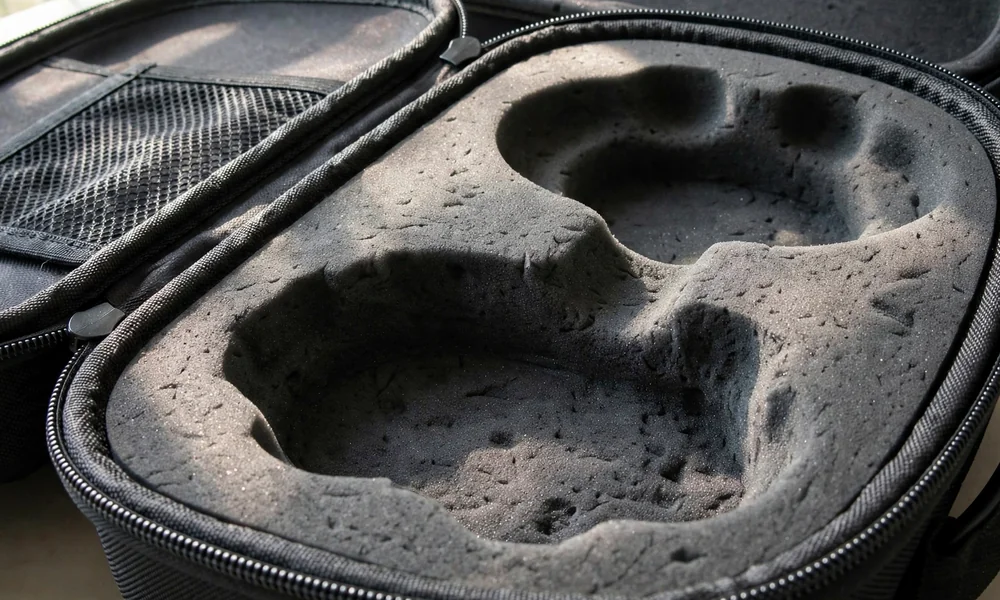
A hard-shell case is a rigid outer of moulded plastic or EVA foam, with a zip around the edge and a soft lining inside. It is the default for anyone whose headphones leave the house, because the shell is what stops crushing. The best ones have moulded hollows for the ear cups, a mesh pocket under the lid, and a zip with two pulls. If the shell flexes easily when you squeeze it, it will flex in a packed bag too.
Soft Pouches
A soft pouch is a drawstring or zip bag in fabric, leather, or neoprene. It stops scratches and dust, weighs almost nothing, and folds flat when empty, which makes it right for a pair that lives at home or travels inside luggage that is already rigid. It cannot protect against crushing, so it is a poor pick for a crowded commuter bag. Never put a pouched pair at the bottom of a bag under heavy things.
Leather Cases
Leather cases sit between the two: stiffer than a pouch, softer than a hard shell, and far better looking than either. A good one uses a firm base with a padded lining and a zip that stays shut, and it ages well, picking up a patina instead of showing every scuff.
Rugged and Waterproof Cases
Rugged cases are hard shells with a waterproof seal, a pressure valve, and reinforced corners, built for travel and outdoor work. They are heavier and cost more, but they are the only type that survives a drop in a puddle or a suitcase packed on top of them. If your headphones travel by plane and train, this is the case that earns its keep.
Best Overall: A Hard-Shell Zip Case
The best all-round headphone case in 2026 is a slim hard-shell zip case with moulded ear-cup hollows and a mesh lid pocket. It fits most full-size over-ear headphones, protects against the crushing that kills more pairs than drops do, and still slips into a backpack without taking over the whole bag. The shell should feel rigid when you squeeze it, the lining soft enough not to scratch the cups, and the zip should run smoothly without catching.
It is the balanced middle: a rugged case protects more but costs more, and a pouch protects less. Fold-flat headphones fit best, since the cups sit side by side in the moulded hollows.
Best for Travel: A Rugged Waterproof Case
Travel asks more of a case than the daily commute. A rugged waterproof case with a sealed lid and reinforced corners survives baggage handlers, rain on the platform, and the weight of a suitcase packed on top of it. The best travel cases also have room for the cable and a flight adapter, each in its own pocket so nothing rattles against the cups. The trade-off is bulk: it suits a suitcase, not a small day bag, and a case too tight for travel presses the cushions flat for the whole flight.
Best Slim Pick: A Soft Lined Pouch
For a pair that never leaves the house, or travels inside luggage that is already protected, a soft lined pouch is the sensible buy. The best pouches use thick fabric or neoprene with a soft lining, a zip rather than a drawstring, and a small pocket for the cable. They weigh almost nothing, fold flat when empty, and cost a fraction of a hard shell. A pouch stops scratches and tangles, not crushing. If your headphones only move between rooms, pair a pouch with a stand. Our guide to headphone stands covers the desk side.
How to Choose the Right Headphone Case
Start with the fit. Measure your headphones folded flat, and check the case dimensions against those numbers, not a brand name. Your headphones should fit with a little room around the ear cups but not so much that they slide around. If the listing only names a brand, check the comments for your exact model before you buy.
Next, check the ear-cup depth. Deep cushions need a deep case. Press the lid gently with the headphones inside: if it touches the cushions, the case is too shallow and will flatten them over time. Moulded hollows help, because they hold the cups in place without pressing on them.
Then test the shell and the zip. Squeeze the shell firmly and twist it slightly; a good one resists both and springs back without a creak. The zip should run smoothly around the whole case, with two pulls and no loose threads. A mesh pocket under the lid keeps the cable off the cups.
Headphone Cases Compared
| Case type | Crush protection | Weight | Best for | Price range |
|---|---|---|---|---|
| Hard-shell zip case | Very good | Light | Everyday carry and commuting | Low to mid |
| Soft lined pouch | Basic | Very light | Home storage and light travel | Low |
| Leather case | Good | Medium | Office carry and premium pairs | Mid to high |
| Rugged waterproof case | Excellent | Heavy | Flights, outdoor work, rough bags | Mid to high |
No case wins on every measure.
What to Avoid
The worst cases share a few faults. The first is a shell that looks rigid in a photograph but flexes when you squeeze it. Thin plastic and soft EVA feel solid until they meet the weight of a laptop, and then they give way. The second is a case that is too small: if you have to force the zip shut over the ear cups, it presses on the cushions every time it closes, and they will stay dented.
The third fault is a loose interior. If the headphones rattle inside, they rub against the lining and the zip every time the bag moves. Moulded hollows or a snug strap fix this. Also be wary of cases with no cable pocket, since a loose cable tangles around the headband and scratches the cups.

Checklist: Before You Buy a Headphone Case
- Measure your headphones folded flat and check them against the case interior size, not just the brand name.
- Squeeze the shell firmly and check it resists crushing without flexing or creaking.
- Check the ear-cup depth: the lid should not press on the cushions when closed.
- Run the zip all the way around and check it moves smoothly, with two pulls and no catching.
- Confirm a separate pocket for the cable and adapter, away from the ear cups.
- Weigh the case and check it still fits in the bag you carry every day.
Frequently Asked Questions
Do I need a case if my headphones came with one?
Many headphones come with a pouch or a slim case, and for home use that is often enough. An extra case is worth it if the included one is a thin pouch and your headphones travel in a crowded bag. A hard shell is the upgrade that changes how well the pair survives the commute.
Will a hard case damage the ear cushions?
Not if it fits. A case with moulded hollows and enough depth lets the cushions rest in their natural shape. Damage happens when a case is too shallow. Measure the cup depth first.
Are waterproof cases worth the extra money?
Yes, if your headphones travel outdoors in rain, by plane, or in a bag that gets thrown around. For a pair that only moves between home and office, a standard hard shell is enough and a rugged case is extra weight for no benefit.
Can one case fit several pairs of headphones?
Usually not well. Cases are shaped around one pair, and a second pair either will not fit or will press against the first. Buy a case for the pair that travels most, and store the others on a stand or in pouches at home.
How do I clean a headphone case?
Wipe a hard shell with a damp cloth and leave it open to dry. For the lining, use a soft brush for dust and a barely damp cloth for marks. Never soak a case or put it on a radiator, because heat warps the shell and loosens the lining.
Should I choose a case with a handle or a carabiner?
A handle helps if you carry the case on its own, and a carabiner loop helps if you clip it to a backpack. Both add bulk, so skip them if the case always lives inside a bag. The shell, the fit, and the zip matter far more.
The Bottom Line
The best headphone case of 2026 is the one that fits your headphones exactly, resists a firm squeeze, and suits the way you carry them. For most people that is a slim hard-shell zip case, with a rugged case for travel and a soft pouch for home. Measure the fit, check the ear-cup depth, and test the shell and the zip before the return window closes.