
A good highlighter is the difference between skin that looks lit from within and skin that looks glittery. It catches the light on the high points of the face, the tops of the cheekbones, the brow bone, the bridge of the nose, so the face looks rested, hydrated, and alive. A bad highlighter does the opposite. It sits in visible sparkle, shows every pore, and reads as makeup from across the room. The difference is rarely the price. It is the finish, the shade, and a light hand.
Highlighter is often confused with shimmer, and that is where most of the glitter comes from. Its job is not to add colour or to make the face shiny, but to reflect light where light would naturally fall, so the face gains dimension without gaining colour. When it works, nobody can tell you are wearing it; they only notice that your skin looks healthy and your cheekbones look higher.
Key Takeaways
- A highlighter should reflect light, not add colour: if you can see glitter, the finish is too strong for daytime.
- Choose a shade close to your skin tone, with an undertone that matches your own, not three shades lighter.
- A soft sheen looks most natural; visible sparkle belongs in the evening, if anywhere.
- Place highlighter where light falls: cheekbones, brow bone, nose, cupid’s bow, and the inner corners of the eyes.
- Use the smallest amount that shows, blend the edges, and check the result in daylight.
What a Highlighter Actually Does
Light is what gives a face its shape: the high points catch it, the hollows lose it, and the brain reads that contrast as structure. Foundation flattens that contrast, and highlighter puts a little of it back where light would fall on bare skin, which is why a face with highlighter looks more awake than a face with foundation alone.
The effect is subtle by design. Highlighter does not cover anything, warm the face the way bronzer does, or add the pink flush that belongs to blush. It adds light, which stops a made-up face from looking flat in daylight. The most convincing highlighter could pass for your own skin catching the sun.

Powder, Cream, Balm, and Liquid: Which Formula Suits You
Powder highlighter is the classic choice and the easiest to control. It goes over foundation and powder, blends with a brush, and can be built up in thin layers or swept away if you overdo it. It suits normal, combination, and oily skin best, and it is the most forgiving formula for a beginner, because a powder mistake can be softened with a clean brush in seconds.
Cream and balm highlighters melt into the skin, leave a softer finish, and suit dry and mature skin far better than powder, which can settle into fine lines. Cream goes on before powder, applied with fingers or a damp sponge, then pressed into the high points rather than swept across them. Cream is harder to take off than powder, so start with less than you think you need.
Liquid highlighter is sheer, blends quickly, and works well mixed into moisturiser for an all-over glow, or dotted onto the cheekbones for a targeted sheen. It sets fast, so blend quickly. Whatever the formula, the product should disappear into the skin, leaving light behind; if you can see its edge, it is not blended.
Sheen or Sparkle: The Finish Decides the Look
A soft sheen is the safest finish for daytime and mature skin: it reads as healthy skin and never draws attention to pores. If you are buying one highlighter only, buy a finely milled powder or a balm with a sheen, not a sparkle. A glitter highlighter can be beautiful in the evening, but in daylight it shows every pore it sits on. Visible glitter in the pan will be visible glitter on your face, only larger.
Choosing the Right Shade by Skin Tone
Shade is where most highlighter goes wrong. Too light looks like a white stripe, too dark looks like bronzer in the wrong place. Pick a shade close to your own skin tone, one step lighter at most, with an undertone that matches your own. Fair skin suits pale champagne and soft pearl, medium skin warm champagne and soft gold, and deep skin rich gold, copper, and bronze, because a pale shade on deep skin reads as ash.
Undertone matters just as much. Warm undertones suit golden and peachy highlighters, cool undertones suit pearly and pink ones, and neutral undertones can wear either. Test on the cheekbone, not the back of the hand, blend the edge with a finger, and step to a window before you decide. A good highlighter should look like light on your own skin, not like a separate colour sitting on top of it. Our guide to foundations that match your skin explains undertone in more detail, and the same test works here.

Where to Place Highlighter, and Where Not To
Placement is the whole trick with highlighter, and it is simpler than the diagrams make it look. Light falls on the high points first, so that is where highlighter belongs: the tops of the cheekbones, the brow bone under the arch of the eyebrow, lightly down the bridge of the nose, a dot on the cupid’s bow, and a touch in the inner corners of the eyes. Those five places are enough. Each one catches the light when you move, and together they give the face dimension without adding colour.
What matters more than the list is restraint. Highlighter should never be painted in a stripe, taken down the cheek, or applied to the whole face. The centre of the forehead, the tip of the nose, and the chin should stay mostly bare, because too much light in the middle of the face reads as shine, not glow. If your T-zone goes shiny by midday, keep highlighter off it entirely.
How to Apply Highlighter Without the Glitter
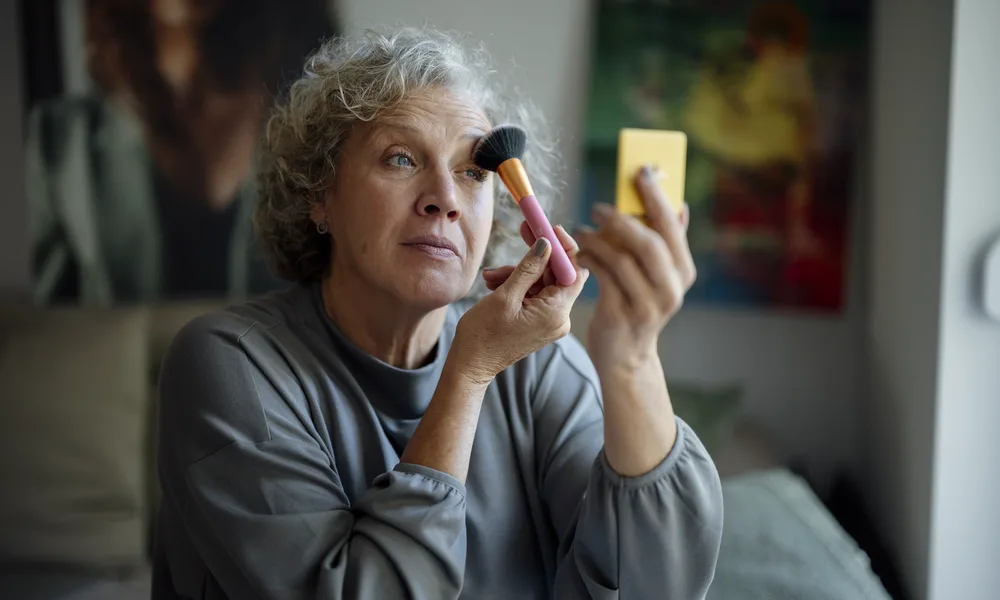
Start with a small amount on a fan brush, a tapered brush, or your fingertip. A fan brush picks up the least product and spreads it most thinly, which is exactly what highlighter needs. Sweep it once over the top of the cheekbone, from the outer edge toward the temple, and stop. Do not reload the brush for the second cheekbone; use what is left on it. Then take a clean finger and press gently over the edges, warming the product into the skin until there is no line where it starts or stops.
Blend is a verb, not a step you do once. After the first pass, wait a minute and look again in daylight, because highlighter settles as it warms on the skin, and a sheen that looked perfect under bathroom lights can look glittery by the window. If it does, a little translucent powder over the top will soften it, and a damp sponge will lift the worst of it. With cream or balm, press rather than sweep: dab it onto the high points, blend the edges outward with a fingertip, and set only the areas that tend to go shiny. Our guide to what makes a great face primer explains how a smooth base helps light sit evenly, and that matters here, because highlighter shows every patch of dry skin and every unblended edge underneath it.
The most common mistakes are easy to name: the wrong shade or undertone, too much product in one heavy layer, a brush too dense to spread a wash of light, or skin that is not ready for it, with dry patches or unblended foundation underneath.
Highlighter, Bronzer, and Blush: Keeping Them Apart
Highlighter, bronzer, and blush are often confused, but they do three different jobs. Highlighter adds light to the high points, bronzer adds warmth to the same points, and blush adds a flush of colour to the cheeks. One lights, one warms, one colours, and a face that uses one product for all three jobs looks muddy.
The order matters too. Foundation first, then bronzer on the high points if you use it, then blush on the apples of the cheeks, then highlighter last, on the very tops of the cheekbones, above where the blush sits. Highlighter goes last because it is the lightest touch of all, and because it needs to sit on top of everything else to catch the light. Our guide to why the right blush makes all the difference explains the blush side of this in full.
Comparison Table
| Formula | Best for | Finish | Ease of blending |
|---|---|---|---|
| Powder highlighter | Normal, combination, oily skin | Sheen to sparkle | Easiest, most forgiving |
| Cream highlighter | Dry and mature skin | Skin-like, dewy | Needs a light hand |
| Balm highlighter | Dry skin, no-makeup looks | Wet sheen, no sparkle | Press in, do not sweep |
| Liquid highlighter | All skin types, sheer glow | Sheer, natural | Fast-setting, blend quickly |
| Glitter highlighter | Evening only | Visible sparkle | Shows texture if overdone |
Checklist
- Pick a shade close to your skin tone, one step lighter at most, with an undertone that matches your own.
- Choose a soft sheen for daytime; save visible sparkle for the evening.
- Use a fan brush or fingertip, and start with the smallest amount that shows.
- Place highlighter on the high points only: cheekbones, brow bone, nose, cupid’s bow, and inner eye corners.
- Blend the edges until there is no visible line, then check the result in daylight.
- Keep highlighter off the T-zone if your skin goes shiny by midday.
Frequently Asked Questions
Can highlighter replace bronzer?
No. Highlighter adds light to the high points, while bronzer adds warmth. A highlighter used as bronzer looks pale and ashy, and a bronzer used as highlighter looks dark and muddy. Use each for its own job, and keep them in their own places.
Why does my highlighter look glittery in daylight?
The finish is too strong for the light, or too much product went on in one layer. Try a finely milled sheen instead of a sparkle formula, use half as much, and check it by a window. A little translucent powder over the top will also soften visible glitter.
Should highlighter go on before or after blush?
Highlighter goes last. Foundation first, then bronzer, then blush on the apples of the cheeks, then highlighter on the very tops of the cheekbones, above where the blush sits. Applied last, it catches the light instead of being buried under the next layer.
Is powder or cream highlighter better for mature skin?
Cream or balm is usually better, because it melts into the skin and does not settle into fine lines the way powder can. Press it in with a fingertip, blend the edges, and skip powder over the high points so the sheen survives.
How do I fix highlighter that is too strong?
Take a clean, damp sponge and press it gently over the area to lift the excess, then dust a little translucent powder over the top. If it is still too strong, the finish is wrong for you, and a softer sheen will serve you better than a sparkle formula.
Can I wear highlighter without any other makeup?
Yes. A dot of balm on the cheekbones and brow bone over moisturised skin looks like healthy skin catching the light. Keep the shade close to your own skin, use the smallest amount, and blend the edges so there is no line.
The Bottom Line
Highlighter works when it is treated as light, not colour. Choose a sheen close to your skin tone, with an undertone that matches your own, place it where light would naturally fall, and use the smallest amount that shows. Do that, and your skin will look lit from within, even on the dullest day of the year.

