
Oil Paints That Blend Rich and Slow in 2026
Oil paints that blend rich and slow give you something no other paint can: time. A stroke laid down on Monday can still be pushed and reworked on Tuesday, because oil paint dries by oxidation over days rather than by evaporation in minutes. That slow drying is what lets colours melt into each other on the canvas instead of drying into hard, separate edges, and it is why oil has been the painter’s medium for portraits, landscapes and still life for centuries. The best oil paints in 2026 carry a high pigment load in a clean linseed or safflower oil binder, so blends stay rich, luminous and true as they cure.
Key Takeaways
- Slow drying is oil paint’s superpower: wet-into-wet blending stays workable for days, so gradients and skin tones can be softened without hard edges.
- Pigment load decides richness: professional oils use more pigment and less filler, so a little paint goes further and mixtures stay clean instead of turning muddy.
- Linseed oil is the classic binder, while safflower and walnut oils yellow less and suit whites and pale colours.
- Mediums change how oil paint behaves: a little linseed oil lengthens it, while alkyd mediums speed drying and stand oil gives a smooth, enamel-like finish.
- Fat over lean is the golden rule: paint thin, lean layers first and richer, oilier layers on top, or the surface will crack as it cures.
What Makes an Oil Paint Blend Rich and Slow
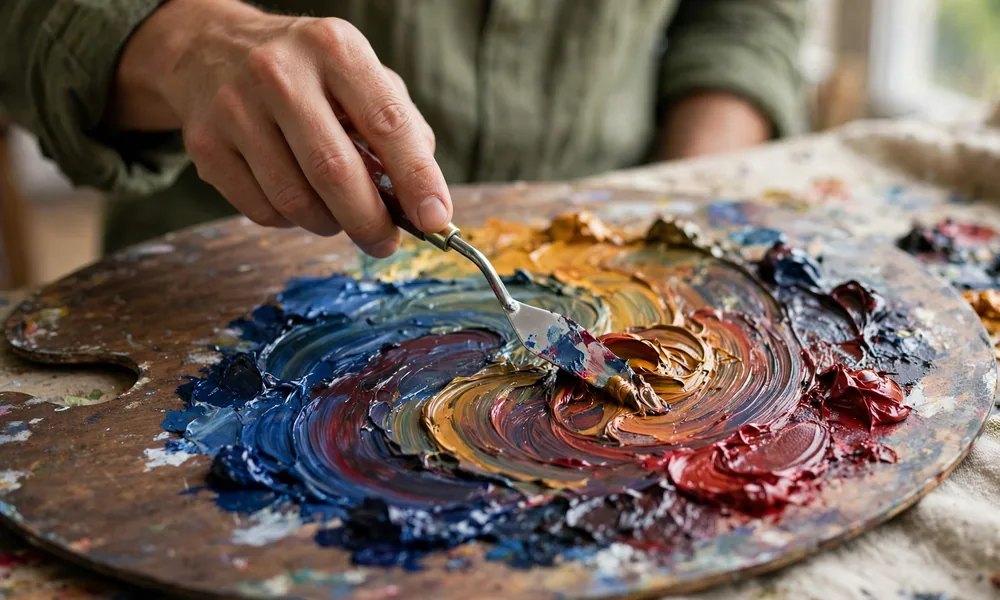
A rich blend starts with the paint staying workable. Oil paint dries when its oil binder absorbs oxygen from the air and slowly hardens, a chemical process that takes days rather than minutes. While the paint is still wet, two colours can be drawn into each other with a brush or a knife until the join disappears entirely. The longer the open time, the softer the blend, and the best oils stay workable for two or three days in a cool studio.
The second factor is pigment load. A professional oil paint is packed with finely ground pigment in oil, with very little filler, so the colour goes on dense and stays intense as it dries. Cheap oils bulk out the tube with extenders, so the colour looks thin and chalky on the canvas, and blends turn grey because there is simply less real pigment to mix. When you compare oils, the test is simple: mix a little white into a colour and see whether it stays vivid or goes dull and flat.
The binder matters just as much. Linseed oil is the traditional choice, and it gives a strong, flexible film with a warm tone that suits most colours beautifully. Safflower oil dries more slowly and yellows far less, which makes it the better binder for whites, pale blues and cool greys. Walnut oil sits between the two, with a pale colour and a pleasant handling quality that many painters prefer for delicate work.
Tubes, Oil Sticks and Water-Mixable Oils: Which Suits You
Tubes are the classic format, and they suit almost every painter. The paint is a thick, buttery paste that holds its shape on the palette, mixes cleanly, and can be thinned with oil or solvent to any consistency you like. Tubes come in every colour and grade, and a small squeeze goes a long way.
Oil sticks are oil paint in solid form, like a large crayon made of pigment and wax. They lay down bold, direct marks without a brush, and they are wonderful for drawing straight onto the canvas, for sketching in a composition, or for adding thick impasto strokes over a dried layer. They are harder to soften into a smooth gradient than tube paint, so most painters use them alongside tubes.
Water-mixable oils are the modern compromise. The paint is modified so it thins and cleans up with water instead of solvent, which suits painters who work at home, share a studio, or dislike the smell of turpentine. They handle much like traditional oils, although they dry a little faster and feel slightly stickier on the brush. For a beginner who wants the oil experience without solvents, they are an excellent starting point.
Drying Times, Mediums and Solvents
Every oil colour dries at its own speed, and knowing this saves a great deal of frustration. Earth colours such as raw umber and burnt sienna dry in a day or two, while cadmium reds and yellows can stay wet for a week, and ivory black is famously slow. Lay the fast-drying colours down first, and save the slow ones for the final layers.
Mediums let you change the paint’s behaviour without changing its colour. A few drops of linseed oil make the paint longer and glossier, which helps it flow in fine detail. Stand oil, a thickened linseed oil, levels beautifully and gives a smooth, enamel-like surface that suits glazing. Alkyd mediums speed the drying to a day or less, which is useful when you need to varnish a painting on a deadline.
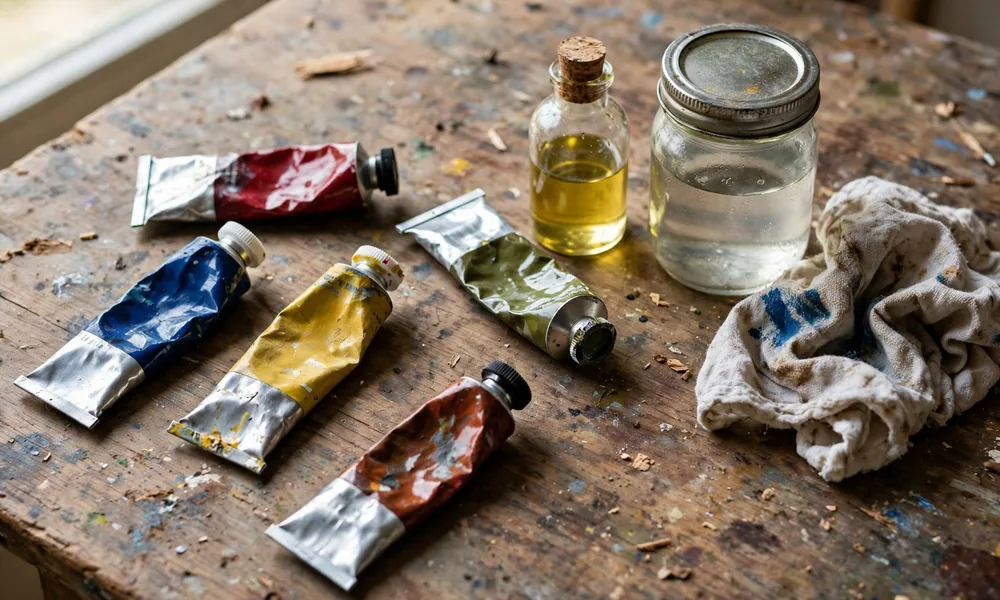
Solvents thin paint and clean brushes, and they should be used with care. Odourless mineral spirit is the safest everyday choice, and a little goes a long way when you want a thin wash for an underpainting. Never use solvent as a medium in the final layers, because it leaves the paint lean and underbound. Keep the studio ventilated and wash brushes in solvent first, then soap and water.
How the Best Oil Paints Compare in 2026
The table below sums up the main choices side by side.
| Type | Best for | Blend quality | Price | Watch out for |
|---|---|---|---|---|
| Professional tube oils | Finished work, portraits, landscapes | Excellent, slow and buttery | Higher | Some colours dry very slowly |
| Student tube oils | Learning, practice, studies | Good, slightly less rich | Low | More filler; some colours fade |
| Water-mixable oils | Home studios, solvent-free painting | Very good, slightly faster drying | Mid-range | Feels stickier on the brush |
| Oil sticks | Direct marks, sketching, impasto | Bold, harder to soften | Mid-range | Not ideal for smooth gradients |
| Alkyd oils | Fast deadlines, alla prima work | Good, dries in a day | Mid-range | Less open time for blending |
Oil or Acrylic: How to Choose
Oil and acrylic are the two great canvas paints, and they solve opposite problems. Oil is slow-drying and rich, it blends for days, and it gives soft gradients and luminous glazes that no fast paint can match. Acrylic is opaque and fast-drying, it covers in one coat, corrects mistakes instantly, and lets you finish a painting in a single sitting. If you want time to think, to blend and to rework, choose oil; if you want speed, bold coverage and a painting dry by dinner, choose acrylic.
Many painters keep both on the shelf, using acrylic for quick studies and oil for finished work. To compare the two properly, read our guide to Acrylic Paints That Cover Bold and Bright in 2026, which covers opacity, fast drying and layering in detail. The other sibling medium is watercolour, which is transparent and water-soluble and lives on paper rather than canvas: our guide to Watercolour Paints That Blend Beautifully in 2026 explains luminous washes and glazing, the opposite end of the spectrum from oil’s slow, buttery blends.
Surfaces Oil Paint Loves
Primed canvas is the classic oil surface, and it suits the paint perfectly: the primed weave grips the paint, flexes with it, and comes in every size from postcard to mural. Never paint oil directly onto raw canvas, because the oil will rot the fibres over time; always use a primed or gessoed surface.
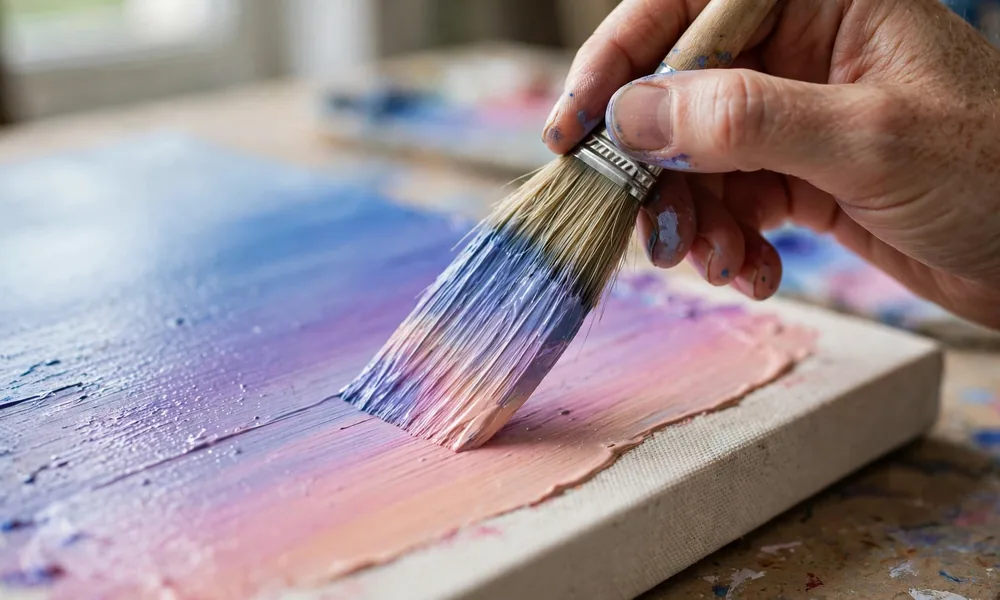
Wood panels give a smoother, harder surface that suits detailed work and glazing, because the paint sits on top instead of sinking into fabric. Seal the wood first with gesso, or the oil will soak in unevenly and dull the colour. Heavy paper works too, but it must be primed or sealed, since oil stains ordinary paper and weakens it. A good brush matters on every surface, so our guide to Top Paint Brushes for Clean Edges in 2026 is worth reading before you buy, since natural bristles are the traditional choice for oil-based paints and the care that keeps them in shape applies to every brush you own.
Common Mistakes That Spoil Oil Paint
The most common mistake is painting fat over lean the wrong way round. If a rich, oily layer goes underneath a lean, thin one, the top layer dries first, shrinks, and cracks as the layer beneath keeps moving. Always build from lean to fat: thin washes first, richer paint on top, and the painting will stay sound for decades.
The second mistake is judging a colour before it has cured. Oil paint changes slightly as it oxidises, and some colours deepen or lighten over the first weeks. Let each layer dry before deciding whether it needs another coat, and wait at least six months before varnishing, so the paint has fully cured.
Finally, do not let paint dry on the brush. Oil left in bristles hardens into a stiff mass that no amount of washing will shift. Wipe brushes on a rag, rinse them in solvent, then wash with soap and water the moment you finish, and store them bristle-up so they keep their shape.
Your Oil Paint Checklist
- Choose a limited palette of single-pigment colours: a warm and cool primary, plus white and one earth tone.
- Prime every surface with gesso before you paint, even pre-primed canvas, for the richest colour.
- Paint fat over lean: thin, lean layers first, richer and oilier layers on top.
- Test every mixture on scrap first, since some colours change slightly as they cure.
- Keep the studio ventilated and keep solvent jars lidded when you are not using them.
- Clean brushes in solvent, then soap and water, the moment you finish painting.
Frequently Asked Questions
How long does oil paint take to dry?
Oil paint is touch-dry in a few days and fully cured in weeks or months, depending on the colour, the thickness and the temperature. Earth colours dry fastest, while cadmium colours and ivory black can stay wet for a week or more.
Can I paint over a dried oil layer?
Yes, and that is one of oil’s great strengths. Once a layer is dry to the touch, you can paint straight over it, glaze it, or scrape it back, which makes correction easy at every stage.
What is the difference between oil paint and acrylic paint?
Oil paint is slow-drying, rich and buttery, and it blends for days on canvas. Acrylic is opaque and fast-drying, it covers in one coat and dries in minutes, which suits quick work but leaves almost no time to blend.
Do I need solvents to paint with oils?
No. You can paint with oils using only paint and a little linseed oil, and clean up with soap and water if you use water-mixable oils. Solvents are useful for thinning washes and cleaning brushes, but they are not essential.
Why does my oil painting crack?
Cracking usually means the fat-over-lean rule was broken: a lean layer painted over a fat one dries first and splits as the layer beneath moves. Build from thin, lean layers to rich, oily ones and the surface will stay sound.
Can oil paint be used on paper?
Yes, if the paper is primed or sealed first. Raw paper absorbs the oil, stains and weakens, so use gessoed paper or a primed board for the brightest, safest colour.
The Bottom Line
The oil paints that blend rich and slow in 2026 are the ones with a high pigment load, a clean oil binder and honest lightfastness: they stay workable for days, melt colour into colour without hard edges, and cure into a rich, luminous surface that lasts for generations. Pick a limited palette, prime your surface, paint fat over lean, and give the paint the time it needs, and oil will reward you with blends no fast-drying paint can match.


