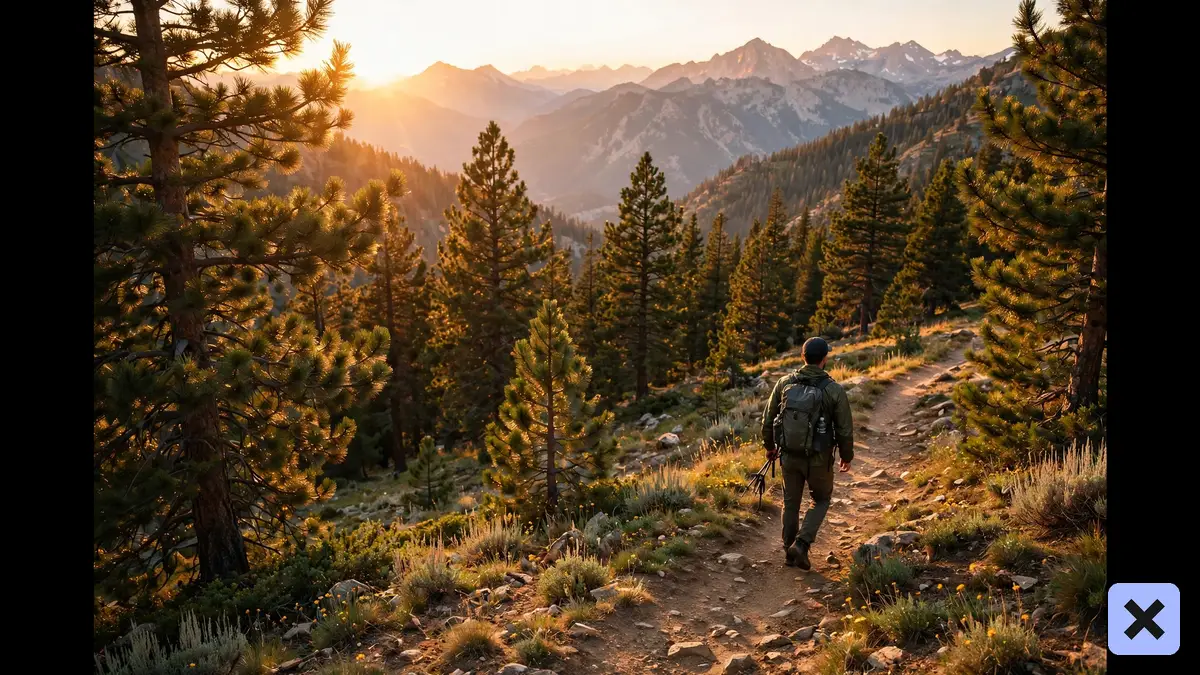
The best hiking essentials for 2026 are the pieces of gear that turn a good walk in the hills into a great day out. You do not need a garage full of specialist kit: you need the right footwear, enough water, layers that handle changing weather, a way to find your way, and a pack that carries it all without punishing your shoulders.
That sounds simple, and it is, but the details matter. A boot that rubs on mile two will ruin mile eight, and the weather at the trailhead is rarely the weather at the summit.
This guide covers the essentials across every category, from footwear and packs to water, clothing, navigation and safety, so you can build a kit that works on a gentle forest loop and a long mountain day alike.
Key Takeaways
- Footwear matters most: fit and grip beat brand and price, and new boots need breaking in before a long hike.
- Carry at least half a litre of water per hour of walking, plus a way to treat stream water on longer routes.
- Dress in layers you can add or remove, and always pack a waterproof shell, whatever the forecast says.
- A paper map and a compass still belong in every pack, even when your phone has a trail app.
- Keep your day pack under about 10 kilograms, with the heaviest items close to your back.
How We Chose the Essentials
An essential is something you will miss within hours if you leave it behind. That test shaped every category here, and the list scales: a flat two-hour loop needs a small pack and water, while a six-hour climb demands boots, layers, navigation and first aid.
Hiking Essentials at a Glance
| Category | Top Priority | Best For | Budget Tip |
|---|---|---|---|
| Footwear | Well-fitted boots or trail shoes with grip | Every hike | Shop late in the day, when feet are slightly swollen |
| Pack | 20 to 30 litre day pack with a hip belt | Carrying the kit | A simple pack that fits beats a feature-heavy one |
| Water | At least 2 litres, plus a treatment method | Staying hydrated | A reusable bottle beats buying drinks on the trail |
| Clothing | Moisture-wicking layers and a waterproof shell | Changing weather | Skip cotton; it stays wet and chills you |
| Navigation | Map, compass and a charged phone | Staying on route | Download offline maps before you leave |
| Safety | First aid kit, headlamp and sun protection | Emergencies | Check batteries and expiry dates each season |
| Food | High-energy snacks and a packed lunch | Keeping energy up | Trail mix and bars beat a heavy picnic |
Footwear Comes First
No other piece of gear affects your day as much as what is on your feet. Blisters, sore ankles and slipping on wet rock all start with the wrong shoes, and no kit elsewhere makes up for it. Spend your money and attention here first.

Boots or Trail Shoes?
For rough, rocky or muddy ground, a mid-height boot gives ankle support and a stiff sole that shields your feet from sharp stones. For smooth, well-marked paths in dry weather, a trail shoe is lighter and more comfortable. Neither is wrong; it depends on the ground you walk most. Grip is non-negotiable either way: look for deep, widely spaced lugs that shed mud instead of clogging. Waterproof membranes help in wet grass but make boots warmer, so in hot, dry conditions a breathable shoe can be better. Break new footwear in with two or three short walks first.
If you are shopping for a women-specific fit, narrower heels and a different arch shape make a real difference over a long day, and our guide to the best hiking boots for women in 2026 compares the pairs that handle those differences best.
Socks Matter More Than You Think
Socks are the cheapest upgrade in hiking and one of the most effective. A good hiking sock is merino wool or a synthetic blend, cushioned at heel and toe, and tall enough to stop grit working in over the top of your boot. Cotton absorbs sweat, stays wet, and is the fastest route to blisters. Carry a spare pair on any hike longer than a few hours: dry socks at lunchtime feel like a small luxury.
The Day Pack
Your pack is your base camp for the day. For most day hikes, 20 to 30 litres is the sweet spot: big enough for water, food, a waterproof layer, a first aid kit and a spare layer, but small enough that you are not tempted to fill it with things you will never use.
Fit and Comfort
A good fit matters more than a long feature list. The hip belt should sit on your hip bones and carry most of the weight, with the shoulder straps mainly keeping the pack stable. Adjust in this order: hip belt, shoulder straps, chest strap, then the load lifters at the top. Look for a ventilated back panel, reachable side pockets, and a rain cover or waterproof liner. Pack heavy items close to your back and high up, and keep your waterproof layer where you can grab it in seconds. For the packs that carry best, see our roundup of the best hiking backpacks of 2026.
Water and Hydration
Dehydration creeps up quietly. By the time you feel thirsty, you are already behind, and a headache on a long climb is often the first sign. Plan on about half a litre per hour in mild weather, more in heat or on steep ground: a four-hour hike needs at least two litres, and three is safer.
Bottles or a Hydration Bladder?
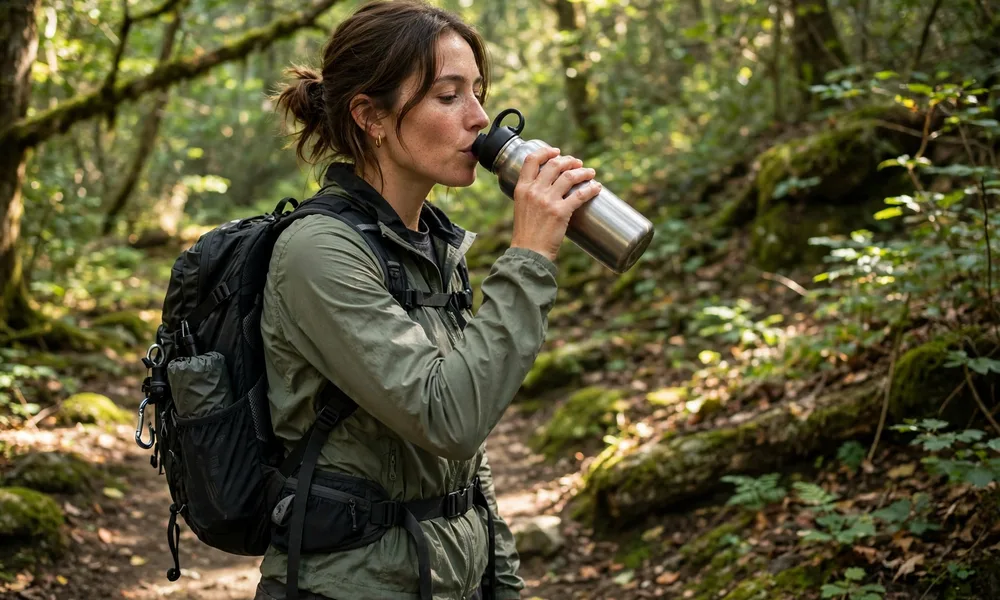
Bottles are simple, easy to refill and clean, and you can see at a glance how much you have left. A bladder with a drinking tube lets you sip without stopping, so most people drink more, but it is harder to refill and harder to tell when it is running low. Many hikers carry one of each. Insulated bottles keep water cool on a hot day and stop it freezing on a cold one. Our guide to the best insulated water bottles for hiking compares the bottles that hold their temperature longest.
Treating Water on the Trail
On longer routes, carrying all your water is heavy, so a treatment method lets you refill from streams and springs. A squeeze filter is light, fast and simple, and it removes bacteria and sediment. Purification tablets weigh almost nothing and work as a backup, though they take time and can leave a taste. Practise at home first, and never assume a clear-looking stream is safe untreated.
Clothing and Layers
The secret to staying comfortable is layers. You will warm up on a climb, cool down at a viewpoint, and possibly get rained on in between, and no single garment handles all three. Three thin layers you can add or remove beat one thick one every time.
The Three-Layer System
Start with a base layer that wicks sweat from your skin — merino wool or a synthetic fabric, never cotton, which stays wet and chills you. Add a mid layer for warmth, such as a light fleece, which you can take off and pack away when you warm up. Finish with a waterproof, windproof shell that packs small enough to live in your pack all day, even when the forecast looks perfect. Quick-drying walking trousers beat jeans, which get heavy when wet, and a sun hat and sunglasses complete the kit.
Navigation and Safety
Getting lost is the most common hiking mishap, and it usually starts with a small mistake: a missed turn, a faded marker, or a phone battery that gave up. Good navigation is mostly about redundancy — never rely on a single method.
Finding Your Way
A paper map and a compass are light, never run out of battery, and work without a signal. Learn the basics before you need them: how to orient the map, take a bearing, and recognise the features around you. A phone with a trail app and downloaded offline maps is a superb backup, but treat it as a second opinion, not your only plan. Download maps at home, carry a small power bank, and keep the phone in a pocket. Before you set out, tell someone where you are going and when you expect to be back.
The Safety Kit
A small first aid kit belongs in every pack: plasters, blister pads, antiseptic wipes, painkillers, any personal medication, and a few strips of tape. A headlamp matters just as much, even on a daytime hike, because a slow descent can easily push you past sunset. Add sunscreen, lip balm and sunglasses, plus a whistle, which carries further than a shout and costs nothing.
Food and Snacks
Hiking burns far more energy than a normal day, so eat little and often rather than waiting until you are hungry, and carry more food than you think you need. Trail mix, energy bars, dried fruit and nuts are the classics: light, long-lasting, and quick energy. A sandwich or wrap makes a proper lunch, and something salty replaces what you lose in sweat. Pack a small bag for your rubbish — leaving no trace is part of the deal.
Trekking Poles and the Extras
Trekking poles divide opinion, but most hikers who try them keep them. They take weight off your knees on descents, give balance on stream crossings and loose ground, and set a steady rhythm on climbs. Adjustable poles that fold down are the most versatile, and they strap to your pack when you do not need them.

The Six-Item Pre-Hike Checklist
- Check the forecast and the route, and tell someone where you are going and when you expect to be back.
- Charge your phone, download offline maps, and pack a power bank.
- Fill your water bottles and pack more food than you think you need.
- Wear broken-in footwear and moisture-wicking socks, with a spare pair in the pack.
- Pack a waterproof shell, a warm layer, a map, a compass, a headlamp and a first aid kit.
- Final check at the trailhead: boots tied, straps adjusted, water within reach, route confirmed.
Frequently Asked Questions
What are the absolute must-have hiking essentials?
The non-negotiables are well-fitted footwear, enough water, food, a waterproof layer, a warm layer, a map and compass, a charged phone, a headlamp, sun protection and a small first aid kit. Everything else is optional.
How much water should I bring on a hike?
About half a litre per hour in mild weather, more in heat or on steep ground. A four-hour hike needs at least two litres, and three is safer. A filter or purification tablets let you refill from streams.
Do I need hiking boots, or are trainers enough?
Trainers or trail shoes suit smooth, dry, well-marked paths. Boots earn their keep on rough, rocky, muddy or steep ground, where ankle support and a stiff, grippy sole protect your feet.
What size day pack do I need for hiking?
For most day hikes, 20 to 30 litres is right: water, food, a waterproof shell, a spare layer, a first aid kit and navigation gear, without tempting you to overpack.
Should I bring trekking poles on a day hike?
Not essential, but they help on steep descents, stream crossings and loose ground, and they take real pressure off your knees. Adjustable, folding poles are a best-value upgrade.
What should I do if the weather turns bad mid-hike?
Put your waterproof layer on early, before you get wet, and keep moving to stay warm. If conditions get worse — heavy rain, strong wind, lightning or poor visibility — turn back or find shelter.
The Bottom Line
The best hiking essentials for 2026 are not the most expensive or the most technical — they are the ones that fit well, weigh little, and get used on every trip. Good footwear, enough water, layers for changing weather, reliable navigation and a small safety kit will carry you through almost any day hike.


