The best honey in 2026 is not the prettiest jar on the supermarket shelf. It is the one that tastes of the flowers the bees actually visited, pours slowly from the dipper, and keeps the floral notes heat and filtering strip away. Honey is one of the oldest foods humans have gathered, yet buying a good jar is confusing, with labels shouting about raw, unfiltered, organic, single-origin and manuka while the jar itself tells you almost nothing.
This guide cuts through that noise: how honey is made, what separates a good jar from a bland one, which types suit tea, toast, baking and cooking, and how to spot the fakes. The best honey is the one that fits how you actually use it.
Key Takeaways
- Raw, minimally filtered honey keeps more aroma and flavour than processed honey, and is usually worth the small premium.
- Floral source decides flavour: acacia is light and mild, wildflower is warm and complex, buckwheat is dark and malty.
- Crystallisation is natural, not a fault; a warm water bath restores a crystallised jar in minutes.
- Never feed honey to children under one, and do not add it to boiling water.
- Buy from beekeepers who name the floral source and region; vague “honey blend” labels are the weakest buys.
How Honey Is Made, and Why It Matters
Honey begins as flower nectar, collected by foraging bees and carried back to the hive. Inside, the bees pass the nectar between one another, adding enzymes that break its sugars down, then fan it with their wings until most of the water evaporates. When the moisture drops to around eighteen per cent, the bees cap the cell with wax, and the honey is ready — the work of thousands of bees visiting millions of flowers, which is why real honey tastes like a place and a season rather than generic sweetness.

What happens after the harvest decides how much of that character survives. Small beekeepers extract honey cold, strain it lightly and jar it as it is. Large packers heat honey so it flows faster through filters, making a clear product that crystallises slowly but flattening the aroma, and ultra-filtering removes the pollen that gives honey its fingerprint. Two identical-looking jars can taste completely different.
Raw Honey, Explained
Raw honey has not been heated above hive temperature and has only been lightly strained. It may look cloudy, contain tiny flecks of wax or pollen, and crystallise sooner than a processed jar. None of that is a defect: the cloudiness is the pollen and tiny particles that carry flavour, and crystallisation is simply glucose forming crystals as the honey sits. A jar in a warm water bath returns to liquid in ten minutes.
Processed honey is heated and finely filtered for a uniform look and long shelf life. It is still honey, fine for sweetening tea or baking, but it has lost much of the floral character that makes a good jar memorable. If you are buying mainly for flavour, raw is the better spend.
The Best Honey Types Compared
Every honey type is named after the flowers the bees visited most, and the floral source is the biggest influence on flavour, colour and texture. A light acacia is almost water-clear and delicately floral, while a buckwheat honey is nearly black, thick, and tastes of molasses and malt. Neither is better in the abstract; they suit different things.
| Honey Type | Colour and Flavour | Best For | Typical Price |
|---|---|---|---|
| Acacia | Pale gold, light, delicately floral, slow to crystallise | Tea, yoghurt, drizzling | Moderate |
| Wildflower | Amber, warm, complex, varies by season | Everyday use, toast, cooking | Moderate |
| Manuka | Dark amber, earthy, herbal, thick and intense | Spoonfuls, wellness use, special occasions | Premium |
| Orange blossom | Light amber, citrusy, fragrant | Baking, dressings, tea | Moderate to high |
| Buckwheat | Very dark, malty, molasses-like | Baking, glazes, strong cheeses | Moderate |
| Clover | Light amber, mild, gently sweet | Everyday sweetening, children, baking | Budget-friendly |
For most kitchens, a good wildflower or clover honey is the workhorse jar, and a small jar of acacia or manuka is the treat jar. Two jars, chosen for different jobs, cover almost everything honey is good for.
Manuka Honey: Worth the Price?
Manuka honey comes from the manuka bush in New Zealand and parts of Australia, and is the most expensive honey most people will ever buy. Its price comes from limited supply, strict grading and the methylglyoxal behind its reputation. Genuine manuka carries an independently tested UMF or MGO rating on the jar.
Whether it is worth it depends on how you use it. As a daily sweetener, manuka is poor value: its strong, earthy flavour can overpower tea and toast, and wildflower honey does the same job for a fraction of the price. Eaten by the spoonful, it is genuinely distinctive, and a small jar goes a long way. Buy manuka for manuka, not as a general-purpose honey, and check the label: a real jar names the UMF or MGO rating, the region and the batch.
Honey in Tea, on Toast and in the Kitchen
Honey earns its place by being more than a sweetener. It brings floral notes sugar cannot, keeps baked goods moist for longer, and caramelises beautifully on roast vegetables. The trick is matching the honey to the job: a delicate acacia disappears in a rich glaze, while a dark buckwheat can overwhelm a light tea.

For tea, a light honey is best: acacia, clover and orange blossom dissolve cleanly and add fragrance without fighting the tea. Let the tea cool for a minute before stirring the honey in, because water straight off the boil dulls its delicate aromas. Our guide to the best green tea of 2026 pairs light honeys with the teas they suit best.
Honey on Toast and Breakfast
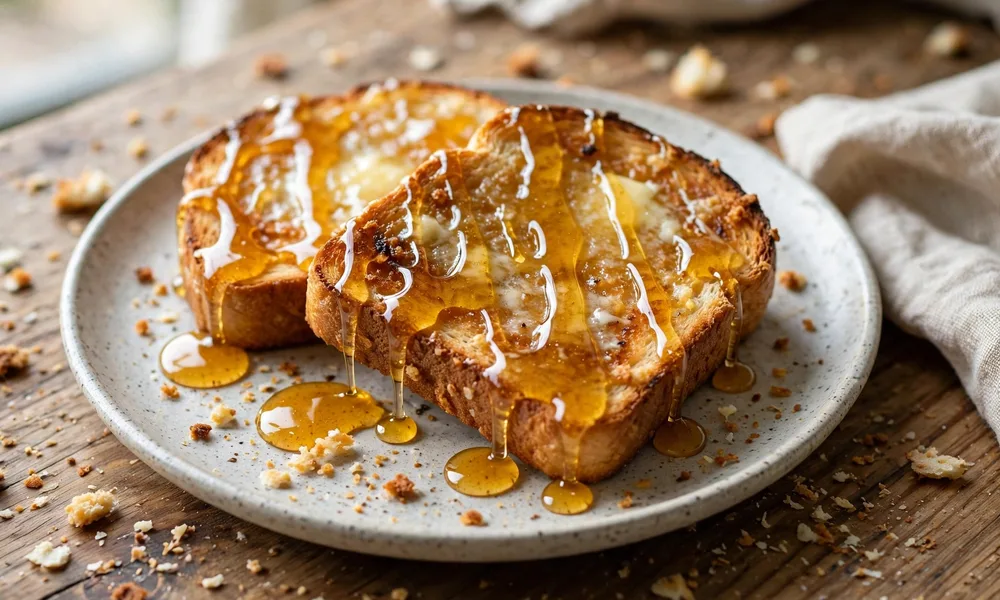
Toast is where honey shows off: thick bread, real butter and a generous drizzle of wildflower honey, where the honey’s flavour matters because there is nothing to hide behind. Runny honey soaks into warm toast; thicker, set honey sits on top. For the bread itself, our roundup of the best bread makers of 2026 covers the machines that make a loaf worth topping properly, and a drizzle of honey over warm homemade bread is hard to beat.
Cooking and Baking With Honey
In baking, honey adds moisture and flavour, and browns faster than sugar. That means lowering the oven temperature by about ten degrees when you swap honey for sugar, and reducing the other liquid slightly, because honey is about a fifth water. Replace each cup of sugar with three quarters of a cup of honey: mild in cakes, stronger in gingerbread and glazes.
As a glaze, honey is at its best. Brushed over roasted carrots, parsnips or a ham in the last minutes of cooking, it turns sticky and golden without burning if you watch it. Mixed with mustard it makes a quick dressing, and whisked into warm milk it makes a soothing evening drink; our guide to the best oat milk of 2026 lists the ones that take honey and heat best.
How to Spot Fake or Low-Quality Honey
Honey is one of the most faked foods in the world, because real honey is expensive to produce and sugar syrup is cheap. The most common fraud is blending honey with rice, corn or sugar syrups and selling the mixture as pure honey. A suspiciously cheap jar that never crystallises, or tastes of nothing but flat sweetness, is worth questioning.
There are no perfect home tests: the thumb test, the water test and the flame test are all unreliable. What actually works is reading the label and knowing the seller. Real honey lists one ingredient: honey. A good label names the floral source, the country or region, and ideally the beekeeper. Blends should say so plainly. If a jar says only “honey”, with no origin or floral source, and is the cheapest on the shelf, it is the weakest buy.
Crystallisation is your friend here, not a warning sign. Genuine honey crystallises over time, especially in a cool cupboard, while syrup blends often stay liquid for years. If your honey goes cloudy or grainy, warm the jar gently in warm water and it will clear. Never microwave it: that overheats the edges and damages the flavour.
Storing Honey the Right Way
Honey keeps almost indefinitely if stored properly — archaeologists have found edible honey in Egyptian tombs. Your jar will easily last several years sealed, dry and at room temperature. The enemies are moisture and heat: water getting in can ferment honey, and long storage above about thirty-five degrees dulls flavour.
Keep the lid tight, keep the jar in a cupboard rather than the fridge, and always use a clean, dry spoon. The fridge speeds up crystallisation and makes honey hard to pour, so there is no benefit to refrigerating it. A crystallised jar is not spoiled, and a darkened jar is not bad either; honey darkens slowly with age. If a jar ever smells of alcohol or tastes sour, it has fermented, usually from water getting in, and it is time to replace it.
Honey Buying Checklist
- Choose the floral source first: acacia or clover for tea, wildflower for everyday use, manuka or buckwheat for intensity.
- Pick raw, lightly filtered honey when flavour matters, and accept that it crystallises sooner.
- Read the label: one ingredient, a named floral source and a named country or region.
- Buy a small jar first when trying a new variety, so you can taste it before committing to a large one.
- Check the price: manuka and single-origin jars cost more for a reason, while a cheap “blend” is the weakest value.
- Store the jar sealed at room temperature, and revive crystallised honey in a warm water bath.
Frequently Asked Questions
Is raw honey better than regular honey?
For flavour, yes. Raw honey is only lightly strained and never heated above hive temperature, so it keeps more of the floral aroma and pollen that give honey its character. Processed honey is heated and finely filtered for a clear look and long shelf life, which flattens the taste. Both are real honey; raw tastes more like the flowers it came from.
Why has my honey gone cloudy or solid?
That is crystallisation, and it is completely natural. Honey is a supersaturated sugar solution, and glucose crystals form over time, faster in cool conditions. It is a sign of genuine honey, not spoilage. Stand the jar in warm water and it will turn liquid again.
Can I use honey instead of sugar in baking?
Yes. Use about three quarters of a cup of honey for each cup of sugar, reduce the other liquid slightly, and lower the oven temperature by around ten degrees, because honey browns faster. Mild honeys suit cakes best; darker ones suit gingerbread and spice bakes.
Is honey safe for children?
Never give honey to children under one year old: it can carry spores that cause infant botulism. For children over one and for adults, honey is safe in normal amounts, raw or processed.
How long does honey last once opened?
Practically indefinitely, if kept sealed and dry at room temperature. Honey’s low moisture and acidity stop bacteria and mould from growing. The best-before date is about quality, not safety: flavour slowly mellows and colour darkens, but a well-stored jar stays good for years.
What is the difference between manuka honey and regular honey?
Manuka comes from the manuka bush in New Zealand and Australia, graded by methylglyoxal content as a UMF or MGO rating. It is thicker, darker and more earthy than most honeys, and costs far more because supply is limited and grading is strict. It is a speciality honey, not a better everyday sweetener.
The Bottom Line
The best honey in 2026 is a raw, lightly filtered jar that names its flowers and region, chosen for the job you want it to do. Keep a mild wildflower or clover honey for everyday tea, toast and cooking, and add a small jar of acacia or manuka when you want something special. Read the label, buy from beekeepers who say where their honey comes from, and do not be put off when it crystallises: warm it gently and it will be as good as new.