A Guide to Jam Jars That Seal Tight and Keep Preserves Fresh in 2026
A jam jar has a big job: it must take boiling hot jam, seal it airtight, and keep it safe on a shelf for months. The difference between a good jar and a bad one shows up in the seal: a jar that seals keeps mould out and flavour in, while one that does not leaves you with a batch to eat in a week or throw away. This guide covers the jam jars worth buying in 2026, the sizes that suit different batches, and the lids that seal.
A jam jar is a preserving jar, and preserving asks more than storing dry goods does. The glass must cope with hot filling, the rim must be smooth enough for a lid to seal against, and the lid must hold a vacuum as the jam cools. A jar that is fine for flour can fail completely at jam, so get the jar right and the rest gets easier: filling is cleaner, sealing is more reliable, and the jars look good enough to give away.

Key Takeaways
- Small jars beat big ones: half-pints stay fresh once opened and make the best gifts.
- The rim is the part that seals, so check it before every use and retire any chipped jar.
- Twist-off lids are easiest for jam, while two-piece lids suit water-bath canning best.
- Sterilise every jar, fill it hot, and leave the headspace the recipe calls for.
- Label every jar with flavour and date, and store it cool, dark and upright.
What Counts as a Jam Jar
A jam jar is any small glass jar made to hold preserves: jam, jelly, marmalade, chutney and fruit butter. Most hold between 110 and 500 millilitres, with the half-pint jar of about 240 millilitres the classic size. The glass is thicker than an ordinary food jar, and the rim is ground flat so a lid seals evenly all the way around. That flat rim is the whole point: a wavy rim will never seal reliably, however good the lid is.
Jam jars come in two broad families. Preserving jars, often sold simply as jam jars, come with twist-off metal lids and are made for hot filling: you pour in hot jam, screw the lid on, and the vacuum that forms as the jam cools pulls the lid down tight. Mason-style jars use a two-piece lid, a flat disc and a screw band, and suit water-bath and pressure canning as well. Our guide to mason jars covers that family in full.
Twist-Off Lids vs Two-Piece Lids
A twist-off lid is a single metal cap with sealing compound inside the rim. You screw it on by hand, the compound softens against the hot jam, and the cooling vacuum holds it down. They are easy to use and replace, and fit the standard sizes most preserving jars use. Their weakness is that they are single-use for a proper seal: once the compound has been compressed it will not seal as reliably again, so use a fresh lid for each batch.
A two-piece lid gives a more certain seal for long storage and water-bath canning, because the flat disc is held down by the band while the vacuum forms. The trade-off is fuss: you need the right disc and band, the discs are single-use, and the bands rust if stored wet. If you can your jam and keep it for a year, two-piece lids are the safer choice; if you hot-fill and eat it within a few months, twist-off lids are simpler and just as safe when fresh.
The Main Types of Jam Jar
Small Preserving Jars
The small preserving jar is the one most kitchens should buy first. It holds 110 to 250 millilitres, takes a standard twist-off lid, and is the right size for jam that will be eaten within a few weeks of opening. Small jars also make the best gifts: a little jar with a label and a ribbon looks generous, and nobody is left with a huge jar going stale in the fridge. Buy them in sets of six or twelve in one size, so lids and labels match.
Half-Pint and Pint Jars
Half-pint jars, about 240 millilitres, are the workhorse of jam making: big enough for a family table, small enough to finish before the jam spoils. Pint jars, about 500 millilitres, suit large batches and households that eat a lot of jam, but they are heavy when full and a pint takes a long time to finish once opened. Use half-pints for giving away, and pints only for the flavours your household eats fastest.
Reused Supermarket Jars
Almost every jam maker starts with reused supermarket jars: they are free, the right size, and they already held jam once. A clean supermarket jar with a fresh twist-off lid is a perfectly good jam jar, provided the rim is smooth and the glass is thick enough for hot filling. Check each one for hairline cracks, retire any jar with a chip, and never reuse a lid that has sealed once, because a failed seal costs more than a new lid.
Jam Jar Sizes and What They Suit
Size is the decision most jam makers get wrong, because they buy the jars they like the look of rather than the jars that suit the batch. A small batch belongs in small jars: the jam sets better, cools faster, and is eaten while fresh. A large batch needs half-pints or pints, because filling twenty tiny jars takes so long the jam cools in the pan and the last jars are filled lukewarm.
Think about who eats the jam as well. A household of one or two eats slowly, so small jars keep every opening fresh, while a family with children eats it fast, so half-pints are the better buy.
| Jar type | Best for | Lid | Watch out for |
|---|---|---|---|
| Small preserving jar, 110 to 190 ml | Gifts, small batches, new flavours | Twist-off | Too small for a family table |
| Half-pint jar, about 240 ml | Everyday jam, most batches | Twist-off or two-piece | None, the best all-rounder |
| Pint jar, about 500 ml | Large batches, fast eaters | Twist-off or two-piece | Goes stale before it is finished |
| Reused supermarket jar | Starting out, saving money | Fresh twist-off lid | Chipped rims, thin glass |
Sterilising and Filling Jam Jars
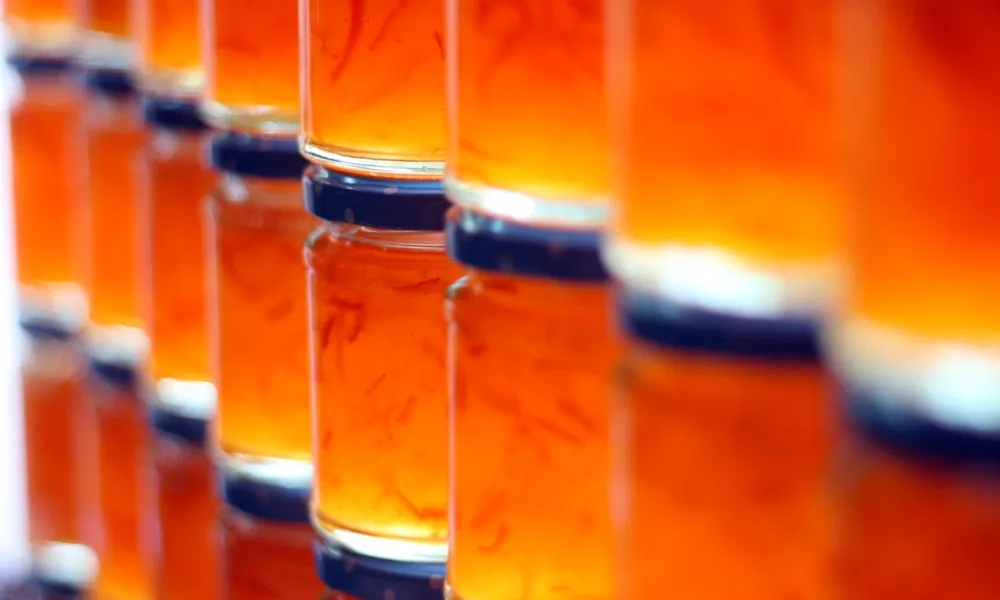
Sterilising is the step that separates jam that keeps from jam that moulds, and it is simpler than most people fear. Wash the jars and lids in hot soapy water, then heat the jars in a low oven for ten minutes, or stand them in boiling water for ten minutes. Keep the jars hot until you fill them: a cold jar filled with boiling jam can crack.
Fill Hot and Leave Headspace
Fill each jar while both jar and jam are hot, and leave the headspace the recipe calls for, usually about half a centimetre. Headspace is the gap between the jam and the rim, and the air in it forms the vacuum as the jar cools. Too little and jam bubbles out under the lid and breaks the seal; too much and the vacuum is weak. Wipe the rim clean first, because one smear of jam on it is enough to stop a lid sealing.
Seal, Cool and Test
Screw the lid on firmly, then leave the jars upright and untouched for twelve hours. As they cool you will hear the lids pop down, one by one: the vacuum forming. When they are cold, test each seal by pressing the centre of the lid; it should not move or click. A lid that pops up and down has not sealed, so refrigerate that jar and eat it first. Store sealed jars cool and dark: a bulging lid or jam that smells off means the jar goes out.
Labelling, Storing and Gifting Jam Jars
Label every jar on the day you fill it, with the flavour and the date, while you still remember what is in it. A jar of red jam with no label is a guessing game in three months. Use a plain paper label and keep it simple: flavour, month and year. Our guide to storage jars covers the labelling habit in full, and the same rule applies here.
Store filled jars cool, dark and upright, in a cupboard rather than on a sunny shelf, because light fades the colour and heat shortens the seal. Once opened, keep the jar in the fridge and use a clean spoon every time, because crumbs and butter are what grow mould. For gifts, a small jar with a paper label and a ribbon is enough: the jam is the gift.

Jam Jar Checklist: Six Checks Before You Buy
- Check the rim: run a finger around it and reject any jar with a chip or rough patch.
- Match the lid: buy jars in a standard size so fresh twist-off lids are easy to find.
- Buy small first: half-pint jars suit most batches and most households better than pints.
- Plan the batch: count the jars before you cook, so the jam is filled hot and fast.
- Keep spare lids: fresh lids are cheap, and a used lid is the commonest cause of a failed seal.
- Label from day one: flavour and date on every jar, while you still remember what is in it.
Frequently Asked Questions
Can I reuse jam jars from the supermarket?
Yes, if the glass is thick, the rim is smooth and unchipped, and you fit a fresh twist-off lid. Hold each jar up to the light for cracks, and retire any jar with a chipped rim, because it will not seal.
What size jam jar is best for homemade jam?
Half-pint jars of about 240 millilitres suit most batches and households. Small jars of 110 to 190 millilitres are better for gifts and slow eaters, and pints only suit households that eat jam fast.
Do I need to sterilise jam jars?
Yes. Wash them in hot soapy water, then heat them in a low oven or in boiling water for ten minutes, and keep them hot until you fill them. That is what keeps jam safe on the shelf for months.
How much headspace should I leave in a jam jar?
Follow the recipe, but about half a centimetre is usual for jam. Too little lets jam bubble under the lid and break the seal, and too much leaves a weak vacuum that may not hold.
How do I know if a jam jar has sealed properly?
Leave the jars untouched for twelve hours, then press the centre of each lid. A sealed lid stays down; one that pops up and down has not sealed, so refrigerate that jar and eat it first.
How long does jam keep in a sealed jar?
A properly sealed jar kept cool and dark lasts for months, often up to a year, but check the lid and the smell before you open it. Once opened, keep it in the fridge, use a clean spoon, and finish it within a few weeks. For more on keeping jars tidy, our guide to cookie jars shows the same shelf habits applied to a different jar.
Bottom Line
The best jam jar is a small, thick glass jar with a smooth rim and a fresh lid, filled hot and labelled on the day. Buy half-pints in one matching size, keep spare lids on hand, and test every seal when the jars are cold. Do that, and your jam will keep for months and look good enough to give away.