
Why Jelly Beans Still Win the Sweet Aisle in 2026
Jelly beans look like the simplest sweet on the shelf: small, shiny, bean-shaped, and brightly coloured. Yet they are also one of the most varied, because flavour, shell, centre, and freshness differ far more between brands than the colours suggest. A good jelly bean has a crisp, thin shell that cracks cleanly, a soft jelly centre that tastes of real fruit, and a flavour that matches its colour. A poor one has a thick, waxy shell, a centre that tastes only of sugar, and a colour that promises a flavour the bean never delivers.
This guide explains why jelly beans still earn their place in the sweet aisle in 2026, how to judge a bean before you buy a whole jar, which flavours hold up best, and how to store beans so the shells stay crisp and the centres stay soft. Whether you are filling a jar for guests, choosing a treat for a party, or sorting beans by flavour for fun, the same rules apply: look for real fruit flavour, a thin shell, a short ingredient list, and a maker who takes the centre as seriously as the colour.
5 Key Takeaways
- A good jelly bean has a thin, crisp shell and a soft, fruity centre, never a thick waxy coating or a dry middle.
- Flavour should match the colour: red should taste of cherry or strawberry, green of apple or lime, yellow of lemon.
- The best beans list real fruit juice or natural flavouring first, not sugar, glucose syrup, and colouring alone.
- Fresh beans are glossy and firm; stale beans are dull, soft-shelled, or stuck together in the bag.
- Store jelly beans airtight, cool, and dry, and eat them within a few weeks of opening for the best texture.
What Makes a Jelly Bean Good
The shell is the first test. It should be smooth, glossy, and thin enough to crack with a light bite, giving way cleanly to the jelly inside. A shell that is too thick feels waxy and dulls the flavour, while a shell that is soft or sticky has usually been stored badly or made with too much moisture. Hold a bean up to the light: a good one shines evenly, with no cloudy patches or rough spots. If the beans in a bag are stuck together, the shells have softened and the bag is past its best, however fresh the date on the packet claims to be.
The Centre Is Where Flavour Lives
The centre is the second test, and it is the one that separates a good jelly bean from a pretty one. A good centre is soft, smooth, and jelly-like, with a flavour that arrives straight away and lasts until the bean is gone. Cherry should taste of cherries, sharp and dark rather than like cherry medicine. Lemon should be bright and zesty, not just sour. Liquorice should be deep and complex, not rubbery. When a centre tastes only sweet, the maker has leaned on sugar to carry a flavour that the real ingredients never delivered. A little acidity helps here, lifting the fruit flavour and stopping the sweetness from becoming flat. Our comparison of the best and worst candies of 2026 judges sweets the same way, by flavour, ingredients, and texture rather than by colour alone, and jelly beans reward that kind of honest tasting more than most sweets do.
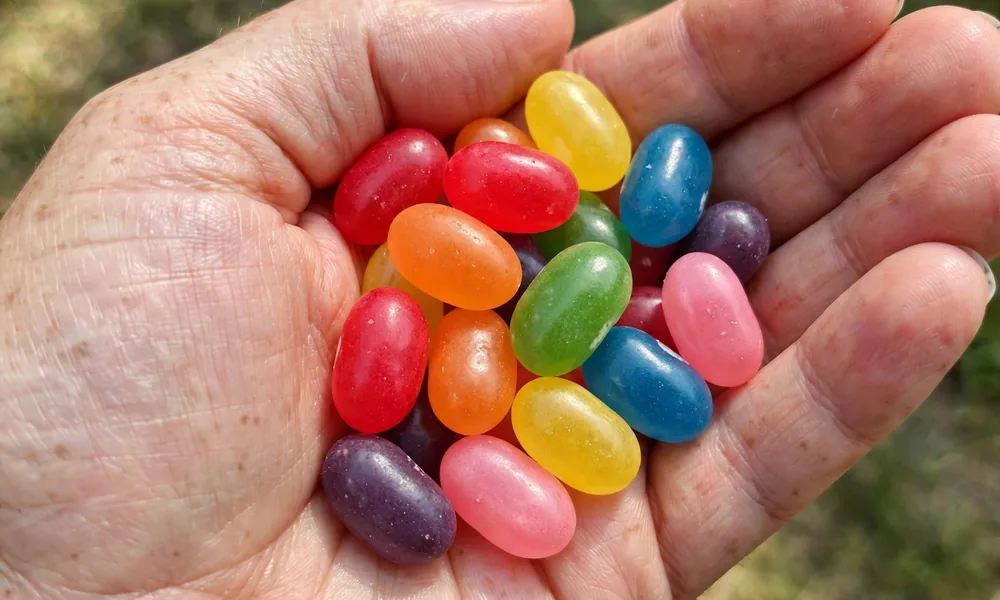
Flavour by Colour: What Each Bean Should Taste Like
Colour is the jelly bean’s promise, and a good maker keeps it. Red beans are usually cherry, strawberry, or raspberry, and they should taste dark and fruity rather than like cough syrup. Orange beans are usually orange or peach, bright and juicy. Yellow beans are lemon or pineapple, sharp and sunny. Green beans are apple, lime, or pear, crisp and a little tart. Blue beans are often blueberry or blue raspberry, and they are the hardest to get right, because the flavour is easily lost under the colouring. Purple beans are grape or blackcurrant, deep and sweet. White beans are often coconut, vanilla, or popcorn, and they should taste creamy rather than blank.
The table below compares the most common flavours on the things that matter when you actually eat them: how true the flavour is, how strong it tastes, and who it suits best. Use it as a starting point, then buy a mixed bag and sort the beans by colour before you eat them, so you can judge each flavour on its own instead of letting one strong bean carry the whole bag.
| Flavour | Colour | Flavour Strength | Best For |
|---|---|---|---|
| Cherry | Red | Strong, dark | Sharing, sweet tables |
| Lemon | Yellow | Bright, sharp | After a meal |
| Green apple | Green | Crisp, tart | Everyday snacking |
| Orange | Orange | Juicy, sweet | Children, parties |
| Grape | Purple | Deep, sweet | Gifting, jars |
| Blueberry | Blue | Mild, fruity | Mixed bags |
Gourmet Beans and Unusual Flavours
Gourmet jelly beans are the strongest challenger to the classic mixed bag. They use real fruit purees, natural colours, and carefully matched flavours, often in flavours you will not find in a standard bag: buttered popcorn, toasted marshmallow, pear, peach, or even chilli mango. The best versions taste true to their name, with a flavour that develops as you chew. Avoid versions where the unusual flavour is only a name on the packet and the bean underneath tastes of generic sweetness.
How to Read the Label Before You Buy
Start with the ingredient list, which good makers display proudly. Sugar, glucose syrup, and starch are the base of most jelly beans, so look for what comes next: fruit juice, fruit puree, natural flavouring, and citric acid should follow close behind. If the list is mostly colourings, flavourings, and glazing agents, the beans are built for bright colour and shelf life rather than flavour. Short lists are a good sign. So is a maker who names the flavour of each colour on the packet, because a maker who hides behind “assorted flavours” is rarely proud of what is inside.
Buy small before you buy big. A single small bag tells you everything you need to know about a maker, and it costs little. Look at the beans, smell the bag before you eat one, and notice whether the flavour arrives straight away or only after the sweetness fades. If you are buying online, read recent reviews for mentions of texture and freshness rather than just flavour, and check whether the seller ships in cool packaging during warm weather, because jelly beans soften and stick together fast in heat.

Buying Jelly Beans for Parties, Jars, and Gifts
For a party table, a large mixed bag in a clear jar looks generous and invites guests to pick their favourites, and a small scoop keeps hands out of the jar. For a sweet jar at home, refill in small amounts, so the beans at the bottom do not sit for months. For children, a small bag with familiar fruit flavours is a better choice than a gourmet mix with chilli or liquorice. For a gift, a neatly packed jar of gourmet beans looks thoughtful. Avoid novelty flavours like earwax or rotten egg unless you know the recipient finds that joke funny.
Storing Jelly Beans So the Shells Stay Crisp
Jelly beans keep best in an airtight container at cool room temperature, away from direct sunlight and strong smells. A sealed jar or a resealable bag with the air pressed out will keep beans crisp for several weeks after opening. Do not store them in the fridge, because condensation softens the shells and makes the beans stick together. If beans go soft, they rarely crisp up again, so keep the container sealed, cool, and dry, and eat the beans within a few weeks of opening.

Your Jelly Bean Checklist
- Check the shells: glossy, firm, and thin, never dull, soft, or stuck together.
- Match flavour to colour, and sort beans by colour before tasting.
- Bite one bean first: the shell should crack cleanly and the centre should taste fruity.
- Buy a small bag before committing to a large jar.
- Choose familiar fruit flavours for children and parties, gourmet flavours for gifts.
- Store airtight, cool, and dry, and eat within a few weeks of opening.
Frequently Asked Questions
Are jelly beans vegetarian?
Many jelly beans are vegetarian, but not all are vegan, because some use beeswax or shellac as a glazing agent on the shell. Check the packet for a vegan label if that matters to you, and do not assume that a fruit flavour means a plant-based bean.
How many jelly beans make a sensible portion?
A small handful, roughly 25 to 30 grams, is a sensible portion for most adults. That is about fifteen to twenty beans, depending on their size. A whole large jar can contain many times that amount of sugar, so it is better shared or saved across several days.
Why do jelly beans go sticky?
Beans go sticky when the shells absorb moisture, usually because the bag was left open or stored somewhere warm and humid. An airtight container and a cool, dry temperature slow this down. Once beans are stuck together, they rarely separate cleanly again.
What is the difference between jelly beans and gummy bears?
Jelly beans are small and bean-shaped, with a hard shiny shell and a soft jelly centre. Gummy bears are soft and chewy all the way through, made with gelatine or pectin, with a matte or lightly glossy surface. They are different sweets with different textures, even though both come in fruit flavours and bright colours. If you want a crisp shell that gives way to jelly, choose jelly beans; if you want a soft chew, choose gummy bears.
Can you freeze jelly beans?
You can, but freezing changes the texture: the shells can crack and the centres can turn sticky as they thaw. It is better to buy a smaller bag and eat it fresh than to freeze a large one.
Are gourmet jelly beans worth the price?
They are worth it when the flavour is genuinely better: real fruit puree, natural colours, and flavours that taste true to their name. They are not worth it when the only difference is the packaging. Buy a small bag first and judge the flavour before you pay for a large jar.
The Bottom Line
Jelly beans still win the sweet aisle in 2026 because they do something no other sweet quite does: a crisp shell, a soft fruity centre, and a colour that tells you what you are about to taste, all in a bean small enough to share by the handful. Start with the label, buy small, trust the shell-and-centre test, and store what you buy properly. Do that, and a simple jar of beans becomes a genuinely good sweet, whether you are filling a party table, topping up a sweet jar, or keeping a small bag for a treat after dinner. The same rule that picks a good fudge picks a good jelly bean: real flavour first. Our guide to the best fudge in 2026 makes that point about honest ingredients, and it holds here too. For a softer sweet to serve alongside them, our guide to the best cookies in 2026 follows the same logic: flavour that tastes of what it claims to be, and a maker who is not afraid of a little richness.


