
Best Cookies 2026: Our Top Picks for Every Craving
The best cookies in 2026 are the ones that get the small things right: real butter you can taste, edges that hold their shape, and a centre that stays soft long after the tray has cooled. A great cookie does not need a fancy bakery name or a long ingredient list: it needs good fat, good chocolate or spice, the right bake, and freshness you can taste. This guide sorts the cookie types worth your money, explains what to look for before you buy or bake, and shows how to keep a batch fresh for days.
Key Takeaways
- Butter is the biggest quality signal: real butter gives flavour and a tender crumb margarine cannot match.
- Texture is a choice, not an accident: chewy, crisp and cakey cookies come from different sugar, fat and bake combinations, so pick the style you like.
- Freshness beats branding: a cookie baked yesterday at a small bakery usually beats a famous brand that sat in a warehouse for months.
- Chocolate chip remains the safest all-round pick, while oatmeal raisin, shortbread and gingerbread each win for a specific occasion.
- Storage decides day two: an airtight container keeps cookies soft, and a slice of bread in the tin still works.
What Makes a Great Cookie
A great cookie starts before the oven: the dough matters more than the decoration, and the fat matters most. Real butter brings a warm, slightly nutty richness no substitute copies. When butter is the first fat on the label, that is a good sign; when the fat is vegetable oil, palm fat or “shortening”, expect a cookie that is sweet but flat, with a greasy film instead of a clean finish.
Sugar does the second job: white sugar crisps the edges, brown sugar holds moisture and pulls the texture toward chewy, so most great cookies use both. A pinch of salt is the quiet third ingredient: it makes the butter taste more like butter and the chocolate more like chocolate, and cookies without enough salt taste dull even when they are sweet enough.
The Bake Matters as Much as the Recipe
Even the best dough turns ordinary in a bad oven. Cookies should come out when the edges are set and the centres still look a touch underdone, because they keep baking on the hot tray for two or three minutes. A cookie baked until it looks finished in the oven will be dry by the time it cools, so good bakers pull the tray early and let carry-over heat finish the job.
The tray matters too: a heavy, pale sheet browns bottoms slowly, while a thin dark tray can scorch them. Use a pale, heavy tray, leave space between cookies, and bake one tray at a time in the centre of the oven.
Freshness You Can Judge in Seconds
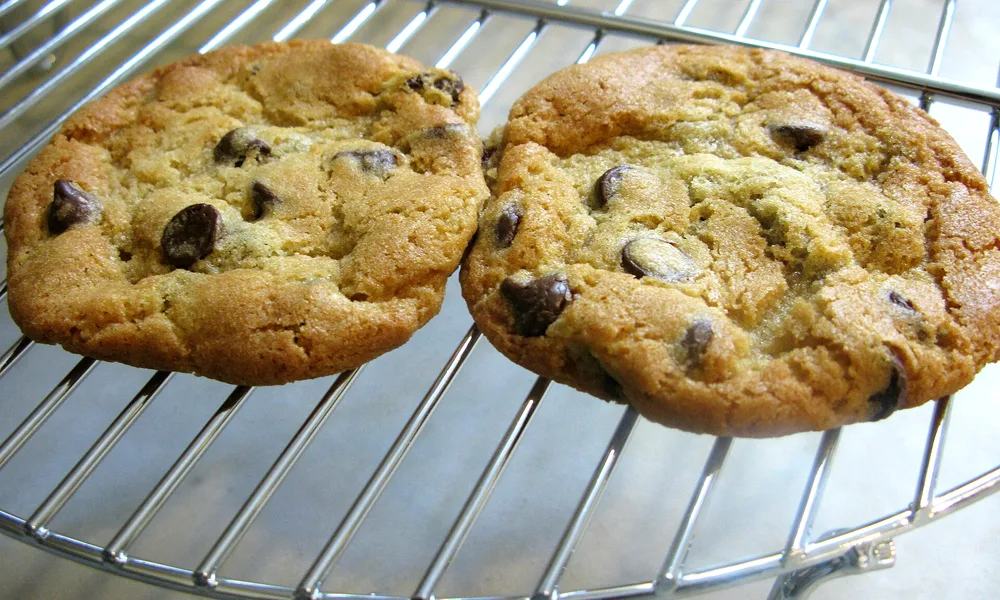
You can tell a fresh cookie before you taste it. Pick it up: it should feel slightly heavy for its size, not light and dry. Bend it gently: a chewy cookie flexes before it breaks, a crisp cookie snaps cleanly, and a stale cookie crumbles into dry crumbs. Smell it too: fresh butter and vanilla carry across the room, while a cookie that smells of nothing but sugar has been sitting too long.
At a bakery, ask when the batch came out. At a supermarket, check the bake date rather than the best-before date, and choose the pack with the latest date. Packaged cookies can still be good, but they are engineered for shelf life first, so expect a softer, more uniform texture.
The Cookie Types That Matter Most
There is no single best cookie, because the right cookie depends on the moment: chocolate chip is the best all-rounder, oatmeal raisin the best with tea, shortbread the best with coffee, gingerbread the best at Christmas, and biscotti the best for dunking.
| Cookie type | Texture | Best for | Stays fresh | Watch out for |
|---|---|---|---|---|
| Chocolate chip | Chewy centre, crisp edge | Everyday snacking, sharing | 3–4 days | Too few chips, over-baked edges |
| Oatmeal raisin | Soft, hearty, spiced | Tea breaks, lunchboxes | 4–5 days | Dry oats, raisins like stones |
| Sugar cookie | Tender, pale, buttery | Decorating, gifts | 3–4 days | Bland without vanilla or lemon |
| Shortbread | Crumbly, rich, buttery | Coffee, after dinner | 1–2 weeks | Greasy if butter is poor |
| Gingerbread | Firm, spiced, snappy | Christmas, gifting | 1–2 weeks | Too much spice, rock-hard bake |
| Biscotti | Very crisp, twice-baked | Dunking in coffee | 2–3 weeks | Tooth-breakingly hard |
Chocolate chip cookies deserve their top spot: the hardest type to get badly wrong and the easiest to judge, since you can see the chips, feel the chew, and taste the butter in a single bite. Oatmeal raisin divides people sharply, because the raisins and the spice are the whole point. Shortbread is the purest test of butter quality, because it has almost nothing to hide behind: flour, butter, sugar and salt.
What About the Other Cookie Types?
Beyond the six in the table there are dozens of cousins: snickerdoodles with their cinnamon sugar coat, peanut butter cookies with their fork-pressed crosshatch, macarons with their crisp shell and chewy centre, and blondies, which are brownie-style bars rather than cookies at all. Judge each on its own terms: a snickerdoodle should be soft and cinnamon-forward, a peanut butter cookie should taste of peanuts first, and a macaron should have a smooth shell and a filling you can actually taste.
Two neighbours are worth a clear distinction. Cookie cutters are tools, not food: they shape the dough, but they tell you nothing about how the finished cookie will taste. Cookie jars are storage, not food either: a jar with a proper seal keeps cookies crisp for days, while a loose lid turns them soft overnight. The same goes for cookie dough, the raw starting point: dough is judged on how evenly it bakes, while finished cookies are judged on flavour, texture and freshness.
Bakery, Supermarket or Homemade?
A good bakery wins on freshness and butter quality. Small bakeries bake in small batches, sell through them fast, and can afford real butter because they are not shipping across the country. The trade-off is price: a bakery cookie costs more, and one batch may differ slightly from the next.
Supermarket cookies win on price and availability. The best use real butter and a decent chip, and they suit lunchboxes and large gatherings. The worst are built for a six-month shelf life, which means more preservatives, more palm fat, and a flavour that fades fast. Read the ingredient list: butter near the top is a good sign, and a list that reads like a chemistry exam is not.
Homemade wins on control: you choose the butter, the chocolate and the bake, and you eat the cookies warm. It also wins on cost per cookie once you have the basics in the cupboard. The catch is time and skill: a first batch can spread into one giant cookie if the butter is too warm or the dough is not chilled. Our guide to cookie dough that bakes evenly explains why chilling the dough and portioning evenly matter more than any secret ingredient.

Ingredients Worth Paying For
Three ingredients decide most of the quality gap between a good cookie and a great one. The first is butter: real butter beats margarine for baking on flavour, texture and browning, while margarine makes a cookie that spreads fast and tastes flat. Our guide to why real butter beats margarine for baking sets out the difference in detail.
The second is chocolate: real chips or chopped chocolate taste deeper and less sweet than compound chocolate. Chopped chocolate melts into pools rather than holding neat chip shapes, which many bakers prefer, but either is fine as long as the chocolate itself is real. The third is vanilla. Real extract adds a warm background note imitation vanilla cannot copy, most noticeable in plain cookies like sugar cookies and shortbread.
How to Store Cookies So They Stay Fresh
A great cookie goes stale fast if you store it badly. The enemy is air and moisture moving the wrong way: crisp cookies go soft when they absorb moisture, and soft cookies go hard when they lose it. The fix is an airtight container: a tin with a loose lid is barely better than the counter.
Keep different textures apart. Crisp cookies stored with soft cookies swap moisture until both are mediocre: the crisp ones soften and the soft ones dry out. A slice of plain bread in the tin is the classic trick for soft cookies: the bread gives up its moisture to the cookies and goes stale instead. Replace the bread every day or two.
For longer storage, freeze the cookies rather than refrigerating them. The fridge dries cookies out and dulls their flavour, while the freezer holds them almost perfectly for two or three months. Freeze them in a single layer first, then stack them in a bag with the air pressed out, and thaw for twenty minutes. A proper cookie jar helps with day-to-day storage: our guide to which cookie jar keeps cookies crisp compares seals and materials, and the seal matters more than the material or the price.

Your Cookie-Buying Checklist
- Check the fat first: real butter at the top of the ingredient list beats palm fat, shortening or margarine every time.
- Judge freshness by feel: a chewy cookie should flex before it breaks, a crisp one should snap cleanly, and a stale one crumbles dry.
- Match the type to the moment: chocolate chip for sharing, shortbread for coffee, oatmeal raisin for tea, biscotti for dunking.
- Count the inclusions: a chocolate chip cookie should have chips in every bite, not just on top.
- Buy the latest bake date, not the longest best-before date, and prefer small batches that sell through fast.
- Store by texture: keep soft and crisp cookies apart, and freeze what you will not eat within four days.
Frequently Asked Questions
What is the best cookie in 2026?
Chocolate chip: it suits the most occasions, it is the easiest type to judge by sight and taste, and a good one balances chewy centre, crisp edge and real chocolate.
Are bakery cookies really better than supermarket cookies?
Usually, yes: bakeries bake in small batches with real butter and sell through them fast. Supermarket cookies can be good too, especially ones listing butter first with a recent bake date, but they are built for shelf life first, so their flavour is often flatter.
How long do homemade cookies stay fresh?
Most stay fresh for three to five days in an airtight container at room temperature. Shortbread and biscotti last one to three weeks because they are drier, while soft frosted cookies may only last two days.
Why do my cookies spread into flat discs?
Usually butter that is too warm or dough that was not chilled. Cold dough spreads slowly, so the edges set before the centre over-bakes. Chill the dough for at least thirty minutes and portion it evenly.
Should cookies be stored in the fridge?
No. The fridge dries cookies out and dulls their flavour. Store them airtight at room temperature for up to five days, or freeze them for up to three months.
Can I freeze cookie dough instead of baked cookies?
Yes, and it is often the better option. Scoop the dough into balls, freeze them solid on a tray, then store them in a bag and bake from frozen with a couple of extra minutes.
The Bottom Line
The best cookies in 2026 are not the most expensive or the most decorated: they are made with real butter, baked until the edges are set and the centres are still soft, and eaten while fresh. Chocolate chip is the safest pick for most people, shortbread is the purest test of butter, and oatmeal raisin is the best partner for a cup of tea. Buy the latest bake date, store soft and crisp cookies apart, and freeze what you will not finish in a few days.


