
A Guide to the Best Shortbread of 2026: Buttery, Crumbly, and Worth Buying
The best shortbread of 2026 is a simple thing done properly: real butter, good flour, a little sugar, and nothing else getting in the way. It should be pale gold, not brown, with a crumb so short it melts on the tongue. There is nowhere for cheap ingredients to hide in shortbread, which is why the gap between the best and the worst of it is so wide.
This guide explains what shortbread is, the main types, how to judge a packet or a bakery batch before you buy, and how to bake it at home without the usual mistakes. Whether you want fingers for tea, rounds for a gift tin, or a wedge with coffee, the same rule applies: the butter does the talking.
Key Takeaways
- Real butter is non-negotiable: shortbread made with margarine or shortening tastes flat and greasy by comparison.
- Three ingredients make classic shortbread: flour, butter, and sugar, with a pinch of salt.
- The crumb should be short and sandy, never chewy or hard: it should melt, not snap.
- Pale gold is the right colour: deep browning means the butter has cooked too far and turned bitter.
- Shortbread keeps for two weeks in an airtight tin; the flavour often improves a day after baking.
What Shortbread Actually Is
Shortbread is a Scottish biscuit made from flour, butter, and sugar, with no eggs, no raising agent, and traditionally no flavouring at all. The word “short” describes the texture: a high proportion of fat coats the flour and stops long gluten strands from forming, so the baked cookie crumbles into sandy pieces instead of holding together. That melt-in-the-mouth crumb is the whole point.
The classic ratio is roughly three parts flour to two parts butter to one part sugar, though every baker has a preferred version. Some use a little rice flour or cornflour for a finer crumb; some add a pinch of salt, which lifts the butter flavour. What matters is the balance: too much flour and the cookie is dry and chalky, too much butter and it spreads into a greasy puddle, too much sugar and it turns hard and sweet.
Butter is the ingredient that decides quality. Shortbread made with real butter tastes rich, clean, and faintly nutty; made with margarine or shortening it tastes flat and waxy, and leaves a film on the palate. The difference is obvious in a side-by-side tasting. Our guide to why real butter beats margarine for baking explains where it comes from.
A Short History
Shortbread began in Scotland as a twice-baked bread enriched with butter, once expensive enough to be reserved for weddings, Christmas, and Hogmanay. The fingers and petticoat tails still sold today keep the old shapes: fingers cut from a rectangle, wedges cut from a round. That is why shortbread still feels like a gift biscuit, and why a good tin makes such an easy present.
The Main Types of Shortbread
Shortbread comes in a handful of shapes and a few flavour variations. The dough is the same at heart; the shape and finish change how it eats.
Classic Fingers
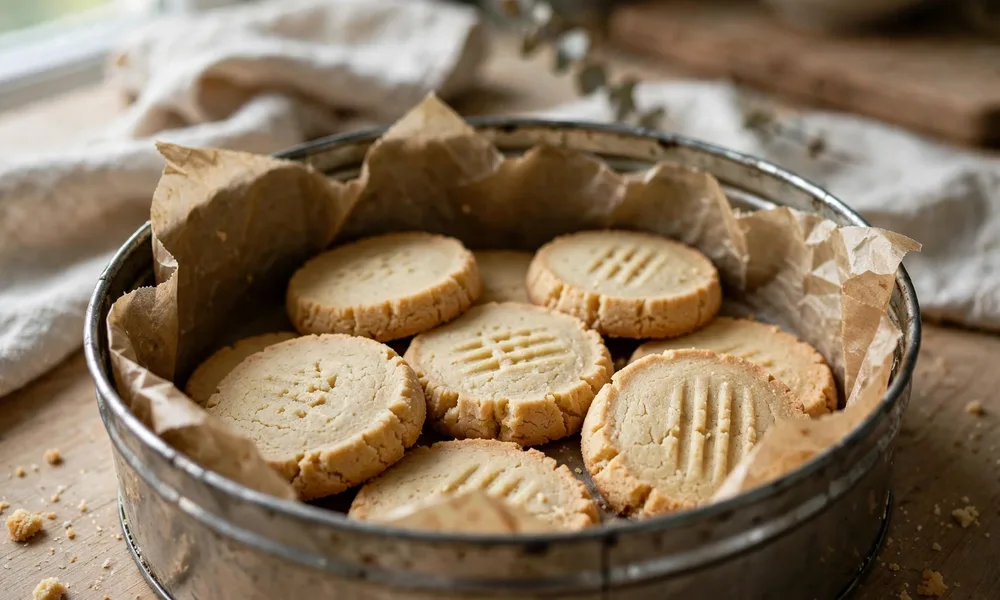
Fingers are the most familiar shape: neat rectangles, often with fork pricks along the top and a dusting of caster sugar. They bake evenly, stack well, and are the easiest shape to get right at home. Good fingers are pale, crisp at the edges, and sandy inside.
Petticoat Tails
Petticoat tails are wedges cut from a single round of dough, traditionally scored before baking and broken apart afterwards. They are thicker than fingers, so they bake a little softer in the centre. The name is said to come from the wedges, which resemble pieces of a petticoat.
Rounds and Cut Shapes
Rounds are cut with a plain or fluted cutter and are the shape most often found in gift tins. They are also the easiest shape for flavoured shortbread, because a round holds its pattern well. If you are cutting shapes at home, chill the dough first and cut close together; our guide to cookie cutters that keep their shape covers the cutters and chilling that make the difference.
Millionaire’s Shortbread
Millionaire’s shortbread is a layered cousin rather than a classic: a shortbread base, a thick caramel middle, and a chocolate top. It is richer and sweeter than plain shortbread, and belongs in the traybake family as much as the biscuit tin. Good versions keep the base crisp under the caramel; bad ones go soggy.
Flavoured Shortbread
Lemon zest, lavender, rosemary, and chocolate chips are the most common additions, and all can work when used lightly. The flavouring should sit behind the butter, not in front of it. A shortbread that tastes mostly of lemon or chocolate is a flavoured biscuit wearing a shortbread name.

What to Look for When You Buy Shortbread
The label tells you nearly everything. Butter should be the first fat listed, and ideally the only fat. The ingredient list should be short: flour, butter, sugar, salt, and perhaps rice flour. A list that runs to flavourings, emulsifiers, palm oil, or glucose syrup means the maker is cutting corners on the one ingredient that matters.
Butter Content
Good shortbread is usually at least a quarter butter by weight, the best closer to a third. Some packets hide the figure, but the ingredient order gives it away: if butter appears after flour and sugar, there is not much of it. If a packet lists “vegetable oil” or “margarine” before butter, put it back.
Colour and Crumb
Look at the biscuit through the packet, or break one open. The colour should be pale gold, even across the surface, with no dark edges. The crumb should look fine and sandy. A biscuit that is deep brown, glossy, or dense has been over-baked or made with too much sugar.
Price and Honesty
Real butter is expensive, so genuinely good shortbread costs more than the cheapest packet. That does not mean the dearest tin is the best; a suspiciously cheap packet is almost certainly made with cheaper fat. Pay for butter, not packaging, and check the weight before comparing prices.
Store-Bought vs Bakery vs Homemade
Each way of getting shortbread has a real advantage. Supermarket tins are consistent and travel well, but they are baked for shelf life and often lean on cheaper fats. Bakery shortbread is fresher and usually made with real butter, but costs more and varies by the day. Homemade is the cheapest per biscuit and the best tasting when it works, but needs a cool kitchen and a light hand.
| Option | Flavour | Freshness | Price | Best for |
|---|---|---|---|---|
| Supermarket tin | Mild, consistent | Weeks on the shelf | Low to medium | Gifts, everyday tea |
| Bakery shortbread | Rich, buttery | Baked this week | Medium | A proper treat |
| Homemade | Exactly as you like it | Same day | Low, plus time | Tea, gifting, baking with children |
| Mail-order tin | Varies widely | Depends on delivery | Medium to high | Sending as a gift |
The baking tray matters more than most people expect: a thin, dark tray browns the base before the centre is done, while a heavy, light-coloured tray bakes evenly. Our roundup of the best vs worst baking sheets of 2026 is worth a look first.
How to Bake Shortbread That Melts
Shortbread fails in two ways: it spreads, or it turns tough. Both come from working the dough too much or too warm. Keep the butter cold, handle the dough as little as possible, and let the fridge do the work. Mix the butter and sugar only until they come together, add the flour, and stop the moment the dough forms a ball. Over-mixing builds gluten, the enemy of a short crumb.
Shape the dough, then chill it again before baking: thirty minutes in the fridge for fingers, longer for cut rounds. Prick the top with a fork to let steam escape and stop the surface puffing. Bake low and slow, around 160°C, until the edges are just turning gold and the centre is still pale. Shortbread firms up as it cools, so take it out earlier than instinct suggests and leave it on the tray for ten minutes.
Two details make a visible difference. First, use caster sugar rather than granulated, because it dissolves into the dough and leaves a finer crumb. Second, dust the finished shortbread with a little extra caster sugar while it is still warm, for the classic sparkle and a faint crunch.
Storing and Serving Shortbread
Shortbread keeps well because it is low in moisture: two weeks in an airtight tin at room temperature is normal, and the flavour often improves after a day as the butter settles. Keep it away from strong smells, and do not store it with soft cookies, which will make it go limp.
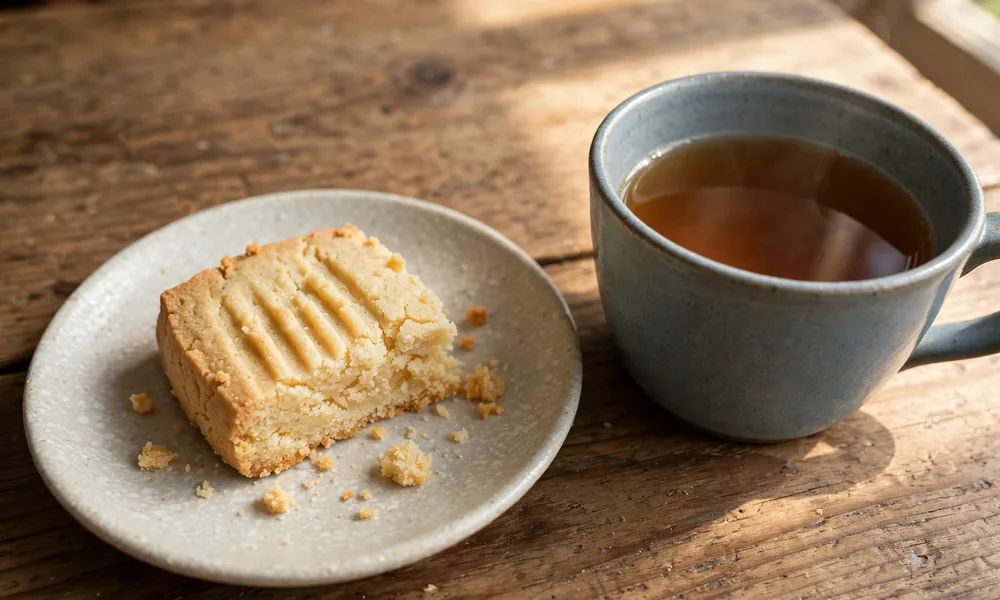
Serve shortbread at room temperature with tea or coffee. It pairs well with sharp fruit, strong cheese, and dark chocolate, all of which contrast with the rich butter. A wedge of petticoat tail with a pot of tea is still one of the simplest good puddings.
Shortbread vs Gingerbread: The Short Version
Shortbread and gingerbread are often sold side by side, but they are opposite cookies. Shortbread is pale, buttery, and made from just flour, butter, and sugar, with no spice at all. Gingerbread is dark, spiced, and sweetened with molasses. Shortbread gets its character from the butter; gingerbread gets its character from the spice jar. One is rich and crumbly, the other is warm and peppery, and choosing between them is really a question of whether you want butter or spice to lead.
Your Shortbread Checklist
- Check the label first: butter should be the first fat listed, and the list should be short.
- Look for pale gold, not brown: deep browning means bitter butter and a hard crumb.
- Break one open: the crumb should be fine, sandy, and dry, never chewy or dense.
- Pay for butter, not packaging: a cheap tin is usually cheap for a reason.
- Keep the dough cold and handle it lightly, or the crumb turns tough.
- Store airtight for up to two weeks, away from strong smells and soft cookies.
Frequently Asked Questions
Is shortbread meant to be soft or crunchy?
Neither, exactly. Good shortbread is crisp at the edge and sandy in the middle, and it crumbles rather than snaps or bends. If it snaps cleanly, it has too much sugar or was baked too long.
Can you make shortbread without butter?
You can, but the result is not really shortbread. Margarine and shortening make a biscuit that looks similar but tastes flat and leaves a waxy film. If dairy is the issue, a plant-based butter block is a better substitute.
Why did my shortbread spread in the oven?
Usually because the butter was too soft or the dough too warm. Chill the shaped dough for at least thirty minutes, make sure the oven is fully hot, and avoid over-creaming the butter and sugar.
How long does shortbread last?
About two weeks in an airtight tin at room temperature. It rarely goes stale; it goes soft if stored with moist food, or picks up smells from the cupboard, so keep the tin sealed and separate.
Can you freeze shortbread?
Yes, both the dough and the baked biscuits freeze well for up to three months. Freeze the dough as a disc and thaw it in the fridge overnight. Freeze baked shortbread in a single layer first, then pack it up.
What is the difference between shortbread and a butter cookie?
A butter cookie usually contains egg and sometimes a raising agent, which makes it lighter and more cake-like. Shortbread has neither, which gives it the dense, sandy crumb.
Bottom Line
The best shortbread of 2026 is the one made with real butter, baked pale gold, and crumbly enough to melt. Read the label before you buy, keep the dough cold when you bake, and take it out earlier than you think. Get the butter right and everything else follows.


