
What Is Gingerbread? Finding the Best Gingerbread of 2026
The best gingerbread of 2026 is dark, warmly spiced, and honest about what it is: a molasses-sweetened, ginger-led cookie that can be crisp enough to snap or soft enough to bend. It is not a sugar cookie with a pinch of spice, or a biscuit that happens to be brown. Real gingerbread tastes of ginger first, then of molasses, cinnamon, and clove, and it keeps its flavour for days.
This guide explains what gingerbread is, the main types worth knowing, how to tell a good one from a stale one, and how to bake a batch at home that holds its shape. The same tests apply whether you buy it or bake it: smell the spice, check the texture, read the label.
Key Takeaways
- Good gingerbread leads with ginger, not sugar: the spice should be the first thing you taste and the last thing that lingers.
- Molasses gives gingerbread its dark colour and deep flavour; golden syrup makes a lighter, milder cookie.
- Texture is a choice, not an accident: crisp snaps, chewy rounds, and soft gingerbread men are all made differently on purpose.
- Freshness matters more than branding: a small bakery batch baked this week usually beats a famous packet baked months ago.
- Store gingerbread airtight and it keeps for a week or more; a slice of bread in the tin keeps soft cookies soft.
What Gingerbread Actually Is
Gingerbread is a baked good flavoured with ginger and sweetened, traditionally, with molasses or treacle. The name covers a family of recipes: thin crisp snaps, thick chewy rounds, soft loaves, decorated figures, and the sturdy panels used to build gingerbread houses. What ties them together is the spice blend and the dark sweetener, not the shape or the crunch.
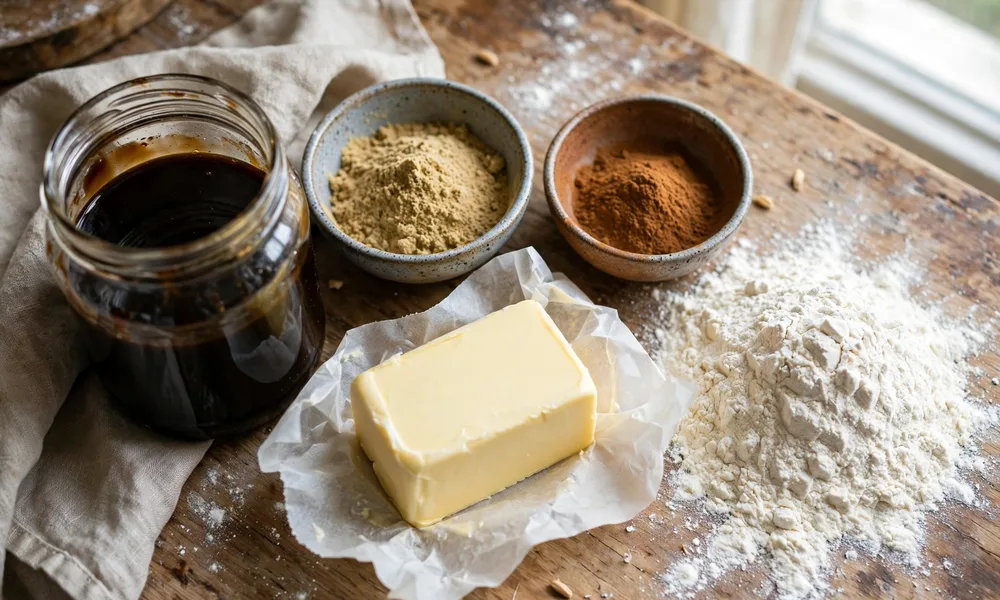
The defining ingredient is ginger, and it has to be present in a quantity you can taste. In most good recipes, ground ginger is the largest spice by weight, supported by cinnamon and a smaller amount of clove, nutmeg, or allspice. If a cookie labelled gingerbread tastes mostly of sugar and brown colouring, it is a gingerbread-flavoured biscuit at best. The ginger you buy matters too: fresh, pungent ground ginger gives a warm bite, while old, faded spice gives little more than colour.
Molasses is the second pillar. It brings the dark colour, a slightly bitter depth, and the moisture that keeps softer styles from drying out. Recipes that swap it for golden syrup or honey produce a paler, sweeter, milder cookie. Neither is wrong; the mistake is expecting one and getting the other without being told.
A Short History
Gingerbread has been baked in Europe for centuries, from medieval spiced honey cakes to the crisp biscuits of Victorian fairs and the decorated houses of German Christmas markets. Ginger arrived through trade routes from Asia, and it was expensive enough that spiced baking was once a feast-day treat. That history still shows: gingerbread is the cookie of Christmas, fairs, and gift tins, though there is no reason it cannot be baked all year.
The Main Types of Gingerbread
Shopping for gingerbread is easier once you know which type you want, because the same name is used for cookies that behave very differently.
Crisp Ginger Snaps
Thin, dark, and snappy, ginger snaps are rolled thin and baked until they break cleanly. They are the most intensely spiced of the family, because the thin crumb leaves nowhere for weak flavour to hide. Good ones shatter rather than bend, and they are excellent dunked in tea.
Soft and Chewy Gingerbread Rounds
Soft gingerbread is rolled thicker, baked for less time, and made with more molasses and brown sugar. The result bends, has a moist centre, and stays soft for days in a tin. It is the style most people picture when they think of a bakery gingerbread cookie, and the most forgiving to bake at home.
Gingerbread Men and Shaped Cookies
Gingerbread men sit between the two styles above: firm enough to hold a shape and take icing, but not so hard that they snap. The dough needs to be sturdy, so it is usually chilled before cutting. The classic decoration is simple white icing for eyes, buttons, and a smile.
Gingerbread Houses
A gingerbread house is less a cookie than a construction project. The panels are baked from a low-moisture dough that dries hard and stays rigid, joined with royal icing that sets like cement. Nobody expects house panels to taste as good as a soft cookie; their job is to stand up. Choose a recipe written for houses, not a cookie recipe, or the walls will slump.
Dark Loaves and Lebkuchen-Style Gingerbread
Not all gingerbread is a cookie. Dark gingerbread loaves are closer to cake: moist, dense, and sliced like bread, often eaten buttered. German Lebkuchen is another cousin, softer and rounder, spiced with a wider blend that can include cardamom and coriander, sometimes with a chocolate coating.

What to Look for When You Buy Gingerbread
The packet tells you most of what you need to know. Ginger should appear early among the flavourings, molasses or treacle should be named rather than hidden behind “caramel colour”, and the list should be short. A long list of flavourings, colours, and preservatives is a sign the cookie needs help to taste like gingerbread.
The Spice Should Lead
Open the packet and smell it. Good gingerbread smells warm and peppery, ginger ahead of cinnamon. If the smell is faint, the cookies are probably stale or under-spiced. If the smell is all cinnamon, the maker has skimped on the ginger, which is the more expensive spice.
Molasses or Golden Syrup
Check which sweetener is used. Molasses gives a dark, almost bitter depth; golden syrup a lighter, cleaner sweetness; honey a floral note. All three can make good gingerbread, but the label should match the flavour.
Texture Tells the Truth
Pick up a cookie and bend it gently. A snap should break with a sharp crack. A soft cookie should give without crumbling to dust. A cookie that bends when it should snap, or snaps when it should bend, was either baked wrong or stored badly. Also look at the edges: even browning means an even oven.
Store-Bought vs Bakery vs Homemade
Each way of getting gingerbread has a real advantage, and the best choice depends on what matters most: convenience, freshness, or control. Supermarket packets are consistent and cheap, but baked for shelf life. Bakery cookies are fresher and more strongly flavoured, but cost more. Homemade is the most work, yet the only version where you choose every ingredient.
| Option | Flavour | Freshness | Price | Best for |
|---|---|---|---|---|
| Supermarket packet | Mild, consistent | Weeks on the shelf | Low | Everyday snacking, lunchboxes |
| Bakery cookie | Strong, spiced | Baked this week | Medium | A proper treat, gifting |
| Homemade | Exactly as you like it | Same day | Low, plus time | Shaped cookies, houses, gifts |
| Kit | Varies widely | Depends on the kit | Medium to high | Building a house with children |
If you are comparing gingerbread with the wider world of cookies before you decide, our roundup of the best vs worst cookies of 2026 puts it in context, including which cookie styles hold up best after a few days in the tin.
How to Bake Gingerbread That Holds Its Shape
Good gingerbread dough is a cold dough. Chill it for at least an hour, preferably overnight, before rolling it out. Cold dough spreads less, holds a cut shape, and bakes evenly. Roll it to an even thickness and cut shapes close together. Re-rolled scraps get tougher each time, so gather them once and chill them again.
Baking time is the difference between the style you want and the style you get. For crisp snaps, roll thin and bake until the edges are firm and dark. For soft cookies, roll thicker and take them out when the centres still look slightly underdone; they firm up as they cool. For shaped cookies, bake until the edges are set, then leave them on the tray for five minutes before moving them.
The dough itself is simple, but it rewards care. Cream the butter and sugar properly, warm the molasses slightly so it pours and mixes evenly, and add the flour in stages rather than all at once. If you are new to baking with this kind of dough, our guide to cookie dough that bakes evenly covers the chilling, rolling, and resting steps that matter most.
Storing Gingerbread So It Stays Good
Gingerbread keeps better than most cookies, because the molasses and spice help it stay stable and the low moisture of crisp styles keeps them firm. Store it in an airtight tin at room temperature, away from heat and sunlight. Crisp snaps keep for two weeks or more; soft cookies for about a week.
If soft gingerbread does dry out, put a slice of fresh bread in the tin overnight and the cookies will borrow its moisture. Keep crisp and soft styles in separate tins, because the soft ones will soften the crisp ones. Iced gingerbread should be stored in a single layer, or separated with baking paper, so the decoration does not stick.

Gingerbread vs Shortbread: The Short Version
Gingerbread and shortbread are often sold side by side in the biscuit aisle, but they are opposite cookies. Gingerbread is dark, spiced, and sweetened with molasses; shortbread is pale, buttery, and made from just flour, butter, and sugar, with no spice at all. Gingerbread gets its character from the spice jar, while shortbread gets its character from the butter.
Your Gingerbread Checklist
- Smell the packet first: warm, peppery ginger should be obvious before the first bite.
- Check the label: named molasses and real ginger near the top of the ingredients.
- Match the texture to the type: snaps should snap, soft cookies should bend.
- Buy bakery over packet when freshness matters, and eat it within the week.
- Chill homemade dough overnight for shapes that hold and bake evenly.
- Store airtight, keep crisp and soft styles apart, and protect any icing.
Frequently Asked Questions
Is gingerbread the same as a ginger snap?
A ginger snap is one type of gingerbread, not a different thing. Gingerbread is the family name, and snaps are its thin, crisp branch. Soft gingerbread, gingerbread men, and gingerbread houses are the other branches of the same family.
Does gingerbread contain real ginger?
Good gingerbread does, usually as ground ginger, sometimes with fresh or crystallised ginger as well. Cheap versions may rely on flavouring and colour instead, which is why the ingredient list matters.
How long does gingerbread last?
Crisp gingerbread keeps for two weeks or more in an airtight tin. Soft gingerbread keeps for about a week. Iced or decorated gingerbread keeps for a week if stored in a single layer.
Can you freeze gingerbread?
Yes, both the dough and the baked cookies freeze well. Freeze dough as a flat disc for up to three months and thaw it in the fridge overnight. Freeze baked cookies in a single layer first, then pack them up; they thaw in about an hour.
Why did my gingerbread spread in the oven?
Almost always because the dough was too warm or the butter was too soft. Chill the cut shapes for fifteen minutes before baking, make sure your oven is fully hot before the tray goes in, and avoid re-rolling scraps more than once.
Is gingerbread meant to be soft or hard?
Both, depending on the recipe. There is no single correct texture. Thin dough and a longer bake gives a snap, thick dough and a shorter bake gives a soft cookie, and house dough is meant to dry hard on purpose.
Bottom Line
The best gingerbread of 2026 is the one that tastes of ginger first, uses real molasses, and matches its texture to its type. Buy it from a bakery when you can, read the label when you cannot, and if you bake it yourself, chill the dough and trust the smell of spice over the colour.


