A pair of kids ice skates is not a smaller version of an adult pair. It is a different piece of kit with a different job: it has to hold a small ankle steady, forgive a wobble without tipping a child over, stay comfortable through a whole rink session, and still be simple enough that a beginner can stand up, glide a little, and want to try again. The best kids ice skates of 2026 do all of that without feeling like a toy that will be outgrown in a month, and the worst ones fail on fit and support long before the blade ever matters.

What Makes a Kids Ice Skate Different
An adult skate is built for a skater who already knows how to balance. A kids skate assumes the opposite. It assumes the skater will wobble, catch an edge, sit down on the ice, and get up again, and it is designed to make each of those moments kinder. The boot is therefore not a fashion choice. It is the whole skate. The best kids ice skates have a padded, supportive boot that holds the ankle upright without squeezing it, a flat, stable blade, and a fit that leaves room to grow without leaving the foot sliding around inside.
Support is the first difference, and it is the one most parents underestimate. A soft boot that folds at the ankle looks comfortable in the shop and feels floppy on the ice. A child in a floppy boot spends the whole session fighting to stay upright instead of learning to glide, and tired ankles make for short sessions and sore feet. Look for a boot that stands up on its own when it is empty, with firm padding around the ankle and a heel that does not lift when the child walks in it.
How to Choose: The Three Things That Matter Most
Start with fit. A kids ice skate should fit like a snug shoe, not like a boot with room to grow into. The toes should brush the end of the boot when the child stands straight, then pull back slightly when the knees bend, and the heel should stay put when the child walks. A skate that is a full size too big will feel fine in the shop and terrible on the ice, because the foot slides, the ankle rolls, and blisters follow. Measure both feet, fit the larger one, and try the skates on with the socks the child will actually skate in.
Blade quality comes next. The blade should be straight, firmly fixed to the boot, and free of rust, nicks and wobble. Hold the skate up and look along the blade from the front: it should run in a straight line, not curve to one side. A blade that is bent or loose will pull a child to one side all session, and no amount of practice fixes a bent blade. Ask whether the shop sharpens blades, and how often a beginner’s blade needs it, because a dull blade slides sideways instead of gripping the ice.
Finally, think about the kind of skating your child will actually do. A child who wants to glide around a public rink needs a comfortable, stable skate. A child who dreams of spins and jumps needs a figure skate with a toe pick and a stiffer boot. A child who wants to chase a puck needs a hockey skate with a harder shell and more protection. Buying the wrong type is not a disaster, but it makes learning harder, so match the skate to the skating, not to the colour.
Figure Skates and Hockey Skates
Figure skates are the most common choice for beginners, and for good reason. They have a longer blade, a toe pick at the front, and a boot that supports the ankle well. The toe pick helps with stopping and with the first small jumps, and the longer blade makes gliding feel smooth and steady. A child who is not sure what kind of skating they want to try will be happy in a figure skate for the first year, and the skills learned in them transfer to other styles later.
Hockey skates suit children who want speed and quick turns. They have a shorter blade, a harder boot, and no toe pick, which makes them feel faster and more agile once a child can balance. They are also tougher, with more protection around the toes and ankles, which suits a child who falls often and gets straight back up. The trade-off is that they are less forgiving at very low speed, so a complete beginner may find a figure skate easier for the first few sessions.
Getting the Fit Right at Home
Fit is worth checking again after the first skate, because feet settle into a boot once it has been used. Before the second visit, check for red marks on the ankles and heels, ask whether any spot rubbed, and feel inside the boot for a seam or a fold in the lining that presses on the foot. A small rub in the shop becomes a blister on the ice, and a blister is the fastest way to put a child off skating for the rest of the winter.
Our guide to the best kids helmets of 2026 is worth reading alongside this one, because a helmet is part of the kit, not an optional extra. A helmet that fits well, sits level on the head, and stays put when the strap is fastened protects a child on the days when the ice is harder than the lesson, and it also gives a nervous beginner the confidence to try a glide without worrying about a fall.

Safety First: Helmets, Adults and Lace Checks
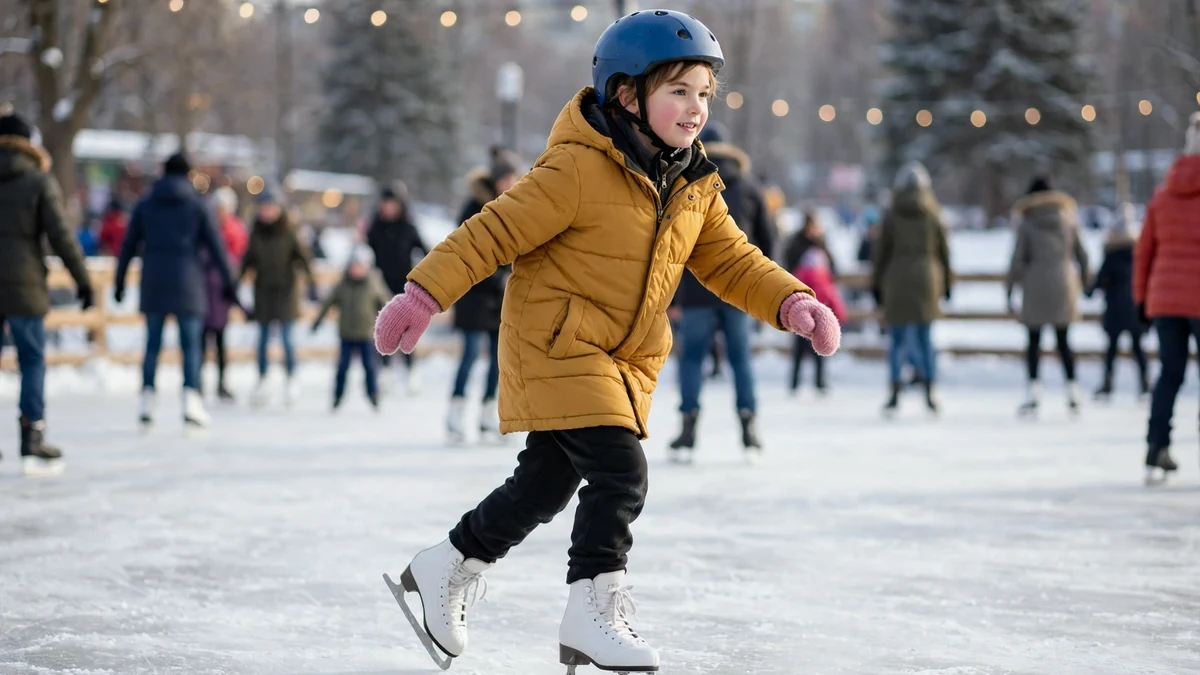
Safety on the ice starts before the skates go on. A helmet is recommended for every child on the ice, and it matters most for beginners, who fall more often and in less predictable directions. Choose a helmet made for snow sports or skating, check that it sits level and does not tip forward over the eyes, and fasten the strap so that only one or two fingers fit underneath it. A helmet that slides around is a helmet that will not be in the right place when it is needed.
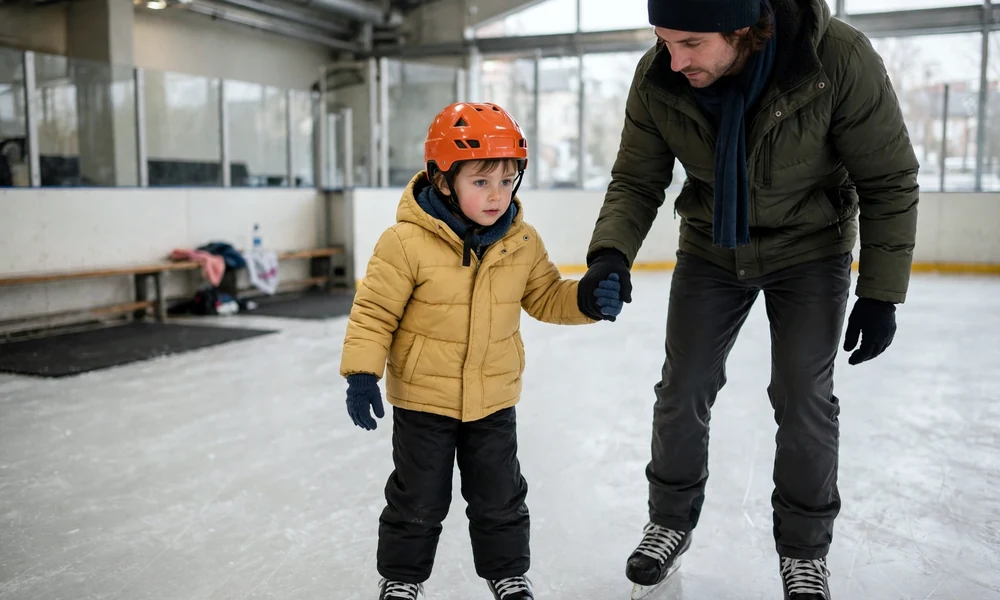
Children should always skate with an adult nearby, and for the first sessions that adult should be on the ice or standing at the barrier where the child can see them. A rink is a busy place, with faster skaters, sudden stops and children going in different directions, and a young skater needs a familiar face to skate towards and a hand to hold when the ice feels crowded. Agree in advance where to meet if you get separated, and keep the first sessions short, so the child leaves wanting more rather than exhausted.
Check the laces and buckles every time the skates go on, and again halfway through a long session. Laces loosen as a boot warms up and a child moves, and a loose skate is a wobbly skate. Tighten the laces over the middle of the foot, where the support matters most, and leave the top hooks a little looser so the ankle can bend. Check that the buckles on adjustable skates are fully closed, and that the skate guards are off before the child steps onto the ice, because walking on guards is a common cause of slips before the skating even starts.
Learning to Skate: The First Few Sessions
The first session should be about standing, not skating. Let the child hold the barrier, march on the spot, and feel the blade grip the ice. Then try a small glide: push off gently with one foot, glide on the other, and stop by turning the toes in. Short, slow glides build balance far faster than long, fast ones, and a child who can stop is a child who feels safe enough to go a little faster next time.
Looking After the Skates Between Visits
Good care keeps a pair of kids ice skates working for a whole season. After each session, wipe the blades dry with a soft cloth, because a blade left wet will rust, and rust makes the edge rough and slow. Put the skate guards on for the walk to the car, then take them off at home so the blades can dry properly, and store the skates somewhere dry and cool, never in a damp bag or a hot car boot.
Let the boots air out after each session, with the tongues pulled forward so air can reach the lining. A damp boot left closed in a bag will smell by the next visit, and a lining that never dries can rub a child’s foot raw. Dry boots, dry blades and dry laces are the whole care routine, and it takes less than five minutes.
For winter sport in general, our guide to the best kids ski helmets of 2026 covers the same fit and safety ground for the slopes, and many families use the same helmet for skating and skiing, as long as it is rated for the activity and fits well with the rest of the kit. One well-fitting helmet that a child is happy to wear is worth more than two that sit in a cupboard.
What to Avoid When Buying Kids Ice Skates
Avoid skates that are bought a size too big to grow into. It is tempting, because children grow fast and skates are not cheap, but an oversized skate is the single most common reason a child struggles on the ice. The foot slides, the ankle rolls, and the child learns to shuffle instead of glide. If the budget is tight, an adjustable skate or a good second-hand pair in the right size is a better choice than a new pair that is too big.
The First Rink Visit: A Simple Plan
Plan the first visit like a short outing, not a lesson. Arrive early, hire or buy the skates without rushing, and let the child walk around in them on the mats before stepping onto the ice. Sit at the barrier for a few minutes and watch the other skaters, so the child knows what the ice looks like when it is busy and where the slow lane is. Then step on together, hold hands, and glide a little, stop, and glide again.
Skating is also a good way to spend a winter afternoon outdoors as a family, and our guide to the best outdoor toys for kids in 2026 has ideas for the days when the rink is closed and the garden is the playground instead. A child who is active outside in winter, in whatever way suits them, is a child who comes home tired, happy, and ready for a warm meal.
The best kids ice skates are the ones that fit your child, hold their ankles steady, and make the ice feel friendly rather than frightening. Choose a snug fit, a supportive boot, a straight blade and a helmet that fits, skate with an adult nearby, and keep the first sessions short and happy. Do that, and the skates will be used all winter, not left in a cupboard after one cold afternoon.