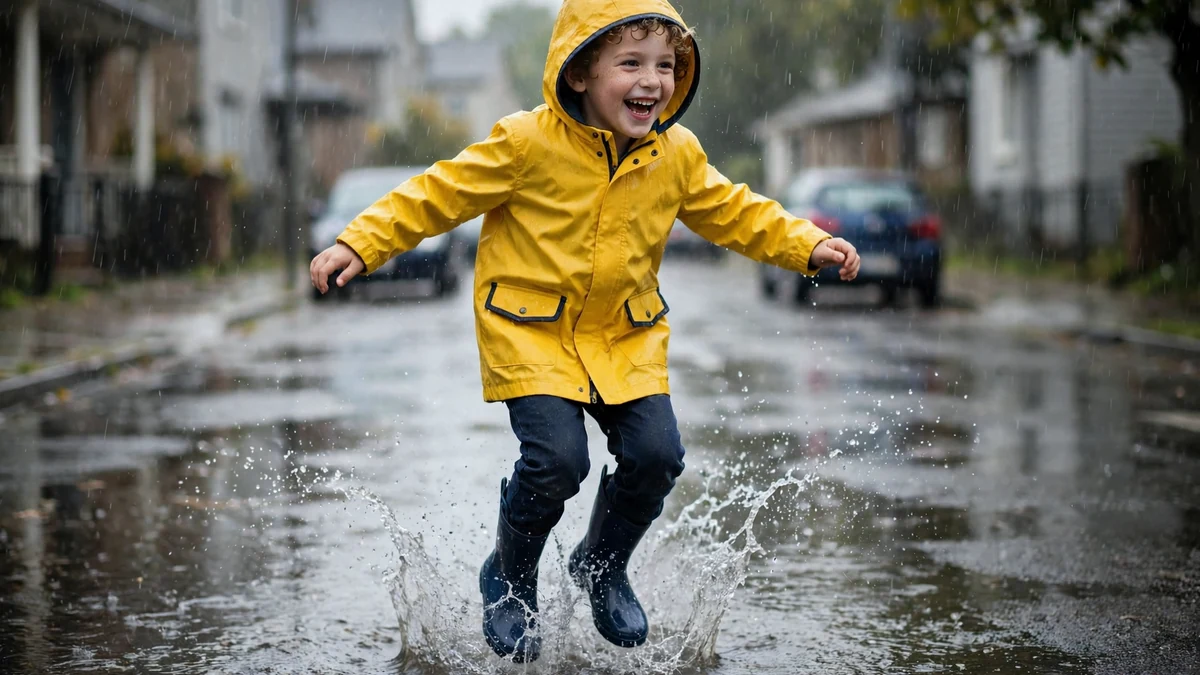
A kids raincoat is not a small adult raincoat. It has a different job: it has to keep a child dry while they run, jump, climb and sit in wet grass, survive being dragged through mud, and still be comfortable enough that the child actually wants to wear it. The best kids raincoats of 2026 do all of that without feeling stiff or clammy, and the worst ones fail on the basics long before the rain gets heavy. A coat that leaks at the shoulders, a hood that falls over the eyes, or cuffs that let water run straight up the sleeves will end up hanging in the hallway while the child gets soaked.
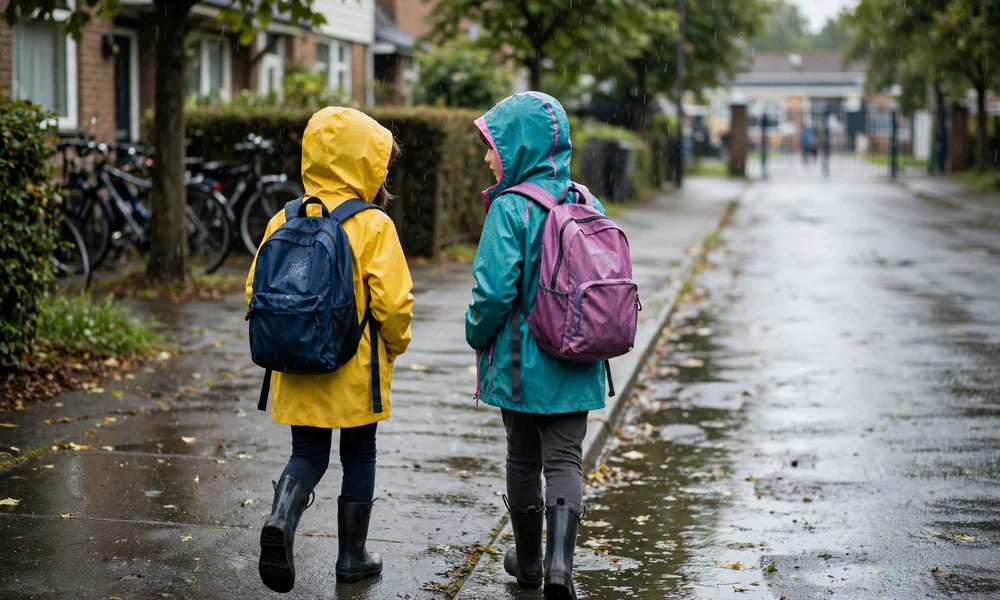
What Makes a Kids Raincoat Different
A general raincoat is designed for an adult who will walk from a car to a door and mostly stay upright. A kids raincoat assumes the opposite. It assumes the wearer will jump in puddles, crouch down to look at something on the ground, slide down a wet slide and fall over at least once. The fabric therefore has to work harder. It needs a waterproof coating that stands up to kneeling and sitting, seams that are sealed rather than simply stitched, and a cut that covers the back when a child bends over. A coat that is only showerproof will look fine in drizzle and give up in a proper downpour.
The second difference is the hood. On an adult coat the hood is a nice extra. On a kids coat it is the whole point, because children rarely carry umbrellas well and almost never keep one up in wind. A good hood stays up without flopping forward over the eyes, fits over a hat on a cold morning, and can be tightened at the front so the rain runs off instead of dripping down the face. The best kids raincoats use a hood with a small stiffened peak or brim, a chin strap or toggle, and enough depth that a child can turn their head and still see sideways. If the hood will not stay up, the coat is not doing its job.
How to Choose: The Three Things That Matter Most
Start with waterproofing. Look for a coat described as waterproof rather than water-resistant, with taped or welded seams and a waterproof rating the maker is willing to state. A rating around 5,000 millimetres will handle steady rain, while 10,000 millimetres and above will handle a long, heavy downpour and a child who sits in wet grass. A coating that washes off after a few cycles is a warning sign, so check whether the maker gives care instructions that keep the coating working, such as washing without fabric softener and drying it properly.
Then check the fit. A raincoat should fit over a jumper with room to move, but it should not be so big that the sleeves cover the hands or the hem catches on knees. Sleeves should end at the wrist with a cuff that can be tightened, and the shoulders should sit in the right place so the hood stays centred. Children grow quickly, so a little growing room is sensible, but a coat bought two sizes too big will be heavy, awkward and more likely to snag. Buy the size that fits now with a jumper underneath, not the size they might grow into next year.
Finally, think about how the coat fastens. A full-length zip with a storm flap and a chin guard is the most practical choice, because it is quick to do up and keeps wind out. Pop studs on their own can gap and let rain in, and a coat with fiddly buttons will slow a child down at the school gate. A two-way zip is a useful extra for older children, letting them open the bottom of the coat to sit on a bike or a bus seat. Whatever the fastening, a child should be able to do it up alone, because a coat that needs an adult every time will be left open.

The Types Worth Knowing
The classic hooded raincoat is the workhorse. It is a single waterproof layer with a hood, a full zip and a comfortable lining, and it suits most children for most rainy days. Look for one with sealed seams, a storm flap and pockets that actually close, because open pockets fill with water and ruin whatever is inside. This is the coat to buy first if you are only buying one, and it is the style that the best kids raincoats of 2026 do best.
Picks by Age: Toddlers, School Age and Older Kids
For toddlers, the priorities are simplicity and coverage. A coat should be easy to pull on, with a hood that stays up, a zip a parent can do one-handed, and a length that covers the nappy area when they sit down. Bright colours and a fun pattern help, because a toddler who likes their coat will put it on without a battle. Avoid long cords and toggles near the neck, and choose soft cuffs that do not rub. A puddle suit is often the better buy at this age, because toddlers spend so much time at ground level.
For school-age children, durability takes over. This is the age of playground football in the rain, climbing frames, scooters and bags dragged along the ground, so the coat needs tough fabric, reinforced elbows and a hood that survives being pulled. Pockets matter more too, because a school-age child carries things and needs somewhere to put them that stays dry. A mid-thigh length works best here, and a coat with a name tag inside will save a lot of lost property. This is also the age when a child starts to care about how a coat looks, so letting them choose the colour is worth the extra five minutes in the shop.
Puddles, Boots and the Rest of the Kit
A raincoat on its own only solves half the problem. A child in a brilliant coat and soaked trainers will still come home wet, cold and miserable, so the rest of the kit matters just as much. Rain boots are the obvious partner, and they should be tall enough that puddle water does not pour in over the top, with a sole that grips on wet pavement. Our guide to the best rain boots of 2026 covers the muddy-day options, but the short version is simple: boots that fit well, grip well and are easy to pull on will get worn, and boots that are hard to get on will be left by the door.

Fit, Cuffs and the Details That Decide It
The cuffs are the next detail. A cuff that gapes lets rain run down the arm and into the sleeve, which is how a child ends up wet despite a waterproof coat. Look for cuffs that can be tightened with elastic or a velcro tab, and that sit snugly over a glove or a jumper cuff. The hem matters in the same way: a drawcord or elasticated hem stops wind and rain blowing up underneath, and it keeps the coat in place when a child raises their arms.
Pockets should close. An open patch pocket is a small bucket that collects rain, so look for pockets with a flap, a zip or a velcro closure. Two pockets are enough for most children, and a small inside pocket is a useful place for a bus pass or a house key. Check that the pockets are big enough for cold hands, because a child who cannot warm their hands will not want to be outside for long.
Keeping a Raincoat Working
A raincoat needs care, and a little of it goes a long way. Wash it when it is dirty, but follow the label: use a gentle cycle, skip the fabric softener, and avoid harsh detergents that strip the waterproof coating. Fabric softener is the most common mistake, because it coats the fabric and stops water beading, which is exactly the effect you want to keep. A reproofing wash-in or spray can restore a tired coat, and it is worth doing once a season rather than buying a new coat.
Drying matters just as much. Hang the coat up after every wet day, open the zip, and let the air get to it, rather than stuffing it damp into a bag or a cupboard. A coat that is put away wet will smell, and the lining will take far longer to dry next time. Never dry a waterproof coat on a hot radiator or in a tumble dryer unless the label says it is safe, because heat can damage the coating and the taped seams. A cool, airy spot is all it needs.
What to Avoid
Avoid coats that are only described as water-resistant if the child will be out in real rain. Water-resistant means the fabric sheds light rain for a short time, and it will give up in a downpour. Avoid coats with unsealed seams for the same reason: water finds a stitch hole far faster than most people expect, and a coat that leaks at the shoulders is useless no matter how good the fabric is. If the maker does not say the seams are sealed, assume they are not.
Avoid buying for next year. A coat two sizes too big is heavy, catches on things, and lets rain in at the sleeves and hem. It is also less safe on stairs and climbing frames, because the extra fabric gets in the way. Buy the size that fits now with a jumper underneath, and pass the coat on when it is outgrown. A coat that fits is a coat that works, and a coat that does not fit is a coat that fails.
The Rest of the Rainy-Day Picture
Rainy days are not just about getting to school. They are about play, and a child who is dry will play outside for far longer than a child who is cold and wet. A good raincoat turns a cancelled afternoon into a normal one, and that is worth more than any single feature on a label. Our guide to the best outdoor toys for kids of 2026 has ideas for wet-weather play, and the thread running through it is the same: the right kit means the weather stops being a reason to stay inside.
The same logic applies to adults. A parent who walks to school in a good raincoat will be far happier standing at the gate in the rain, and a family where everyone is dry is a family that still goes out. Our guide to the best rain jackets of 2026 covers the adult side, from commutes to hikes, and the buying advice is familiar: waterproofing, sealed seams, a hood that works, and a fit that lets you move.
The best kids raincoats of 2026 are the ones that get worn without a fuss: waterproof with sealed seams, long enough to cover the back, with a hood that stays up and cuffs that keep the rain out. Get the fit right, keep the coating working with a little care, and pair the coat with boots that actually grip, and the rain stops being a problem. The puddles, after all, are the whole point.


