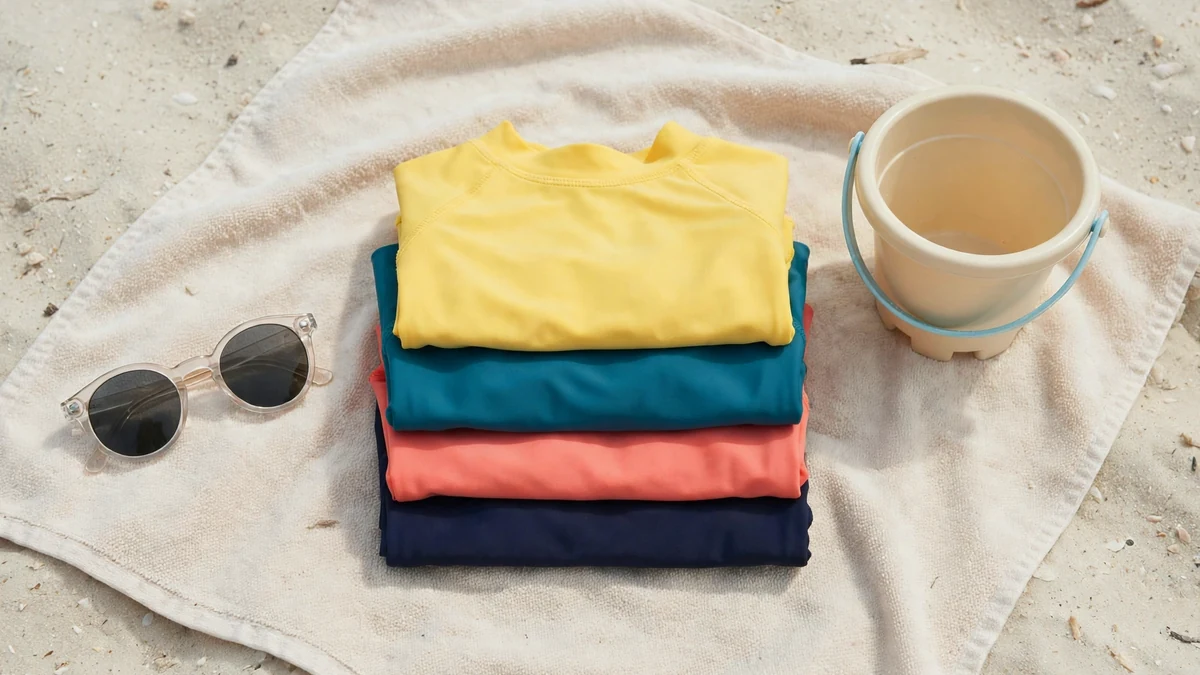
A kids rash guard is one of those small purchases that quietly decides how a whole beach day goes. When it fits well, stays put and keeps the sun off small shoulders, nobody thinks about it at all. When it does not, you hear about it all afternoon: the sleeves ride up, the neck rubs, the fabric goes heavy and cold after one swim, and the child who was desperate to get in the water is suddenly desperate to get out of it. The best kids rash guards of 2026 are the ones that disappear into the background of a good day, and the worst are the ones that become the story of the day for all the wrong reasons.
A rash guard is a close-fitting swim top, usually long-sleeved, made from stretchy swim fabric. It was first worn by surfers to stop surfboards rubbing their skin raw, which is where the name comes from, but for children its main job is different. It covers the shoulders, chest, back and arms, which are the parts of a child that burn fastest and are hardest to keep covered with sunscreen. A good one does that without feeling hot, heavy or restrictive, and it dries fast enough that a child is not sitting around in a cold, damp top while everyone else is building sandcastles.
What Makes a Great Kids Rash Guard
The first thing to understand is sun protection, because it is the reason most parents buy a rash guard in the first place. UPF is the fabric equivalent of SPF. A fabric rated UPF 50 blocks about 98 percent of ultraviolet rays, while UPF 30 blocks about 97 percent. Either is a huge improvement on an ordinary cotton T-shirt, which may only rate around UPF 5 when it is wet. Look for a stated UPF rating printed on the label or the product page, and treat a top with no rating as unrated rather than assuming it will protect. If the maker was confident about the protection, they would have had it tested and printed the number.
Fit is the second thing that matters, and it matters more than most people expect. A kids rash guard should fit snugly when it is dry, because swim fabric loosens a little when it is wet. A top that looks perfect on the hanger is often too big in the water, where it rides up, fills with water and flaps around the waist. The right fit feels slightly close at first, smooth across the chest and tummy, with sleeves that stay down at the wrists and a hem that stays down at the waist. At the same time it should never leave red marks, pinch under the arms, or restrict how a child moves their arms overhead. If your child cannot raise both arms comfortably above their head, the top is too tight.

Why Long Sleeves Win
Long sleeves are the default choice for most children, and for good reason. They cover the arms completely, which are among the first parts to burn, and they mean far less skin is left to protect with cream. For beach days, for fair-skinned children, and for children who will be in the sun for hours, long sleeves are the right call. They also protect against grazes from sand, pool edges and the rough surface of a bodyboard. The only real drawback is warmth: a long-sleeved top can feel hot out of the water on a very warm day, so for a child who is mostly playing on the sand rather than swimming, a short-sleeved version may be more comfortable.
Fabric and Durability
Most kids rash guards are made from a blend of polyester or nylon with elastane, usually between ten and twenty percent elastane. That blend gives stretch, shape retention and quick drying, which are the three things that matter most. Polyester holds its shape when wet and resists chlorine better than nylon, so it is the better choice if your child swims in a pool every week. A small amount of elastane adds the stretch that lets a child move freely, but too much elastane makes the fabric go baggy when wet, so a blend in the usual range is what you want to see on the label.
Choosing by Age
For children aged four to seven, the rash guard has to work harder. The child is swimming longer, jumping in, climbing out, playing on slides and spending hours in the sun. Fit matters more than it did before, because a loose top fills with water and drags, while a tight one restricts the arms. This is the age to check the size properly, to make sure the sleeves stay down at the wrists, and to pair the top with the rest of the kit. A good pair of swim shorts that fits properly and dries quickly makes the whole outfit work, and our guide to the best kids swim shorts for 2026 covers what to look for in fit, fabric and waistbands. A hat that stays on and sunscreen on the face complete the set.
The Best and the Worst: What to Buy and What to Skip
The best kids rash guards of 2026 share a short list of qualities. They carry a stated UPF 50 rating. They fit snugly without leaving marks. They use a polyester blend with elastane, with flatlock seams and a smooth inside. They dry quickly, hold their colour after repeated washing, and have no dangling ties, small buttons or rough decoration. They are easy to get on and off, even when wet, and they look like something a child would actually want to wear. If a top ticks all of those boxes, the brand on the label matters far less than the fit on the child.
The worst kids rash guards fail in predictable ways, and they are easy to spot once you know what to look for. Skip anything with no stated UPF rating that still claims to be sun protective, because the claim has not been tested. Skip anything so thin you can see through it when you hold it up to the light, because thin fabric lets ultraviolet light straight through. Skip tops with rough seams, scratchy labels or stiff applique on the inside. Skip tops with dangling ties or small decorative buttons near the face, because anything that can be pulled off and put in a mouth is a risk, and anything that dangles can catch on pool equipment.
Sunscreen and the Rest of the Sun Kit
A rash guard is one layer of sun protection, not the whole plan, and the rest of the kit deserves the same attention. Sunscreen still goes on every part the fabric does not cover: the face, ears, hands, feet, and the back of the neck if the neckline is low. Apply it fifteen to twenty minutes before going outside, use more than you think you need, and reapply every two hours and after every swim. A broad-spectrum SPF 50 mineral sunscreen is the safest starting point for most children, and our guide to the best kids sunscreen for 2026 explains the difference between mineral and chemical formulas, which formats work best, and how much to use on a child of each age.
Care That Keeps a Rash Guard Going All Summer
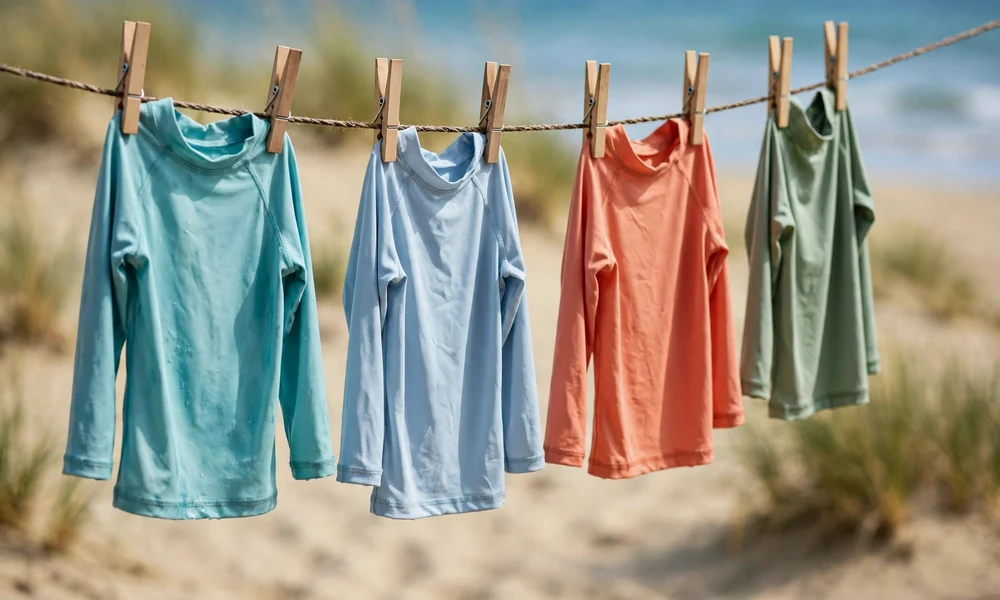
A rash guard that is looked after lasts far longer than one that is not, and the care is simple. Rinse it in fresh water after every swim to wash out the chlorine and salt, which are what attack the elastic and fade the colours. A quick rinse under a tap, a gentle squeeze and hanging it in the shade takes two minutes and can double the life of a top. Never leave a wet rash guard rolled up in a beach bag overnight, because that is when mildew starts and elastic begins to weaken.
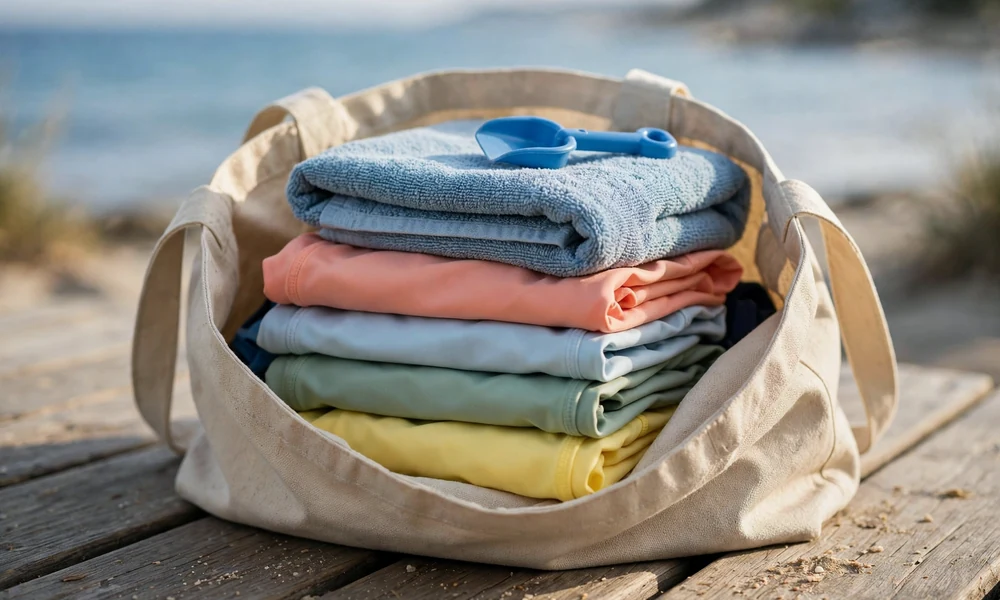
Replace the top when the elastic goes or the fabric goes thin, even if the child still fits it. A rash guard that has lost its stretch no longer fits snugly, which means it rides up in the water and lets the sun through the stretched fabric. Hold it up to the light: if you can see through it far more easily than you could when it was new, its sun protection has faded with it. The same goes for colour. Fading is not just cosmetic; it is a sign that the fabric has been through a lot of sun, chlorine and salt, and that its best days are behind it.
How to Choose in Five Minutes
Start with the UPF rating. Check for a stated UPF 50 on the label, and put the top back if there is no rating at all. Then check the fit: snug when dry, smooth across the chest, sleeves that stay down, a hem that stays down, and both arms raising comfortably overhead. Then check the seams: flat, smooth, no rough edges, and a label that will not scratch. If all three pass, the top is worth trying on your child.
Finally, let your child choose the colour. The best kids rash guard is the one a child wants to wear, and a child who picks a bright turquoise or a bold coral top will reach for it every time. Fit, fabric and sun protection are the parent’s job; colour is the child’s. When both of you are happy, you have found the right top, and it will do its job quietly all summer while your child gets on with the swimming.
Frequently Asked Questions
Can a child wear a rash guard all day at the beach? Yes, if it dries quickly and the fit is comfortable, but it is better to change into a dry top after lunch, because sitting in a damp top for hours can irritate skin and make a child cold in the shade. Pack a spare in the beach bag and the afternoon stays comfortable. For the wider picture of what to pack, our roundup of the best swimwear for 2026 covers the whole family, from babies to adults, and it is worth a read before you buy anything else.
How many rash guards does a child need for a holiday? Two is the practical answer. One on, one drying, and a rinse each evening keeps both fresh for a week. Three is luxury, but it is worth it for a longer trip or a child who swims twice a day. A spare also saves the day when one top is still damp from the morning swim and the child is already asking to go back in.
The best kids rash guards of 2026 are not the most expensive tops or the ones with the loudest prints. They are the tops with a stated UPF 50 rating, a snug fit, flat seams and quick-drying fabric, chosen for the child who will actually wear them and looked after with a rinse and a hang in the shade after every swim. Get those things right, pack a spare, keep the sunscreen routine going, and the rash guard will simply do its job while the summer happens around it. That is the whole point of it, and when it works, nobody notices it at all, which is exactly how it should be.