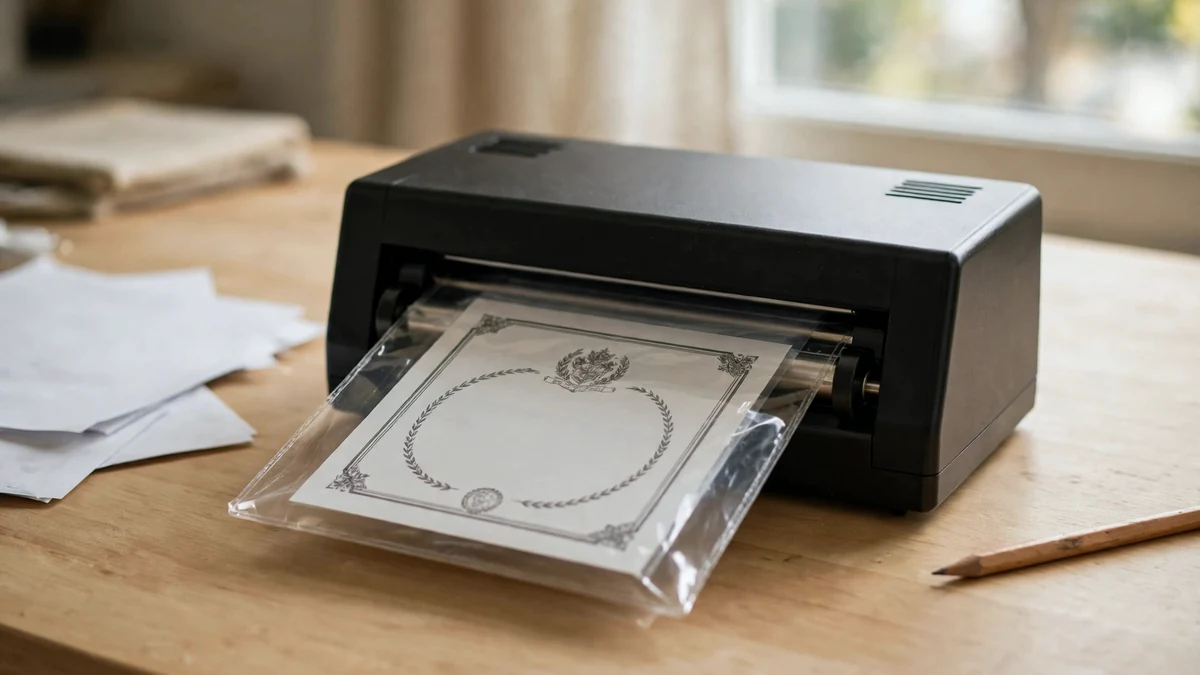
A laminator is a small machine that seals a sheet of paper inside a clear plastic pouch, protecting it from spills, fingerprints, creases and damp. It sounds like a niche office gadget, and in a way it is, but for a teacher, a parent, a small business owner or anyone who makes signs, menus, flashcards and certificates, a laminator turns ordinary paper into something that lasts. A bad laminator leaves bubbles, wrinkles and cloudy patches, while a good one produces a flat, clear, firmly sealed sheet every time. The best laminators of 2026 are the ones that warm up quickly, feed straight and seal evenly, without jamming or scorching the pouch.

What Makes a Laminator Good
The first thing to judge is the quality of the seal. A laminator is only useful if the plastic bonds firmly to the paper all the way to the edges, and the best machines heat evenly across the whole width, so there are no cold spots that leave the pouch loose and no hot spots that scorch it. The seal is the first test, and it is easy to see: hold the finished sheet up to the light and look for bubbles, ripples and loose corners.
The second thing is the feed. A laminator should pull the pouch in smoothly and in a straight line, without skewing to one side or stopping halfway through. The best machines have guides that keep the pouch centred, rollers that grip evenly, and a steady speed that does not rush the seal. A smooth, straight feed is what separates a reliable laminator from a frustrating one, and it is worth testing with a plain sheet before laminating anything important.
The third thing is the warm-up time and the range of pouch thicknesses it can handle. A laminator that takes fifteen minutes to warm up will not be used for a quick job, while one that is ready in two or three minutes fits naturally into a working day. The best laminators of 2026 handle the common thicknesses without complaint, and they tell you clearly when they are ready, instead of leaving you to guess.
The Main Types of Laminator
Pouch laminators are the classic choice for home and small office use. They take a ready-made pouch, with the paper slipped inside, and seal it as it passes through heated rollers. They are simple, affordable and easy to use, and they are the best choice for most people, because they handle the everyday jobs: certificates, notices, flashcards, luggage tags and children’s artwork. The trade-off is size: a pouch laminator only seals what fits through it, so a wide poster needs a wider machine.
Roll laminators are the workhorse option for a busy office, school or print room. They feed film from a roll rather than using individual pouches, and they can seal long runs of documents, posters and banners without stopping. They are faster for volume work, and they are the best choice when laminating is a daily job rather than an occasional one. The downside is the size, the price and the learning curve: a roll laminator is a bigger machine, it costs more, and it takes practice to load and trim cleanly.
Cold laminators are the gentle option for heat-sensitive items. They use pressure rather than heat to bond the film, so they suit photographs, inkjet prints, foil, and anything that would curl, fade or melt in a hot machine. They are quiet, they use less power, and they are the best choice for craft work and for prints that must keep their colours true. The trade-off is the bond: a cold seal is not always as firm as a hot one, and it suits flat, smooth items best.
A4 laminators are the compact option, and they are the ones most homes will buy. They seal sheets up to A4 size, they fit on a desk, and they are the best choice for school work, home filing and small signs. The downside is the limit: an A3 poster, a large chart or a wide menu will not fit, so anyone who regularly works larger will outgrow an A4 machine quickly.
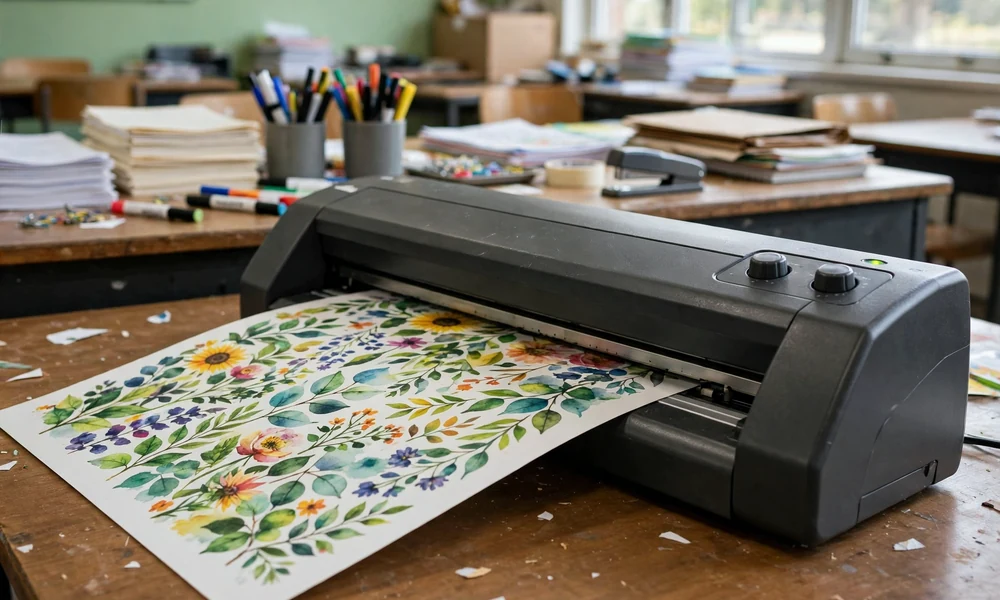
A3 laminators are the flexible option for a classroom or a small office. They seal sheets up to A3 size, which covers posters, charts, large certificates and wide menus, and they still fit on a desk or a trolley. They are the best choice for a teacher or a club secretary, because they handle both the small jobs and the big ones. The trade-off is the price and the footprint: an A3 machine costs more and takes up more space than an A4 one.
How to Choose the Right Laminator
Start with the size of the work, not the machine. A parent laminating flashcards and homework needs only an A4 pouch laminator, while a teacher making classroom posters needs an A3 machine, and a print shop making banners needs a roll laminator. Match the laminator to the largest sheet you laminate regularly, and the machine will earn its place.
Then check the practical details. Look at the warm-up time, because a machine that is ready in a few minutes will be used far more than one that takes a quarter of an hour. Check the pouch thicknesses it supports, and make sure they include the thickness you will actually use. Check the speed: a fast machine suits volume work, while a slower machine suits careful, one-off jobs. A machine that fails any of these tests will be a daily annoyance.
The Best Laminators of 2026
The best pouch laminator for most people this year is a compact A4 machine with a fast warm-up, a clear ready light and an even seal across the whole width. It handles the common pouch thicknesses, it feeds straight, and it is the machine for everyday documents, certificates and flashcards. For most people, this is the laminator to buy.
The best A3 laminator of 2026 is a desk-sized machine with a wide feed, a steady speed and a seal that stays even from edge to edge. It suits a teacher, a club or a small office, it is the machine for posters, charts and large certificates, and it is the one that makes a classroom display look professional. For anyone who laminates posters regularly, this is the laminator that works.
The best laminator for a busy office is a fast pouch machine with a wide throat, a short warm-up and a jam release that is easy to reach. It costs more than a home machine, but the speed is worth it when there is a stack of documents to seal. For a workplace where laminating is a daily job, this is the laminator to buy.
The best cold laminator of 2026 is a quiet, pressure-based machine that seals photographs and inkjet prints without heat. It suits a photographer, a crafter or anyone who works with delicate prints, it is the machine for foil, glossy prints and anything that would curl in a hot machine, and it is the one that keeps colours true. For delicate items, this is the laminator that matters.
The best budget laminator of 2026 is a simple A4 pouch machine, at a price that is less than a weekly shop. It is steady, it is easy to use, and it is genuinely useful. Cheap does not have to mean cloudy, and this machine proves it.

Pouch Thickness and Finish
Pouch thickness is measured in microns, and the number matters more than most buyers expect. A thin pouch of around 75 microns is flexible and light, and it suits documents that will be filed away or pinned to a board, because it adds protection without much stiffness. A pouch of around 125 microns is the everyday middle ground: firm enough to feel solid in the hand, yet still easy to feed through a home machine, and it suits certificates, menus and flashcards that will be picked up often. A thick pouch of 175 microns or more is stiff and rigid, almost like a card, and it suits luggage tags, outdoor signs and anything that will be handled roughly or left in damp conditions. The thicker the pouch, the more heat and the slower the feed the machine needs, so check that the laminator supports the thickness before buying a box of pouches that it cannot seal. Finish matters too: a gloss finish makes colours look bright and sharp, and it suits photographs and displays, while a matt finish cuts glare and is easier to read under bright lights, and it suits notices and classroom charts. Choose the thickness and the finish for the job, not for the price, and the sealed sheet will look right and last.
What Else You Need
A laminator works best with a little help. A good printer will produce the documents, certificates and signs worth protecting, and a scanner will let you keep a digital copy before the original is sealed away. And a desk organizer will keep the pouches, the trimmer and the finished sheets tidy, so the laminator is ready whenever it is needed. The laminator is the sealer; the printer, the scanner and the organizer are what make the desk work.
Common Mistakes to Avoid
The biggest mistake is feeding the pouch in crooked. A pouch that enters at an angle will skew, crease and jam, and a jammed pouch can melt inside the machine. Use the guides, line the pouch up squarely, and let the rollers take it at their own pace. The second mistake is laminating a sheet that is too thick for the machine: a bulky item, a folded sheet or a pouch that is overfilled will stall the rollers and scorch the plastic. Check the thickness limit before laminating anything unusual.
Another common mistake is trimming too close to the paper. A sealed sheet needs a small margin of plastic all the way round, because that margin is what holds the seal closed. Trim right up to the paper and the edge will peel open, letting in damp and dirt. Leave a few millimetres of clear plastic, and the seal will last.
How Laminators Fit a Tidy Home Office
A laminator is one of the simplest ways to make a home office tidier. It protects the documents that get handled often, it stops the certificates that fade in sunlight, and it does it without anyone thinking about it. A desk with a good laminator is a desk where the important papers stay readable, and a desk where the papers stay readable is a desk that works. The machine is not exciting, but it is useful, and a good one is the kind of thing that is only noticed when it is missing.
The habit also pairs naturally with a little routine. A quick wipe of the rollers when the machine is cool, a check that the pouches are stored flat, and a test sheet before any important job will keep the laminator sealing cleanly and the documents looking sharp.
The Verdict
The best laminator of 2026 is the one that matches the work. For most people that means a compact A4 pouch laminator with a fast warm-up and an even seal. For a teacher or a club, an A3 machine is the better choice. For a busy office, a fast machine with a jam release is the one that matters. For delicate prints, a cold laminator is the only sensible option. Whatever the choice, check the size first, test the seal, and feed every pouch in straight.