Top loafers for everyday style in 2026 bridge the gap between trainers and formal shoes: easy to slip on, comfortable all day, and smart enough for the office or a weekend out. The best are not the flashiest or the cheapest: they have good leather, a solid sole and a shape that suits your foot, made to look better with age instead of worse.
A loafer earns its place by being the shoe you reach for without thinking: it must fit well, feel comfortable after hours on your feet, and go with most of what you own. This guide compares the main styles, explains which leathers and soles last longest, and shows you how to choose a pair that will carry you through 2026 and beyond.
Key Takeaways
- Full-grain leather loafers last longest and age best; corrected-grain and bonded leather crack and peel within a year or two.
- Penny loafers are the most versatile everyday style; tassel and horsebit loafers suit smarter outfits.
- A leather sole looks elegant but wears fast on wet pavements; a rubber sole is the practical choice for daily wear.
- Loafers should fit snugly at first, because leather stretches by about half a size as it breaks in.
- One pair in dark brown and one in black covers almost every outfit a loafer is right for.
What Makes a Loafer Good
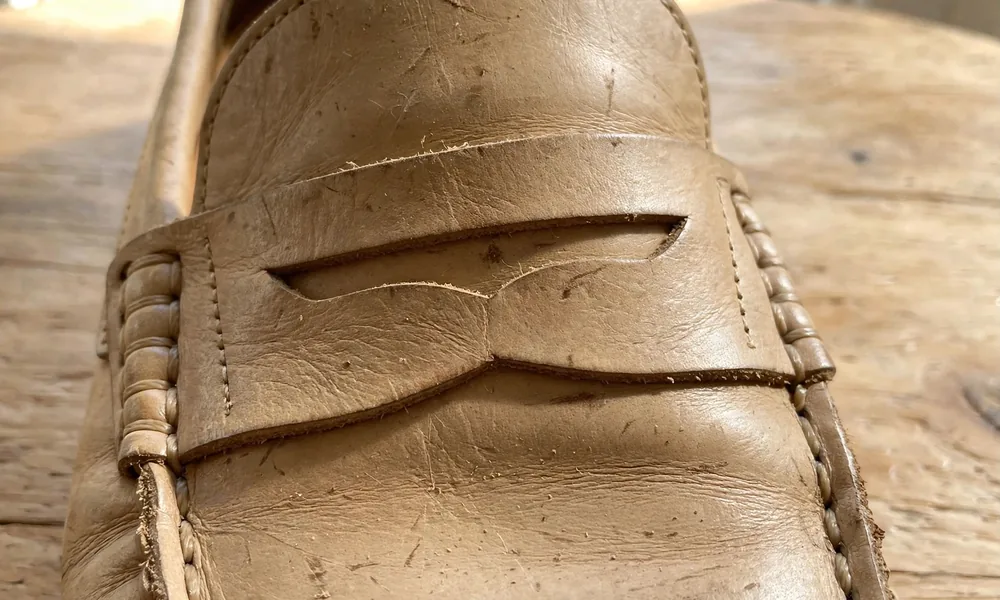
A good loafer starts with the leather. Full-grain leather, the top layer of the hide, is the strongest and most durable leather there is. Scuffs polish out, and it develops a rich patina that makes the shoe look better, not worse. Top-grain leather is a step down: sanded and refinished, it looks smooth and uniform, but it is thinner and less hard-wearing. Corrected-grain and bonded leather sit at the bottom: coated in plastic-like finishes that look shiny when new, then crack and peel within a year or two.
Construction and Comfort
Construction is the second thing to check. A Goodyear-welted loafer, stitched to the sole through a leather welt, can be resoled again and again, which is why welted shoes last for decades. Blake-stitched loafers are stitched directly through the sole, making them lighter and more flexible, though resoling is harder. Cemented or glued loafers are the cheapest to make and the hardest to repair, and the most likely to come apart after a wet winter. For daily wear, welted or Blake-stitched construction is worth paying for.
Comfort comes from the shape of the last and the footbed. A cushioned insole with slight arch support feels comfortable after a full day, while a flat, hard insole leaves your feet aching by the afternoon. Because loafers have no laces, the shape has to be right from the start: try them on at the end of the day, when your feet are at their largest.
Loafer Styles Compared
Loafers come in more styles than most people realise. The table below compares the main styles on versatility, formality and everyday wearability.
| Loafer Style | Formality | Versatility | Best With | Typical Price |
|---|---|---|---|---|
| Penny loafer | Smart casual | Excellent | Chinos, jeans | $80 to $300 |
| Tassel loafer | Smart | Good | Tailored trousers | $120 to $400 |
| Horsebit loafer | Smart | Good | Suits | $150 to $600 |
| Suede loafer | Casual | Good | Jeans | $90 to $350 |
| Driving loafer | Casual | Fair | Weekends | $60 to $250 |
| Chunky sole loafer | Casual | Good | Jeans | $100 to $350 |
The penny loafer is the safest first buy: it works with the widest range of outfits and never looks out of place. The small slot across the vamp, originally made to hold a penny, is now just a design detail, but it gives the shoe its clean, uncluttered look. Tassel loafers add personality and suit smarter outfits, while horsebit loafers, with their metal bar across the front, are the dressiest of the group.
Leather, Suede and Soles
Smooth calf leather is the classic loafer material, and the easiest to look after: a brush, cream polish and a cloth keep it looking good for years. Suede, made from the underside of the hide, has a soft, napped texture and a more relaxed look. It is comfortable and breathable, but it stains easily and needs a protective spray before its first wear, plus a suede brush for regular cleaning. Suede is a summer favourite, but not the best choice for wet weather.
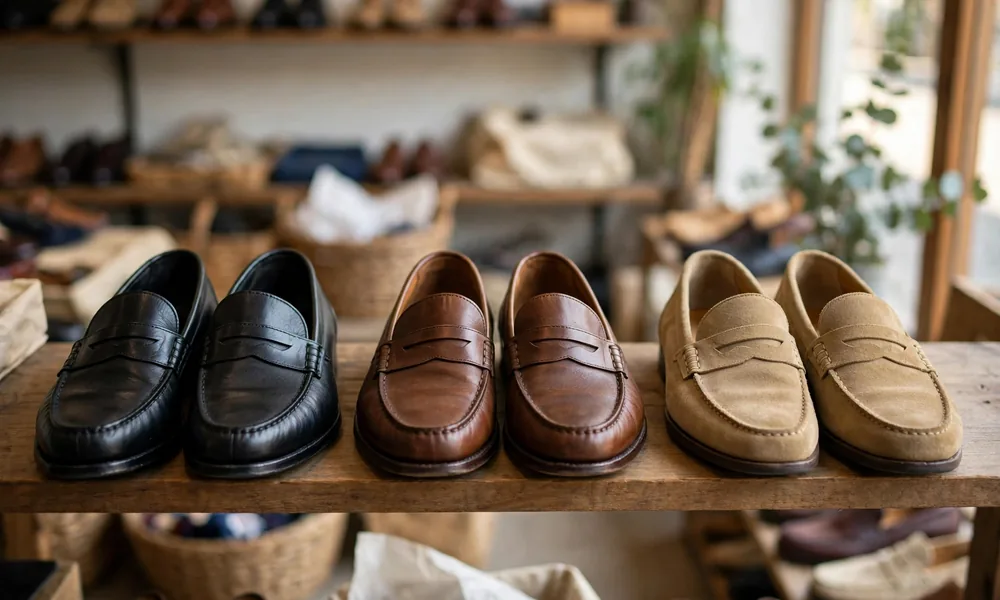
The sole is where practicality meets style. A leather sole is slim, elegant and traditional, and it moulds to your foot over time, but it wears down quickly on wet pavements. A rubber sole, or a leather sole with a rubber insert, grips better, lasts longer and handles rain without complaint. For everyday wear, a rubber sole is the sensible choice. Chunky lug soles add grip and a more casual look, though they suit jeans better than suits.
Fit: Getting Loafers Right
Loafers should feel snug when you first put them on, because leather stretches as it breaks in. A pair that feels perfect in the shop will usually feel loose after a month, and a loose loafer slips at the heel with every step, causing blisters and wearing the lining. Most leather loafers stretch by about half a size over the first few weeks, mostly across the vamp.
Heel slip is the most common loafer problem, and a little is normal at first: the leather needs time to mould to your foot, and a thin heel grip or an insole can help during break-in. But if your heel lifts a full centimetre or more with every step, the shoe is too big. Width matters too: loafers are often sold in a single width, so wide feet need brands that offer wide fittings, or a softer leather or suede style. The same fitting principles apply to trainers, and our guide to the best sneakers of 2026 explains how to judge fit and support.
Styling Loafers for Everyday Wear
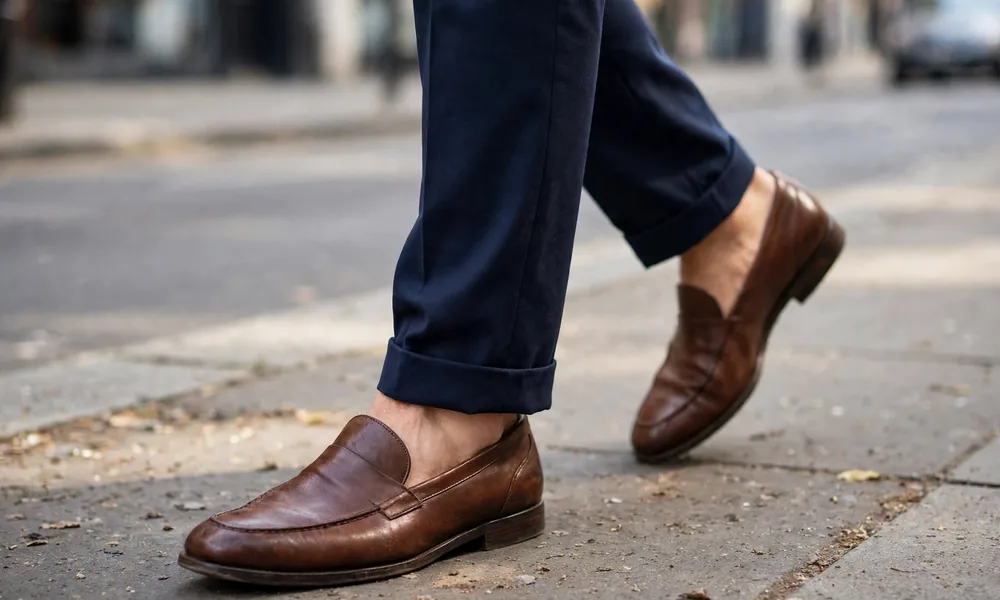
Loafers are at their best with chinos and a shirt, the classic smart-casual combination for the office or a weekend out. Navy trousers with dark brown loafers is one of the most reliable outfits a man can own, needing nothing more than a white or pale blue shirt. With jeans, loafers dress the outfit up just enough without making it formal: choose a slim or straight-leg jean, roll the hem slightly, and wear no-show socks.
How Much Should You Spend
Loafers fall into three price bands, and the middle band is where most buyers should look. Budget loafers, roughly 60 to 120 dollars, are usually cemented and made from corrected-grain leather, comfortable for a season or two before the finish cracks or the sole comes away. Mid-range loafers, roughly 150 to 350 dollars, are where full-grain leather, Blake stitching and proper footbeds appear, and a pair at this price lasts three to five years with basic care.
Premium loafers, roughly 400 to 800 dollars, buy Goodyear-welted construction, the finest calf leather and hand finishing. They are worth it if you wear loafers most days and want a pair that can be resoled for a decade or more, but they are not necessary for most people. A well-chosen mid-range pair, looked after properly, will serve most wardrobes for years. Price is a guide, not a guarantee. For a sense of how the same value logic works in running shoes, our comparison of the best vs worst running shoes of 2026 shows what separates a shoe built to last from one built to a price.
Caring for Loafers So They Last
Leather loafers last longest when rested between wears. Wearing the same pair every day never gives the leather time to dry out, and damp leather breaks down faster. Rotating two pairs can double the life of a shoe. Cedar shoe trees are the single best investment for loafers: they absorb moisture, hold the shape, and smooth out creases while it rests.
Polishing is not just cosmetic: cream polish feeds the leather and keeps it supple, while wax polish adds a protective shine. Brush the shoes after each wear, apply cream polish every few weeks, and wax the toe and heel for extra protection. Suede needs different care: a protective spray before the first wear, a suede brush to lift the nap, and a suede eraser for marks. Never polish suede, and never wear suede loafers in heavy rain. For boots that face rougher conditions, our guide to the best vs worst hiking boots of 2026 covers waterproofing and sole care.
Resoling turns a good loafer into a great investment. A Goodyear-welted loafer can be resoled many times, and a Blake-stitched loafer usually can too, though fewer cobblers offer the service. A resole costs far less than a new pair, and it is worth doing as soon as the sole starts to thin, before damage reaches the upper. If the heel wears unevenly, a cobbler can replace the heel cap, a quick and cheap repair.
Common Mistakes When Buying Loafers
The first mistake is buying the wrong size because loafers feel tight at first. Leather stretches, so a snug fit is correct, and a pair that slips at the heel in the shop will only get worse. The second mistake is choosing a style that does not match your wardrobe: a horsebit loafer looks wrong with jeans, and a chunky lug-sole loafer looks wrong with a suit.
The third mistake is ignoring the sole: a leather sole on a shoe worn every day in all weathers wears out fast, and a driving loafer is not designed for long walks on hard pavements. The fourth mistake is neglecting care: loafers never brushed, polished or rested look old within a year, while the same pair with basic care looks good for five.
Loafer Buying Checklist
- Choose full-grain leather, and avoid corrected-grain or bonded leather that cracks and peels.
- Check the construction: welted or Blake-stitched loafers can be resoled, glued ones usually cannot.
- Pick a rubber sole for daily wear, and save leather soles for dry days.
- Buy snug: leather stretches by about half a size during break-in.
- Start with dark brown for versatility, and add black as a second pair.
- Buy cedar shoe trees and rest your loafers between wears.
Frequently Asked Questions
Are loafers comfortable for all-day wear?
Yes, if they fit well and have a cushioned footbed with some arch support. A well-made loafer with a rubber sole is comfortable all day, but a flat, hard-soled loafer with no support will leave your feet aching.
Should you wear socks with loafers?
No-show socks keep the clean loafer look while protecting your feet and the shoe lining, the best option for most people. Bare feet in leather loafers cause sweat, odour and faster wear, so socks are worth wearing even when they cannot be seen.
Do loafers stretch out?
Yes, leather loafers stretch by about half a size as they break in, mostly across the vamp. Suede stretches a little more. Buy leather loafers snug.
Can you wear loafers with a suit?
Yes, loafers work well with modern suits, especially slim styles in black or dark brown with a smooth leather finish. They suit business-casual and smart occasions, though Oxford shoes are safer for the most formal events.
How do you stop loafers slipping at the heel?
A little heel slip is normal while new leather moulds to your foot. Heel grips, a thin insole, or thicker socks during break-in all help. If the heel still lifts after a few weeks, the shoe is too big.
Are expensive loafers worth the money?
They are if you wear loafers often and look after them. A premium welted loafer can be resoled for a decade or more, making it cheaper per wear than replacing budget pairs every year.
The Bottom Line
Top loafers for everyday style in 2026 are full-grain leather, well-constructed, and fitted snugly enough to break in rather than break down. Start with a dark brown penny loafer with a rubber sole, look after it with shoe trees and polish, and it will be the shoe you reach for most days.