A loveseat is the small living room’s best friend. It seats two people properly, faces the television, and still leaves room for a coffee table, a lamp, and a clear path to the door. The best loveseats for small living rooms do all of that without crowding the space, and this guide explains how to find one that fits your room and the way you actually sit.
Key Takeaways
- A loveseat is a two-seat sofa, usually 120 to 170 centimetres wide, built for two people and small rooms.
- Measure the wall, the walkways, and the delivery route before you buy, because a loveseat that fits on paper can still block a door.
- Seat depth and back height decide comfort more than the fabric or the price, so sit on a loveseat the way you sit at home.
- Slim arms, raised legs, and a low back make a loveseat look lighter and leave more visible floor in a small room.
- A hardwood frame, high-density foam, and washable covers are the three quality signs worth paying for.
What Is a Loveseat, Exactly?
A loveseat is a sofa made for two people. It is shorter than a three-seat sofa, usually between 120 and 170 centimetres wide, with two seat cushions and room for two adults to sit side by side. It is bigger than an armchair and smaller than a sofa, which is why it suits small living rooms where a full sofa would dominate the wall.
The name comes from the old two-seat settee, a piece made for two people to sit close together, and the idea has not changed much. What has changed is the engineering: modern loveseats use the same frames, springs, and foams as full sofas, so a good one is just as comfortable and lasts just as long. The difference is only size, and in a small room size is the whole decision. Our guide to how to choose a sofa covers full three-seat sofas; this guide covers the smaller piece that fits where a three-seater cannot.
Loveseat or Armchair: Which Fits Your Room?
The choice between a loveseat and an armchair comes down to how many people use the room together. A loveseat suits two people who sit together every evening, giving them a shared seat and a focal point for the television. An armchair suits one person, or a room that must stay flexible, and it leaves far more floor free. Our comparison of a sofa vs armchair for a small living room works through that choice in full, and it is worth reading before you commit either way.
Many small rooms end up with both: a loveseat against the main wall and one armchair at an angle. The combination works when the pieces are close in height and style, so the room reads as a set rather than a collection of leftovers. Avoid pairing a deep, low loveseat with a tall, upright armchair, because the mismatch makes both look wrong.
Loveseat Types Compared
| Type | Best for | Comfort | Watch out for | Price level |
|---|---|---|---|---|
| Standard | Everyday sitting | High | Arms take up width | Mid |
| Armless | Very small rooms | Good | Nothing to lean on | Mid |
| Reclining | Film nights | High | Needs space behind it | High |
| Sleeper | Studios | Good | Thin mattress, heavy | High |
| Leather | Pets | High | Scratches show | High |
The standard two-seater is the safest first choice, because it does everything well and nothing badly. An armless loveseat saves about 20 centimetres of width, which matters on a short wall, but it is less comfortable for long evenings. Reclining and sleeper loveseats each add a function, and each function adds weight, cost, and something that can break. Buy the extra function only if you will use it weekly.

How to Measure a Loveseat for a Small Living Room
Measure the wall first, then the loveseat, then the route it must travel. A loveseat needs its own width plus at least 75 centimetres of walking space on one side, or the room will feel blocked. Leave 45 centimetres between the loveseat and the coffee table, so legs fit and mugs can be reached. Our guide to the best coffee tables for small living rooms explains how to pair the two pieces.
Measure the delivery route with the same care. Doorways, hallways, stair turns, and lift doors are where loveseats get stuck. Check the narrowest point against the loveseat’s longest dimension, and ask whether the legs come off and the back detaches, which makes delivery far easier.
Think about the room’s other furniture too. A loveseat that fits the wall but blocks the radiator, the window, or the bookcase is a mistake you will notice every day. Sketch the room on paper, or mark the loveseat’s footprint on the floor with tape, and live with the outline for a day before ordering.
Frames, Fabric, and Comfort
The frame decides how long a loveseat lasts. A good frame is kiln-dried hardwood, joined with dowels and glue and reinforced with corner blocks. Test it by lifting one front corner: a good frame stays rigid and the other front leg lifts with it, while a weak frame twists. A bad frame is stapled pine or particleboard, and it will creak, wobble, and eventually break at the joints.
Fabric: The Practical Choice
Fabric is a practical choice, not a colour choice. With children and pets, you want a tight weave with a rub count above 40,000, a mid-tone colour that hides marks, and ideally removable, washable covers. Leather wipes clean and does not hold smells, but cheap bonded leather peels within a few years and scratches show on dark colours. Velvet looks wonderful, but it marks easily, so it suits a quiet room better than a family room.
Seat Depth and Back Height
Seat depth and back height decide comfort more than anything else. A seat depth of 55 to 60 centimetres suits most people for sitting upright, while deeper seats suit lounging. A low back makes a small room feel bigger because more wall stays visible. A high back supports the head for reading, but it can dominate a small room. Sit on the loveseat the way you will sit at home, for ten minutes, before you decide.
Where a Loveseat Fits Best
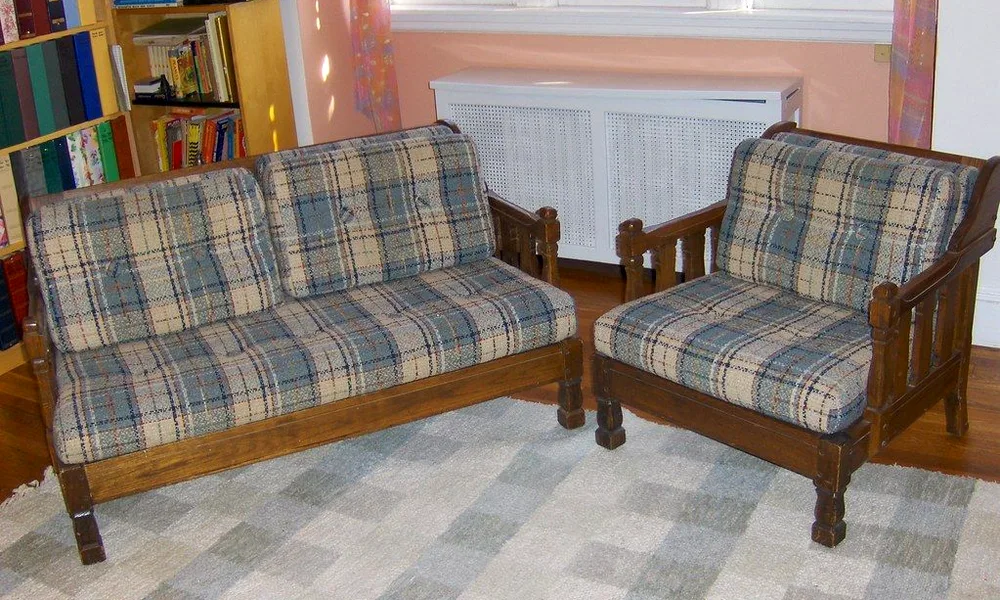
The small living room is the obvious home, and the loveseat is often the only sofa that fits. Place it against the longest wall, facing the television or the fireplace, and keep the second wall free. If the room is long and narrow, a loveseat across the short end can divide it into a sitting area and a working area without building anything.
Bedrooms suit loveseats too, especially a large bedroom with a reading corner or a bay window. A loveseat at the foot of the bed or under a window gives the room a place to sit that is not the bed. In a home office, a loveseat gives a long working day a place to stretch out and read.
Styling a Loveseat in a Small Room
A loveseat looks best when it is dressed simply. Two cushions in a colour that picks up the rug, one throw folded over one arm, and a cushion in a contrasting texture are enough. Too many cushions crowd a two-seat sofa and leave nowhere to sit. A small side table at one end with a lamp gives the seat a finished look.
Keep the wall above the loveseat simple: one picture, a mirror, or a shelf, rather than a gallery that competes with the furniture. A rug in front of the loveseat should be large enough for its front legs to sit on it, which ties the seating area together. A rug that is too small makes the loveseat look as if it is floating.
What to Avoid
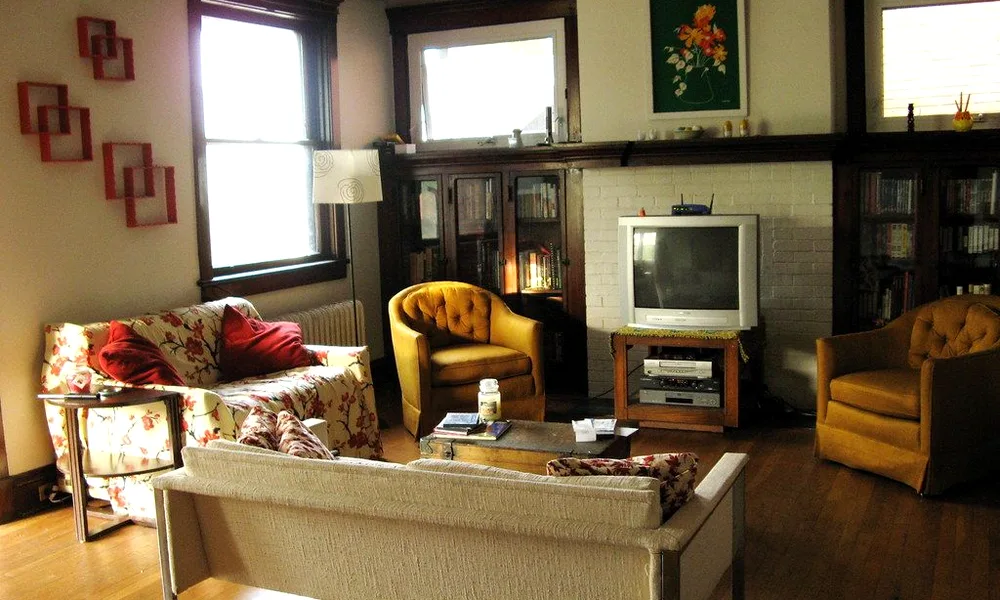
The most common loveseat mistake is buying by width alone. Two loveseats can be the same width and feel completely different, because one has wide arms and a shallow seat while the other has slim arms and a deep seat. The second one seats two people comfortably; the first seats one person and a bag. Measure the sitting width between the arms, not the overall width.
The second mistake is choosing a loveseat that is too deep for the room. A deep seat is comfortable for lounging, but in a small room it pushes the coffee table into the walkway and leaves no room to pass. If the room is tight, choose a seat depth at the shallow end of the range and a back that is upright rather than reclined.
Buying Checklist
- Measure the wall, the walkways, the coffee table gap, and the delivery route before ordering.
- Sit on the loveseat for ten minutes, and check the cushions spring back when you stand.
- Lift one front corner to test the frame: a good frame stays rigid and the other leg lifts with it.
- Measure the sitting width between the arms, not just the overall width of the piece.
- Check the fabric rub count, whether the covers are washable, and whether spares are available.
- Confirm the legs come off and the back detaches, so the loveseat can get through your doorways.
Frequently Asked Questions
What size is a loveseat?
Most loveseats are 120 to 170 centimetres wide and 85 to 95 centimetres deep, with two seat cushions. Compact loveseats can be as narrow as 110 centimetres, and large ones reach 180 centimetres. Always check the sitting width between the arms, because that is the space you actually sit in.
Is a loveseat big enough for two people?
Yes, if it is a true two-seater with two cushions and a sitting width of at least 110 centimetres. Two adults can sit comfortably and watch television together. It is not big enough for two people to lie down side by side, which is what a three-seat sofa is for.
Can a loveseat work as the only sofa in a living room?
Yes, in a small living room used by one or two people. Add one armchair for a third person, or a pouffe that doubles as a seat. In a household of three or more, a loveseat alone is not enough seating, and a three-seat sofa or a loveseat plus two armchairs is the better layout.
What is the best fabric for a loveseat with pets?
A tight weave with a rub count above 40,000 and removable, washable covers is the best choice, in a mid-tone colour that hides hair and marks. Leather also works well because it wipes clean, but claws scratch it. Avoid loose weaves and pale velvet, which show every mark within a month.
How much should a good loveseat cost?
A well-made loveseat with a hardwood frame and high-density foam usually costs more than a cheap one, but far less per year, because it lasts ten years instead of two. Pay for the frame, the springs, and the foam first; the fabric can be changed later, but a weak frame cannot be fixed.
Should I choose a loveseat or two armchairs?
Choose a loveseat if two people sit together most evenings, because it gives a shared seat and a focal point for the room. Choose two armchairs if the room must stay flexible, or if people sit at different times. Many small rooms work best with a loveseat and one armchair together.
Bottom Line
The best loveseat for a small living room fits the wall, seats two people properly, and leaves the room feeling open rather than crowded. That means measuring before ordering, sitting on it before buying, and choosing a hardwood frame, a practical fabric, and a seat depth that suits the way you sit. Get those right and the smallest living room gains a proper sofa for two, with space left over for everything else the room needs.