
Milk chocolate is the chocolate most of us grew up with, and it is also the one most often bought badly. A bar can taste of cream, caramel and cocoa in perfect balance, or of little more than sugar and vegetable fat, and the wrapper will not tell you which. The difference is in the cocoa, the milk and the making, and once you know what to look for, choosing the best milk chocolate for snacking and baking gets much simpler.
The first thing to understand is that milk chocolate is not a weaker version of dark chocolate. It is a different food with its own rules: dark chocolate is judged on the beans and the percentage, while milk chocolate is judged on the balance between cocoa, milk and sugar. When that balance is right, the result is creamy, mellow and deeply satisfying.
Key Takeaways
- Milk chocolate is judged on balance, not percentage: a well-made 30% bar beats a careless 40% bar.
- Look for cocoa butter and real milk on the ingredient list, and put the bar back if vegetable fat or palm oil appears.
- For snacking, choose a bar with a clean snap, a glossy surface and a flavour of cream and caramel.
- For baking, choose milk chocolate that melts smoothly, and chop it yourself rather than using chips.
- Store it cool and dry, never in the fridge, and eat it within six to nine months.
What Makes Milk Chocolate Different
Milk chocolate starts where dark chocolate stops. The moment milk solids are added, the flavour softens, the texture turns creamy, and the cocoa takes a supporting role instead of the lead. A good milk bar usually contains between 25% and 40% cocoa, with milk solids and sugar making up the rest. That lower cocoa content is not a flaw; it is the whole point. Milk chocolate is meant to taste of cream and caramel with cocoa in the background.
The milk itself matters more than most buyers realise. The best makers use fresh milk or whole milk powder and treat it gently; cheap bars often use skimmed milk powder and extra sugar, and taste sweet before they taste of anything else. In a good milk bar, creaminess comes first, sweetness second, and cocoa third, as a warm finish rather than a shout.
Cacao, Milk and Sugar: The Balance That Matters
The percentage on a milk chocolate bar works differently from a dark bar. On a dark bar, the number tells you how much of the bar is cocoa; on a milk bar it tells you the same thing, but the number is lower and the rest is milk and sugar. A 30% milk bar is 30% cocoa and 70% milk, sugar and other ingredients, so the percentage alone tells you very little about whether the bar will taste good. What matters is what makes up the other 70%.
Read the ingredients before you read the percentage. In a good milk bar the list is short: cocoa mass, sugar, cocoa butter, milk powder or whole milk, and perhaps vanilla or lecithin. If you see vegetable fat, palm oil or cocoa butter substitutes, the maker has replaced expensive cocoa butter with cheap fat, and the chocolate will feel greasy and melt oddly. Put it back.
As a rough guide, milk chocolate between 30% and 40% cocoa hits the sweet spot for most people. Below 25%, the bar is mostly sugar and milk, and the cocoa is little more than a colour. Above 40%, it starts to behave like a mild dark chocolate, which can be excellent for baking but may lose the creaminess that makes milk chocolate worth eating on its own. If you are buying for snacking, start around 35%.
Snacking: Snap, Shine and the Slow Melt
A good milk chocolate bar announces itself before you taste it. Hold a square up to the light and look for a smooth, glossy surface with no white streaks or grey bloom. Break it and listen: well-tempered chocolate snaps cleanly, with a soft crack, and the broken edge looks smooth rather than crumbly. Milk chocolate snaps more gently than dark chocolate, but it should still break cleanly rather than bending. That snap shows the bar was tempered properly, so it melts evenly instead of turning grainy or waxy.

Let a small square sit on your tongue for a few seconds before you chew, and notice how the flavour changes as it melts. A good milk bar starts with cream, moves into caramel, and finishes with a gentle cocoa warmth. A dull bar tastes sweet from the first second to the last, usually a sign of bulk beans and too much sugar. Eat it at room temperature, in small amounts, taken slowly. Milk chocolate melts faster than dark chocolate because of the milk fat, so a square softens quickly in a warm hand.
A creamy bar around 30% suits children, sharing, and anyone who wants comfort rather than complexity. A richer bar around 38% to 40%, with notes of caramel and toasted nuts, suits a quiet moment of tasting. Keeping two bars in the cupboard — one gentle, one richer — covers most occasions. For a broader view, our guide to the best dark chocolate for snacking and baking in 2026 makes a useful comparison, because the two are judged by different rules.
Milk Chocolate Compared: Snacking, Baking and Drinking
Not every milk chocolate suits every job — the table below puts the main kinds side by side.
| Type | Cocoa | Texture | Flavour | Best for |
|---|---|---|---|---|
| Everyday eating bar | 25–32% | Soft, creamy | Sweet, milky, gentle cocoa | Snacking, sharing, children |
| Craft milk bar | 35–45% | Firm, clean snap | Cream, caramel, cocoa warmth | Slow snacking, tasting |
| Baking milk chocolate | 30–40% | Melts smoothly | Even, sweet cocoa | Cakes, brownies, cookies |
| Couverture milk | 35–40% | Fluid when melted | Rich, glossy finish | Coating, dipping, truffles |
| Milk chocolate chips | 25–35% | Holds its shape | Sweet, mild cocoa | Cookies, muffins, scones |
| Drinking milk chocolate | 30–40% | Thick, smooth | Comforting, creamy | Hot chocolate, mochas |
Baking With Milk Chocolate: Melt, Chop and Measure
Baking is where milk chocolate earns its keep, and it is also where the wrong choice shows up fastest. Milk chocolate is sweeter and softer than dark chocolate, so it melts at a lower temperature, scorches more easily, and adds both sugar and milk solids to the batter. You cannot simply swap it for dark chocolate in equal amounts. The recipes that work best are the ones written for it: milk chocolate chip cookies, brownies, creamy ganache and frostings where sweetness is welcome.

For cakes and brownies, a baking bar between 30% and 40% cocoa is the safest bet, because it brings real chocolate flavour without bitterness that can overwhelm a sweet batter. Chop the chocolate yourself rather than reaching for chips when the recipe needs it to melt: chips are designed to hold their shape in the oven, which is what you want in a cookie and not what you want in a ganache. Melt milk chocolate gently, in short bursts or over simmering water, and take it off the heat while a few small pieces remain, because the residual heat will finish the job. It seizes faster than dark chocolate if even a drop of water gets in, so keep your bowl and spoon completely dry.
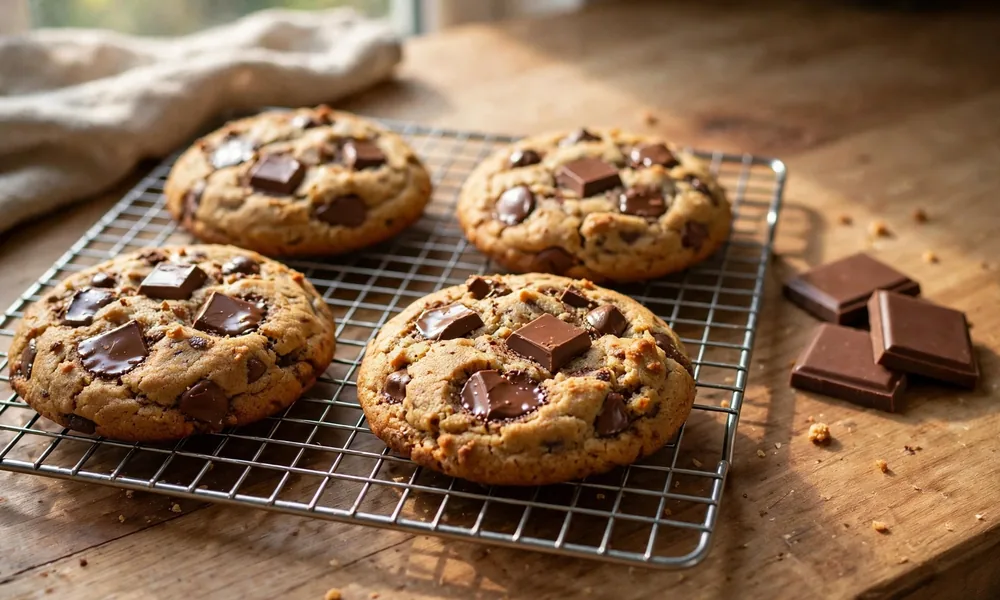
Cookies are where milk chocolate truly shines. Chopped milk chocolate melts into soft pools inside a warm cookie in a way that chips never quite manage. Chop a good eating bar into rough chunks of different sizes, and press a few chunks into the tops just before baking.
How to Store Milk Chocolate So It Stays Good
Milk chocolate keeps well only if you store it properly. Keep it cool and dry, in a cupboard away from the cooker and out of direct sunlight, wrapped tightly in its original packaging or in a sealed container. Never put it in the fridge unless your home is genuinely hot, because the cold and moisture invite sugar bloom, the white dusty coating that appears when damp gets in, and fat bloom, the greyish film that appears when the cocoa butter melts and sets again. Bloom looks alarming, but the chocolate is still safe to eat, and for baking it hardly matters, since it melts away.
Milk chocolate keeps for around six to nine months in a cool, dry cupboard, far less than dark chocolate, because the milk solids turn stale. If a bar smells musty rather than clean and faintly creamy, it is past its best. Keep it away from strongly scented foods, and buy smaller bars more often so nothing goes stale. A mug of real hot chocolate is one of the best uses for a bar past its prime, and our guide to the best hot chocolate in 2026 is worth reading for exactly that.
Milk Chocolate Buying Checklist
- Read the ingredients: cocoa mass, sugar, cocoa butter and milk should lead, with no vegetable fat or palm oil.
- Aim for 30–40% cocoa for snacking, unless you prefer something sweeter or richer.
- Look for a named origin or maker, not just words like premium or luxury.
- Judge the bar by its snap and shine: a clean break and glossy surface mean it was tempered properly.
- For baking, choose a bar that melts smoothly, and chop it yourself instead of using chips.
- Store it cool and dry, never in the fridge, and buy smaller bars more often so nothing goes stale.
Frequently Asked Questions
What cocoa percentage should I buy in milk chocolate?
For most people, 30% to 40% cocoa is the sweet spot: real creaminess and cocoa warmth without harsh bitterness or cloying sweetness. Start at 35% if you are new to good milk chocolate, go higher for a richer bar, and lower for something gentler.
Is milk chocolate healthier than dark chocolate?
Dark chocolate has less sugar and more cocoa, and is usually eaten in smaller amounts. Milk chocolate is sweeter and richer in milk fat, so it is more of a treat than a health food. Enjoy a little of it slowly.
Why does my milk chocolate have white spots?
Those spots are bloom: sugar bloom from damp, and fat bloom from heat. Both are harmless, and the chocolate is still safe to eat, though the texture suffers. For baking it makes no difference once melted. Store it cool and dry, out of the fridge.
Can I use an eating bar for baking?
Yes, as long as you chop it and melt it gently. Eating bars between 30% and 40% cocoa work well in cakes, brownies and cookies. For ganache and coating, couverture melts more smoothly, so it is worth buying if you bake often.
Can I swap milk chocolate for dark chocolate in a recipe?
You can, with two adjustments: reduce the sugar by about a quarter, and add a spoonful of cocoa powder to deepen the flavour. The result will be sweeter and softer, so it works best in cookies and frostings rather than in a dark chocolate torte.
How long does milk chocolate keep?
Milk chocolate keeps for around six to nine months in a cool, dry cupboard, far less than dark chocolate, because the milk solids turn stale. Keep it wrapped, away from strong smells, and out of the fridge. If it smells musty, it is past its best, though it is still fine melted into baking or hot chocolate.
The Bottom Line
The best milk chocolate for snacking and baking in 2026 is a well-made bar between 30% and 40% cocoa, with a short ingredient list, real cocoa butter and a flavour that moves from cream to caramel to gentle cocoa as it melts. Buy a creamy bar for sharing and a richer one for slow tasting, chop your own chocolate for baking, melt it gently, and store it cool and dry. For a wider view, our guide to how to choose chocolate that is actually worth the price in 2026 puts milk chocolate in context beside dark and white.


